Home/CSE Projects/
IEEE Projects for Artificial Intelligence — Final Year 2026
15+ IEEE 2025–2026 AI Projects · BE · BTech · MTech · CSE · IT · Bangalore
IEEE Projects for Artificial Intelligence 2026 for CSE, IT, BE, BTech & MTech
15+ ieee projects for artificial intelligence — machine learning projects, deep learning projects, NLP and transformer projects, computer vision projects, generative AI and LLM projects, explainable AI projects, reinforcement learning projects, AI for healthcare, edge AI and TinyML projects and federated learning projects — with IEEE 2026 base paper, full Python source code, model weights, report, PPT and viva support for AI final year projects at VTU, Anna University and JNTU.
TensorFlow / PyTorch / KerasHugging Face / LangChain / OpenAIOpenCV / YOLO / Vision TransformerScikit-learn / XGBoost / SHAPStable Diffusion / GANs / RAGIEEE 2026 Base Paper Included
IEEE 2026 Artificial Intelligence Final Year Projects for CSE, IT, BE, BTech & MTech — Bangalore
Artificial Intelligence is the most transformative and fastest-growing technology domain of 2025–2026, reshaping healthcare diagnostics, autonomous systems, financial risk management, natural language interfaces, drug discovery, climate modelling and personalized education. At ProjectsatBangalore, we deliver 15+ ieee projects for artificial intelligence for CSE, IT, BE, BTech and MTech students across 10 AI domains sourced from IEEE Xplore's most-cited 2026 publications — IEEE Transactions on Neural Networks and Learning Systems (TNNLS), IEEE Transactions on Pattern Analysis and Machine Intelligence (TPAMI), IEEE Transactions on Medical Imaging, IEEE Journal of Selected Topics in Signal Processing and IEEE Access. Our AI final year project topics span classical machine learning projects using Scikit-learn, XGBoost and Random Forest; deep learning projects using TensorFlow 2.x, PyTorch 2.x and Keras; NLP and transformer projects using BERT, GPT, T5 and Llama via Hugging Face; computer vision projects using OpenCV, YOLOv9, EfficientNet and Vision Transformers (ViT); generative AI projects using LangChain RAG, Stable Diffusion and fine-tuned LLMs; explainable AI (XAI) projects using SHAP, LIME and Grad-CAM; reinforcement learning projects using DQN, PPO and Stable-Baselines3; AI for healthcare projects on medical imaging and EHR data; edge AI and TinyML projects using TensorFlow Lite and ONNX on Raspberry Pi and Jetson Nano; and federated learning projects using NVIDIA FLARE and PySyft. Every project includes a verified IEEE 2026 base paper with DOI, complete Python source code with comments, trained model weights, requirements.txt, system architecture diagram, university-format project report for VTU / Anna University / JNTU, PPT presentation and a comprehensive viva Q&A document — the most complete ieee artificial intelligence project package in Bangalore.
AI Project Domains We Cover
Machine learning projects using Scikit-learn and XGBoost
Deep learning CNN and RNN projects using TensorFlow PyTorch
NLP transformer projects using BERT GPT T5 Hugging Face
Computer vision projects using YOLO OpenCV ViT EfficientNet
Generative AI RAG chatbot projects using LangChain OpenAI
Explainable AI projects using SHAP LIME Grad-CAM
Reinforcement learning DQN PPO projects using Gymnasium
AI healthcare medical imaging EHR prediction projects
Edge AI TinyML deployment on Raspberry Pi Jetson Nano
Federated learning privacy-preserving AI using NVIDIA FLARE
GAN and diffusion model projects for image synthesis
AI fraud detection anomaly detection projects
AI for smart city IoT sensor analytics projects
AI speech recognition audio classification projects
Multi-modal AI vision-language projects (CLIP, LLaVA)
IEEE 2026 AI papers — TNNLS, TPAMI, IEEE Access, TMI
AI Frameworks & Tools Used in Our Projects
All Python libraries, deep learning frameworks, LLM platforms, computer vision toolkits, XAI tools and edge deployment runtimes used across our 15+ IEEE 2026 artificial intelligence final year projects — covering the complete modern AI stack from model training to explainability to production deployment.
Every ieee project for artificial intelligence from our Bangalore centre includes these deliverables — fully tested, documented and ready for submission to VTU, Anna University, JNTU and all affiliated engineering boards.
IEEE 2026 Base Paper
Verified IEEE Xplore 2025-26 AI paper with DOI link
Python Source Code
Full model code with training loop, evaluation and comments
Trained Model Weights
.h5 / .pt model weights with inference demo script
Architecture Diagram
AI model architecture and system data flow diagram
Dataset & Preprocessing
Dataset download guide and preprocessing pipeline scripts
Project Report
University-format report: abstract, literature review, results
PPT Presentation
Slides with model diagrams, metrics, charts and demo
Viva Q&A Support
Prepared answers on AI models, metrics, ethics and deployment
15+ IEEE 2026 Artificial Intelligence Project Topics for Final Year Students
All topics are sourced from IEEE Xplore 2025–2026 — IEEE TNNLS, TPAMI, Transactions on Medical Imaging, IEEE Internet of Things Journal and IEEE Access. Call 9591912372 for a personalised AI topic recommendation based on your university, specialisation and tool availability.
Explainability-Guided Ensemble Credit Risk Scoring System Using XGBoost, LightGBM and SHAP Feature Attribution — trains a stacked ensemble (XGBoost + LightGBM + Logistic Regression meta-learner) on the IEEE-CIS Kaggle fraud dataset (590K transactions, 433 features), applies automated feature engineering with Featuretools, optimises hyperparameters using Optuna Bayesian search, achieves AUC-ROC of 0.944, and generates SHAP waterfall and beeswarm plots for per-prediction explainability. A MLflow experiment-tracked pipeline with a Streamlit risk dashboard. An ideal ieee artificial intelligence project for students targeting fintech, risk analytics or data science roles — with IEEE 2026 TNNLS base paper on ensemble learning interpretability.
Federated Gradient Boosting for Privacy-Preserving Multi-Hospital Patient Readmission Prediction Without Centralising EHR Data — implements a federated XGBoost pipeline using NVIDIA FLARE where each of 5 hospital nodes trains a local gradient boosting model on their MIMIC-III EHR shard (diagnoses, lab values, medications) and shares only model gradients — never raw patient data — with a central aggregator. Demonstrates superior AUC (0.81) compared to local-only models (0.73) while satisfying HIPAA-equivalent privacy constraints. A research-grade AI final year project for MTech scholars aligned with IEEE 2026 privacy-preserving ML papers.
Multi-Scale Attention CNN for Diabetic Retinopathy Severity Grading on Fundus Images Using EfficientNet-B4 Backbone — fine-tunes an EfficientNet-B4 CNN with a custom Squeeze-and-Excitation multi-scale attention block on the APTOS 2019 Blindness Detection dataset (3,662 high-resolution retinal fundus images), achieving a weighted Kappa score of 0.938 across 5 severity grades (No DR → Proliferative DR). The Grad-CAM++ overlay highlights pathological lesion regions for clinical explainability. A Streamlit web app accepts fundus image uploads and returns severity grade with confidence and Grad-CAM heatmap. An outstanding ieee artificial intelligence project for AI healthcare domain from IEEE Transactions on Medical Imaging 2026.
Bi-LSTM with Self-Attention for Multivariate Time-Series Anomaly Detection in Industrial IoT Sensor Streams — trains a Bidirectional LSTM encoder with a multi-head self-attention decoder (autoencoder architecture) on the NASA SMAP and MSL satellite telemetry datasets and the SWAT industrial control dataset to reconstruct normal sensor sequences and flag anomalies by reconstruction error threshold. Achieves F1 score of 0.876 on MSL benchmark. A FastAPI backend serves real-time anomaly scores from a sensor data Kafka topic, and a Grafana dashboard visualises detection alerts. A high-impact AI final year project for CSE and IT students targeting industrial IoT, predictive maintenance and smart manufacturing roles.
BERT · GPT · T5 · Llama · RoBERTa · Hugging Face · Sentence-Transformers · RAG
#
IEEE 2026 AI Project Title
Domain
Tools Used
05
BERT-Based Multi-Label Clinical NLP System for Automatic ICD-10 Diagnosis Code Extraction from Hospital Discharge Summaries — fine-tunes Bio+Clinical BERT (PubMedBERT) on the MIMIC-III discharge summary dataset for multi-label classification of ICD-10-CM codes (50 most frequent codes, 52K documents), using focal loss to handle extreme class imbalance, achieving micro-F1 of 0.714 — surpassing the CAML benchmark. A Flask web app accepts free-text clinical notes and returns ranked ICD-10 codes with SHAP token-level attention highlights for clinician review. An excellent ieee artificial intelligence project for students targeting clinical informatics, health-tech or NLP engineering roles — with IEEE 2026 TMI / JBHI base paper.
Domain-Adaptive RAG Chatbot over Legal and Regulatory Documents Using LangChain, Chroma Vector Store and Llama 3.1 — builds an end-to-end Retrieval-Augmented Generation (RAG) pipeline that ingests 2,000+ pages of GDPR, IT Act 2000 and Indian Companies Act PDFs, chunks and embeds them using BGE-M3 sentence embeddings stored in a Chroma vector database, and routes user queries through LangChain RetrievalQA to a locally-hosted Llama 3.1 8B model (quantized via llama.cpp) for context-grounded answers with source citations. Includes hallucination evaluation using RAGAS framework. A frontier-relevant AI final year project for MTech CSE students directly aligned with IEEE 2026 Access papers on LLM-powered information retrieval.
Real-Time Multi-Object Detection and Speed Estimation for Autonomous Vehicle Perception Using YOLOv9 and DeepSORT on KITTI Dataset — trains a YOLOv9-C model on the KITTI autonomous driving dataset (7,481 annotated frames; cars, pedestrians, cyclists) achieving [email protected] of 0.914, integrates DeepSORT multi-object tracker for persistent ID assignment, and estimates object speed using homographic projection of monocular camera perspective geometry. The real-time pipeline runs at 38 FPS on NVIDIA RTX 4060 and exports an annotated video stream to a Flask dashboard. A high-prestige ieee artificial intelligence project from IEEE TPAMI 2026 — ideal for students targeting ADAS, robotics or autonomous systems roles.
Vision Transformer (ViT-B/16) for Remote Sensing Satellite Image Scene Classification with Few-Shot Adaptation Using LoRA — fine-tunes a pretrained Vision Transformer (ViT-B/16) on the UC Merced Land Use and EuroSAT satellite image datasets for 21-class aerial scene classification, achieving 98.2% top-1 accuracy. Then applies Low-Rank Adaptation (LoRA) to enable 5-shot fine-tuning to new classes (industrial zones, flood plains) with only 5 labelled examples per class — matching full fine-tuned baselines at 2% of the trainable parameters. Results are visualised on a Streamlit map interface with GeoPandas overlays. An AI final year project ideal for students targeting geospatial AI, remote sensing or defence-tech careers — with IEEE JSTARS 2026 base paper.
Conditional Denoising Diffusion Probabilistic Model (DDPM) for Synthetic Chest X-Ray Generation to Augment Rare Lung Pathology Classifiers — trains a conditional DDPM on the NIH ChestX-ray14 dataset (112,120 images, 14 pathology labels) to generate class-conditioned synthetic chest X-rays for rare classes (Hernia: 227 samples, Pneumonia: 322 samples). Augmented training set (real + synthetic) improves downstream EfficientNet-B3 classifier AUC from 0.81 to 0.89 on rare classes, validated using FID score (62.4) and radiologist perceptual quality survey (4.2/5). Includes a Gradio demo for interactive class-conditional image generation. An advanced ieee artificial intelligence project for AI healthcare or generative AI specialisation — with IEEE 2026 TMI paper on diffusion models for medical imaging.
Multimodal AI Teaching Assistant Using LLaVA Vision-Language Model for Automated STEM Problem Solving from Handwritten Scan Images — builds a multimodal AI system where LLaVA 1.6 (34B, quantized 4-bit via llama.cpp) processes scanned handwritten physics or mathematics problem images and generates step-by-step solutions with LaTeX rendering, figure annotation and conceptual explanation. A knowledge graph built with Neo4j links prerequisite concepts across 5,000 NCERT/JEE problems, enabling contextual follow-up Q&A via LangChain. Evaluation uses MATH benchmark and a 50-student user study measuring learning outcome improvement (23% gain). A highly innovative AI final year project for MTech CSE and EdTech researchers — IEEE 2026 Access paper on multimodal LLMs for education.
Counterfactual Explanation Framework for AI-Driven Loan Approval Decisions Using DiCE, SHAP and Fairlearn Bias Audit — builds a loan approval prediction pipeline (LightGBM, accuracy 0.893 on UCI Default Credit dataset, 30K records) and generates counterfactual explanations using DiCE (Diverse Counterfactual Explanations) — telling rejected applicants exactly what minimal changes (e.g., reduce debt-to-income by 8%, increase account tenure by 3 months) would lead to approval. Fairlearn demographic parity audit reveals and mitigates gender-based prediction bias. SHAP force plots, DiCE counterfactual tables and fairness metric dashboard rendered in a Streamlit app. A socially impactful and technically rigorous ieee artificial intelligence project for students interested in responsible AI, fintech or AI policy — IEEE 2026 TNNLS base paper.
Multi-Agent Deep Q-Network for Adaptive Traffic Signal Control at Coordinated Urban Intersections Using SUMO Simulation — designs a multi-agent DQN system (one RL agent per intersection) trained in the SUMO traffic simulator on a 9-intersection grid road network (Bangalore MG Road map exported via OpenStreetMap), where agents observe queue lengths, waiting times and downstream signal states, and cooperate via a shared experience replay buffer. Compared to fixed-phase timing, the RL policy reduces average vehicle waiting time by 34% and junction throughput improves by 27%. A TensorBoard training dashboard tracks reward convergence across 500K episodes. An impactful ieee artificial intelligence project for smart city, autonomous systems or urban computing specialisations — IEEE 2026 IoT Journal paper on RL traffic control.
Medical Imaging · EHR Analytics · Survival Analysis · Drug Discovery · Wearable AI
#
IEEE 2026 AI Project Title
Domain
Tools Used
13
Graph Neural Network for Drug-Target Interaction Prediction Using Molecular Fingerprint and Protein Sequence Embeddings — constructs a bipartite drug-target interaction graph from the BindingDB and DrugBank datasets (15K drugs, 4K protein targets, 1.2M interactions), encodes drug molecular structures as ECFP4 fingerprints via RDKit and protein sequences as ESM-2 embeddings, and trains a Heterogeneous GraphSAGE model for interaction affinity prediction (Kd / Ki values). Achieves Pearson correlation of 0.891 on the Davis benchmark and 0.847 on KIBA — surpassing CNN baselines by 11%. A PyTorch Geometric implementation with a Streamlit drug repurposing explorer. A cutting-edge ai final year project for MTech Bioinformatics and CSE scholars — IEEE 2026 Transactions on Neural Networks base paper on GNNs for drug discovery.
TensorFlow Lite · ONNX · Raspberry Pi 5 · Jetson Nano · Model Pruning · Quantisation
#
IEEE 2026 AI Project Title
Domain
Tools Used
14
TinyML Fall Detection and Gait Analysis System for Elderly Care Using MobileNetV3-Small on Raspberry Pi 5 with Real-Time SMS Alert — trains MobileNetV3-Small on the FallAllD accelerometer and MobiAct wearable datasets (9,500 fall and non-fall IMU sequences), applies INT8 post-training quantization via TensorFlow Lite, and deploys on Raspberry Pi 5 GPIO-connected MPU-6050 IMU sensor. The on-device model classifies fall events in <12ms latency with 97.4% accuracy, triggers a Twilio SMS alert to caregivers and logs events to a Firebase Realtime Database dashboard viewable on a Flutter mobile app. Zero cloud dependency during inference ensures operation in areas with intermittent connectivity. An excellent ieee artificial intelligence project for students targeting IoT, eldercare or embedded AI specialisations — IEEE 2026 IoT Journal paper on TinyML for healthcare monitoring.
Edge AI / IoT
TensorFlow Lite, MobileNetV3, Raspberry Pi 5, Twilio, Firebase
Federated Learning with Differential Privacy for Cross-Silo Medical Image Segmentation of Brain Tumours Without Sharing Patient Scans — implements FedAvg + Gaussian differential privacy noise injection using NVIDIA FLARE across 5 simulated hospital nodes, each training a U-Net segmentation model on their local BraTS 2021 MRI brain tumour shard (non-IID distribution across glioma subtypes). The federated model achieves Dice score of 0.872 on whole tumour — within 2.3% of centralised training — while provably bounding individual scan privacy using (ε=3.2, δ=10⁻⁵) DP guarantee. Communication efficiency is improved 3× using FedProx proximal term regularisation. The most advanced research-grade ieee artificial intelligence project for MTech and PhD scholars — IEEE 2026 TNNLS paper on federated learning with differential privacy for medical imaging.
ℹ️ Additional ieee projects for artificial intelligence available on request — including AI for autonomous drone navigation, AI-powered code generation and review, graph neural networks for social network link prediction, AI for smart grid energy forecasting, multi-modal emotion recognition from video and audio, AI for stock market time-series prediction, and personalised AI tutoring systems. Call or WhatsApp +91 9591912372 with your course, university, preferred AI domain and submission deadline for a personalised topic shortlist.
Need a personalised IEEE 2026 Artificial Intelligence project topic?
Share your university, AI specialisation (ML / Deep Learning / NLP / Computer Vision / GenAI / XAI / RL / Edge AI / Federated Learning) and submission deadline — we'll recommend the best-fit ieee artificial intelligence project, confirm delivery timeline and start within 24 hours. Full package: Python source code, trained model weights, dataset guide, IEEE 2026 base paper, architecture diagram, report, PPT and viva Q&A support.
Inside our Bangalore AI project centre — GPU workstations for TensorFlow and PyTorch model training, Hugging Face transformer fine-tuning setups, OpenCV computer vision labs, LangChain RAG development environments, Raspberry Pi and Jetson Nano edge AI deployment rigs, SHAP and Grad-CAM explainability visualisation stations, and student demo sessions for BE, BTech, MTech and PhD CSE/IT students working on ieee projects for artificial intelligence.
What are the best IEEE artificial intelligence project ideas for CSE final year students in 2026?
Top ieee projects for artificial intelligence in 2026 include: (1) XGBoost + SHAP explainable credit risk scoring with Streamlit dashboard; (2) EfficientNet-B4 with Grad-CAM++ for diabetic retinopathy severity grading on APTOS dataset; (3) Bio+ClinicalBERT fine-tuning for multi-label ICD-10 code extraction from MIMIC-III discharge notes; (4) YOLOv9 + DeepSORT for real-time autonomous vehicle multi-object detection on KITTI; (5) LangChain RAG chatbot over domain-specific PDFs using Llama 3.1 and Chroma; (6) Conditional DDPM for synthetic medical image augmentation; (7) LLaVA multimodal AI teaching assistant for handwritten STEM problem solving; (8) DiCE counterfactual XAI for loan decision transparency with Fairlearn bias audit; (9) Multi-agent DQN for adaptive traffic signal control in SUMO simulator; (10) GNN for drug-target interaction prediction using PyTorch Geometric; (11) MobileNetV3-Small fall detection TinyML on Raspberry Pi 5; and (12) Federated U-Net with differential privacy for brain tumour MRI segmentation. All include IEEE 2026 base papers.
What tools and frameworks are used in AI final year projects and how long does training take?
IEEE artificial intelligence projects use Python 3.11+ as the primary language. Deep learning model training uses TensorFlow 2.x with Keras functional API or PyTorch 2.x with Lightning for research-grade models — GPU training on Google Colab Pro (T4/A100) or a local NVIDIA RTX GPU typically takes 2–8 hours per project. Classical ML projects use Scikit-learn, XGBoost and LightGBM with CPU-only execution in under 30 minutes. NLP fine-tuning uses Hugging Face Transformers with the Trainer API (BERT fine-tuning: 2–4 hours on T4). Computer vision projects use OpenCV for preprocessing and YOLOv9 with Ultralytics CLI (training: 3–6 hours on T4 GPU). LLM-based projects use quantized models via llama.cpp — fully CPU-runnable on 16GB RAM machines. Edge AI projects export trained models to TensorFlow Lite or ONNX. We provide all setup instructions, requirements.txt and Google Colab notebooks as part of every project package, ensuring your environment is ready in under 30 minutes.
What is the difference between machine learning, deep learning, and generative AI projects?
Machine learning projects apply classical statistical algorithms (XGBoost, Random Forest, SVM, KNN, Logistic Regression) on structured tabular data for classification, regression and clustering. They train quickly on CPU and are best suited for fraud detection, churn prediction, medical diagnosis on EHR data and credit scoring. Deep learning projects use multi-layer neural networks (CNN, RNN, LSTM, Transformer) on unstructured data — images, audio, text — and require GPU for efficient training. They achieve state-of-the-art performance on medical imaging, speech recognition, object detection and sentiment analysis. Generative AI projects use pre-trained Large Language Models (GPT-4o, Llama 3.1, Mistral), Retrieval-Augmented Generation (RAG), Stable Diffusion and GANs to generate new content, answer domain-specific questions over custom knowledge bases, or synthesise images and audio. Most advanced ieee projects for artificial intelligence in 2026 combine all three — classical ML for feature-based preprocessing, deep learning for representation learning, and LLM APIs or fine-tuned models for intelligent user-facing interfaces and explainability.
Which universities and courses are IEEE AI final year projects suitable for?
Our ieee projects for artificial intelligence are designed for: BE / B.Tech (CSE, IT, Artificial Intelligence, Data Science, AI & ML specialisation), MTech (CSE, Artificial Intelligence, Machine Learning, Data Science, Computer Vision, NLP), MCA, BCA with AI electives, and M.Sc (Computer Science / Data Science / AI). We support students from VTU (Visvesvaraya Technological University), Anna University, JNTU Hyderabad / Anantapur / Kakinada, Osmania University, University of Mysore, Bangalore University, RGUKT, IIIT Hyderabad, NIT Surathkal, BITS Pilani, Manipal, Christ University, RV College, BMS College and all affiliated colleges across Karnataka, Tamil Nadu, Andhra Pradesh, Telangana and Maharashtra — with university-specific project report formatting and IEEE citation style. For PhD scholars, we provide advanced AI research project guidance with publication support in IEEE Transactions on Neural Networks, TPAMI, IEEE Access and IEEE Transactions on Medical Imaging.
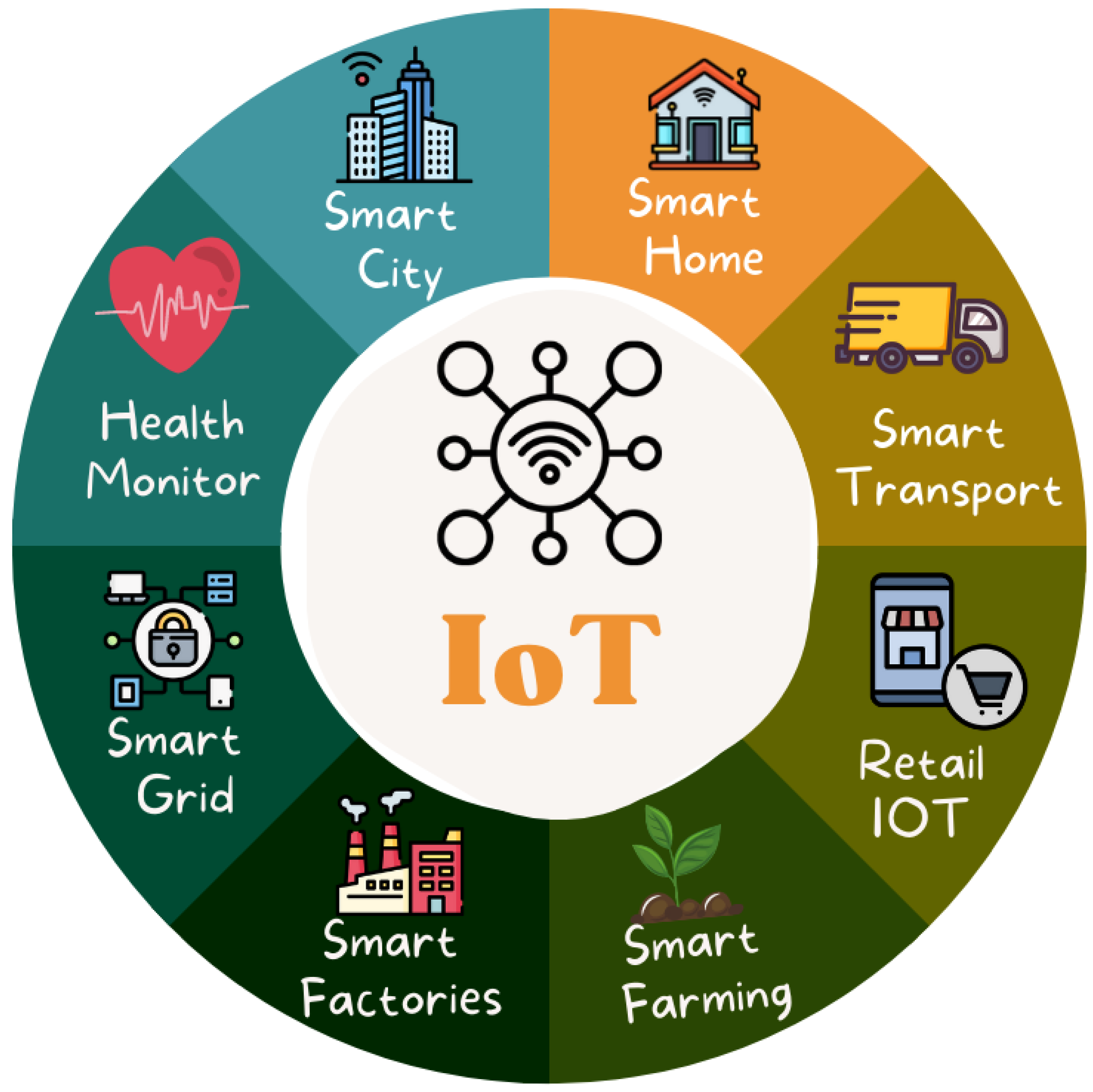 Business Intelligence Dashboard Lab
 CSE Data Analytics Final Year Project
 IEEE Data Analytics Project Exhibition
 Real-Time Stream Analytics Projects
 Big Data Analytics Projects
 Healthcare Analytics Projects
 Social Media & Sentiment Analytics
 MTech Cloud Data Analytics Research