Complete Technical Paper Content — Ai Cyberbullying Detection
1. Executive Abstract, Problem Formulation & Background
Online child abuse is a unique form of child abuse that is committed, facilitated, or amplified through digital technologies, including the internet, mobile devices, online games, and social media platforms. It includes conduct from cyberbullying and online harassment as well as coercion to self-harm, grooming, sexual extortion, the production and distribution of child sexual abuse material (CSAM), and the live-streaming of contact sexual abuse. Such abuse may not happen face-to-face, nor does it necessarily require physical contact, but may overlap into real-world offline harm. The scale of online child abuse has grown substantially alongside internet access.
Online harassment of children includes a range of behavior including cyberbullying, coordinated pile-ons called dogpiles, identity-based attacks, doxxing, and the non-consensual sharing of intimate images. Cyberbullying, the repeated use of digital platforms to harass, humiliate, or socially exclude a specific target, is the most extensively researched form. Unlike traditional bullying, it is not bounded by physical proximity or school hours: harmful content can be screenshotted, shared, and resurfaced indefinitely, and a child may be targeted simultaneously by multiple people across multiple platforms. Girls and young women are disproportionately targeted by sexual harassment and coordinated pile-ons involving large numbers of strangers simultaneously, a scale of victimization with no offline equivalent. Identity-based harassment targeting children on the basis of race, religion, disability, or sexual orientation has been documented across platforms in regions around the world, and frequently intersects with bullying and discrimination in the physical world.
Grooming is a method used by offenders that involves building trust with a child in order to gain access to and time alone with them, with the goal of facilitating sexual abuse, the production of CSAM, or in-person contact. When grooming occurs online it is frequently done without the knowledge of any trusted adult in the child's life. A significant proportion of online grooming is carried out by individuals already known to the child offline, including acquaintances, family friends, and trusted adults, who use the internet to strengthen that relationship for future exploitation or lie about their identity to forge a relationship. Individual groomers can be of any sex, gender, or age and often use social media platforms, chat rooms, photo-sharing apps, dating apps, or gaming sites to make initial contact with potential victims. The platforms used vary by region: in Latin America, Facebook and WhatsApp are the most commonly documented contact points, while in Southeast Asia and Eastern Africa mobile messaging applications predominate, reflecting differences in platform penetration and internet access patterns. Perpetrators actively study the vulnerabilities and needs of individual children, adapting their strategies so that the child feels like a willing participant rather than a victim. Groomers employ a range of techniques to establish and maintain contact. Compliments and trust-building language are used consistently to create a sense of special connection with the target before escalating to sexual content. Groomers frequently create false profiles to build a more trustworthy persona, a practice known as catfishing. A common technique is "off-platforming", where groomers move conversations from larger, more moderated platforms to private messaging applications or end-to-end encrypted environments where detection is more difficult. Two-thirds of children surveyed in one study had been asked to move from a public forum to a private conversation on a different platform, and high-risk grooming situations have been documented developing in social gaming environments in as little as 19 seconds. Where grooming involves the solicitation of intimate or sexual media, that material is frequently used for blackmail or extortion.
Sextortion is the threatened release of intimate or sexual imagery to coerce a victim into producing further imagery, paying money, or engaging in sexual activity. In the context of child abuse, it typically results either from a grooming relationship in which a perpetrator has solicited imagery from a child, or from deceptive contact in which an offender poses as a peer to obtain images before revealing their intent. There are two main types of sextortion: sexually motivated sextortion, in which the perpetrator seeks ongoing access to imagery or sexual contact, and financially motivated sextortion, in which the perpetrator demands payment to suppress images already obtained.
Child sexual abuse material (CSAM) refers to visual depictions of a child engaged in sexual activity or of a child's sexual parts for sexual purposes. The term replaced "child pornography" in practitioner and legislative usage to reflect that such material is a record of abuse rather than consensual adult content. CSAM is produced in a range of contexts: during contact abuse by an adult, coerced from a child through grooming or sextortion, within families, and self-generated by adolescents and subsequently shared without consent. Reports of CSAM increased by an average of 50% per year over the two decades to 2019, with a further spike during the COVID-19 pandemic as offenders increased consumption, distribution, and production.
Online sexual abuse is a relatively modern trend, in which perpetrators utilize modern forms of technology such as live stream web cameras, cell phones, or social media to coerce targeted victims into inappropriate and sometimes illegal sex acts. Abusers do not discriminate and target victims of every walk of life. Online sexual abuse differs from other forms of sexual abuse in that it can be perpetrated stealthily on a global scale, allowing the offender to evade capture. At the same time, technology offers predators greater opportunities to find the youth that they prey upon. Children are often the targets of online sexual predators who will often bully, emotionally manipulate, blackmail, or befriend willing communicators on the web in order to obtain their desires. Online sexual abuse may vary from personal interactions between a victim and offender to a more mechanized process, in which children are sexually exploited for the perpetrators' profit. Online sexual predators often target young victims, with a study showing that 13% of children receive negative unwanted attention of a sexual nature on the Internet. Predators make contact with prospective targets in a variety of settings, although the most prolific place that predators troll is chat rooms, where 76% of known first encounters with online sexual predators occur. Predators troll chat rooms and other forms of social media like MySpace or Facebook, seeking people who outwardly share personal information. Detection and deterrence of online sexual abuse are difficult because of the anonymous nature of the Internet; however, stopping and detecting an online predator's criminal activity is the task of various government organizations like the Federal Bureau of Investigation (FBI). The FBI's Violent Crimes Against Children Program was specifically created, "...to provide a rapid, proactive, and comprehensive counter to all threats of abuse and exploitation of children" in its jurisdiction. The FBI accomplishes quick response times by having agents scouring the Internet in search of perpetrators; they ask for information in forums and chat-rooms and look for the telltale signs of abusive behavior in the children they interact with. Online sexual predators, however, are often difficult to distinguish because they show a misleading representation of themselves to avoid incriminating evidence. Rather than relying completely on authorities to apprehend the perpetrators of online sexual abuse, one may decrease the chances of unwanted and unsolicited advances from online predators by keeping one's intimately private details off of the Internet. Another way to avoid unwanted sexual solicitations is to ignore, block, and report an offender to the website's management staff.
This glossary of computer science is a list of definitions of terms and concepts used in computer science, its sub-disciplines, and related fields, including terms relevant to software, data science, and computer programming.
abstract data type (ADT) A mathematical model for data types in which a data type is defined by its behavior (semantics) from the point of view of a user of the data, specifically in terms of possible values, possible operations on data of this type, and the behavior of these operations. This contrasts with data structures, which are concrete representations of data from the point of view of an implementer rather than a user.
abstract method One with only a signature and no implementation body. It is often used to specify that a subclass must provide an implementation of the method. Abstract methods are used to specify interfaces in some computer languages.
abstraction 1. In software engineering and computer science, the process of removing physical, spatial, or temporal details or attributes in the study of objects or systems in order to more closely attend to other details of interest; it is also very similar in nature to the process of generalization. 2. The result of this process: an abstract concept-object created by keeping common features or attributes to various concrete objects or systems of study.
agent architecture A blueprint for software agents and intelligent control systems depicting the arrangement of components. The architectures implemented by intelligent agents are referred to as cognitive architectures.
agent-based model (ABM) A class of computational models for simulating the actions and interactions of autonomous agents (both individual or collective entities such as organizations or groups) with a view to assessing their effects on the system as a whole. It combines elements of game theory, complex systems, emergence, computational sociology, multi-agent systems, and evolutionary programming. Monte Carlo methods are used to introduce randomness.
aggregate function In database management, a function in which the values of multiple rows are grouped together to form a single value of more significant meaning or measurement, such as a sum, count, or max.
2. Related Work, Literature Survey & Algorithmic Foundations
agile software development An approach to software development under which requirements and solutions evolve through the collaborative effort of self-organizing and cross-functional teams and their customer(s)/end user(s). It advocates adaptive planning, evolutionary development, early delivery, and continual improvement, and it encourages rapid and flexible response to change.
algorithm An unambiguous specification of how to solve a class of problems. Algorithms can perform calculation, data processing, and automated reasoning tasks. They are ubiquitous in computing technologies.
algorithm design A method or mathematical process for problem-solving and for engineering algorithms. The design of algorithms is part of many solution theories of operation research, such as dynamic programming and divide-and-conquer. Techniques for designing and implementing algorithm designs are also called algorithm design patterns, such as the template method pattern and decorator pattern.
algorithmic efficiency A property of an algorithm which relates to the number of computational resources used by the algorithm. An algorithm must be analyzed to determine its resource usage, and the efficiency of an algorithm can be measured based on usage of different resources. Algorithmic efficiency can be thought of as analogous to engineering productivity for a repeating or continuous process.
American Standard Code for Information Interchange (ASCII) A character encoding standard for electronic communications. ASCII codes represent text in computers, telecommunications equipment, and other devices. Most modern character-encoding schemes are based on ASCII, although they support many additional characters.
application programming interface (API) A set of subroutine definitions, communication protocols, and tools for building software. In general terms, it is a set of clearly defined methods of communication among various components. A good API makes it easier to develop a computer program by providing all the building blocks, which are then put together by the programmer.
application software Also simply application or app. Computer software designed to perform a group of coordinated functions, tasks, or activities for the benefit of the user. Common examples of applications include word processors, spreadsheets, accounting applications, web browsers, media players, aeronautical flight simulators, console games, and photo editors. This contrasts with system software, which is mainly involved with managing the computer's most basic running operations, often without direct input from the user. The collective noun application software refers to all applications collectively.
array data structure Also simply array. A data structure consisting of a collection of elements (values or variables), each identified by at least one array index or key. An array is stored such that the position of each element can be computed from its index tuple by a mathematical formula. The simplest type of data structure is a linear array, also called a one-dimensional array.
artifact One of many kinds of tangible by-products produced during the development of software. Some artifacts (e.g. use cases, class diagrams, and other Unified Modeling Language (UML) models, requirements, and design documents) help describe the function, architecture, and design of software. Other artifacts are concerned with the process of development itself—such as project plans, business cases, and risk assessments.
artificial intelligence (AI) Also machine intelligence. Intelligence demonstrated by machines, in contrast to the natural intelligence displayed by humans and other animals. In computer science, AI research is defined as the study of "intelligent agents": devices capable of perceiving their environment and taking actions that maximize the chance of successfully achieving their goals. Colloquially, the term "artificial intelligence" is applied when a machine mimics "cognitive" functions that humans associate with other human minds, such as "learning" and "problem solving".
assertion In computer programming, a statement that a predicate (Boolean-valued function, i.e. a true–false expression) is always true at that point in code execution. It can help a programmer read the code, help a compiler compile it, or help the program detect its own defects. For the latter, some programs check assertions by actually evaluating the predicate as they run and if it is not in fact true – an assertion failure – the program considers itself to be broken and typically deliberately crashes or throws an assertion failure exception.
associative array An associative array, map, symbol table, or dictionary is an abstract data type composed of a collection of (key, value) pairs, such that each possible key appears at most once in the collection.
the addition of a pair to the collection the removal of a pair from the collection the modification of an existing pair the lookup of a value associated with a particular key
3. Dataset Ingestion, Preprocessing & Stochastic Augmentations
automata theory The study of abstract machines and automata, as well as the computational problems that can be solved using them. It is a theory in theoretical computer science and discrete mathematics (a subject of study in both mathematics and computer science).
automated reasoning An area of computer science and mathematical logic dedicated to understanding different aspects of reasoning. The study of automated reasoning helps produce computer programs that allow computers to reason completely, or nearly completely, automatically. Although automated reasoning is considered a sub-field of artificial intelligence, it also has connections with theoretical computer science, and even philosophy.
bandwidth The maximum rate of data transfer across a given path. Bandwidth may be characterized as network bandwidth, data bandwidth, or digital bandwidth.
Bayesian programming A formalism and a methodology for having a technique to specify probabilistic models and solve problems when less than the necessary information is available.
benchmark The act of running a computer program, a set of programs, or other operations, in order to assess the relative performance of an object, normally by running a number of standard tests and trials against it. The term benchmark is also commonly utilized for the purposes of elaborately designed benchmarking programs themselves.
best, worst and average case Expressions of what the resource usage is at least, at most, and on average, respectively, for a given algorithm. Usually the resource being considered is running time, i.e. time complexity, but it could also be memory or some other resource. Best case is the function which performs the minimum number of steps on input data of n elements; worst case is the function which performs the maximum number of steps on input data of size n; average case is the function which performs an average number of steps on input data of n elements.
big data A term used to refer to data sets that are too large or complex for traditional data-processing application software to adequately deal with. Data with many cases (rows) offer greater statistical power, while data with higher complexity (more attributes or columns) may lead to a higher false discovery rate.
big O notation A mathematical notation that describes the limiting behavior of a function when the argument tends towards a particular value or infinity. It is a member of a family of notations invented by Paul Bachmann, Edmund Landau, and others, collectively called Bachmann–Landau notation or asymptotic notation.
binary number In mathematics and digital electronics, a number expressed in the base-2 numeral system or binary numeral system, which uses only two symbols: typically 0 (zero) and 1 (one).
binary search algorithm Also simply binary search, half-interval search, logarithmic search, or binary chop. A search algorithm that finds the position of a target value within a sorted array.
binary tree A tree data structure in which each node has at most two children, which are referred to as the left child and the right child. A recursive definition using just set theory notions is that a (non-empty) binary tree is a tuple (L, S, R), where L and R are binary trees or the empty set and S is a singleton set. Some authors allow the binary tree to be the empty set as well.
bioinformatics An interdisciplinary field that combines biology, computer science, information engineering, mathematics, and statistics to develop methods and software tools for analyzing and interpreting biological data. Bioinformatics is widely used for in silico analyses of biological queries using mathematical and statistical techniques.
bit A basic unit of information used in computing and digital communications; a portmanteau of binary digit. A binary digit can have one of two possible values, and may be physically represented with a two-state device. These state values are most commonly represented as either a 0or1.
4. Neural Network Backbone, Layer Specifications & Loss Formulations
Also bitrate. In telecommunications and computing, the number of bits that are conveyed or processed per unit of time.
blacklist Also block list. In computing, a basic access control mechanism that allows through all elements (email addresses, users, passwords, URLs, IP addresses, domain names, file hashes, etc.), except those explicitly mentioned in a list of prohibited elements. Those items on the list are denied access. The opposite is a whitelist, which means only items on the list are allowed through whatever gate is being used while all other elements are blocked. A greylist contains items that are temporarily blocked (or temporarily allowed) until an additional step is performed.
BMP file format Also bitmap image file, device independent bitmap (DIB) file format, or simply bitmap. A raster graphics image file format used to store bitmap digital images independently of the display device (such as a graphics adapter), used especially on Microsoft Windows and OS/2 operating systems.
Boolean data type A data type that has one of two possible values (usually denoted true and false), intended to represent the two truth values of logic and Boolean algebra. It is named after George Boole, who first defined an algebraic system of logic in the mid-19th century. The Boolean data type is primarily associated with conditional statements, which allow different actions by changing control flow depending on whether a programmer-specified Boolean condition evaluates to true or false. It is a special case of a more general logical data type (see propositional logic)—i.e. logic need not always be Boolean.
Boolean expression An expression used in a programming language that returns a Boolean value when evaluated, that is one of true or false. A Boolean expression may be composed of a combination of the Boolean constants true or false, Boolean-typed variables, Boolean-valued operators, and Boolean-valued functions.
Boolean algebra In mathematics and mathematical logic, the branch of algebra in which the values of the variables are the truth values true and false, usually denoted 1 and 0, respectively. Contrary to elementary algebra, where the values of the variables are numbers and the prime operations are addition and multiplication, the main operations of Boolean algebra are the conjunction and (denoted as ∧), the disjunction or (denoted as ∨), and the negation not (denoted as ¬). It is thus a formalism for describing logical relations in the same way that elementary algebra describes numeric relations.
byte A unit of digital information that most commonly consists of eight bits, representing a binary number. Historically, the byte was the number of bits used to encode a single character of text in a computer and for this reason it is the smallest addressable unit of memory in many computer architectures.
booting The procedures implemented in starting up a computer or computer appliance until it can be used. It can be initiated by hardware such as a button press or by a software command. After the power is switched on, the computer is relatively dumb and can read only part of its storage called read-only memory. There, a small program is stored called firmware. It does power-on self-tests and, most importantly, allows access to other types of memory like a hard disk and main memory. The firmware loads bigger programs into the computer's main memory and runs it.
callback Any executable code that is passed as an argument to other code that is expected to "call back" (execute) the argument at a given time. This execution may be immediate, as in a synchronous callback, or it might happen at a later time, as in an asynchronous callback.
central processing unit (CPU) The electronic circuitry within a computer that carries out the instructions of a computer program by performing the basic arithmetic, logic, controlling, and input/output (I/O) operations specified by the instructions. The computer industry has used the term "central processing unit" at least since the early 1960s. Traditionally, the term "CPU" refers to a processor, more specifically to its processing unit and control unit (CU), distinguishing these core elements of a computer from external components such as main memory and I/O circuitry.
character A unit of information that roughly corresponds to a grapheme, grapheme-like unit, or symbol, such as in an alphabet or syllabary in the written form of a natural language.
cipher Also cypher. In cryptography, an algorithm for performing encryption or decryption—a series of well-defined steps that can be followed as a procedure.
class In object-oriented programming, an extensible program-code-template for creating objects, providing initial values for state (member variables) and implementations of behavior (member functions or methods). In many languages, the class name is used as the name for the class (the template itself), the name for the default constructor of the class (a subroutine that creates objects), and as the type of objects generated by instantiating the class; these distinct concepts are easily conflated.
5. Training Protocol, Convergence Behavior & Experimental Evaluation
class-based programming Also class-orientation. A style of object-oriented programming (OOP) in which inheritance occurs via defining "classes" of objects, instead of via the objects alone (compare prototype-based programming).
client A piece of computer hardware or software that accesses a service made available by a server. The server is often (but not always) on another computer system, in which case the client accesses the service by way of a network. The term applies to the role that programs or devices play in the client–server model.
cleanroom software engineering A software development process intended to produce software with a certifiable level of reliability. The cleanroom process was originally developed by Harlan Mills and several of his colleagues including Alan Hevner at IBM. The focus of the cleanroom process is on defect prevention, rather than defect removal.
closure Also lexical closure or function closure. A technique for implementing lexically scoped name binding in a language with first-class functions. Operationally, a closure is a record storing a function together with an environment.
cloud computing Shared pools of configurable computer system resources and higher-level services that can be rapidly provisioned with minimal management effort, often over the Internet. Cloud computing relies on sharing of resources to achieve coherence and economies of scale, similar to a public utility.
code library A collection of non-volatile resources used by computer programs, often for software development. These may include configuration data, documentation, help data, message templates, pre-written code and subroutines, classes, values or type specifications. In IBM's OS/360 and its successors they are referred to as partitioned data sets.
coding Computer programming is the process of designing and building an executable computer program for accomplishing a specific computing task. Programming involves tasks such as analysis, generating algorithms, profiling algorithms' accuracy and resource consumption, and the implementation of algorithms in a chosen programming language (commonly referred to as coding). The source code of a program is written in one or more programming languages. The purpose of programming is to find a sequence of instructions that will automate the performance of a task for solving a given problem. The process of programming thus often requires expertise in several different subjects, including knowledge of the application domain, specialized algorithms, and formal logic.
coding theory The study of the properties of codes and their respective fitness for specific applications. Codes are used for data compression, cryptography, error detection and correction, data transmission and data storage. Codes are studied by various scientific disciplines—such as information theory, electrical engineering, mathematics, linguistics, and computer science—for the purpose of designing efficient and reliable data transmission methods. This typically involves the removal of redundancy and the correction or detection of errors in the transmitted data.
cognitive science The interdisciplinary, scientific study of the mind and its processes. It examines the nature, the tasks, and the functions of cognition (in a broad sense). Cognitive scientists study intelligence and behavior, with a focus on how nervous systems represent, process, and transform information. Mental faculties of concern to cognitive scientists include language, perception, memory, attention, reasoning, and emotion; to understand these faculties, cognitive scientists borrow from fields such as linguistics, psychology, artificial intelligence, philosophy, neuroscience, and anthropology.
collection A collection or container is a grouping of some variable number of data items (possibly zero) that have some shared significance to the problem being solved and need to be operated upon together in some controlled fashion. Generally, the data items will be of the same type or, in languages supporting inheritance, derived from some common ancestor type. A collection is a concept applicable to abstract data types, and does not prescribe a specific implementation as a concrete data structure, though often there is a conventional choice (see Container for type theory discussion).
comma-separated values (CSV) A delimited text file that uses a comma to separate values. A CSV file stores tabular data (numbers and text) in plain text. Each line of the file is a data record. Each record consists of one or more fields, separated by commas. The use of the comma as a field separator is the source of the name for this file format.
compiler A computer program that transforms computer code written in one programming language (the source language) into another programming language (the target language). Compilers are a type of translator that support digital devices, primarily computers. The name compiler is primarily used for programs that translate source code from a high-level programming language to a lower-level language (e.g. assembly language, object code, or machine code) to create an executable program.
computability theory also known as recursion theory, is a branch of mathematical logic, of computer science, and of the theory of computation that originated in the 1930s with the study of computable functions and Turing degrees. The field has since expanded to include the study of generalized computability and definability. In these areas, recursion theory overlaps with proof theory and effective descriptive set theory.
Model Figures & Evaluation Curves (4 Images)
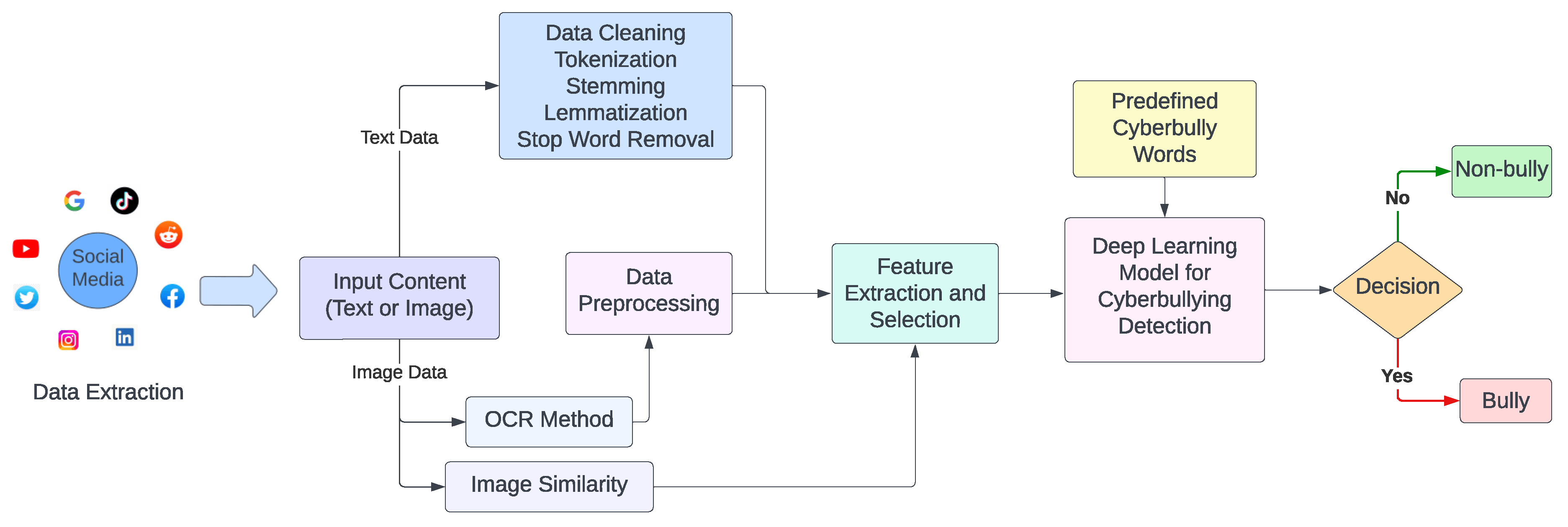
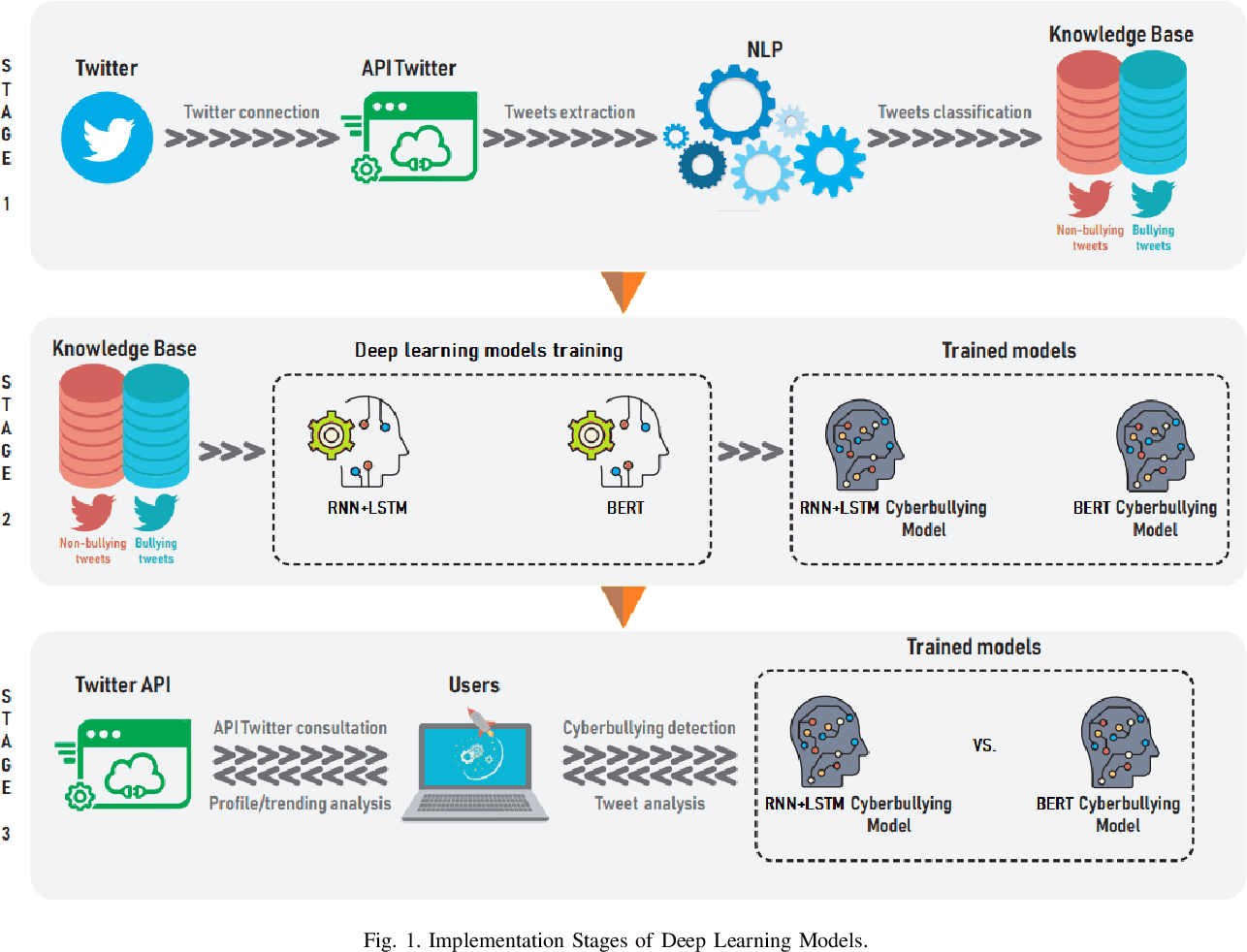
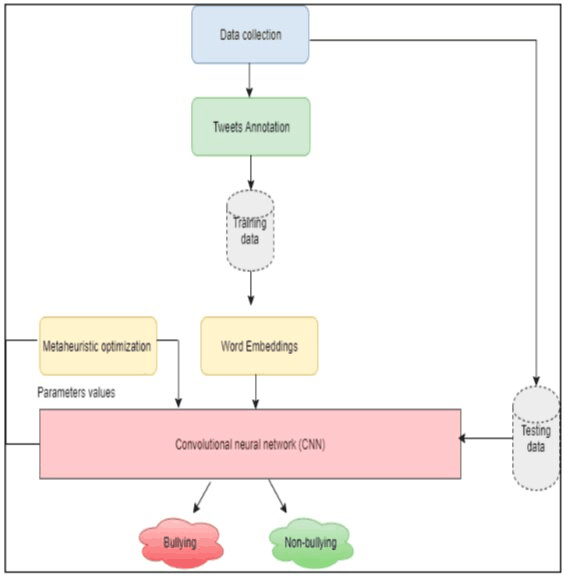
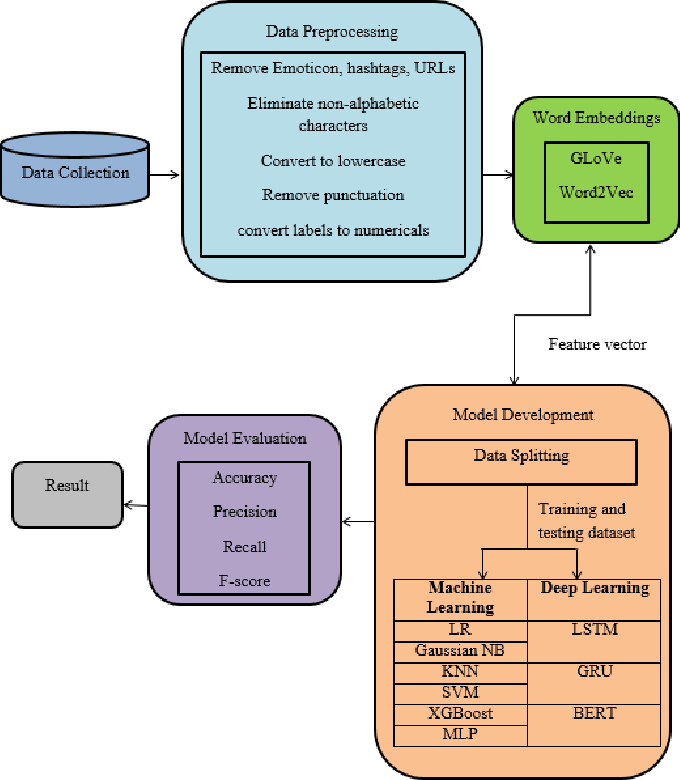
Deep Learning Execution Pipeline
(Preprocessing)
(Feature Extraction)
(Self-Attention)
(Loss Optimization)