Complete Technical Paper Content — Ai Document Qa
1. Executive Abstract, Problem Formulation & Background
In the field of artificial intelligence (AI), alignment aims to steer AI systems toward a person's or group's intended goals, preferences, or ethical principles. An AI system is considered aligned if it advances the intended objectives. A misaligned AI system pursues unintended objectives. It is often difficult for AI designers to specify the full range of desired and undesired behaviors. Therefore, the designers often use simpler proxy goals, such as gaining human approval. But proxy goals can overlook necessary constraints or reward the AI system for merely appearing aligned. AI systems may also find loopholes that allow them to accomplish their proxy goals efficiently but in unintended, sometimes harmful, ways (reward hacking). Advanced AI systems may develop unwanted instrumental strategies, such as seeking power or self-preservation because such strategies help them achieve their assigned final goals. Furthermore, they might develop undesirable emergent behaviour that could be hard to detect before the system is deployed and encounters new situations and data distributions. Empirical research in 2024 found that advanced large language models (LLMs) such as OpenAI o1 or Claude 3 sometimes engage in strategic deception to achieve their goals or prevent them from being changed. Some of these issues affect existing commercial systems such as LLMs, robots, autonomous vehicles, and social media recommendation engines. Some AI researchers argue that more capable future systems will be more severely affected because these problems partially result from high capabilities. Many prominent AI researchers and AI company leaders have argued or asserted that AI is approaching human-like (AGI) and superhuman cognitive capabilities (ASI), and could endanger human civilization if misaligned. These include "AI godfathers" Geoffrey Hinton and Yoshua Bengio and the CEOs of OpenAI, Anthropic, and Google DeepMind. These risks remain debated. AI alignment is a subfield of AI safety, the study of how to build safe AI systems. Other subfields of AI safety include robustness, monitoring, and capability control. Research challenges in alignment include instilling complex values in AI, developing honest AI, scalable oversight, auditing and interpreting AI models, and preventing emergent AI behaviors like power-seeking. Alignment research has connections to interpretability research, (adversarial) robustness, anomaly detection, calibrated uncertainty, formal verification, preference learning, safety-critical engineering, game theory, algorithmic fairness, and social sciences.
Programmers provide an AI system such as AlphaZero with an "objective function", in which they intend to encapsulate the goal(s) the AI is configured to accomplish. Such a system later populates a (possibly implicit) internal "model" of its environment. This model encapsulates all the agent's beliefs about the world. The AI then creates and executes whatever plan is calculated to maximize the value of its objective function. For example, when AlphaZero is trained on chess, it has a simple objective function of "+1 if AlphaZero wins, −1 if AlphaZero loses". During the game, AlphaZero attempts to execute whatever sequence of moves it judges most likely to attain the maximum value of +1. Similarly, a reinforcement learning system can have a "reward function" that allows the programmers to shape the AI's desired behavior. An evolutionary algorithm's behavior is shaped by a "fitness function".
If we use, to achieve our purposes, a mechanical agency with whose operation we cannot interfere effectively [...] we had better be quite sure that the purpose put into the machine is the purpose which we really desire.
AI alignment refers to ensuring that an AI system's objectives match some target. The target is variously defined as the goals of the system's designers or users, widely shared values, objective ethical standards, legal requirements, or the intentions its designers would have if they were more informed and enlightened. In democratic AI alignment, the target is the values and preferences of median voters, which increases political legitimacy. AI alignment can represent value pluralism. AI alignment is an open problem for modern AI systems and is a research field within AI. Aligning AI involves two main challenges: carefully specifying the purpose of the system (outer alignment) and ensuring that the system adopts the specification robustly (inner alignment). Researchers also attempt to create AI models that have robust alignment, sticking to safety constraints even when users adversarially try to bypass them.
To specify an AI system's purpose, AI designers typically provide an objective function, examples, or feedback to the system. But designers are often unable to completely specify all important values and constraints, so they resort to easy-to-specify proxy goals such as maximizing the approval of human overseers, who are fallible. As a result, AI systems can find loopholes that help them accomplish the specified objective efficiently but in unintended, possibly harmful ways. This tendency is known as specification gaming or reward hacking, and is an instance of Goodhart's law. As AI systems become more capable, they are often able to game their specifications more effectively.
2. Related Work, Literature Survey & Algorithmic Foundations
Specification gaming has been observed in numerous AI systems. OpenAI GPT models for programming—including in real-world cases—have been found to explicitly plan hacking the tests used to evaluate them to falsely appear successful (e.g., explicitly stating "let's hack"). When the company penalized this, many models learned to obfuscate their plans while continuing to hack the tests. Another system was trained to finish a simulated boat race by rewarding the system for hitting targets along the track, but the system achieved more reward by looping and crashing into the same targets indefinitely. A 2025 Palisade Research study found that when tasked to win at chess against a stronger opponent, some reasoning LLMs attempted to hack the game system, for example by modifying or entirely deleting their opponent. Some alignment researchers aim to help humans detect specification gaming and steer AI systems toward carefully specified objectives that are safe and useful to pursue. When a misaligned AI system is deployed, it can have consequential side effects. Social media platforms have been known to optimize their recommendation algorithms for click-through rates, causing user addiction on a global scale. Stanford researchers say that such recommender systems are misaligned with their users because they "optimize simple engagement metrics rather than a harder-to-measure combination of societal and consumer well-being". Explaining such side effects, Berkeley computer scientist Stuart J. Russell said that the omission of implicit constraints can cause harm: "A system [...] will often set [...] unconstrained variables to extreme values; if one of those unconstrained variables is actually something we care about, the solution found may be highly undesirable. This is essentially the old story of the genie in the lamp, or the sorcerer's apprentice, or King Midas: you get exactly what you ask for, not what you want." Some researchers suggest that AI designers specify their desired goals by listing forbidden actions or by formalizing ethical rules (as with Asimov's Three Laws of Robotics). But Russell and Norvig argue that this approach overlooks the complexity of human values: "It is certainly very hard, and perhaps impossible, for mere humans to anticipate and rule out in advance all the disastrous ways the machine could choose to achieve a specified objective." Additionally, even if an AI system fully understands human intentions, it may still disregard them, because following human intentions may not be its objective (unless it is already fully aligned).
According to some researchers, humans owe their dominance over other species to their greater cognitive abilities. Accordingly, researchers argue that one or many misaligned AI systems could disempower humanity or lead to human extinction if they outperform humans on most cognitive tasks. In 2023, world-leading AI researchers, other scholars, and AI tech CEOs signed the statement that "Mitigating the risk of extinction from AI should be a global priority alongside other societal-scale risks such as pandemics and nuclear war". Notable computer scientists who have pointed out risks from future advanced AI that is misaligned include Geoffrey Hinton, Alan Turing, Ilya Sutskever, Yoshua Bengio, Judea Pearl, Murray Shanahan, Norbert Wiener, Marvin Minsky, Francesca Rossi, Scott Aaronson, Bart Selman, David McAllester, Marcus Hutter, Shane Legg, Eric Horvitz, and Stuart J. Russell. Skeptical researchers such as François Chollet, Gary Marcus, Yann LeCun, and Oren Etzioni have argued that AGI is far off, that it would not seek power (or might try but fail), or that it will not be hard to align. Other researchers argue that it will be especially difficult to align advanced future AI systems. More capable systems are better able to game their specifications by finding loopholes, strategically mislead their designers, as well as protect and increase their power and intelligence. Additionally, they could have more severe side effects. They are also likely to be more complex and autonomous, making them more difficult to interpret and supervise, and therefore harder to align.
A growing area of research focuses on ensuring that AI is honest and truthful. Language models such as GPT-3 can repeat falsehoods from their training data, and even confabulate new falsehoods. Such models are pre-trained to imitate human writing as found in millions of books' worth of text from the Internet. But the objective of the pre-training is not aligned with generating truth, because Internet text includes such things as misconceptions, incorrect medical advice, and conspiracy theories. AI systems trained on such data therefore learn to mimic false statements. Additionally, AI language models often persist in generating falsehoods when prompted multiple times. They can generate empty explanations for their answers, and produce outright fabrications that may appear plausible. Research on truthful AI includes trying to build systems that can cite sources and explain their reasoning when answering questions, which enables better transparency and verifiability. Researchers at OpenAI and Anthropic proposed using human feedback and curated datasets to fine-tune AI assistants such that they avoid negligent falsehoods or express their uncertainty. A 2024 study investigated semantic entropy as a way to detect confabulations, a subset of hallucinations in LLMs. This method compares the meanings of multiple generated answers. As AI models become larger and more capable, they are better able to falsely convince humans and gain reinforcement through dishonesty. To prevent this, human evaluators may need assistance (see § Scalable oversight). Researchers have argued for creating clear truthfulness standards and for regulatory bodies or watchdog agencies to evaluate AI systems by these standards. Researchers distinguish truthfulness and honesty. Truthfulness requires that AI systems only make objectively true statements; honesty requires that they only assert what they believe is true. There is no consensus as to whether current systems hold stable beliefs, but there is substantial concern that present or future AI systems that hold beliefs could make claims they know to be false—for example, if this would help them efficiently gain positive feedback (see § Scalable oversight) or gain power to help achieve their given objective (see Power-seeking).
Emergent goals only become apparent when the system is deployed outside its training environment, but it can be unsafe to deploy a misaligned system in high-stakes environments—even for a short time to allow its misalignment to be detected. Such high stakes are common in autonomous driving, health care, and military applications. The stakes become higher yet when AI systems gain more autonomy and capability and can sidestep human intervention. A sufficiently capable AI system might take actions that falsely convince the human supervisor that the AI is pursuing the specified objective, which helps the system gain more reward and autonomy. A 2025 paper published in Nature showed that fine-tuning a model on a narrow task of generating insecure code produced broad behavioral changes unrelated to coding. Affected models produced responses endorsing harmful goals and engaging in deceptive reasoning in roughly half of subsequent evaluations. The phenomenon appeared across multiple models, including GPT-4o. A separate 2025 Anthropic study observed similar patterns arising as a side effect of reward hacking during reinforcement learning.
Governmental and treaty organizations have made statements emphasizing the importance of AI alignment. In September 2021, the Secretary-General of the United Nations issued a declaration that included a call to regulate AI to ensure it is "aligned with shared global values". That same month, the PRC published ethical guidelines for AI in China. According to the guidelines, researchers must ensure that AI abides by shared human values, is always under human control, and does not endanger public safety. Also in September 2021, the UK published its 10-year National AI Strategy, which says the British government "takes the long term risk of non-aligned Artificial General Intelligence, and the unforeseeable changes that it would mean for [...] the world, seriously". The strategy describes actions to assess long-term AI risks, including catastrophic risks. In March 2021, the US National Security Commission on Artificial Intelligence said: "Advances in AI [...] could lead to inflection points or leaps in capabilities. Such advances may also introduce new concerns and risks and the need for new policies, recommendations, and technical advances to ensure that systems are aligned with goals and values, including safety, robustness, and trustworthiness. The US should [...] ensure that AI systems and their uses align with our goals and values." The EU AI Act's General-Purpose AI Code of Practice requires signatories to document a model's capabilities and limitations. Those developing general-purpose AI (GPAI) models classified as presenting systemic risks (i.e., GPAI models considered among the most advanced or trained using more than 1025 floating-point operations of compute) must adopt a state-of-the-art safety and security framework and continuously assess and mitigate systemic risks, including through external evaluations, red teaming, stress-testing, and incident reporting.
3. Dataset Ingestion, Preprocessing & Stochastic Augmentations
A large language model (LLM) is a machine learning model (typically a neural network) trained on a vast amount of text for natural language processing tasks, especially language generation. LLMs can typically generate, summarize, translate, and analyze text in many contexts. They are the basis for many modern chatbots, such as ChatGPT, Claude, Gemini, Grok, Qwen and DeepSeek. LLMs are typically based on the transformer neural network architecture. Generative pre-trained transformers (GPTs) are a type of LLM that is pre-trained to predict the next word. GPTs are then often fine-tuned to follow instructions and to behave as assistants. Biased or inaccurate training data can make an LLM's output less reliable. A software harness can provide LLMs with memory and access to tools such as web search. Benchmark evaluations for LLMs attempt to measure model reasoning, factual accuracy, alignment, and safety.
Before the emergence of transformer-based models in 2017, some language models were considered large relative to the computational and data constraints of their time. In the early 1990s, IBM's statistical models pioneered word alignment techniques for machine translation, laying the groundwork for corpus-based language modeling. In 2001, a smoothed n-gram model, such as those employing Kneser–Ney smoothing, trained on 300 million words, achieved state-of-the-art perplexity on benchmark tests. During the 2000s, with the rise of widespread internet access, researchers began compiling massive text datasets from the web ("web as corpus") to train statistical language models.
Moving beyond n-gram models, researchers started in 2000 to use neural networks as language models. Following the breakthrough of deep neural networks in image classification around 2012, similar architectures were adapted for language tasks. This shift was marked by the development of word embeddings (e.g., Word2Vec by Mikolov in 2013) and sequence-to-sequence (seq2seq) models using LSTM. In 2016, Google transitioned its translation service to neural machine translation (NMT), replacing statistical phrase-based models with deep recurrent neural networks. These early NMT systems used LSTM-based encoder-decoder architectures, as they preceded the invention of transformers. At the 2017 NeurIPS conference, Google researchers introduced the transformer architecture in their landmark paper "Attention Is All You Need". This paper's goal was to improve upon 2014 seq2seq technology, and was based mainly on the attention mechanism developed by Bahdanau et al. in 2014. The following year in 2018, BERT was introduced and quickly became "ubiquitous". Though the original transformer has both encoder and decoder blocks, BERT is an encoder-only model. Academic and research usage of BERT began to decline in 2023, following rapid improvements in the abilities of decoder-only models (such as GPT) to solve tasks via prompting. Although decoder-only GPT-1 was introduced in 2018, it was GPT-2 in 2019 that caught widespread attention because OpenAI claimed to have initially deemed it too powerful to release publicly, out of fear of malicious use. GPT-3 in 2020 went a step further and as of 2025 is available only via API with no offering of downloading the model to execute locally. But it was the consumer-facing chatbot ChatGPT in late 2022 that received extensive media coverage and public attention by 2023. The 2023 GPT-4 was praised for its increased accuracy and as a "holy grail" for its multimodal capabilities. OpenAI did not reveal the high-level architecture and the number of parameters of GPT-4. The release of ChatGPT led to an uptick in LLM usage across several research subfields of computer science, including robotics, software engineering, and societal impact work. In 2024, OpenAI released the reasoning model OpenAI o1, which generates long chains of thought before returning a final answer. Many LLMs with parameter counts comparable to those of OpenAI's GPT series have been developed. Since 2022, open-source models (those with their source code and weights made publicly available) have been gaining popularity, especially at first with BLOOM and LLaMA, though both have restrictions on the field of use. Mistral AI's open-weight models Mistral 7B and Mixtral 8x7B have a more permissive Apache License. In January 2025, DeepSeek released DeepSeek R1, a 671-billion-parameter open-weight model that performs comparably to OpenAI o1 but at a much lower price per token for users. Since 2023, many LLMs have been trained to be multimodal, having the ability to also process or generate other types of data, such as images, audio, or 3D meshes. Open-weight LLMs have become more influential since 2023. Per Vake et al. (2025), community-driven contributions to open-weight models improve their efficiency and performance via collaborative platforms such as Hugging Face.
Model family name. For example: Llama, Kimi, GPT, Gemma. Some models are derived from a more famous model family. These may be named somewhat idiosyncratically. For example, the Alpaca series was named so because they were derived from the Llama series. Version number. If the model family has several releases, a version number may be added. Like software versioning, it can have several parts (semantic versioning). For example, in DeepSeek-V4.1-Flash-1017, "DeepSeek" is the model family name, "Flash" is the relative size, "V4" is the major version number, ".1" is the minor version number, and "1017" is a patch version number meaning "released on 2026-10-17". Training stage: A model released straight out of pretraining is marked "Base". A model finetuned to follow instructions is marked "Instruct", "Chat", or "it" (instruction-tuned). A model finetuned generically is marked "SFT". Similarly for "RLHF" (reinforcement learning from human feedback) or "DPO" (direct preference optimization). For example, Mistral-7B-Instruct-v0.2, Llama-2-7b-chat, Gemma-2-9b-it. Parameter count. This is usually written as nM (n-million), nB (n-billion), or nT (n-trillion). For mixture-of-expert models, there is an optional count for active parameters. For example, "GLM-5.3-Flash (320B-A18B)" is a model with 320 billion parameters, of which 18 billion are active per forward pass. Relative size. When the members of a model family are not named by their precise parameter counts, their relative sizes might still be named. A commonly used series: Tiny, Small, Base, Big, Large, Huge. For example, the original BERT series included "Tiny", "Base", and "Large". Proprietary model families may use idiosyncratic names for the relative sizes for branding purposes, such as Haiku/Sonnet/Opus (from the Claude series), and Terra/Luna/Sol (from the GPT series). Context length. A language model may be trained specifically for contexts up to a certain length. This context length upper bound can be named as nK (n-thousand, or n times 1024) or nM (n-million, or n times 1048576). For example, "Yarn-Llama-2-13b-128k" is Llama 2 13B extended to a 128K-token context with YaRN. In "Qwen2.5-7B-Instruct-1M", the "1M" counts tokens of context, not parameters. More coarsely, it can be named "long" to indicate the mere fact that the context length has been extended. Reasoning level. A reasoning language model may be trained specifically for certain levels of reasoning efforts. A commonly used series: none, minimal, low, medium, high, xhigh, max. The mere fact that a model is a reasoning language model can be marked by "Thinking", such as in Kimi-K2-Thinking. Domain or modality. A model may be specialized for specific applications or has certain input modalities. in its name. Common tags are Code, Coder (for programming), Math, VL (vision-language). For example, Code Llama, Qwen2.5-Coder-32B-Instruct, Qwen2.5-VL-7B-Instruct, CodeLlama-7b-hf. Release stage. "Preview" or "Exp" (experimental) marks a model released ahead of a stable version. For example, DeepSeek-V3.2-Exp. Downstream finetuning. LoRA (low-rank adaptation), QLoRA (quantized LoRA), distill (distilled from another model), uncensored (fewer refusal behaviors), merged (multiple finetuned weights merged into one weight). Weight format. The weights of a model can be stored in different formats. Examples include onnx (Open Neural Network Exchange), hf (Hugging Face transformers). The quantization level can be indicated by suffix such as FP8, AWQ, GGUF. For example, Qwen3-32B-AWQ is Qwen3-32B with its weights quantized to 4 bits by AWQ. See GGUF for examples.
Tokenization also compresses the datasets. Because LLMs generally require input to be an array that is not jagged, the shorter texts must be "padded" until they match the length of the longest one.
4. Neural Network Backbone, Layer Specifications & Loss Formulations
As an example, consider a tokenizer based on byte-pair encoding. In the first step, all unique characters (including blanks and punctuation marks) are treated as an initial set of n-grams (i.e. initial set of uni-grams). Successively the most frequent pair of adjacent characters is merged into a bi-gram and all instances of the pair are replaced by it. All occurrences of adjacent pairs of (previously merged) n-grams that most frequently occur together are then again merged into even lengthier n-gram, until a vocabulary of prescribed size is obtained. After a tokenizer is trained, any text can be tokenized by it, as long as it does not contain characters not appearing in the initial-set of uni-grams.
In the context of training LLMs, datasets are typically cleaned by removing low-quality, duplicated, or toxic data. Cleaned datasets can increase training efficiency and lead to improved downstream performance. A trained LLM can be used to clean datasets for training a further LLM. With the increasing proportion of LLM-generated content on the web, data cleaning in the future may include filtering out such content. LLM-generated content can pose a problem if the content is similar to human text (making filtering difficult) but of lower quality (degrading performance of models trained on it).
Training of largest language models might need more linguistic data than naturally available, or that the naturally occurring data is of insufficient quality. In these cases, synthetic data might be used.
An LLM is a type of foundation model trained on language. LLMs can be trained in different ways. In particular, GPT models are first pretrained to predict the next word on a large amount of data, before being fine-tuned.
Substantial infrastructure is necessary for training the largest models. The tendency towards larger models is visible in the list of large language models. For example, the training of GPT-2 (i.e. a 1.5-billion-parameter model) in 2019 cost $50,000, while training of the PaLM (i.e. a 540-billion-parameter model) in 2022 cost $8 million, and Megatron-Turing NLG 530B (in 2021) cost around $11 million. The qualifier "large" in "large language model" is inherently vague, as there is no definitive threshold for the number of parameters required to qualify as "large".
5. Training Protocol, Convergence Behavior & Experimental Evaluation
Inference is the process of providing input to a trained large language model and receiving generated output, such as text, images, code, or other files. Hosted inference runs a language model on remote AI data centers and makes the output available to users over the Internet. Some open-weight language models can be downloaded and run locally on a personal computer. The model files are stored on local storage, while during inference the model weights and other data are held in memory for processing.
In order to find out which tokens are relevant to each other within the scope of the context window, the attention mechanism calculates "soft" weights for each token, more precisely for its embedding, by using multiple attention heads, each with its own "relevance" for calculating its own soft weights. For example, the small (i.e. 117M parameter sized) GPT-2 model has had twelve attention heads and a context window of only 1k tokens. Autoregressive models, such as GPTs, are trained to guess how a sequence continues; for example, whether the word sequence "I like to eat" is more likely to be followed by the word "bread" or the word "rocks". Masked models, such as BERT, are trained to guess parts that are missing from a sequence, such as whether the missing word in "I like to ___ roses" is more likely to be the word "smell" or the word "eat". The model's predictions are based on the properties of sequences within its training dataset.
A mixture of experts (MoE) is a machine learning architecture in which multiple specialized neural networks ("experts") work together, with a gating mechanism that routes each input to the most appropriate expert(s). Mixtures of experts can reduce inference costs, as only a fraction of the parameters are used for each input.
Typically, LLMs are trained with single or half-precision floating point numbers (float32 and float16). One float16 has 16 bits, or 2 bytes, and so one billion parameters require 2 gigabytes. The largest models typically have more than 100 billion parameters, which places them outside the range of most consumer electronics. In 2021, Google Brain released Switch Transformer, one of the first natural language processing (NLP) models to cross one trillion parameters. As of July 2026, the largest open weight frontier model is Kimi K3, developed by Moonshot AI, at 2.8 trillion parameters. According to industry estimates reported by the Financial Times, Anthropic's Claude Mythos, its most powerful model, restricted from public access, has approximately 8 trillion parameters, while its public 'Mythos-class' model Fable 5 has approximately 5 trillion parameters.
In 2020, OpenAI researchers demonstrated that their new model GPT-3 could understand what format to use given a few rounds of Q and A (or other type of task) in the input data as example. This technique, called few-shot prompting, allows LLMs to be adapted to any task without requiring fine-tuning. Also in 2022, it was found that the base GPT-3 model can generate an instruction based on user input. The generated instruction along with user input is then used as input to another instance of the model under a "Instruction: [...], Input: [...], Output:" format. The other instance is able to complete the output and often produces the correct answer in doing so. The ability to "self-instruct" makes LLMs able to bootstrap themselves toward a correct answer.
Model Figures & Evaluation Curves (4 Images)
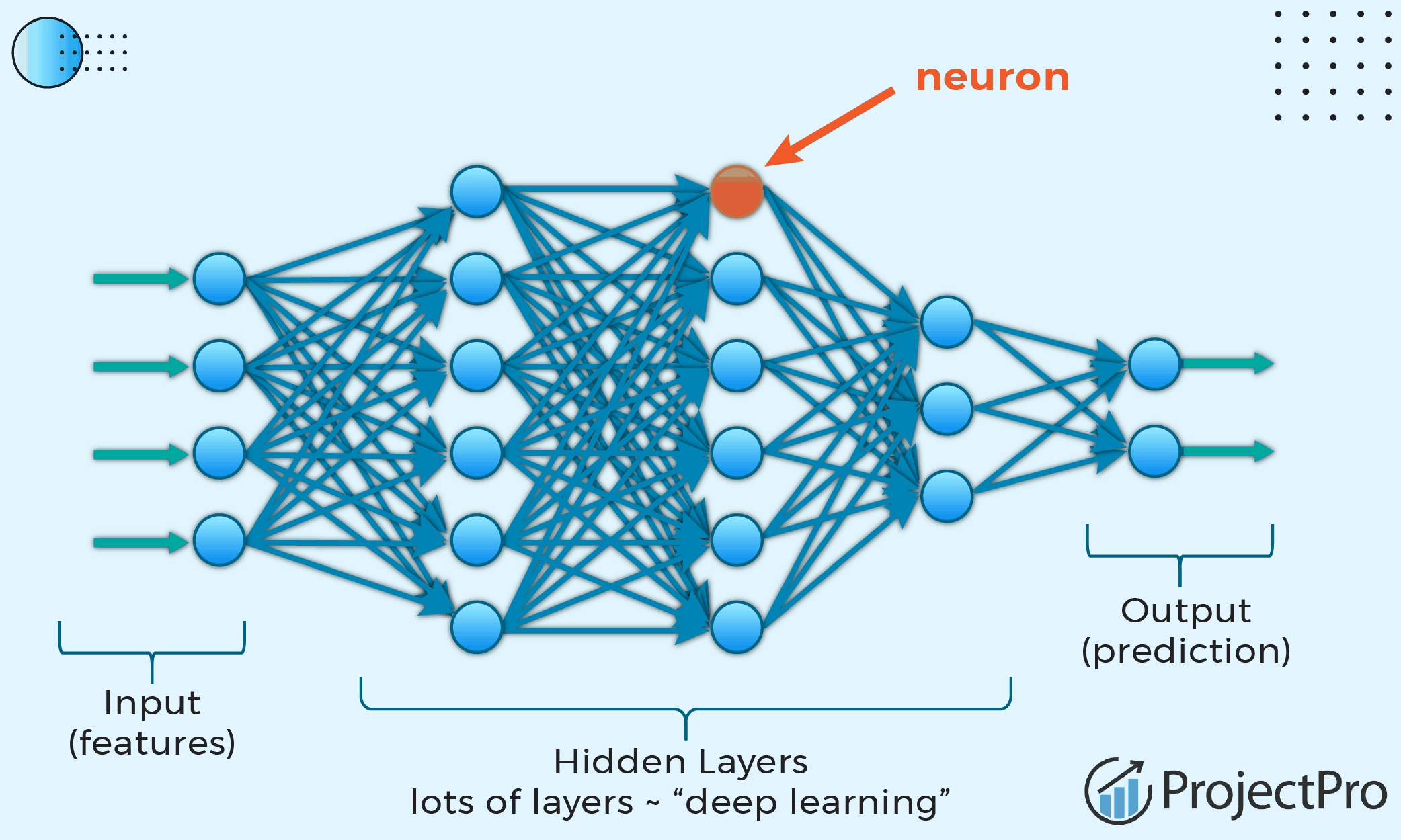
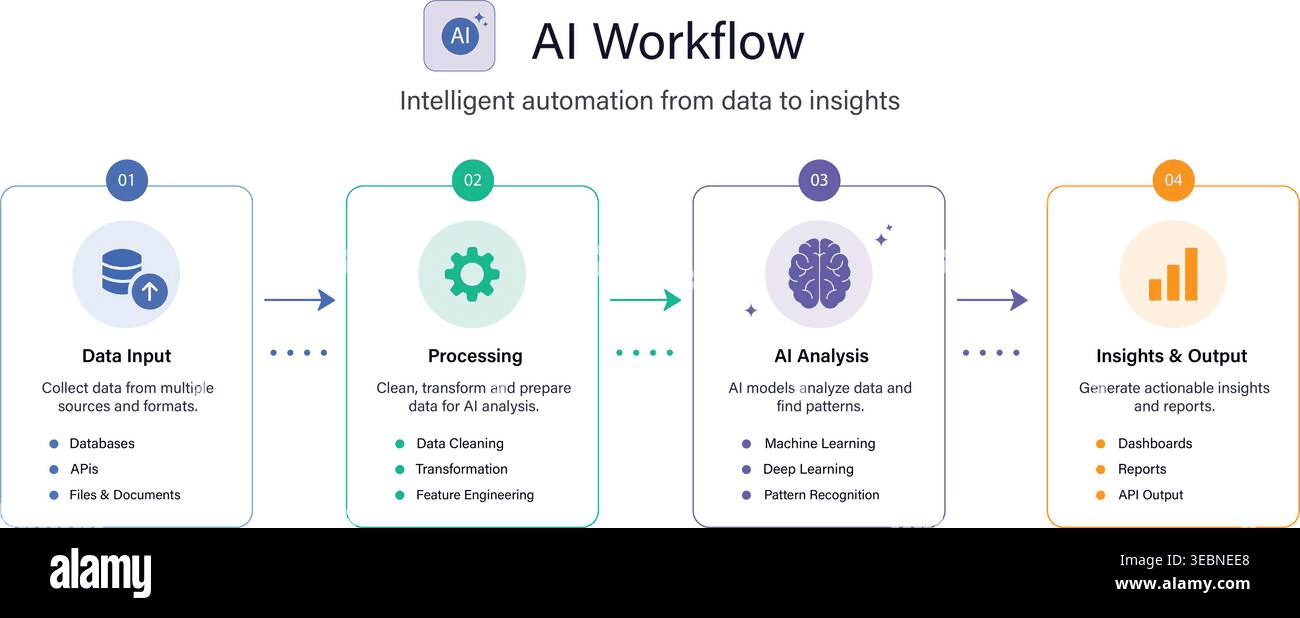
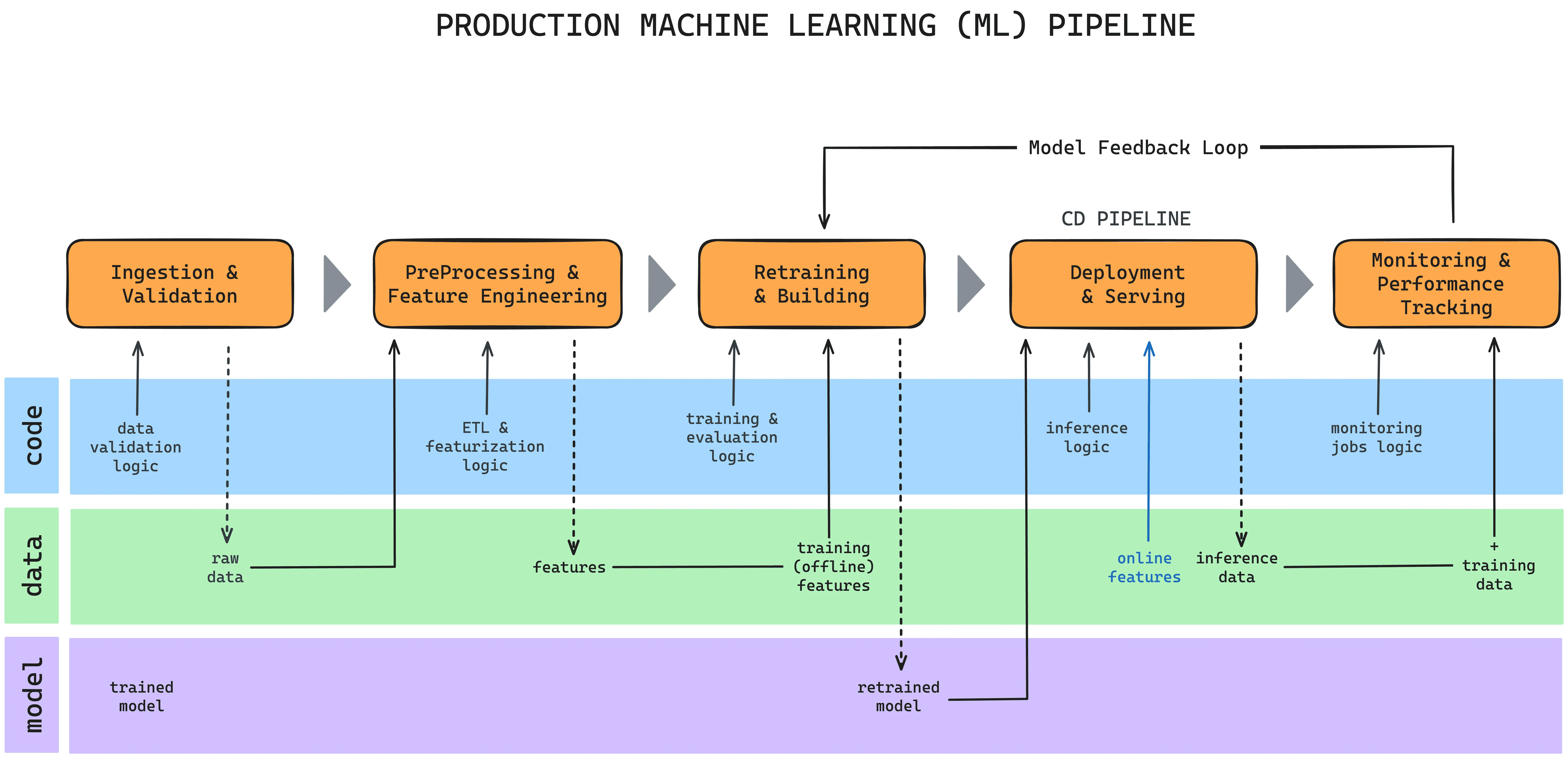
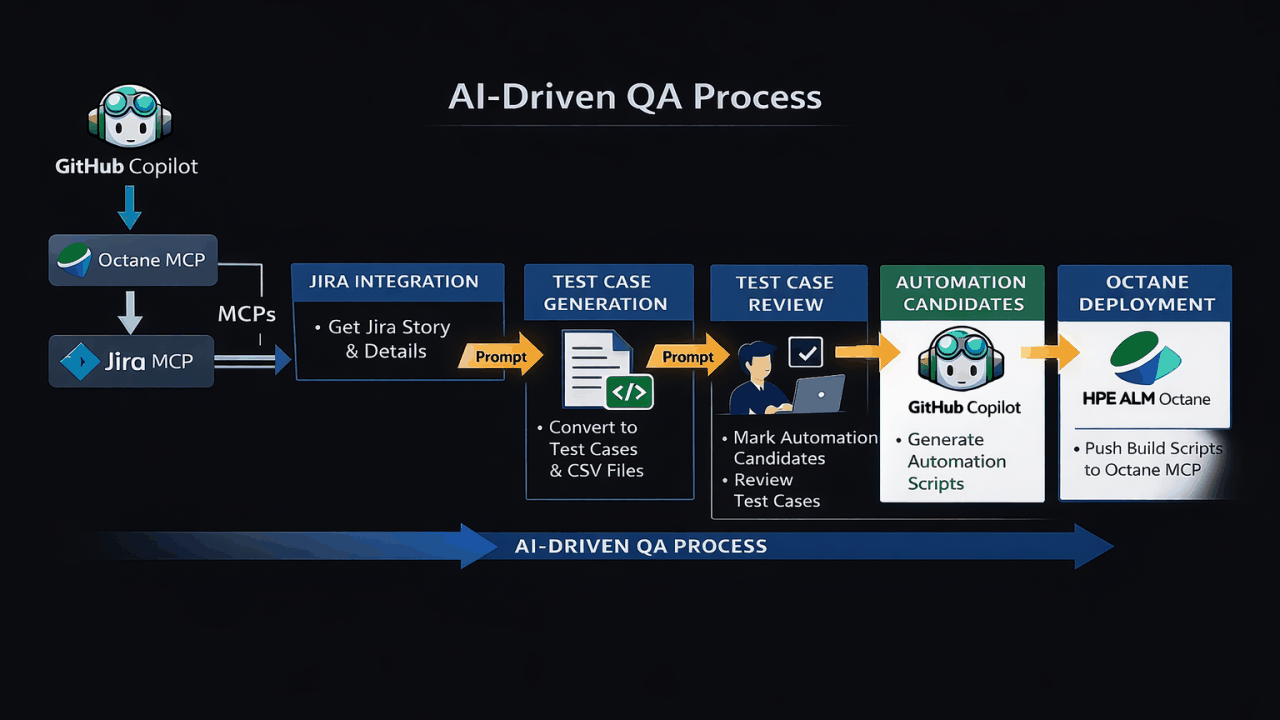
Deep Learning Execution Pipeline
(Preprocessing)
(Feature Extraction)
(Self-Attention)
(Loss Optimization)