Complete Technical Paper Content — Ai For Healthcare
1. Executive Abstract, Problem Formulation & Background
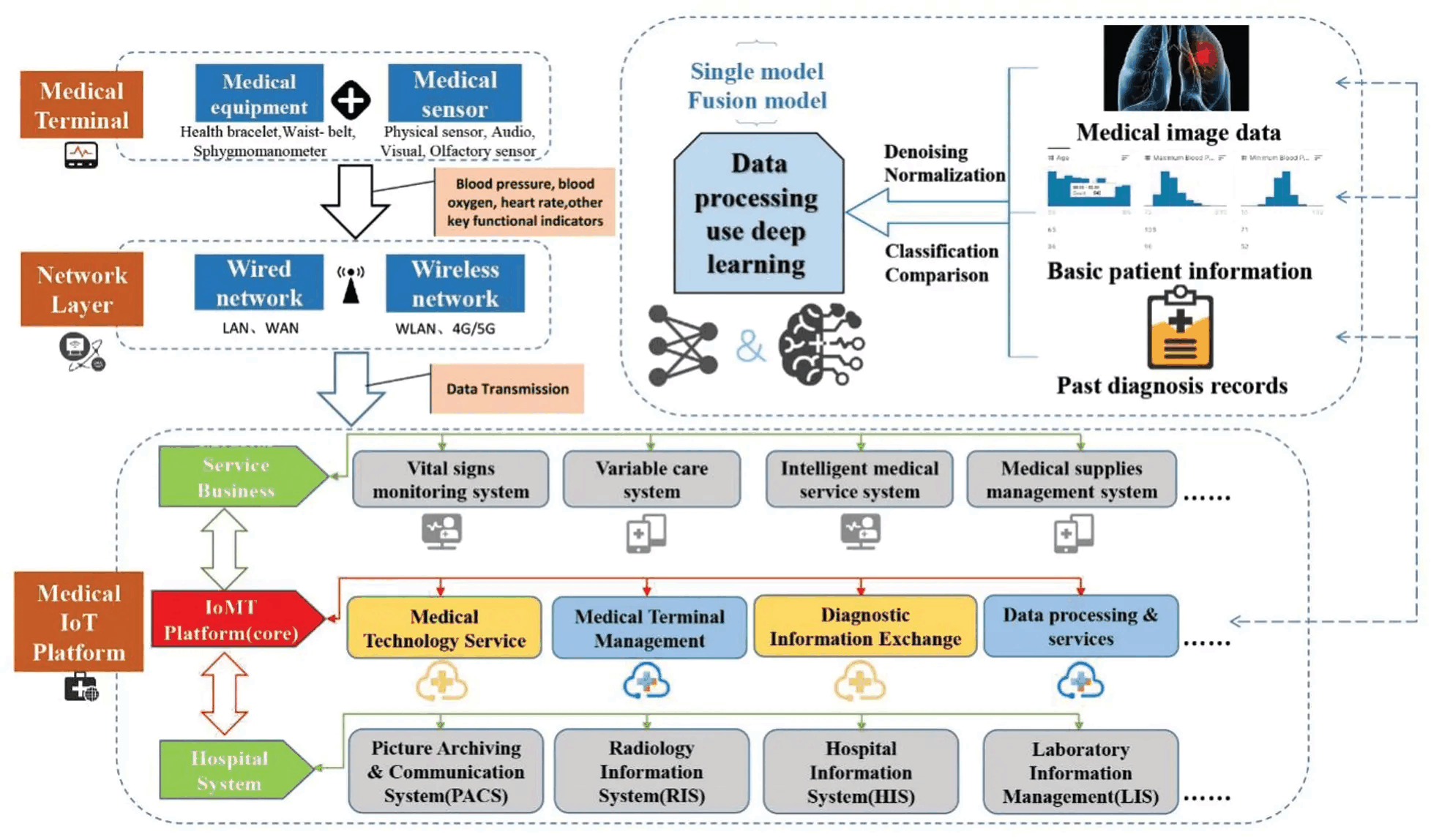
Artificial intelligence in healthcare refers to the application of artificial intelligence (AI) to medical and healthcare data in areas including disease diagnosis, treatment planning, patient monitoring, drug development, and clinical decision support systems. The use of AI in healthcare has also raised ethical, technical, and regulatory concerns, including related to issues such as data privacy, automation of jobs, and amplifying already existing algorithmic bias. Studies have also examined concerns among patients, health professionals, and the public about trust and empathy in care involving AI.
For many diseases, pathological analysis of cells and tissues is considered to be the gold standard of disease diagnosis. Methods of digital pathology allow microscopy slides to be scanned and digitally analyzed. AI-assisted pathology tools have been developed to assist with the diagnosis of a number of diseases, including breast cancer, hepatitis B, gastric cancer, and colorectal cancer. AI has also been used to predict genetic mutations and prognosticate disease outcomes. AI is well-suited for use in low-complexity pathological analysis of large-scale screening samples, such as colorectal or breast cancer screening, thus lessening the burden on pathologists and allowing for faster turnaround of sample analysis. Several deep learning and artificial neural network models have shown accuracy similar to that of human pathologists, and a study of deep learning assistance in diagnosing metastatic breast cancer in lymph nodes showed that the accuracy of humans with the assistance of a deep learning program was higher than either the humans alone or the AI program alone. Additionally, implementation of digital pathology is predicted to save over $12 million for a university center over the course of five years, though savings attributed to AI specifically have not yet been widely researched. The use of augmented and virtual reality could prove to be a stepping stone to wider implementation of AI-assisted pathology, as they can highlight areas of concern on a pathology sample and present them in real-time to a pathologist for more efficient review. AI also has the potential to identify histological findings at levels beyond what the human eye can see, and has shown the ability to use genotypic and phenotypic data to more accurately detect the tumor of origin for metastatic cancer. One of the major current barriers to widespread implementation of AI-assisted pathology tools is the lack of prospective, randomized, multi-center controlled trials in determining the true clinical utility of AI for pathologists and patients, highlighting a current area of need in AI and healthcare research.
Intel's venture capital arm Intel Capital invested in 2016 in the startup Lumiata, which uses AI to identify at-risk patients and develop care options. Siemens Healthineers applies AI in imaging and diagnostics, including algorithms to reconstruct CT images and guide ultrasound procedures. It also uses AI to support treatment planning such as radiation therapy for cancer, improve point-of-care diagnostics, and automate lab workflows. Microsoft's Hanover project, in partnership with Oregon Health & Science University's Knight Cancer Institute, analyzes medical research to predict the most effective cancer drug treatment options for patients. Other projects include medical image analysis of tumor progression and the development of programmable cells. Mayo Clinic, in partnership with Microsoft, is designing a model centered around healthcare, aimed at handling clinical reasoning tasks, supporting earlier diagnoses and personalized treatment decisions. Philips Healthcare develops AI-powered diagnostic tools that analyze medical images to detect subtle anomalies. Its AI technologies also support precision oncology by assisting pathologists in cancer diagnosis, care management, and patient monitoring. Tencent has been working on several medical systems and services. These include AI Medical Innovation System (AIMIS), an AI-powered diagnostic medical imaging service; WeChat Intelligent Healthcare; and Tencent Doctorwork
2. Related Work, Literature Survey & Algorithmic Foundations
AI has been proposed for use in developing nations as a way to diminish the need for outsourcing and improve patient care by diagnosing patients in areas where healthcare is scarce.
Challenges of the clinical use of AI have brought about a potential need for regulations. AI studies need to be completely and transparently reported to have value to inform regulatory approval. Depending on the phase of study, international consensus-based reporting guidelines (TRIPOD+AI, DECIDE-AI, CONSORT-AI) have been developed to provide recommendations on the key details that need to be reported.
While regulations exist pertaining to the collection of patient data such as the Health Insurance Portability and Accountability Act in the US (HIPAA) and the European General Data Protection Regulation (GDPR) pertaining to patients within the EU, health care AI is "severely under-regulated worldwide" as of 2025. Unclear is whether healthcare AI can be classified merely as software or as medical device.
3. Dataset Ingestion, Preprocessing & Stochastic Augmentations
In 2015, the Office for Civil Rights (OCR) issued rules and regulations to protect the privacy of individuals' health information, requiring healthcare providers to follow certain privacy rules when using AI, to keep a record of how they use AI and to ensure that their AI systems are secure. In May 2016, the White House announced its plan to host a series of workshops and formation of the National Science and Technology Council (NSTC) Subcommittee on Machine Learning and Artificial Intelligence. In October 2016, the group published The National Artificial Intelligence Research and Development Strategic Plan, outlining its proposed priorities for Federally-funded AI research and development (within government and academia). The report notes a strategic R&D plan for the subfield of health information technology was in development stages. Regulatory agencies have developed frameworks for machine-learning-enabled medical devices that may undergo post-market modification. The U.S. Food and Drug Administration (FDA), Health Canada, and the United Kingdom's Medicines and Healthcare products Regulatory Agency have published guidance on Predetermined Change Control Plans (PCCPs) with the purpose of establishing procedures to validate and monitor planned modifications to machine learning devices after deployment. In January 2021, the US FDA published a new Action Plan, entitled Artificial Intelligence (AI) /Machine Learning (ML)-Based Software as a Medical Device (SaMD) Action Plan. It laid out the FDA's future plans for regulation of medical devices that would include artificial intelligence in their software with five main actions: 1. Tailored Regulatory Framework for Ai/M:-based SaMD, 2. Good Machine Learning Practice (GMLP), 3. Patient-Centered Approach Incorporating Transparency to Users, 4. Regulatory Science Methods Related to Algorithm Bias & Robustness, and 5. Real-World Performance(RWP). This plan was in direct response to stakeholders' feedback on a 2019 discussion paper also published by the FDA. Under President Biden the DHSS and the National Institute of Standards and Technology were instructed to develop regulation of healthcare AI. According to the U.S. Department of Health and Human Services, the OCR issued guidance on the ethical use of AI in healthcare in 2021. It outlined four core ethical principles that must be followed: respect for autonomy, beneficence, non-maleficence, and justice. Respect for autonomy requires that individuals have control over their own data and decisions. Beneficence requires that AI be used to do good, such as improving the quality of care and reducing health disparities. Non-maleficence requires that AI be used to do no harm, such as avoiding discrimination in decisions. Finally, justice requires that AI be used fairly, such as using the same standards for decisions no matter a person's race, gender, or income level. As of March 2021, the OCR had hired a Chief Artificial Intelligence Officer (OCAIO) to pursue the "implementation of the HHS AI strategy". With the second Trump administration deregulation of health AI began on January 20, 2025 with merely voluntary standards for collecting and sharing data, statutory definitions for algorithmic discrimination, automation bias, and equity being cancelled, cuts to NIST and 19% of FDA workforce eliminated. By 2026, the FDA had a database of authorized AI medical devices. Manufacturers have also been encouraged to identify devices that incorporate large language model functionality going forward.
A systematic review and thematic analysis in 2023 showed that most stakeholders including health professionals, patients, and the general public doubted that care involving AI could be empathetic, or fulfill beneficence. According to a 2019 study, AI can replace up to 35% of jobs in the UK within the next 10 to 20 years. However, of these jobs, it was concluded that AI has not eliminated any healthcare jobs so far. Though if AI were to automate healthcare-related jobs, the jobs most susceptible to automation would be those dealing with digital information, radiology, and pathology, as opposed to those dealing with doctor-to-patient interaction. Outputs can be incorrect or incomplete and diagnosis and recommendations harm people.
Improvements in computing power resulting in faster data collection and data processing Growth of genomic sequencing databases Widespread implementation of electronic health record systems Improvements in natural language processing and computer vision, enabling machines to replicate human perceptual processes Enhanced the precision of robot-assisted surgery Increased tree-based machine learning models that allow flexibility in establishing health predictors Improvements in deep learning techniques and data logs for rare diseases
4. Neural Network Backbone, Layer Specifications & Loss Formulations
Within artificial intelligence (AI), explainable AI (XAI), generally overlapping with interpretable AI, interpretable machine learning and explainable machine learning (XML), is a field of research that explores methods that provide humans with the ability to exercise intellectual oversight over AI algorithms. The main focus is on the reasoning behind the decisions or predictions made by the AI algorithms, to make them more understandable and transparent. This addresses the need for users to know the safety of the algorithms and scrutinize the automated decision-making in applications. XAI counters the "black box" tendency of machine learning, where even the AI's designers cannot explain why it arrived at a specific decision. XAI seeks to help users of AI-powered systems perform more effectively by improving their understanding of how those systems reason. XAI may be an implementation of the social right to explanation. Even if there is no such legal right or regulatory requirement, XAI can improve the user experience of a product or service by helping end users trust that the AI is making good decisions. XAI aims to explain what has been done, what is being done, what will be done next, and what information these actions are based on. This makes it possible to confirm and challenge existing knowledge, and generate new assumptions.
A model is transparent "if the processes that extract model parameters from training data and generate labels from testing data can be described and motivated by the approach designer." Interpretability describes the possibility of comprehending the ML model and presenting the underlying basis for decision-making in a way that is understandable to humans. Explainability is a concept that is recognized as important, but a consensus definition is not yet available; one possibility is "the collection of features of the interpretable domain that have contributed, for a given example, to producing a decision (e.g., classification or regression)". In summary, interpretability refers to the user's ability to understand model outputs, while model transparency includes simulatability (reproducibility of predictions), decomposability (intuitive explanations for parameters), and algorithmic transparency (explaining how algorithms work). Model functionality focuses on textual descriptions, visualization, and local explanations, which clarify specific outputs or instances rather than entire models. All these concepts aim to enhance the comprehensibility and usability of AI systems. If algorithms fulfill these principles, they provide a basis for justifying decisions, tracking them and thereby verifying them, improving the algorithms, and exploring new facts. Sometimes it is also possible to achieve a high-accuracy result with white-box ML algorithms. These algorithms have an interpretable structure that can be used to explain predictions. Concept Bottleneck Models, which use concept-level abstractions to explain model reasoning, are examples of this and can be applied in both image and text prediction tasks. This is especially important in domains like medicine, defense, finance, and law, where it is crucial to understand decisions and build trust in the algorithms. Many researchers argue that, at least for supervised machine learning, the way forward is symbolic regression, where the algorithm searches the space of mathematical expressions to find the model that best fits a given dataset. AI systems optimize behavior to satisfy a mathematically specified goal system chosen by the system designers, such as the command "maximize the accuracy of assessing how positive film reviews are in the training dataset." The AI may learn useful general rules from the training set, such as "reviews containing the word 'horrible' are likely to be negative." However, it may also learn inappropriate rules, such as "reviews containing 'Daniel Day-Lewis' are usually positive"; such rules may be undesirable if they are likely to fail to generalize outside the training set, or if people consider the rule to be "cheating" or "unfair." A human can audit rules in an XAI to get an idea of how likely the system is to generalize to future real-world data outside the test set.
Some explainability techniques do not involve understanding how the model works, and may work across various AI systems. Treating the model as a black box and analyzing how marginal changes to the inputs affect the result sometimes provides a sufficient explanation.
5. Training Protocol, Convergence Behavior & Experimental Evaluation
Partial dependence plots show the marginal effect of an input feature on the predicted outcome. SHAP (SHapley Additive exPlanations) enables visualization of the contribution of each input feature to the output. It works by calculating Shapley values, which measure the average marginal contribution of a feature across all possible combinations of features. Feature importance estimates how important a feature is for the model. It is usually done using permutation importance, which measures the performance decrease when the feature value is randomly shuffled across all samples. LIME (Local Interpretable Model-Agnostic Explanations method) approximates locally a model's outputs with a simpler, interpretable model. Multitask learning provides a large number of outputs in addition to the target classification. These other outputs can help developers deduce what the network has learned. For images, saliency maps highlight the parts of an image that most influenced the result. Systems that are expert or knowledge based are software systems that are made by experts. This system consists of a knowledge based encoding for the domain knowledge. This system is usually modeled as production rules, and someone uses this knowledge base which the user can question the system for knowledge. In expert systems, the language and explanations are understood with an explanation for the reasoning or a problem solving activity. However, these techniques are not very suitable for language models like generative pretrained transformers. Since these models generate language, they can provide an explanation, but it may not be reliable. Other techniques include attention analysis (examining how the model focuses on different parts of the input), probing methods (testing what information is captured in the model's representations), causal tracing (tracing the flow of information through the model) and circuit discovery (identifying specific subnetworks responsible for certain behaviors). Explainability research in this area overlaps significantly with interpretability and alignment research.
Scholars sometimes use the term "mechanistic interpretability" to refer to the process of reverse-engineering artificial neural networks to understand their internal decision-making mechanisms and components, similar to how one might analyze a complex machine or computer program. Studying the interpretability of the most advanced foundation models often involves searching for an automated way to identify "features" in generative pretrained transformers. In a neural network, a feature is a pattern of neuron activations that corresponds to a concept. A compute-intensive technique called "dictionary learning" makes it possible to identify features to some degree. Enhancing the ability to identify and edit features is expected to significantly improve the safety of frontier AI models. For convolutional neural networks, DeepDream can generate images that strongly activate a particular neuron, providing a visual hint about what the neuron is trained to identify.
By just tracing through the dependency structure the problem solver can construct the following explanation: "Socrates died because he was mortal and drank poison, and all mortals die when they drink poison. Socrates was mortal because he was a man and all men are mortal. Socrates drank poison because he held dissident beliefs, the government was conservative, and those holding conservative dissident beliefs under conservative governments must drink poison." By the 1990s researchers began studying whether it is possible to meaningfully extract the non-hand-coded rules being generated by opaque trained neural networks. Researchers in clinical expert systems who created neural network-powered decision support for clinicians sought to develop dynamic explanations that allow these technologies to be more trusted and trustworthy in practice. In the 2010s public concerns about racial and other bias in the use of AI for criminal sentencing decisions and findings of creditworthiness may have led to increased demand for transparent artificial intelligence. As a result, many academics and organizations are developing tools to help detect bias in their systems. Marvin Minsky et al. raised the issue that AI can function as a form of surveillance, with the biases inherent in surveillance, suggesting HI (Humanistic Intelligence) as a way to create a more fair and balanced "human-in-the-loop" AI. Explainable AI recently became a topic of research within deep learning. Modern complex AI techniques, such as deep learning, are naturally opaque. To address this issue, methods have been developed to make new models more explainable and interpretable. This includes layerwise relevance propagation (LRP), a technique for determining which features in a particular input vector contribute most strongly to a neural network's output, although this technique has been shown to suffer from several important issues. Other techniques explain some particular prediction made by a (nonlinear) black-box model, a goal referred to as "local interpretability". There is also research on whether the concepts of local interpretability can be applied to a remote context, where a model is operated by a third party. There has been work on making glass-box models which are more transparent to inspection. This includes decision trees, Bayesian networks, sparse linear models, and more. The Association for Computing Machinery Conference on Fairness, Accountability, and Transparency (ACM FAccT) was established in 2018 to study transparency and explainability in the context of socio-technical systems, many of which include artificial intelligence. Some techniques allow visualisations of the inputs to which individual software neurons respond most strongly. Several groups found that neurons can be aggregated into circuits that perform human-comprehensible functions, some of which reliably arise across different networks trained independently. There are various techniques to extract compressed representations of the features of given inputs, which can then be analysed by standard clustering techniques. Alternatively, networks can be trained to output linguistic explanations of their behaviour, which are then directly human-interpretable. Model behaviour can also be explained with reference to training data—for example, by evaluating which training inputs influenced a given behaviour the most, or by approximating its predictions using the most similar instances from the training data. The use of explainable artificial intelligence (XAI) in pain research, specifically in understanding the role of electrodermal activity for automated pain recognition: hand-crafted features and deep learning models in pain recognition, highlighting the insights that simple hand-crafted features can yield comparable performance to deep learning models and that both traditional feature engineering and deep feature learning approaches rely on simple characteristics of the input time-series data.
Model Figures & Evaluation Curves (4 Images)
Deep Learning Execution Pipeline
(Preprocessing)
(Feature Extraction)
(Self-Attention)
(Loss Optimization)