Complete Technical Paper Content — Protein Structure Prediction Ai
1. Executive Abstract, Problem Formulation & Background
Protein structure prediction is the inference of the three-dimensional structure of a protein from its amino acid sequence—that is, the prediction of its secondary and tertiary structure from primary structure. Structure prediction is different from the inverse problem of protein design. Protein structure prediction is one of the most important goals pursued by computational biology and addresses Levinthal's paradox. Accurate structure prediction has important applications in medicine (for example, in drug design) and biotechnology (for example, in novel enzyme design). Starting in 1994, the performance of current methods is assessed biennially in the Critical Assessment of Structure Prediction (CASP) experiment. A continuous evaluation of protein structure prediction web servers is performed by the community project Continuous Automated Model EvaluatiOn (CAMEO3D).
The peptide bonds in the chain are polar, i.e. they have separated positive and negative charges (partial charges) in the carbonyl group, which can act as hydrogen bond acceptor and in the NH group, which can act as hydrogen bond donor. These groups can therefore interact in the protein structure. Proteins consist mostly of 20 different types of L-α-amino acids (the proteinogenic amino acids). These can be classified according to the chemistry of the side chain, which also plays an important structural role. Glycine takes on a special position, as it has the smallest side chain, only one hydrogen atom, and therefore can increase the local flexibility in the protein structure. Cysteine in contrast can react with another cysteine residue to form one cystine and thereby form a cross link stabilizing the whole structure. Protein structure arises from a sequence of secondary structure elements, such as α helices and β sheets. In secondary structures, regular patterns of H-bonds are formed between the main chain NH and CO groups of spatially neighboring amino acids, and the amino acids have similar Φ and ψ angles.
Formation of these secondary structures efficiently satisfies the hydrogen bonding capacities of the peptide bonds. The secondary structures can be tightly packed in the protein core in a hydrophobic environment, but they can also be present at a polar protein surface. Each amino acid side chain has a limited volume to occupy and a limited number of possible interactions with other nearby side chains, a situation that must be taken into account in molecular modeling and alignments.
2. Related Work, Literature Survey & Algorithmic Foundations
The α-helix is the most abundant type of secondary structure in proteins. The α-helix has 3.6 amino acids per turn with an H-bond formed between every fourth residue; the average length is 10 amino acids (3 turns) or 10 Å but varies from 5 to 40 (1.5 to 11 turns). The alignment of the H-bonds creates a dipole moment for the helix with a resulting partial positive charge at the amino end of the helix. Because this region has free NH2 groups, it will interact with negatively charged groups such as phosphates. The most common location of α-helices is at the surface of protein cores, where they provide an interface with the aqueous environment. The inner-facing side of the helix tends to have hydrophobic amino acids and the outer-facing side hydrophilic amino acids. Thus, every third of four amino acids along the chain will tend to be hydrophobic, a pattern that can be quite readily detected. In the leucine zipper motif, a repeating pattern of leucines on the facing sides of two adjacent helices is highly predictive of the motif. A helical-wheel plot can be used to show this repeated pattern. Other α-helices buried in the protein core or in cellular membranes have a higher and more regular distribution of hydrophobic amino acids, and are highly predictive of such structures. Helices exposed on the surface have a lower proportion of hydrophobic amino acids. Amino acid content can be predictive of an α-helical region. Regions richer in alanine (A), glutamic acid (E), leucine (L), and methionine (M) and poorer in proline (P), glycine (G), tyrosine (Y), and serine (S) tend to form an α-helix. Proline destabilizes or breaks an α-helix but can be present in longer helices, forming a bend.
β-sheets are formed by H-bonds between an average of 5–10 consecutive amino acids in one portion of the chain with another 5–10 farther down the chain. The interacting regions may be adjacent, with a short loop in between, or far apart, with other structures in between. Every chain may run in the same direction to form a parallel sheet, or in the reverse direction to form an antiparallel sheet, or the chains may form a mixed sheet. The pattern of hydrogen bonding is different in the parallel and antiparallel configurations. Each amino acid in the interior strands of the sheet forms two H-bonds with neighboring amino acids, whereas each amino acid on the outside strands forms only one bond with an interior strand. Looking across the sheet at right angles to the strands, more distant strands are rotated slightly counterclockwise to form a left-handed twist. The Cα-atoms alternate above and below the sheet in a pleated structure, and the R side groups of the amino acids alternate above and below the pleats. The Φ and Ψ angles of the amino acids in sheets vary considerably in one region of the Ramachandran plot. It is more difficult to predict the location of β-sheets than of α-helices. The situation improves somewhat when the amino acid variation in multiple sequence alignments is taken into account.
Active site a localized combination of amino acid side groups within the tertiary (three-dimensional) or quaternary (protein subunit) structure that can interact with a chemically specific substrate and that provides the protein with biological activity. Proteins of very different amino acid sequences may fold into a structure that produces the same active site. Architecture is the relative orientations of secondary structures in a three-dimensional structure without regard to whether or not they share a similar loop structure. Fold (topology) a type of architecture that also has a conserved loop structure. Blocks is a conserved amino acid sequence pattern in a family of proteins. The pattern includes a series of possible matches at each position in the represented sequences, but there are not any inserted or deleted positions in the pattern or in the sequences. By way of contrast, sequence profiles are a type of scoring matrix that represents a similar set of patterns that includes insertions and deletions. Class a term used to classify protein domains according to their secondary structural content and organization. Four classes were originally recognized by Levitt and Chothia (1976), and several others have been added in the SCOP database. Three classes are given in the CATH database: mainly-α, mainly-β, and α–β, with the α–β class including both alternating α/β and α+β structures. Core the portion of a folded protein molecule that comprises the hydrophobic interior of α-helices and β-sheets. The compact structure brings together side groups of amino acids into close enough proximity so that they can interact. When comparing protein structures, as in the SCOP database, core is the region common to most of the structures that share a common fold or that are in the same superfamily. In structure prediction, core is sometimes defined as the arrangement of secondary structures that is likely to be conserved during evolutionary change. Domain (sequence context) a segment of a polypeptide chain that can fold into a three-dimensional structure irrespective of the presence of other segments of the chain. The separate domains of a given protein may interact extensively or may be joined only by a length of polypeptide chain. A protein with several domains may use these domains for functional interactions with different molecules. Family (sequence context) a group of proteins of similar biochemical function that are more than 50% identical when aligned. This same cutoff is still used by the Protein Information Resource (PIR). A protein family comprises proteins with the same function in different organisms (orthologous sequences) but may also include proteins in the same organism (paralogous sequences) derived from gene duplication and rearrangements. If a multiple sequence alignment of a protein family reveals a common level of similarity throughout the lengths of the proteins, PIR refers to the family as a homeomorphic family. The aligned region is referred to as a homeomorphic domain, and this region may comprise several smaller homology domains that are shared with other families. Families may be further subdivided into subfamilies or grouped into superfamilies based on respective higher or lower levels of sequence similarity. The SCOP database reports 1296 families and the CATH database (version 1.7 beta), reports 1846 families. When the sequences of proteins with the same function are examined in greater detail, some are found to share high sequence similarity. They are obviously members of the same family by the above criteria. However, others are found that have very little, or even insignificant, sequence similarity with other family members. In such cases, the family relationship between two distant family members A and C can often be demonstrated by finding an additional family member B that shares significant similarity with both A and C. Thus, B provides a connecting link between A and C. Another approach is to examine distant alignments for highly conserved matches. At a level of identity of 50%, proteins are likely to have the same three-dimensional structure, and the identical atoms in the sequence alignment will also superimpose within approximately 1 Å in the structural model. Thus, if the structure of one member of a family is known, a reliable prediction may be made for a second member of the family, and the higher the identity level, the more reliable the prediction. Protein structural modeling can be performed by examining how well the amino acid substitutions fit into the core of the three-dimensional structure. Family (structural context) as used in the FSSP database (Families of structurally similar proteins) and the DALI/FSSP Web site, two structures that have a significant level of structural similarity but not necessarily significant sequence similarity. Fold similar to structural motif, includes a larger combination of secondary structural units in the same configuration. Thus, proteins sharing the same fold have the same combination of secondary structures that are connected by similar loops. An example is the Rossman fold comprising several alternating α helices and parallel β strands. In the SCOP, CATH, and FSSP databases, the known protein structures have been classified into hierarchical levels of structural complexity with the fold as a basic level of classification. Homologous domain (sequence context) an extended sequence pattern, generally found by sequence alignment methods, that indicates a common evolutionary origin among the aligned sequences. A homology domain is generally longer than motifs. The domain may include all of a given protein sequence or only a portion of the sequence. Some domains are complex and made up of several smaller homology domains that became joined to form a larger one during evolution. A domain that covers an entire sequence is called the homeomorphic domain by PIR (Protein Information Resource). Module a region of conserved amino acid patterns comprising one or more motifs and considered to be a fundamental unit of structure or function. The presence of a module has also been used to classify proteins into families. Motif (sequence context) a conserved pattern of amino acids that is found in two or more proteins. In the Prosite catalog, a motif is an amino acid pattern that is found in a group of proteins that have a similar biochemical activity, and that often is near the active site of the protein. Examples of sequence motif databases are the Prosite catalog and the Stanford Motifs Database. Motif (structural context) a combination of several secondary structural elements produced by the folding of adjacent sections of the polypeptide chain into a specific three-dimensional configuration. An example is the helix-loop-helix motif. Structural motifs are also referred to as supersecondary structures and folds. Position-specific scoring matrix (sequence context, also known as weight or scoring matrix) represents a conserved region in a multiple sequence alignment with no gaps. Each matrix column represents the variation found in one column of the multiple sequence alignment. Position-specific scoring matrix—3D (structural context) represents the amino acid variation found in an alignment of proteins that fall into the same structural class. Matrix columns represent the amino acid variation found at one amino acid position in the aligned structures. Primary structure the linear amino acid sequence of a protein, which chemically is a polypeptide chain composed of amino acids joined by peptide bonds. Profile (sequence context) a scoring matrix that represents a multiple sequence alignment of a protein family. The profile is usually obtained from a well-conserved region in a multiple sequence alignment. The profile is in the form of a matrix with each column representing a position in the alignment and each row one of the amino acids. Matrix values give the likelihood of each amino acid at the corresponding position in the alignment. The profile is moved along the target sequence to locate the best scoring regions by a dynamic programming algorithm. Gaps are allowed during matching and a gap penalty is included in this case as a negative score when no amino acid is matched. A sequence profile may also be represented by a hidden Markov model, referred to as a profile HMM. Profile (structural context) a scoring matrix that represents which amino acids should fit well and which should fit poorly at sequential positions in a known protein structure. Profile columns represent sequential positions in the structure, and profile rows represent the 20 amino acids. As with a sequence profile, the structural profile is moved along a target sequence to find the highest possible alignment score by a dynamic programming algorithm. Gaps may be included and receive a penalty. The resulting score provides an indication as to whether or not the target protein might adopt such a structure. Quaternary structure the three-dimensional configuration of a protein molecule comprising several independent polypeptide chains. Secondary structure the interactions that occur between the C, O, and NH groups on amino acids in a polypeptide chain to form α-helices, β-sheets, turns, loops, and other forms, and that facilitate the folding into a three-dimensional structure. Superfamily a group of protein families of the same or different lengths that are related by distant yet detectable sequence similarity. Members of a given superfamily thus have a common evolutionary origin. Originally, Dayhoff defined the cutoff for superfamily status as being the chance that the sequences are not related of 10 6, on the basis of an alignment score (Dayhoff et al. 1978). Proteins with few identities in an alignment of the sequences but with a convincingly common number of structural and functional features are placed in the same superfamily. At the level of three-dimensional structure, superfamily proteins will share common structural features such as a common fold, but there may also be differences in the number and arrangement of secondary structures. The PIR resource uses the term homeomorphic superfamilies to refer to superfamilies that are composed of sequences that can be aligned from end to end, representing a sharing of single sequence homology domain, a region of similarity that extends throughout the alignment. This domain may also comprise smaller homology domains that are shared with other protein families and superfamilies. Although a given protein sequence may contain domains found in several superfamilies, thus indicating a complex evolutionary history, sequences will be assigned to only one homeomorphic superfamily based on the presence of similarity throughout a multiple sequence alignment. The superfamily alignment may also include regions that do not align either within or at the ends of the alignment. In contrast, sequences in the same family align well throughout the alignment. Supersecondary structure a term with similar meaning to a structural motif. Tertiary structure is the three-dimensional or globular structure formed by the packing together or folding of secondary structures of a polypeptide chain.
3. Dataset Ingestion, Preprocessing & Stochastic Augmentations
Secondary structure prediction is a set of techniques in bioinformatics that aim to predict the local secondary structures of proteins based only on knowledge of their amino acid sequence. For proteins, a prediction consists of assigning regions of the amino acid sequence as likely alpha helices, beta strands (often termed extended conformations), or turns. The success of a prediction is determined by comparing it to the results of the DSSP algorithm (or similar e.g. STRIDE) applied to the crystal structure of the protein. Specialized algorithms have been developed for the detection of specific well-defined patterns such as transmembrane helices and coiled coils in proteins. The best modern methods of secondary structure prediction in proteins were claimed to reach 80% accuracy after using machine learning and sequence alignments; this high accuracy allows the use of the predictions as feature improving fold recognition and ab initio protein structure prediction, classification of structural motifs, and refinement of sequence alignments. The accuracy of current protein secondary structure prediction methods is assessed in weekly benchmarks such as LiveBench and EVA.
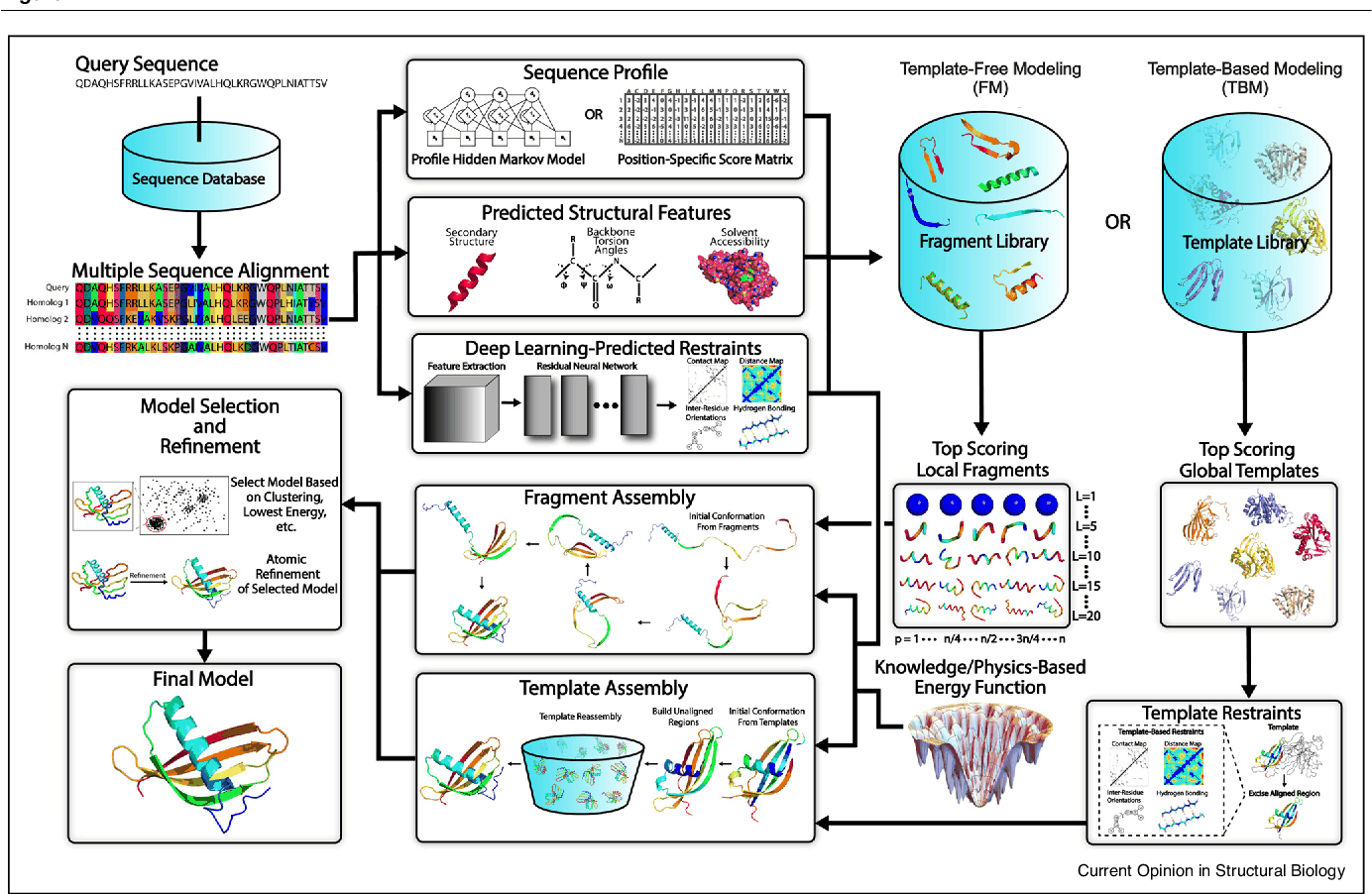
The practical role of protein structure prediction is now more important than ever. Massive amounts of protein sequence data are produced by modern large-scale DNA sequencing efforts such as the Human Genome Project. Despite community-wide efforts in structural genomics, the output of experimentally determined protein structures—typically by time-consuming and relatively expensive X-ray crystallography or NMR spectroscopy—is lagging far behind the output of protein sequences. The protein structure prediction remains an extremely difficult and unresolved undertaking. The two main problems are the calculation of protein free energy and finding the global minimum of this energy. A protein structure prediction method must explore the space of possible protein structures which is astronomically large. These problems can be partially bypassed in "comparative" or homology modeling and fold recognition methods, in which the search space is pruned by the assumption that the protein in question adopts a structure that is close to the experimentally determined structure of another homologous protein. In contrast, the de novo protein structure prediction methods must explicitly resolve these problems. The progress and challenges in protein structure prediction have been reviewed by Zhang.
Homology modeling is based on the reasonable assumption that two homologous proteins will share very similar structures. Because a protein's fold is more evolutionarily conserved than its amino acid sequence, a target sequence can be modeled with reasonable accuracy on a very distantly related template, provided that the relationship between target and template can be discerned through sequence alignment. It has been suggested that the primary bottleneck in comparative modelling arises from difficulties in alignment rather than from errors in structure prediction given a known-good alignment. Unsurprisingly, homology modelling is most accurate when the target and template have similar sequences. Protein threading scans the amino acid sequence of an unknown structure against a database of solved structures. In each case, a scoring function is used to assess the compatibility of the sequence to the structure, thus yielding possible three-dimensional models. This type of method is also known as 3D-1D fold recognition due to its compatibility analysis between three-dimensional structures and linear protein sequences. This method has also given rise to methods performing an inverse folding search by evaluating the compatibility of a given structure with a large database of sequences, thus predicting which sequences have the potential to produce a given fold.
4. Neural Network Backbone, Layer Specifications & Loss Formulations
In the case of complexes of two or more proteins, where the structures of the proteins are known or can be predicted with high accuracy, protein–protein docking methods can be used to predict the structure of the complex. Information of the effect of mutations at specific sites on the affinity of the complex helps to understand the complex structure and to guide docking methods.
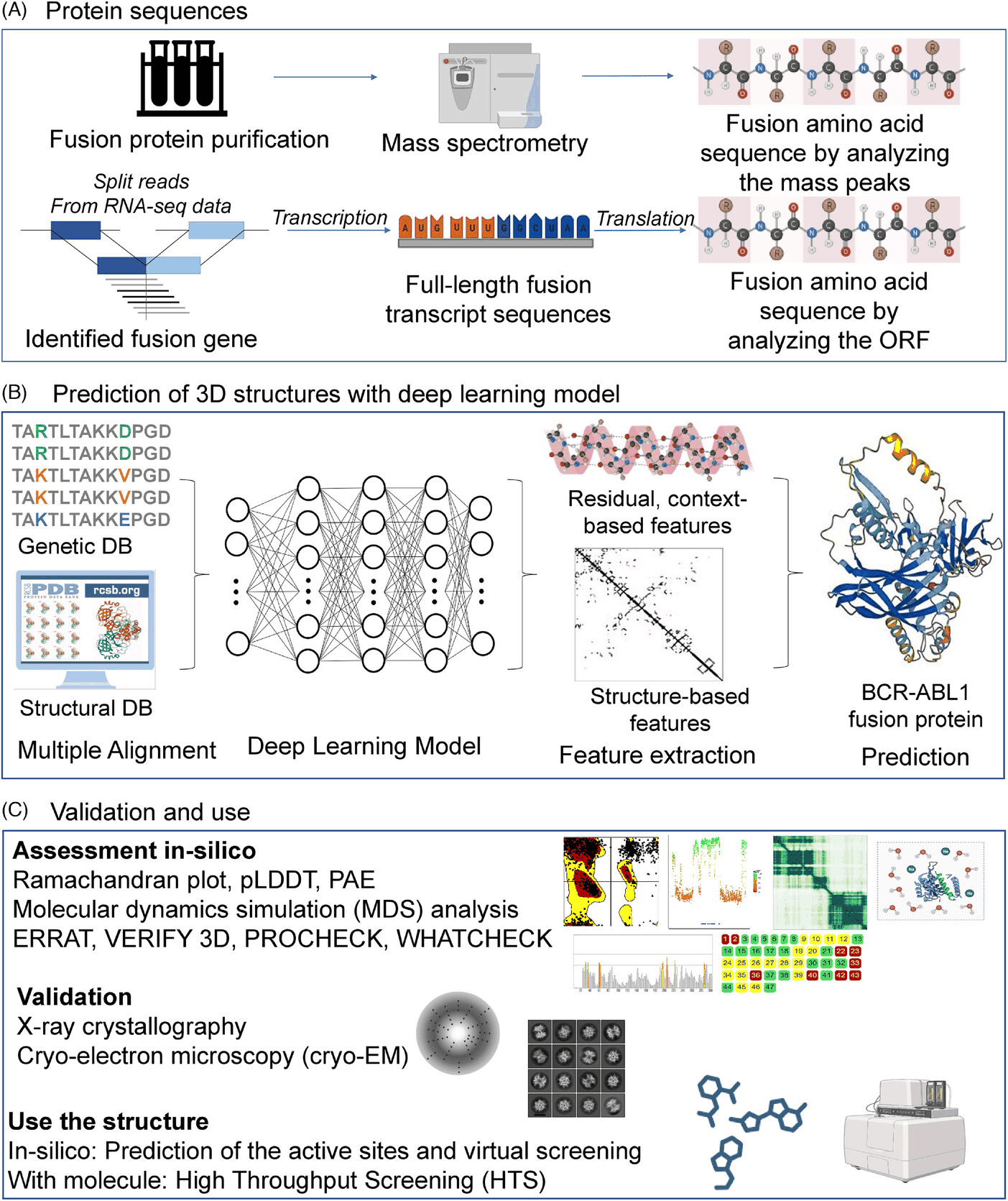
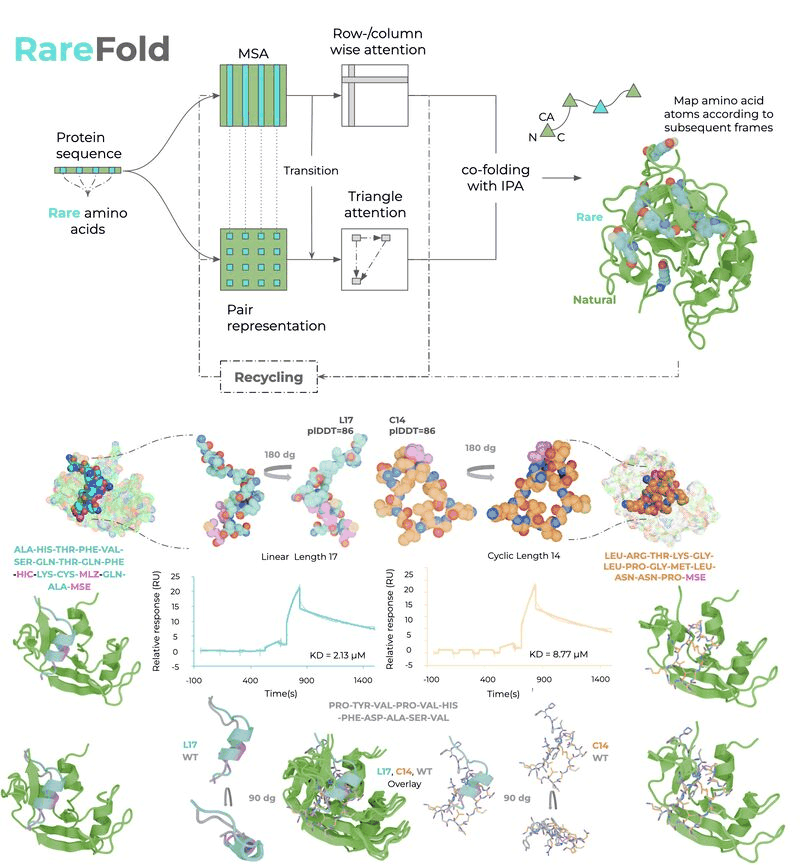
A great number of software tools for protein structure prediction exist. Approaches include homology modeling, protein threading, ab initio methods, secondary structure prediction, and transmembrane helix and signal peptide prediction. In particular, deep learning based on long short-term memory has been used for this purpose since 2007, when it was successfully applied to protein homology detection and to predict subcellular localization of proteins. Some recent successful methods based on the CASP experiments include I-TASSER, HHpred and AlphaFold. In 2021, AlphaFold was reported to perform best. Knowing the structure of a protein often allows functional prediction as well. For instance, collagen is folded into a long-extended fiber-like chain and it makes it a fibrous protein. Recently, several techniques have been developed to predict protein folding and thus protein structure, for example, Itasser, and AlphaFold.
Since AlphaFold outputs protein coordinates directly, AlphaFold produces predictions in graphics processing unit (GPU) minutes to GPU hours, depending on the length of protein sequence. The European Bioinformatics Institute together with DeepMind have constructed the AlphaFold – EBI database for predicted protein structures.
5. Training Protocol, Convergence Behavior & Experimental Evaluation
CASP, which stands for Critical Assessment of Techniques for Protein Structure Prediction, is a community-wide experiment for protein structure prediction taking place every two years since 1994. CASP provides with an opportunity to assess the quality of available human, non-automated methodology (human category) and automatic servers for protein structure prediction (server category, introduced in the CASP7). The CAMEO3D Continuous Automated Model EvaluatiOn Server evaluates automated protein structure prediction servers on a weekly basis using blind predictions for newly release protein structures. CAMEO publishes the results on its website.
Artificial intelligence (AI) is the capability of computational systems to perform tasks typically associated with human intelligence, such as learning, reasoning, problem-solving, perception, and decision-making. It is also a field of research spanning computer science, engineering, and mathematics that develops and studies methods and software enabling machines to perceive their environment and use learning and intelligence to take actions that maximise their chances of achieving defined goals. Prominent applications of AI include advanced web search engines, chatbots, virtual assistants, autonomous vehicles, play and analysis in strategy games (e.g., chess and Go), and content generation (e.g., text, images, audio, and videos). The traditional goals of AI research include learning, reasoning, knowledge representation, planning, natural language processing, and perception, as well as support for robotics. To reach these goals, AI researchers use techniques including state space search and mathematical optimisation, formal logic, artificial neural networks, and methods based on statistics, operations research, and economics. AI also draws upon psychology, linguistics, philosophy, neuroscience, and other fields. Some companies, such as OpenAI, Google DeepMind, and Meta, aim to create artificial general intelligence (AGI)—AI that can complete nearly any cognitive task at least as well as a human. Artificial intelligence was founded as an academic discipline in 1956. The field went through multiple cycles of optimism throughout its history, followed by periods of disappointment and loss of funding, known as AI winters. Funding and interest increased substantially after 2012, when graphics processing units (GPUs) started being used to accelerate neural networks, and deep learning outperformed previous AI techniques. This growth accelerated further after 2017 with the transformer architecture. The 2020s AI boom was spurred on largely by advances in generative AI, which can create and modify media. In addition to AI safety and unintended consequences and harms from the use of AI, ethical concerns, AI's long-term effects, environmental effects, and potential existential risks have prompted discussions of AI regulation.
AI programs use knowledge to answer questions intelligently and make deductions about real-world facts. Formal knowledge representation and knowledge engineering use symbols to represent words, concepts and things in the world. A knowledge base is a body of knowledge represented in a form that can be used by a program. An ontology is the set of objects, relations, concepts, and properties used by a particular domain of knowledge. Formal knowledge has been studied extensively since the 1970s and researchers have developed formalisms for a wide variety of difficult domains. The symbolic approach has difficulty with several problems: the breadth of commonsense knowledge (the set of atomic facts the average person knows is enormous), the sub-symbolic form of most commonsense knowledge (much of what people know is not represented as "facts" or "statements" they can express verbally), and knowledge acquisition (the problem of obtaining knowledge for AI applications). Large language models (and some other AI programs developed since 2012) do not require explicit, symbolic knowledge. They acquire knowledge by being trained on the combined text of millions of books and billions of websites. Modern AI can also learn about a domain by running experiments (as when AlphaZero learns game strategy by playing against itself). Machine learning solves the problems of general knowledge, commonsense knowledge and knowledge acquisition, however, this approach has struggled with accurate recall and valid reasoning.
Model Figures & Evaluation Curves (4 Images)
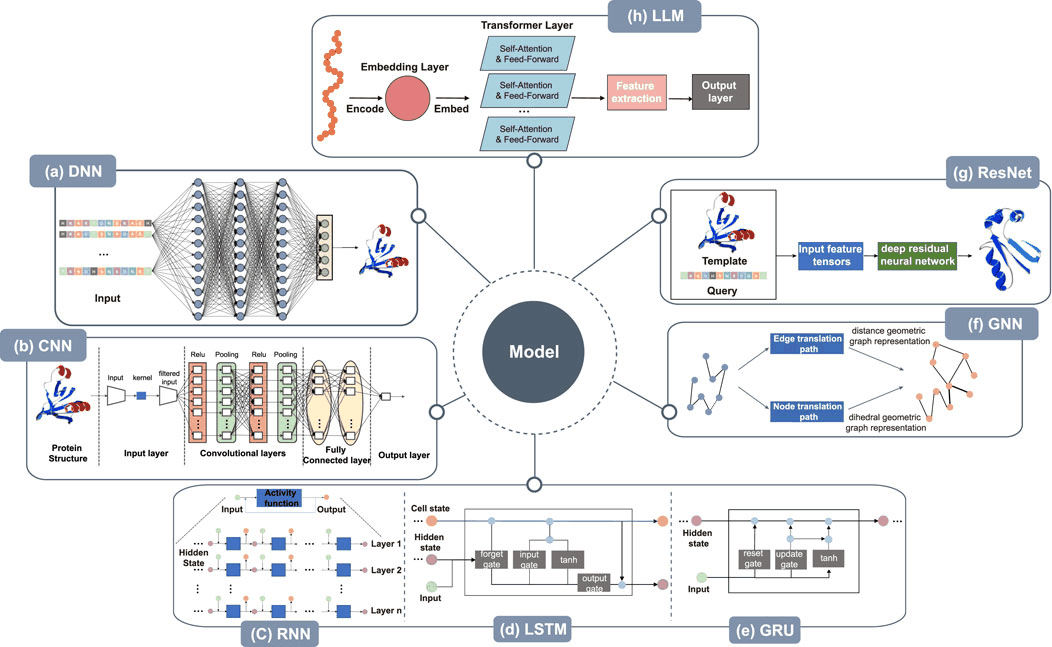
Deep Learning Execution Pipeline
(Preprocessing)
(Feature Extraction)
(Self-Attention)
(Loss Optimization)