Complete Technical Paper Content — Sentiment Analysis Projects
1. Executive Abstract, Problem Formulation & Background
Sentiment analysis (also known as opinion mining) is the use of natural language processing, text analysis, computational linguistics, and biometrics to systematically identify, extract, quantify, and study affective states and subjective information. Sentiment analysis is widely applied to voice of the customer materials such as reviews and survey responses, online and social media, and healthcare materials for applications that range from marketing to customer service to clinical medicine. With the rise of deep language models, such as RoBERTa, more difficult data domains can be analyzed, e.g., news texts where authors typically express their opinion/sentiment less explicitly.
Example of an objective sentence: 'To be elected president of the United States, a candidate must be at least thirty-five years of age.' The term subjective describes the incident contains non-factual information in various forms, such as personal opinions, judgment, and predictions, also known as 'private states'. In the example down below, it reflects a private states 'We Americans'. Moreover, the target entity commented by the opinions can take several forms from tangible product to intangible topic matters stated in Liu (2010). Furthermore, three types of attitudes were observed by Liu (2010), 1) positive opinions, 2) neutral opinions, and 3) negative opinions.
Example of a subjective sentence: 'We Americans need to elect a president who is mature and who is able to make wise decisions.' This analysis is a classification problem. Each class's collections of words or phrase indicators are defined for to locate desirable patterns on unannotated text. For subjective expression, a different word list has been created. Lists of subjective indicators in words or phrases have been developed by multiple researchers in the linguist and natural language processing field states in Riloff et al. (2003). A dictionary of extraction rules has to be created for measuring given expressions. Over the years, in subjective detection, the features extraction progression from curating features by hand to automated features learning. At the moment, automated learning methods can further separate into supervised and unsupervised machine learning. Patterns extraction with machine learning process annotated and unannotated text have been explored extensively by academic researchers. However, researchers recognized several challenges in developing fixed sets of rules for expressions respectably. Much of the challenges in rule development stems from the nature of textual information. Six challenges have been recognized by several researchers: 1) metaphorical expressions, 2) discrepancies in writings, 3) context-sensitive, 4) represented words with fewer usages, 5) time-sensitive, and 6) ever-growing volume.
Metaphorical expressions. The text contains metaphoric expression may impact on the performance on the extraction. Besides, metaphors take in different forms, which may have been contributed to the increase in detection. Discrepancies in writings. For the text obtained from the Internet, the discrepancies in the writing style of targeted text data involve distinct writing genres and styles. Context-sensitive. Classification may vary based on the subjectiveness or objectiveness of previous and following sentences. Time-sensitive attribute. The task is challenged by some textual data's time-sensitive attribute. If a group of researchers wants to confirm a piece of fact in the news, they need a longer time for cross-validation, than the news becomes outdated. Cue words with fewer usages. Ever-growing volume. The task is also challenged by the sheer volume of textual data. The textual data's ever-growing nature makes the task overwhelmingly difficult for the researchers to complete the task on time. Previously, the research mainly focused on document level classification. However, classifying a document level suffers less accuracy, as an article may have diverse types of expressions involved. Researching evidence suggests a set of news articles that are expected to dominate by the objective expression, whereas the results show that it consisted of over 40% of subjective expression. To overcome those challenges, researchers conclude that classifier efficacy depends on the precisions of patterns learner. And the learner feeds with large volumes of annotated training data outperformed those trained on less comprehensive subjective features. However, one of the main obstacles to executing this type of work is to generate a big dataset of annotated sentences manually. The manual annotation method has been less favored than automatic learning for three reasons:
2. Related Work, Literature Survey & Algorithmic Foundations
Variations in comprehensions. In the manual annotation task, disagreement of whether one instance is subjective or objective may occur among annotators because of languages' ambiguity. Human errors. Manual annotation task is a meticulous assignment, it require intense concentration to finish. Time-consuming. Manual annotation task is an assiduous work. Riloff (1996) show that a 160 texts cost 8 hours for one annotator to finish. All these mentioned reasons can impact on the efficiency and effectiveness of subjective and objective classification. Accordingly, two bootstrapping methods were designed to learning linguistic patterns from unannotated text data. Both methods are starting with a handful of seed words and unannotated textual data.
Meta-Bootstrapping by Riloff and Jones in 1999. Level One: Generate extraction patterns based on the pre-defined rules and the extracted patterns by the number of seed words each pattern holds. Level Two: Top 5 words will be marked and add to the dictionary. Repeat. Basilisk (Bootstrapping Approach to Semantic Lexicon Induction using Semantic Knowledge) by Thelen and Riloff. Step One: Generate extraction patterns. Step Two: Move best patterns from Pattern Pool to Candidate Word Pool. Step Three: Top 10 words will be marked and add to the dictionary. Repeat. Overall, these algorithms highlight the need for automatic pattern recognition and extraction in subjective and objective task. Subjective and object classifier can enhance the several applications of natural language processing. One of the classifier's primary benefits is that it popularized the practice of data-driven decision-making processes in various industries. According to Liu, the applications of subjective and objective identification have been implemented in business, advertising, sports, and social science.
Online review classification: In the business industry, the classifier helps the company better understand the feedbacks on product and reasonings behind the reviews. Stock price prediction: In the finance industry, the classifier aids the prediction model by process auxiliary information from social media and other textual information from the Internet. Previous studies on Japanese stock price conducted by Dong et al. indicates that model with subjective and objective module may perform better than those without this part. Social media analysis. Students' feedback classification. Document summarising: The classifier can extract target-specified comments and gathering opinions made by one particular entity. Complex question answering. The classifier can dissect the complex questions by classing the language subject or objective and focused target. In the research Yu et al.(2003), the researcher developed a sentence and document level clustered that identity opinion pieces. Domain-specific applications. Email analysis: The subjective and objective classifier detects spam by tracing language patterns with target words.
The rise of social media such as blogs and social networks has fueled interest in sentiment analysis. With the proliferation of reviews, ratings, recommendations and other forms of online expression, online opinion has turned into a kind of virtual currency for businesses looking to market their products, identify new opportunities and manage their reputations. As businesses look to automate the process of filtering out the noise, understanding the conversations, identifying the relevant content and actioning it appropriately, many are now looking to the field of sentiment analysis. Further complicating the matter is the rise of anonymous social media platforms such as 4chan and Reddit. If web 2.0 was all about democratizing publishing, then the next stage of the web may well be based on democratizing data mining of all the content that is getting published. One step towards this aim is accomplished in research. Several research teams in universities around the world currently focus on understanding the dynamics of sentiment in e-communities through sentiment analysis. The problem is that most sentiment analysis algorithms use simple terms to express sentiment about a product or service. However, cultural factors, linguistic nuances, and differing contexts make it extremely difficult to turn a string of written text into a simple pro or con sentiment. The fact that humans often disagree on the sentiment of text illustrates how big a task it is for computers to get this right. The shorter the string of text, the harder it becomes. Even though short text strings might be a problem, sentiment analysis within microblogging has shown that Twitter can be seen as a valid online indicator of political sentiment. Tweets' political sentiment demonstrates close correspondence to parties' and politicians' political positions, indicating that the content of Twitter messages plausibly reflects the offline political landscape. Furthermore, sentiment analysis on Twitter has also been shown to capture the public mood behind human reproduction cycles globally, as well as other problems of public-health relevance such as adverse drug reactions. While sentiment analysis has been popular for domains where authors express their opinion rather explicitly ("the movie is awesome"), such as social media and product reviews, only recently robust methods were devised for other domains where sentiment is strongly implicit or indirect. For example, in news articles - mostly due to the expected journalistic objectivity - journalists often describe actions or events rather than directly stating the polarity of a piece of information. Earlier approaches using dictionaries or shallow machine learning features were unable to catch the "meaning between the lines", but recently researchers have proposed a deep learning based approach and dataset that is able to analyze sentiment in news articles. Scholars have utilized sentiment analysis to analyse construction health and safety posts on Twitter (which is called X now). The research revealed that there is a positive correlation between favorites and retweets in terms of sentiment valence. Others have examined the impact of YouTube on the dissemination of construction health and safety knowledge. They investigated how emotions influence users' behaviors in terms of viewing and commenting through semantic analysis. In another study, positive sentiment accounted for an overwhelming figure of 85% in knowledge sharing of construction safety and health via Instagram.
3. Dataset Ingestion, Preprocessing & Stochastic Augmentations
For a recommender system, sentiment analysis has been proven to be a valuable technique. A recommender system aims to predict the preference for an item of a target user. Mainstream recommender systems work on explicit data set. For example, collaborative filtering works on the rating matrix, and content-based filtering works on the meta-data of the items. In many social networking services or e-commerce websites, users can provide text review, comment or feedback to the items. These user-generated text provide a rich source of user's sentiment opinions about numerous products and items. Potentially, for an item, such text can reveal both the related feature/aspects of the item and the users' sentiments on each feature. The item's feature/aspects described in the text play the same role with the meta-data in content-based filtering, but the former are more valuable for the recommender system. Since these features are broadly mentioned by users in their reviews, they can be seen as the most crucial features that can significantly influence the user's experience on the item, while the meta-data of the item (usually provided by the producers instead of consumers) may ignore features that are concerned by the users. For different items with common features, a user may give different sentiments. Also, a feature of the same item may receive different sentiments from different users. Users' sentiments on the features can be regarded as a multi-dimensional rating score, reflecting their preference on the items. Based on the feature/aspects and the sentiments extracted from the user-generated text, a hybrid recommender system can be constructed. There are two types of motivation to recommend a candidate item to a user. The first motivation is the candidate item have numerous common features with the user's preferred items, while the second motivation is that the candidate item receives a high sentiment on its features. For a preferred item, it is reasonable to believe that items with the same features will have a similar function or utility. So, these items will also likely to be preferred by the user. On the other hand, for a shared feature of two candidate items, other users may give positive sentiment to one of them while giving negative sentiment to another. Clearly, the high evaluated item should be recommended to the user. Based on these two motivations, a combination ranking score of similarity and sentiment rating can be constructed for each candidate item. Except for the difficulty of the sentiment analysis itself, applying sentiment analysis on reviews or feedback also faces the challenge of spam and biased reviews. One direction of work is focused on evaluating the helpfulness of each review. Review or feedback poorly written is hardly helpful for recommender system. Besides, a review can be designed to hinder sales of a target product, thus be harmful to the recommender system even it is well written. Researchers also found that long and short forms of user-generated text should be treated differently. An interesting result shows that short-form reviews are sometimes more helpful than long-form, because it is easier to filter out the noise in a short-form text. For the long-form text, the growing length of the text does not always bring a proportionate increase in the number of features or sentiments in the text.
Lamba & Madhusudhan introduce a nascent way to cater the information needs of today's library users by purportedly repackaging the results from sentiment analysis of social media platforms like Twitter and providing it as a consolidated time-based service in different formats. Further, Now Sentiments become important factors for investor and traders to use it.
Machine learning (ML) is a field of study in artificial intelligence concerned with the development and study of statistical algorithms that can learn from data and generalize to unseen data, and thus perform tasks without being explicitly programmed. Statistics and mathematical optimisation methods compose the foundations of machine learning. Data mining is a related field of study, focusing on exploratory data analysis (EDA) through unsupervised learning. From a theoretical viewpoint, probably approximately correct learning provides a mathematical and statistical framework for describing machine learning. Most traditional machine learning and deep learning algorithms can be described as empirical risk minimisation under this framework. Advances in the field of deep learning have allowed neural networks, a class of statistical algorithms, to surpass many previous machine learning approaches in performance. The resulting dominance of machine learning within the field of AI from the late 2000s and early 2010s onwards was such that the terms "machine learning" and "artificial intelligence" are now often used interchangeably, even though they are not synonymous.
The term machine learning was coined in 1959 by Arthur Samuel, an IBM employee and pioneer in the field of computer gaming and artificial intelligence. The synonym self-teaching computers was also used during this time period. The earliest machine learning program was introduced in the 1950s, when Samuel invented a computer program that calculated the chance of winning in checkers for each side, but the history of machine learning is rooted in decades of efforts to study human cognitive processes. In 1949, Canadian psychologist Donald Hebb published the book The Organization of Behavior, in which he introduced a theoretical neural structure formed by certain interactions among nerve cells. The Hebbian theory of neuron interaction set the groundwork for how many machine learning algorithms work, with connected artificial neurons changing the strength of their connections based on data. Other researchers who have studied human cognitive systems contributed to the modern machine learning technologies as well, including Walter Pitts and Warren McCulloch, who proposed the first mathematical model of neural networks including algorithms that mirror human thought processes. By the early 1960s, an experimental "learning machine" with punched tape memory, called Cybertron, had been developed by Raytheon Company to analyse sonar signals, electrocardiograms, and speech patterns using rudimentary reinforcement learning. It was repetitively "trained" by a human operator/teacher to recognise patterns and equipped with a "goof" button to cause it to reevaluate incorrect decisions. A representative book on research into machine learning during the 1960s was Nils Nilsson's book "Learning Machines", dealing mostly with machine learning for pattern classification. Interest related to pattern recognition continued into the 1970s, as described by Duda and Hart in 1973. In 1981, a report was given on using teaching strategies so that an artificial neural network learns to recognise 40 characters (26 letters, 10 digits, and 4 special symbols) from a computer terminal. Tom M. Mitchell provided a widely quoted, more formal definition of the algorithms studied in the machine learning field: "A computer program is said to learn from experience E with respect to some class of tasks T and performance measure P if its performance at tasks in T, as measured by P, improves with experience E." This definition of the tasks in which machine learning is concerned is fundamentally operational rather than defining the field in cognitive terms. This follows Alan Turing's proposal in his paper "Computing Machinery and Intelligence", in which the question, "Can machines think?", is replaced by asking whether machines can convincingly imitate a human in its responses to human-posed questions. In 2012, AlexNet, developed by Alex Krizhevsky, Ilya Sutskever, and Geoffrey Hinton, achieved substantially improved results in the ImageNet image recognition competition, contributing to the wider adoption of deep neural networks. In 2013, Tomáš Mikolov and colleagues introduced word2vec, techniques for efficiently learning distributed vector representations of words from large text corpora. In 2014, Ian Goodfellow and colleagues introduced generative adversarial networks (GANs), a framework for training generative models through an adversarial process. In 2016, AlphaGo became the first computer program to defeat a professional human Go player without handicaps on a full-sized board, using deep neural networks and reinforcement learning. In 2017, Ashish Vaswani and colleagues introduced the Transformer, a neural network architecture based primarily on attention rather than recurrence or convolution.
4. Neural Network Backbone, Layer Specifications & Loss Formulations
As a scientific endeavour, machine learning grew out of the quest for artificial intelligence (AI). In the early days of AI as an academic discipline, some researchers were interested in having machines learn from data. They attempted to approach the problem with various symbolic methods, as well as what were then termed "neural networks"; these were mostly perceptrons and other models that were later found to be reinventions of the generalised linear models of statistics. Probabilistic reasoning was also employed, especially in automated medical diagnosis. However, an increasing emphasis on the logical, knowledge-based approach caused a rift between AI and machine learning. Probabilistic systems were plagued by theoretical and practical problems of data acquisition and representation. By 1980, expert systems had come to dominate AI, and statistics was out of favour. Work on symbolic/knowledge-based learning continued within AI, leading to inductive logic programming (ILP), but the more statistical line of research was now outside the field of AI proper, in pattern recognition and information retrieval. Neural network research was abandoned by AI and computer science around the same time. This subfield, termed "connectionism", was continued by researchers from other disciplines, including John Hopfield, David Rumelhart, and Geoffrey Hinton. Their main success came in the mid-1980s with the reinvention of backpropagation. Machine learning (ML), reorganised and recognised as its own field, started to flourish in the 1990s. The field changed its goal from achieving artificial intelligence to tackling solvable problems of a practical nature. It shifted focus away from the symbolic approaches it had inherited from AI, and toward methods and models borrowed from statistics, fuzzy logic, and probability theory.
A core objective of a learner is to generalise from its experience. Generalisation in this context is the ability of a learning machine to perform accurately on new, unseen examples/tasks after having experienced a learning data set. The training examples come from some generally unknown probability distribution (considered representative of the space of occurrences) and the learner has to build a general model about this space that enables it to produce sufficiently accurate predictions in new cases. The computational analysis of machine learning algorithms and their performance is a branch of theoretical computer science known as computational learning theory. One major framework is the probably approximately correct learning model. Because training sets are finite and the future is uncertain, learning theory usually does not yield guarantees of the performance of algorithms. Instead, probabilistic bounds on the performance are quite common. The bias–variance decomposition is one way to quantify generalisation error. For the best performance in the context of generalisation, the complexity of the hypothesis should match the complexity of the function underlying the data. If the hypothesis is less complex than the function, then the model has underfitted the data. If the complexity of the model is increased in response, then the training error decreases. But if the hypothesis is too complex, then the model is subject to overfitting and generalisation will be poorer. In addition to performance bounds, learning theorists study the time complexity and feasibility of learning. In computational learning theory, a computation is considered feasible if it can be done in polynomial time. There are two kinds of time complexity results: Positive results show that a certain class of functions can be learned in polynomial time. Negative results show that certain classes cannot be learned in polynomial time.
Machine learning approaches are traditionally divided into three broad categories, which correspond to learning paradigms, depending on the nature of the "signal" or "feedback" available to the learning system:
Supervised learning: The computer is presented with example inputs and their desired outputs, given by a "teacher", and the goal is to learn a general rule that maps inputs to outputs. Unsupervised learning: No labels are given to the learning algorithm, leaving it on its own to find structure in its input. Unsupervised learning can be a goal in itself (discovering hidden patterns in data) or a means towards an end (feature learning). Reinforcement learning: A computer program interacts with a dynamic environment in which it must perform a certain goal (such as driving a vehicle or playing a game against an opponent). As it navigates its problem space, the program is provided rewards as feedback, which it tries to maximize, thus resulting in the program learning from experience. Although each algorithm has advantages and limitations, no single algorithm works for all problems.
5. Training Protocol, Convergence Behavior & Experimental Evaluation
Supervised learning algorithms build a mathematical model of a set of data that contains both the inputs and the desired outputs. The data, known as training data, consists of a set of training examples. Each training example has one or more inputs and the desired output, also known as a supervisory signal. In the mathematical model, each training example is represented by an array or vector, sometimes called a feature vector, and the training data is represented by a matrix. Through iterative optimisation of an objective function, supervised learning algorithms learn a function that can be used to predict the output associated with new inputs. An optimal function allows the algorithm to correctly determine the output for inputs that were not a part of the training data. An algorithm that improves the accuracy of its outputs or predictions over time is said to have learned to perform that task. Types of supervised-learning algorithms include active learning, classification and regression. Classification algorithms are used when the outputs are restricted to a limited set of values, while regression algorithms are used when the outputs can take any numerical value within a range. For example, in a classification algorithm that filters emails, the input is an incoming email, and the output is the folder in which to file the email. In contrast, regression is used for tasks such as predicting a person's height based on factors like age and genetics or forecasting future temperatures based on historical data. Similarity learning is an area of supervised machine learning closely related to regression and classification, but the goal is to learn from examples using a similarity function that measures how similar or related two objects are. It has applications in ranking, recommendation systems, visual identity tracking, face verification, and speaker verification.
Unsupervised learning algorithms find structures in data that has not been labelled, classified or categorised. Instead of responding to feedback, unsupervised learning algorithms identify commonalities in the data and react based on the presence or absence of such commonalities in each new piece of data. Central applications of unsupervised machine learning include clustering, dimensionality reduction, and density estimation. Cluster analysis is the assignment of a set of observations into subsets (called clusters) so that observations within the same cluster are similar according to one or more predesignated criteria, while observations drawn from different clusters are dissimilar. Different clustering techniques make different assumptions on the structure of the data, often defined by some similarity metric and evaluated, for example, by internal compactness, or the similarity between members of the same cluster, and separation, the difference between clusters. Other methods are based on estimated density and graph connectivity. A special type of unsupervised learning called self-supervised learning involves training a model by generating the supervisory signal from the data itself.
Semi-supervised learning falls between unsupervised learning (without any labelled training data) and supervised learning (with completely labelled training data). Some of the training examples are missing training labels, yet many machine-learning researchers have found that unlabelled data, when used in conjunction with a small amount of labelled data, can produce a considerable improvement in learning accuracy. In weakly supervised learning, the training labels are noisy, limited, or imprecise; however, these labels are often cheaper to obtain, resulting in larger effective training sets.
Reinforcement learning is an area of machine learning concerned with how software agents ought to take actions in an environment to maximise some notion of cumulative reward. Due to its generality, the field is studied in many other disciplines, such as game theory, control theory, operations research, information theory, simulation-based optimisation, multi-agent systems, swarm intelligence, statistics and genetic algorithms. In reinforcement learning, the environment is typically represented as a Markov decision process (MDP). Many reinforcement learning algorithms use dynamic programming techniques. Reinforcement learning algorithms do not assume knowledge of an exact mathematical model of the MDP and are used when exact models are infeasible. Reinforcement learning algorithms are used in autonomous vehicles or in learning to play a game against a human opponent.
Model Figures & Evaluation Curves (4 Images)
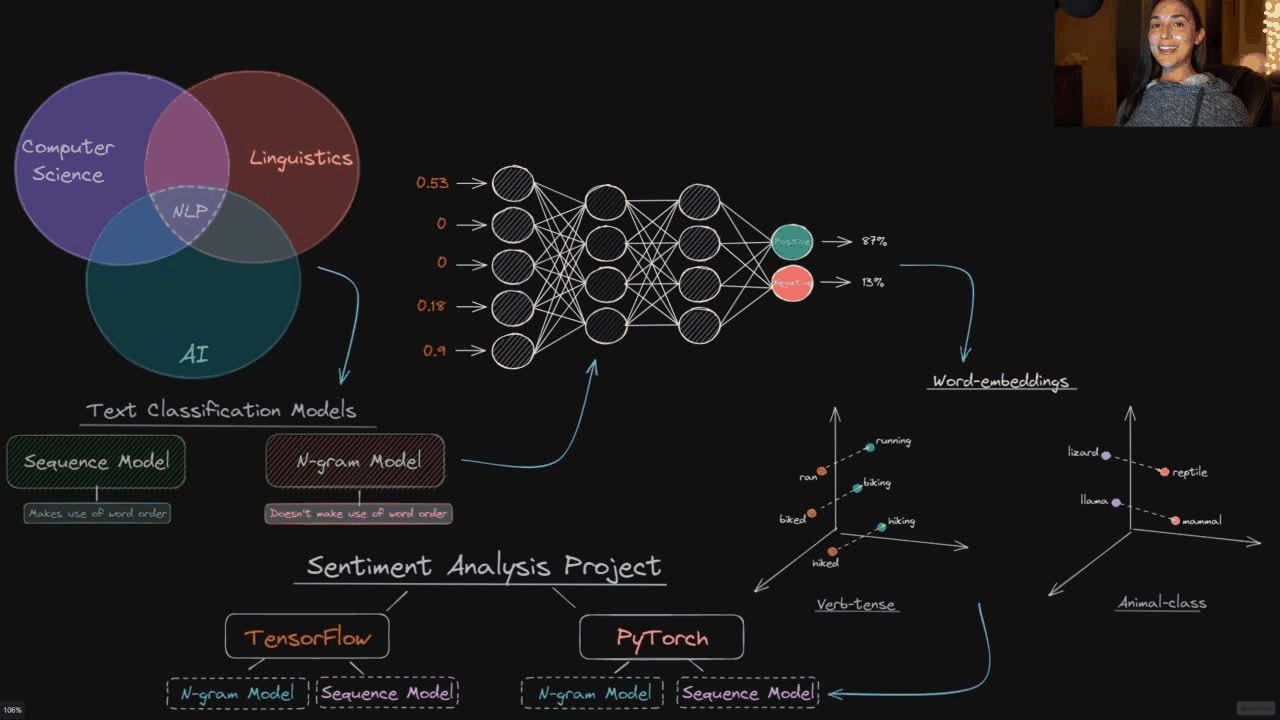
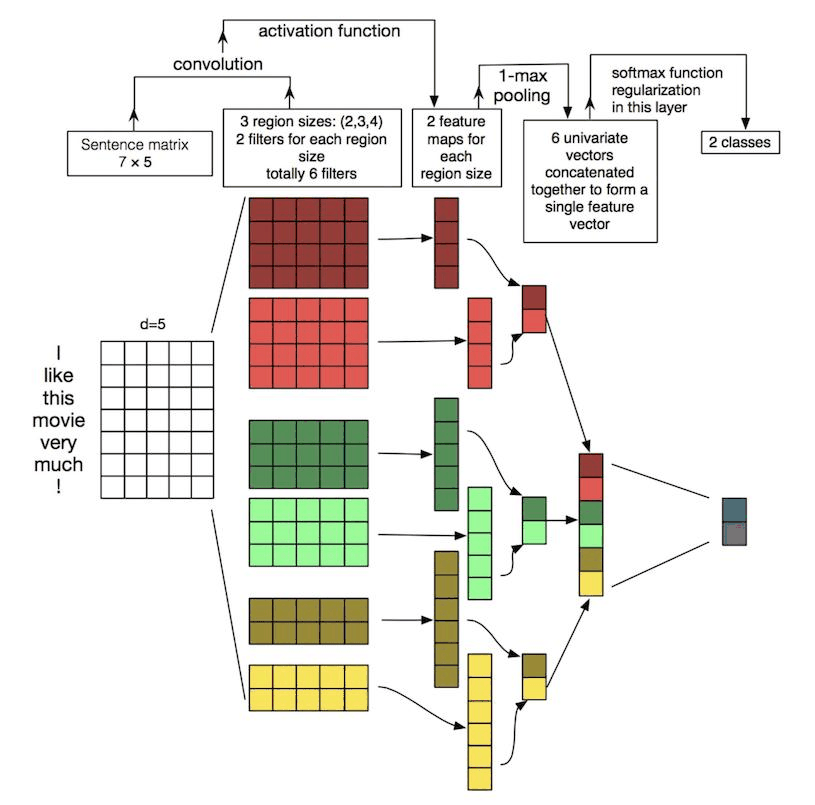
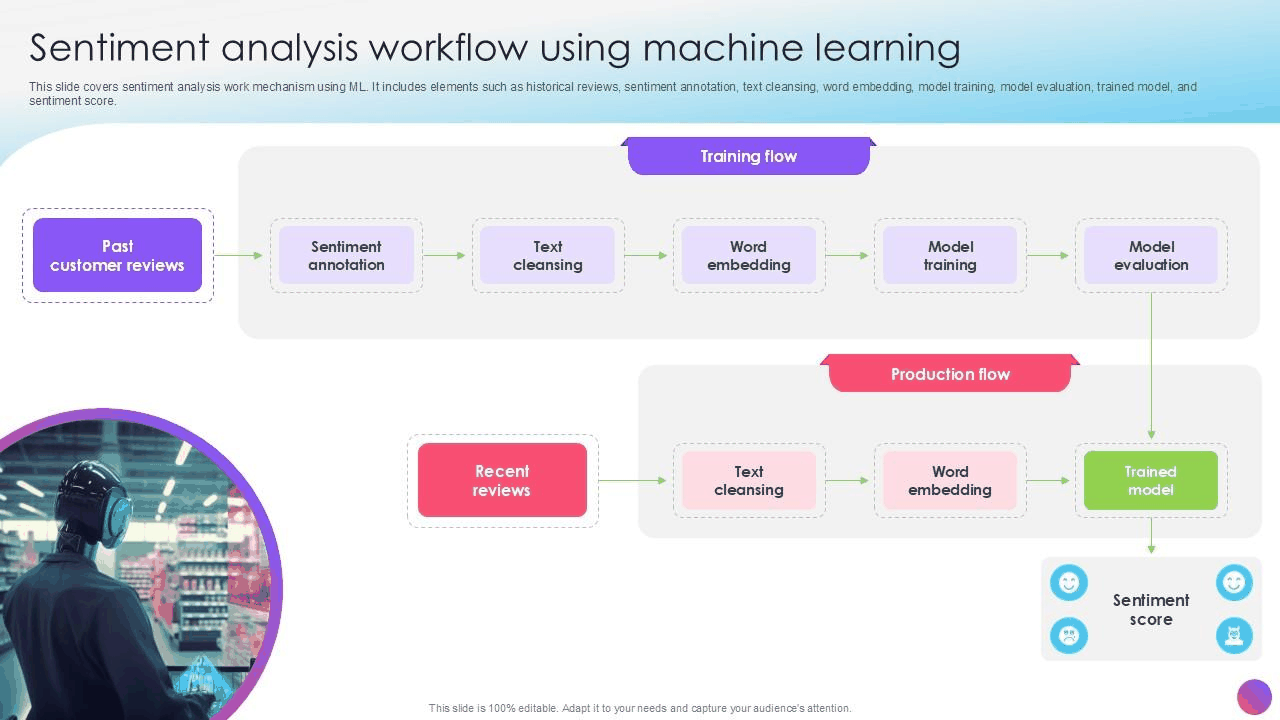
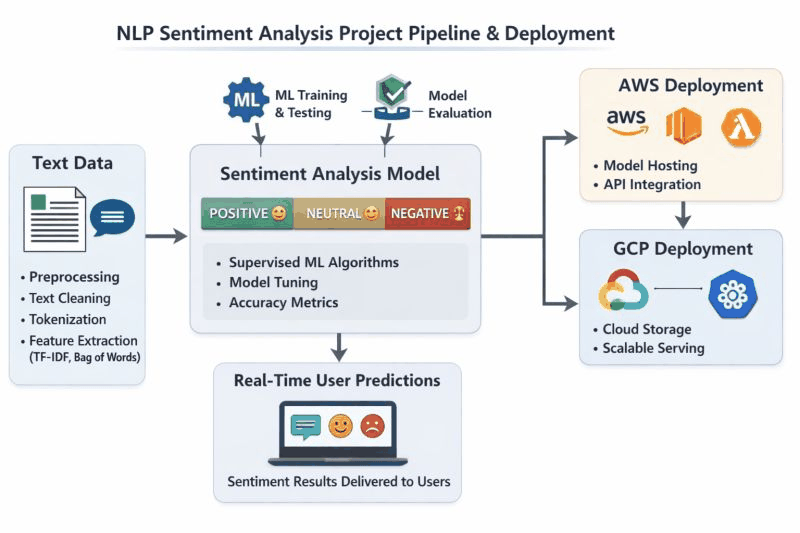
Deep Learning Execution Pipeline
(Preprocessing)
(Feature Extraction)
(Self-Attention)
(Loss Optimization)