Complete Technical Paper Content — Speaker Recognition Projects
1. Executive Abstract, Problem Formulation & Background
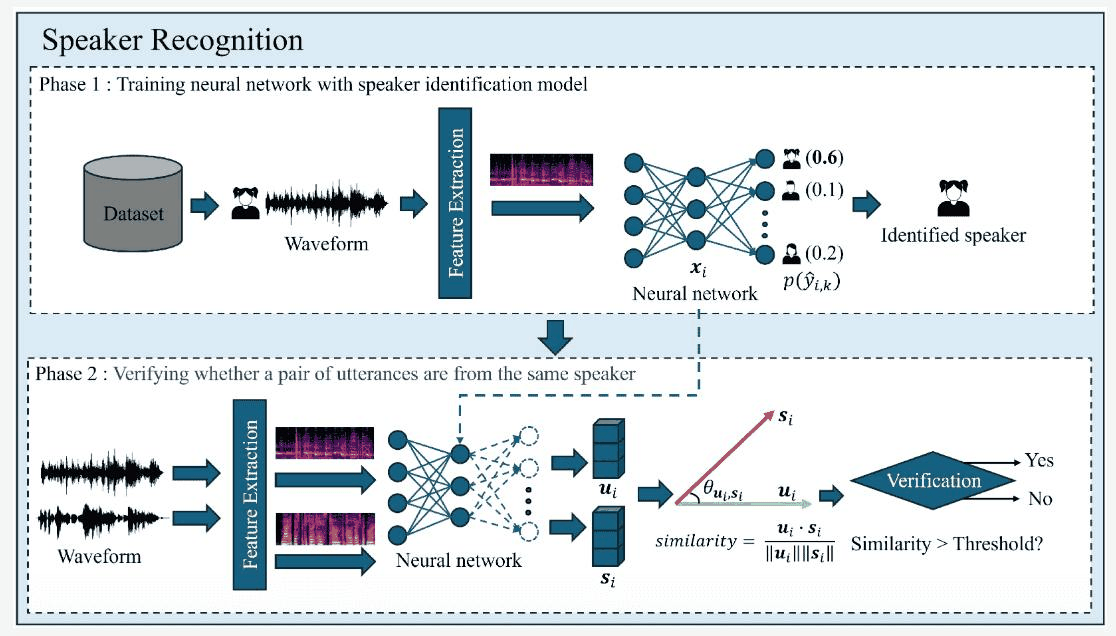
🎙️ Speaker Recognition using Deep Learning This project implements a speaker recognition system using MFCC features and a deep learning model (LSTM/CNN-based). It classifies audio samples into different speakers based on their voice characteristics. 📌 Features MFCC feature extraction Sequence modeling with LSTM or CNN Visualization of training accuracy/loss Dropout for regularization Speaker classification with high accuracy 📂 Dataset We use the Speaker Recognition Dataset from Kaggle, which contains .wav audio samples from multiple speakers. ➡️ Get the data from here: 🔗 https://www.kaggle.com/datasets/kongaevans/speaker-recognition-dataset 🧠 Model Overview The model is designed to handle time-series data extracted from audio signals. We use Mel-frequency cepstral coefficients (MFCC) as features and train a deep neural network for classification. The architecture primarily uses LSTM layers to learn sequential patterns in speech. Dropout layers and batch normalization are used to enhance generalization and prevent overfitting. Alternatively, a CNN-based model can be used for faster inference while maintaining competitive accuracy. Training progress is monitored using loss and accuracy visualizations. The final model is capable of identifying speakers based on their unique vocal features.
This project implements a speaker recognition system using MFCC features and a deep learning model (LSTM/CNN-based). It classifies audio samples into different speakers based on their voice characteristics.
We use the Speaker Recognition Dataset from Kaggle, which contains .wav audio samples from multiple speakers.
➡️ Get the data from here: 🔗 https://www.kaggle.com/datasets/kongaevans/speaker-recognition-dataset
The model is designed to handle time-series data extracted from audio signals. We use Mel-frequency cepstral coefficients (MFCC) as features and train a deep neural network for classification.
2. Related Work, Literature Survey & Algorithmic Foundations
The architecture primarily uses LSTM layers to learn sequential patterns in speech. Dropout layers and batch normalization are used to enhance generalization and prevent overfitting. Alternatively, a CNN-based model can be used for faster inference while maintaining competitive accuracy.
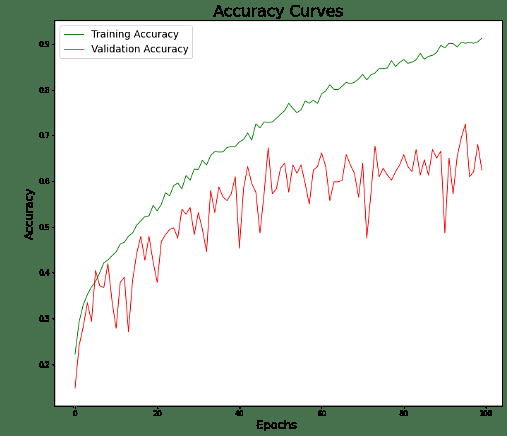
Training progress is monitored using loss and accuracy visualizations. The final model is capable of identifying speakers based on their unique vocal features.
Deep Learning-Based Speaker Identification System Overview This project implements a comprehensive speaker identification system using multiple deep learning architectures including LSTM, CNN-LSTM, Transformer, and attention-based models. The system achieves up to 97% accuracy on a 20-speaker identification task using MFCC features extracted from audio signals. Authors Khoi Nguyen Ta - Department of Artificial Intelligence, FPT University, Danang Quoc Hoan Doan Van - Department of Artificial Intelligence, FPT University, Danang Van Hon Nguyen - Department of Artificial Intelligence, FPT University, Danang Luong Vuong Nguyen (Corresponding Author) - Department of Artificial Intelligence, FPT University, Danang Contact: vuongnl3@fe.edu.vn Table of Contents Features Model Architectures Dataset Requirements Installation Feature Extraction Pipeline Usage Results Key Findings Project Structure Training Configuration Future Work References License Acknowledgments Features 🎯 Multiple neural network architectures for comparative analysis 🎵 MFCC-based audio feature extraction with STFT and Mel filterbank 📊 Data augmentation with Gaussian white noise for robustness 📈 Comprehensive evaluation metrics (Accuracy, Precision, Recall, F1-Score) 📉 Confusion matrix visualization for detailed error analysis 📊 Training history plots for model performance tracking 🔄 Early stopping and learning rate scheduling Model Architectures 1. Baseline LSTM Model Two-layer LSTM with batch normalization and dropout for temporal sequence modeling. Architecture: 2 stacked LSTM layers (128, 64 units) Test Accuracy: 87.00% Precision: 88.23% Recall: 87.00% F1-Score: 85.93% Parameters: ~128K 2. CNN-LSTM Hybrid Model ⭐ Combines convolutional layers for spectral feature extraction with LSTM for temporal modeling. Architecture: 3 Conv2D layers + 2 LSTM layers Test Accuracy: 97.00% Precision: 97.74% Recall: 97.00% F1-Score: 96.91% Parameters: ~279K 3. Transformer Model ⭐ Self-attention based architecture using Transformer encoder blocks for global relationship modeling. Architecture: Transformer encoder with multi-head attention (4 heads) Test Accuracy: 97.00% Precision: 97.50% Recall: 97.00% F1-Score: 96.83% Parameters: ~95K 4. LSTM + Multi-Head Attention ⭐ Enhanced LSTM with multi-head attention mechanism to focus on salient speech segments. Architecture: 2 LSTM layers + Multi-head attention Test Accuracy: 97.00% Precision: 97.50% Recall: 97.00% F1-Score: 96.97% Parameters: ~240K 5. Feature Fusion Model Parallel CNN and LSTM branches with feature fusion at latent representation level. Architecture: Parallel CNN + LSTM with fusion layer Test Accuracy: 84.00% Precision: 89.11% Recall: 84.00% F1-Score: 82.59% Dataset Source: LibriSpeech corpus (clean speech subset) Speakers: 20 (9 male, 11 female) Training Samples: 2,198 clean utterances + 2,198 augmented (total 4,396) Validation Split: 10% of training data Test Samples: 100 utterances (5 per speaker) Audio Format: 16 kHz mono WAV files Augmentation: Gaussian white noise at 3% noise level (SNR) Requirements tensorflow>=2.10.0 numpy>=1.21.0 librosa>=0.9.0 matplotlib>=3.5.0 seaborn>=0.11.0 scikit-learn>=1.0.0 jupyter>=1.0.0 Installation # Clone the repository git clone https://github.com/yourusername/speaker-identification.git cd speaker-identification # Create virtual environment (optional but recommended) python -m venv venv source venv/bin/activate # On Windows: venv\Scripts\activate # Install dependencies pip install -r requirements.txt Feature Extraction Pipeline The system uses a standard MFCC (Mel-Frequency Cepstral Coefficients) extraction pipeline: Pipeline Steps Pre-processing and Framing Frame length: 25ms (400 samples at 16 kHz) Hop length: 10ms (160 samples) Window function: Hamming window Short-Time Fourier Transform (STFT) Converts time-domain signal to frequency domain Computes magnitude spectrogram Mel Filterbank 23 triangular filters Frequency range: 125 Hz - 7.5 kHz Maps linear frequencies to perceptual Mel scale Log Compression Applies logarithm to compress dynamic range Produces log-Mel spectrogram Discrete Cosine Transform (DCT) Decorrelates Mel coefficients Extracts 13 MFCC coefficients per frame Sequence Padding/Truncation Fixed length: 500 frames (5 seconds) Zero-padding for shorter utterances Truncation for longer utterances Final Feature Shape: 500 × 13 (time steps × MFCC features) Mathematical Formulation Hamming Window: w(n) = 0.54 - 0.46 * cos(2πn/(N-1)), n = 0, 1, ..., N-1 Mel Scale: f_Mel = 1127 * log(1 + f/700) MFCC Feature Vector: MFCC_t = [c1(t), c2(t), ..., c13(t)] Usage Data Preparation import librosa import numpy as np from feature_extraction import audio_to_mfcc , pad_or_trim_mfcc # Load audio file audio , sr = librosa . load ( 'path/to/audio.wav' , sr = 16000 , mono = True ) # Extract MFCC features mfcc = audio_to_mfcc ( audio , sampling_rate = 16000 ) # Pad or trim to fixed length mfcc_padded = pad_or_trim_mfcc ( mfcc , max_frames = 500 ) Training Models from models import build_lstm_model , build_cnn_lstm_model , build_transformer_model from tensorflow import keras # Load preprocessed data X_train , y_train = load_training_data () X_val , y_val = load_validation_data () # Build CNN-LSTM model model = build_cnn_lstm_model ( input_shape = ( 500 , 13 ), num_classes = 20 ) # Define callbacks callbacks = [ keras . callbacks . EarlyStopping ( patience = 20 , monitor = 'val_accuracy' , restore_best_weights = True ), keras . callbacks . ModelCheckpoint ( 'models/best_model.h5' , monitor = 'val_accuracy' , save_best_only = True ), keras . callbacks . ReduceLROnPlateau ( factor = 0.5 , patience = 3 , min_lr = 1e-6 ) ] # Train model history = model . fit ( X_train , y_train , validation_data = ( X_val , y_val ), epochs = 100 , batch_size = 32 , callbacks = callbacks , verbose = 1 ) Evaluating Models from evaluation import full_evaluation # Load test data X_test , y_test = load_test_data () # Evaluate model accuracy , precision , recall , f1 = full_evaluation ( model = model , X_test = X_test , y_test = y_test , label_to_index = label_to_index , model_name = "CNN-LSTM" ) print ( f"Test Accuracy: { accuracy :.4f } " ) print ( f"Precision: { precision :.4f } " ) print ( f"Recall: { recall :.4f } " ) print ( f"F1-Score: { f1 :.4f } " ) Prediction # Predict speaker for new audio def predict_speaker ( audio_path , model , label_to_index ): # Load and preprocess audio audio , sr = librosa . load ( audio_path , sr = 16000 , mono = True ) mfcc = audio_to_mfcc ( audio ) mfcc_padded = pad_or_trim_mfcc ( mfcc , max_frames = 500 ) # Reshape for model input mfcc_input = np . expand_dims ( mfcc_padded , axis = 0 ) # Predict prediction = model . predict ( mfcc_input ) predicted_class = np . argmax ( prediction , axis = 1 ) # Get speaker name index_to_label = { v : k for k , v in label_to_index . items ()} speaker_name = index_to_label [ predicted_class ] return speaker_name , prediction [ predicted_class ] # Example usage speaker , confidence = predict_speaker ( 'test_audio.wav' , model , label_to_index ) print ( f"Predicted Speaker: { speaker } (Confidence: { confidence :.2% } )" ) Results Performance Comparison Model Accuracy Precision Recall F1-Score Parameters LSTM (2-layer) 87.00% 88.23% 87.00% 85.93% ~128K CNN-LSTM (hybrid) 97.00% 97.74% 97.00% 96.91% ~279K Transformer 97.00% 97.50% 97.00% 96.83% ~95K LSTM + Multi-Head Attention 97.00% 97.50% 97.00% 96.97% ~240K Feature Fusion (CNN + LSTM) 84.00% 89.11% 84.00% 82.59% ~450K Model Performance Insights Top 3 models (CNN-LSTM, Transformer, LSTM+Attention) achieve 97% accuracy, misclassifying only 3 out of 100 test utterances 10% improvement over baseline LSTM when using hybrid architectures or attention mechanisms Transformer model achieves competitive performance with fewer parameters (~95K vs ~279K for CNN-LSTM) Feature Fusion model underperforms expectations, suggesting challenges in naive feature combination Key Findings Hybrid Architectures Dominate CNN-LSTM, Transformer, and LSTM+Attention significantly outperform baseline LSTM (97% vs 87%) Combining spectral and temporal modeling yields superior results Attention Mechanisms Are Crucial Attention enables models to focus on speaker-discriminative speech segments Multi-head attention effectively captures global relationships in sequences Data Augmentation Improves Robustness Adding Gaussian noise during training enhances generalization Models trained with augmentation perform well on clean test data CNN Feature Extraction Is Effective Convolutional layers extract robust spectral features (formant patterns, pitch contours) CNN front-end + LSTM back-end leverages both local and temporal information Model Convergence at 97% Three different architectures converge to same accuracy ceiling Suggests 97% may be near maximum achievable with current features and dataset Project Structure speaker-identification/ ├── notebooks/ │ └── Copy_of_SLP_Speaker_Identification-1.ipynb # Main implementation ├── paper/ │ └── Deep_Learning_Based_Speaker_Identification_Using_Hybrid_Neural_Architectures_and_Feature_Fusion_Techniques-3.pdf ├── src/ │ ├── models.py # Model architectures │ ├── feature_extraction.py # MFCC extraction pipeline │ ├── data_augmentation.py # Noise augmentation │ ├── evaluation.py # Evaluation utilities │ └── utils.py # Helper functions ├── models/ # Saved model checkpoints ├── data/ # Dataset directory │ ├── train/ │ └── test/ ├── results/ # Training results and plots ├── requirements.txt # Dependencies ├── README.md # This file └── LICENSE # License file Training Configuration Hyperparameters Optimizer: Adam Learning Rate: 1e-4 (0.0001) Loss Function: Sparse Categorical Cross-Entropy Batch Size: 32 Epochs: 100 (with early stopping) Dropout Rate: 0.2-0.3 (varies by model) Callbacks EarlyStopping: Patience = 20 epochs, monitors validation accuracy ModelCheckpoint: Saves best model based on validation accuracy ReduceLROnPlateau: Reduces learning rate by 0.5x after 3 epochs without improvement Data Split Training: 89.9% (~3,956 samples) Validation: 10.1% (~440 samples) Test: 100 samples (5 per speaker, held out) Future Work 🔍 Larger Datasets: Explore datasets with more speakers (100+) and diverse acoustic conditions 🧠 Advanced Fusion Strategies: Investigate attention-based fusion mechanisms 🎯 Pre-trained Models: Experiment with wav2vec 2.0, Whisper, HuBERT embeddings 🚀 Real-time Deployment: Implement streaming inference for live speaker identification 🌐 Noisy Environments: Test robustness on real-world noisy audio 📱 Mobile Optimization: Deploy lightweight models for edge devices 🔊 Multi-speaker Scenarios: Handle overlapping speech and speaker diarization 🌍 Cross-lingual Testing: Evaluate on multilingual speaker datasets References Snyder, D., Garcia-Romero, D., Sell, G., Povey, D., Khudanpur, S. (2018). "X-vectors: Robust DNN embeddings for speaker recognition." Proc. IEEE Int. Conf. Acoust. Speech Signal Process. (ICASSP) , pp. 5329-5333. Prachi, N.N., Nahiyan, F.M., Habibullah, M., Khan, R. (2022). "Deep learning based speaker recognition system with CNN and LSTM techniques." Interdisciplinary Research in Technology and Management (IRTM) , pp. 1-6. Wang, R., Ao, J., Zhou, L., Liu, S., Wei, Z., Ko, T., Li, Q., Zhang, Y. (2022). "Multi-view self-attention based transformer for speaker recognition." ICASSP 2022 , pp. 6732-6736. Saritha, B., Laskar, R.H., Choudhury, M., K, A.M. (2024). "Optimizing speaker identification through SincSquareNet and SincNet fusion with attention mechanism." Procedia Computer Science , 233, 215-225. Hassanzadeh, H., Qadir, J.A., Omer, S.M., Ahmed, M.H., Khezri, E. (2024). "Deep learning for speaker recognition: A comparative analysis of 1D-CNN and LSTM models using diverse datasets." 4th Interdisciplinary Conference on Electrics and Computer (INTCEC) , pp. 1-8. Emon, J.I., Salek, M.A., Alam, K.T. (2025). "Whisper speaker identification: Leveraging pre-trained multilingual transformers for robust speaker embeddings." arXiv preprint arXiv:2503.10446 . License This project is licensed under the MIT License - see the LICENSE file for details. Citation If you use this code or paper in your research, please cite: @article { ehancing_speaker2026 , title = { Enhancing Speaker Identification with Hybrid Deep Learning Models and Multi-Feature Fusion } , author = { Ta, Khoi Nguyen and Van, Quoc Hoan Doan and Nguyen, Van Hon and Nguyen, Luong Vuong } , journal = { Department of Artificial Intelligence, FPT University } , year = { 2026 } } Acknowledgments This research was conducted at the Department of Artificial Intelligence, FPT University, Danang, Vietnam . We acknowledge: The creators of the LibriSpeech corpus for providing the audio dataset The TensorFlow and Librosa development teams for their excellent tools Our advisors and colleagues for valuable feedback and support Contact For questions, collaborations, or issues, please contact: Email: vuongnl3@fe.edu.vn Institution: Department of Artificial Intelligence, FPT University, Danang, 550000, Vietnam
This project implements a comprehensive speaker identification system using multiple deep learning architectures including LSTM, CNN-LSTM, Transformer, and attention-based models. The system achieves up to 97% accuracy on a 20-speaker identification task using MFCC features extracted from audio signals.
Combines convolutional layers for spectral feature extraction with LSTM for temporal modeling.
3. Dataset Ingestion, Preprocessing & Stochastic Augmentations
Self-attention based architecture using Transformer encoder blocks for global relationship modeling.
Enhanced LSTM with multi-head attention mechanism to focus on salient speech segments.
tensorflow>=2.10.0 numpy>=1.21.0 librosa>=0.9.0 matplotlib>=3.5.0 seaborn>=0.11.0 scikit-learn>=1.0.0 jupyter>=1.0.0
# Clone the repository git clone https://github.com/yourusername/speaker-identification.git cd speaker-identification # Create virtual environment (optional but recommended) python -m venv venv source venv/bin/activate # On Windows: venv\Scripts\activate # Install dependencies pip install -r requirements.txt
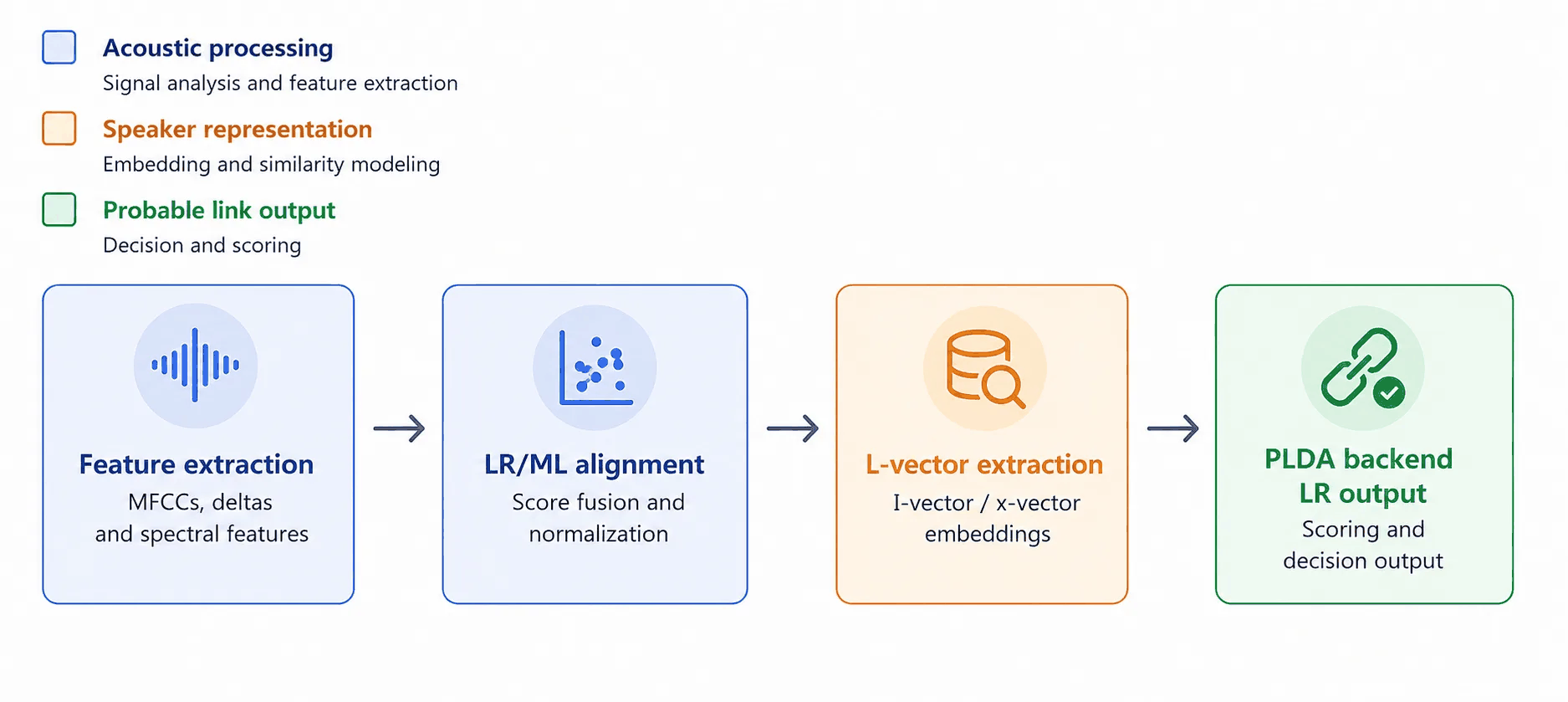
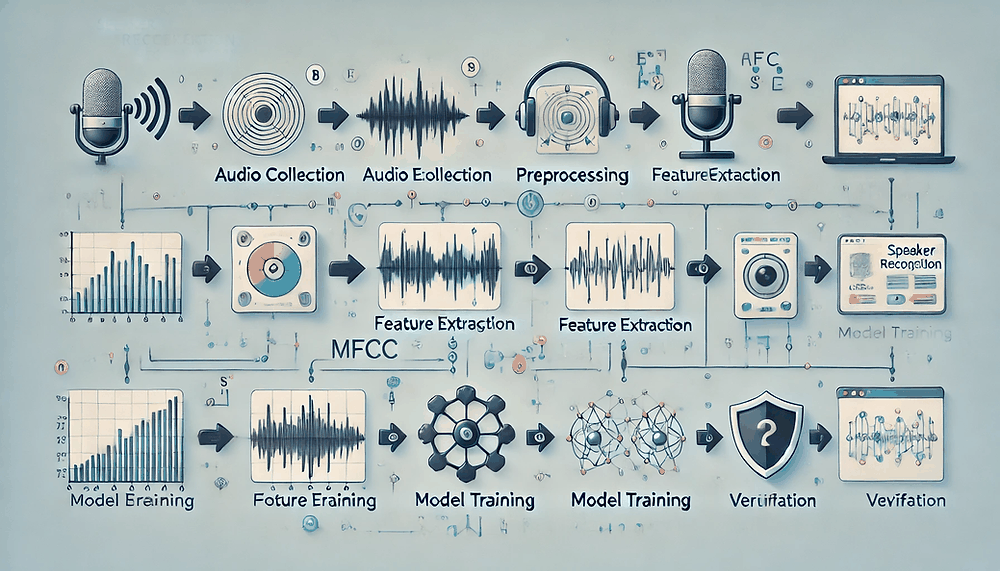
The system uses a standard MFCC (Mel-Frequency Cepstral Coefficients) extraction pipeline:
4. Neural Network Backbone, Layer Specifications & Loss Formulations
import librosa import numpy as np from feature_extraction import audio_to_mfcc , pad_or_trim_mfcc # Load audio file audio , sr = librosa . load ( 'path/to/audio.wav' , sr = 16000 , mono = True ) # Extract MFCC features mfcc = audio_to_mfcc ( audio , sampling_rate = 16000 ) # Pad or trim to fixed length mfcc_padded = pad_or_trim_mfcc ( mfcc , max_frames = 500 )
from models import build_lstm_model , build_cnn_lstm_model , build_transformer_model from tensorflow import keras # Load preprocessed data X_train , y_train = load_training_data () X_val , y_val = load_validation_data () # Build CNN-LSTM model model = build_cnn_lstm_model ( input_shape = ( 500 , 13 ), num_classes = 20 ) # Define callbacks callbacks = [ keras . callbacks . EarlyStopping ( patience = 20 , monitor = 'val_accuracy' , restore_best_weights = True ), keras . callbacks . ModelCheckpoint ( 'models/best_model.h5' , monitor = 'val_accuracy' , save_best_only = True ), keras . callbacks . ReduceLROnPlateau ( factor = 0.5 , patience = 3 , min_lr = 1e-6 ) ] # Train model history = model . fit ( X_train , y_train , validation_data = ( X_val , y_val ), epochs = 100 , batch_size = 32 , callbacks = callbacks , verbose = 1 )
from evaluation import full_evaluation # Load test data X_test , y_test = load_test_data () # Evaluate model accuracy , precision , recall , f1 = full_evaluation ( model = model , X_test = X_test , y_test = y_test , label_to_index = label_to_index , model_name = "CNN-LSTM" ) print ( f"Test Accuracy: { accuracy :.4f } " ) print ( f"Precision: { precision :.4f } " ) print ( f"Recall: { recall :.4f } " ) print ( f"F1-Score: { f1 :.4f } " )
# Predict speaker for new audio def predict_speaker ( audio_path , model , label_to_index ): # Load and preprocess audio audio , sr = librosa . load ( audio_path , sr = 16000 , mono = True ) mfcc = audio_to_mfcc ( audio ) mfcc_padded = pad_or_trim_mfcc ( mfcc , max_frames = 500 ) # Reshape for model input mfcc_input = np . expand_dims ( mfcc_padded , axis = 0 ) # Predict prediction = model . predict ( mfcc_input ) predicted_class = np . argmax ( prediction , axis = 1 ) # Get speaker name index_to_label = { v : k for k , v in label_to_index . items ()} speaker_name = index_to_label [ predicted_class ] return speaker_name , prediction [ predicted_class ] # Example usage speaker , confidence = predict_speaker ( 'test_audio.wav' , model , label_to_index ) print ( f"Predicted Speaker: { speaker } (Confidence: { confidence :.2% } )" )
speaker-identification/ ├── notebooks/ │ └── Copy_of_SLP_Speaker_Identification-1.ipynb # Main implementation ├── paper/ │ └── Deep_Learning_Based_Speaker_Identification_Using_Hybrid_Neural_Architectures_and_Feature_Fusion_Techniques-3.pdf ├── src/ │ ├── models.py # Model architectures │ ├── feature_extraction.py # MFCC extraction pipeline │ ├── data_augmentation.py # Noise augmentation │ ├── evaluation.py # Evaluation utilities │ └── utils.py # Helper functions ├── models/ # Saved model checkpoints ├── data/ # Dataset directory │ ├── train/ │ └── test/ ├── results/ # Training results and plots ├── requirements.txt # Dependencies ├── README.md # This file └── LICENSE # License file
5. Training Protocol, Convergence Behavior & Experimental Evaluation
Snyder, D., Garcia-Romero, D., Sell, G., Povey, D., Khudanpur, S. (2018). "X-vectors: Robust DNN embeddings for speaker recognition." Proc. IEEE Int. Conf. Acoust. Speech Signal Process. (ICASSP) , pp. 5329-5333.
Prachi, N.N., Nahiyan, F.M., Habibullah, M., Khan, R. (2022). "Deep learning based speaker recognition system with CNN and LSTM techniques." Interdisciplinary Research in Technology and Management (IRTM) , pp. 1-6.
Wang, R., Ao, J., Zhou, L., Liu, S., Wei, Z., Ko, T., Li, Q., Zhang, Y. (2022). "Multi-view self-attention based transformer for speaker recognition." ICASSP 2022 , pp. 6732-6736.
Saritha, B., Laskar, R.H., Choudhury, M., K, A.M. (2024). "Optimizing speaker identification through SincSquareNet and SincNet fusion with attention mechanism." Procedia Computer Science , 233, 215-225.
Hassanzadeh, H., Qadir, J.A., Omer, S.M., Ahmed, M.H., Khezri, E. (2024). "Deep learning for speaker recognition: A comparative analysis of 1D-CNN and LSTM models using diverse datasets." 4th Interdisciplinary Conference on Electrics and Computer (INTCEC) , pp. 1-8.
Model Figures & Evaluation Curves (4 Images)
Deep Learning Execution Pipeline
(Preprocessing)
(Feature Extraction)
(Self-Attention)
(Loss Optimization)