Complete Technical Paper Content — Wildfire Detection Ai
1. Executive Abstract, Problem Formulation & Background
Wildfires pose a significant environmental and economic threat worldwide. Their frequency and intensity have been escalating due to various factors, particularly climate change.
These alarming statistics underscore the urgent need for efficient wildfire detection and monitoring systems. Our Wildfire Detection System aims to address this need by leveraging cutting-edge technologies and data-driven models.
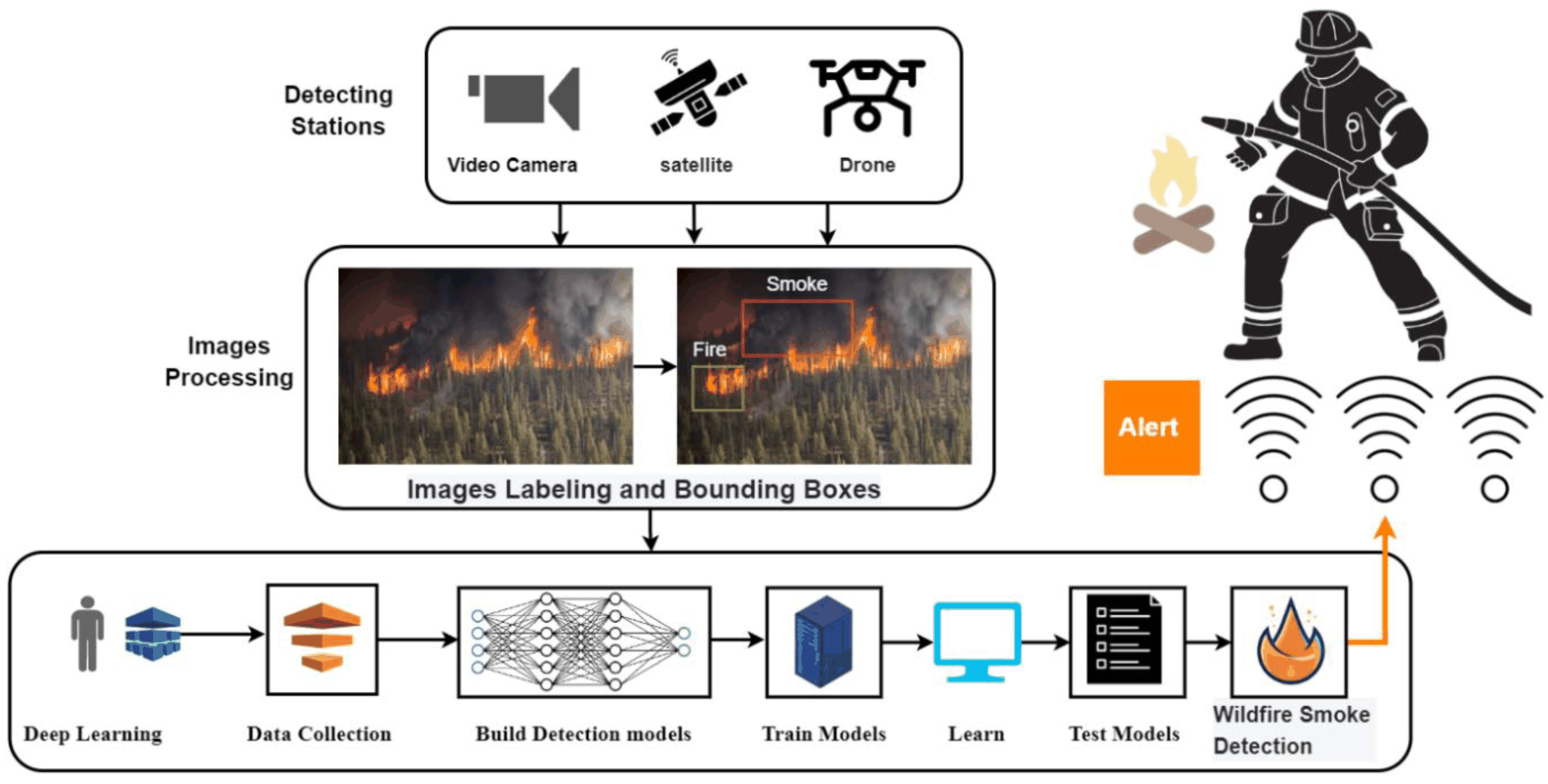
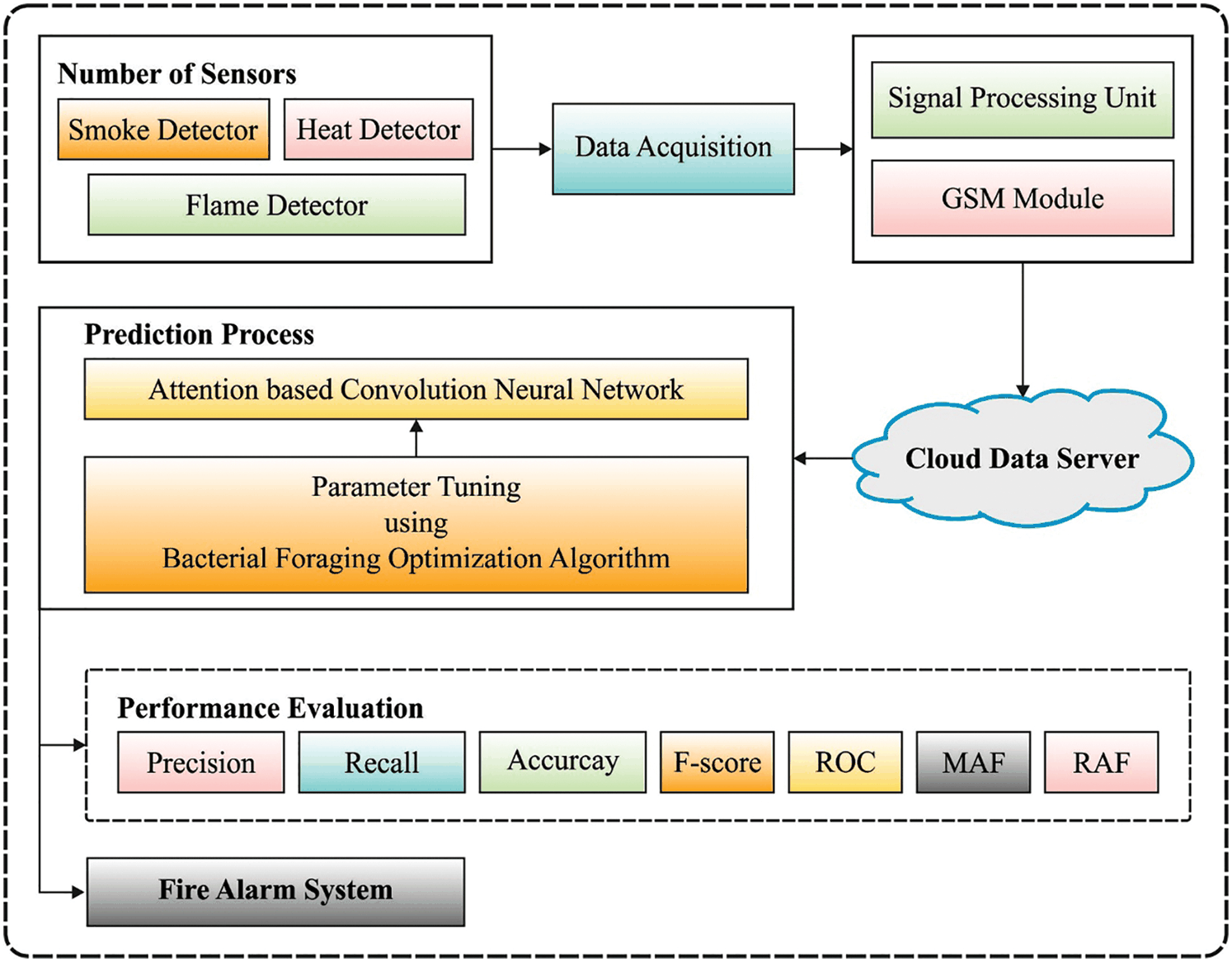
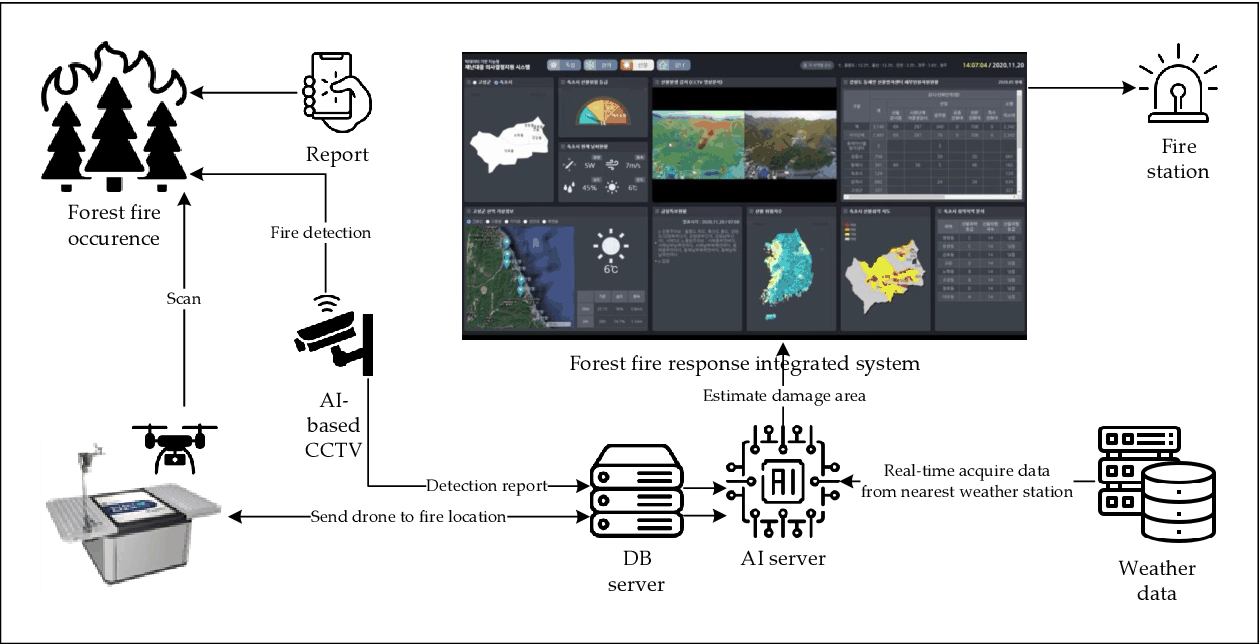
This project presents an innovative solution combining satellite imagery, camera feeds, and weather data to predict the risk of wildfires. Using advanced deep learning techniques, our system performs robust feature extraction and classification to detect potential fire events early.
python3 -m venv venv source venv/bin/activate # On Windows use `venv\Scripts\activate`
Set up environment variables : Create a .env file and add your Mapbox token and other necessary configurations:
. ├── LICENSE # Project license ├── README.md # You're here! ├── alerts.db # Database file for alerts ├── requirements.txt # List of dependencies ├── analysis # Analysis and model files │ ├── meteorological-detection-classification.ipynb # Notebook for weather-based detection │ ├── wildfire-camera-detection.ipynb # Notebook for camera image detection │ ├── wildfire-satellite-detection.ipynb # Notebook for satellite image detection │ ├── meteorological-detection-classification.keras # Saved weather detection model │ ├── std_scaler_weather.pkl # Scaler for weather data │ ├── wildfire_camera_detection_model.keras # Saved camera detection model │ └── wildfire_satellite_detection_model.keras # Saved satellite detection model ├── src # Source code directory │ ├── app.py # Main application file │ ├── camera_functions.py # Functions for camera image processing │ ├── email_alert.py # Functions for sending email alerts │ ├── meteorological_functions.py # Functions for weather data processing │ ├── satellite_functions.py # Functions for satellite image processing │ ├── static # Static files (JS, images) │ │ ├── js # JavaScript files │ │ │ ├── alert_map.js # JS for alert map │ │ │ ├── camera.js # JS for camera detection page │ │ │ └── map.js # JS for satellite detection map │ │ ├── images # Image files │ │ │ └── Screenshot.png # Screenshot of the application │ └── templates # HTML templates │ ├── alert.html # Template for alert page │ ├── base.html # Base template │ ├── detect_camera.html # Template for camera detection page │ ├── detect_satellite.html # Template for satellite image detection │ └── home.html # Template for homepage
Future enhancements could further improve the effectiveness of the Wildfire Detection System:
We welcome contributions from the community! Please read our Contributing Guidelines to get started. Here’s how you can contribute:
This project is licensed under the Apache 2.0 License. See the LICENSE file for more information.
2. Related Work, Literature Survey & Algorithmic Foundations
A Wildfire Detection System that integrates machine learning models with satellite imagery, camera feeds, and weather data to predict and detect wildfires effectively.
🔥 Wildfire Detection Using Deep Learning Convolutional Neural Networks A deep learning project for automated wildfire detection from images using Convolutional Neural Networks (CNNs). Built with PyTorch, this system classifies images as either fire or non-fire to assist in early wildfire detection and monitoring. 📋 Table of Contents Overview Dataset Model Architecture Installation Usage Training Results Project Structure Contributing License 🎯 Overview Wildfires pose a significant threat to ecosystems, property, and human life. Early detection is critical for effective response. This project leverages deep learning to automatically detect the presence of fire in images, providing a scalable solution for monitoring systems. Key Features: ✅ Binary classification: fire_images vs non_fire_images ✅ Custom CNN architecture with 3 convolutional blocks ✅ Data normalization and augmentation pipeline ✅ Class balancing via undersampling ✅ Training/validation monitoring with confusion matrix analysis ✅ Model checkpointing in PyTorch format 📊 Dataset The dataset consists of labeled images organized into two classes: Class Original Count After Undersampling 🔥 Fire Images ~755 244 🌲 Non-Fire Images ~244 244 Total ~999 488 Data Preprocessing Image Size: Resized to 224 × 224 pixels Color Mode: Converted to RGB (3 channels) Normalization: Mean: [0.4201, 0.3118, 0.2111] Std: [0.2819, 0.2403, 0.2240] Train/Validation Split: 80% / 20% Batch Size: 32 Class Balancing The original dataset was imbalanced (significantly more fire images than non-fire images). We applied random undersampling to create a balanced dataset with equal representation of both classes, improving model generalization. 🧠 Model Architecture The CNN architecture consists of 3 convolutional blocks followed by fully connected layers: Sequential( (0): Conv2d(3 → 16, kernel=3×3, padding=1) (1): ReLU() (2): MaxPool2d(2×2, stride=2) (3): Conv2d(16 → 32, kernel=3×3, padding=1) (4): ReLU() (5): MaxPool2d(2×2, stride=2) (6): Conv2d(32 → 64, kernel=3×3, padding=1) (7): ReLU() (8): MaxPool2d(2×2, stride=2) (9): Flatten() (10): Dropout(p=0.5) (11): Linear(50176 → 500) (12): ReLU() (13): Dropout(p=0.5) (14): Linear(500 → 2) [Output: Fire / Non-Fire] ) Model Summary Metric Value Total Parameters 25,113,086 Trainable Parameters 25,113,086 Input Size (Batch, 3, 224, 224) Estimated Model Size ~100 MB ⚙️ Installation Prerequisites Python 3.10+ PyTorch 2.11.0+ CUDA (optional, for GPU acceleration) Setup # Clone the repository git clone https://github.com/Ibnbuba-A360/Wildfire-Detection-Using-DeepLearning-Convolutional-Neural-Networks.git cd Wildfire-Detection-Using-Convolutional-Neural-Networks # Create virtual environment (recommended) python -m venv venv # Activate on Windows venv \S cripts \a ctivate # Activate on macOS/Linux source venv/bin/activate # Install dependencies pip install torch==2.11.0 torchvision==0.26.0 pip install numpy pandas matplotlib tqdm scikit-learn torchinfo Pillow Required Packages torch>=2.11.0 torchvision>=0.26.0 numpy>=1.24.0 pandas>=2.0.0 matplotlib>=3.7.0 tqdm>=4.65.0 scikit-learn>=1.3.0 torchinfo>=1.8.0 Pillow>=10.0.0 🚀 Usage 1. Dataset Exploration Explore the dataset distribution and visualize sample images: from explore_dataset import sample_images , class_counts # View random samples from each class sample_images ( data_dir , "fire_images" ) sample_images ( data_dir , "non_fire_images" ) # Check class distribution class_counts ( dataset ). plot ( kind = "bar" ) 2. Data Preprocessing & Undersampling from explore_dataset import undersample_dataset # Balance the dataset undersample_dataset ( dataset_dir = "data/train/dataset" , output_dir = "data/train/undersampled_dataset" , target_count = None # Uses minimum class count automatically ) 3. Model Training from training import train import torch import torch . nn as nn import torch . optim as optim from torchvision import datasets , transforms from torch . utils . data import DataLoader , random_split # Load preprocessed dataset dataset = datasets . ImageFolder ( root = "data/train/undersampled_dataset" , transform = transform ) train_dataset , val_dataset = random_split ( dataset , [ 0.8 , 0.2 ]) # Create data loaders train_loader = DataLoader ( train_dataset , batch_size = 32 , shuffle = True ) val_loader = DataLoader ( val_dataset , batch_size = 32 ) # Initialize model, loss, and optimizer model = build_model () # Your CNN architecture loss_fn = nn . CrossEntropyLoss () optimizer = optim . Adam ( model . parameters (), lr = 0.001 ) # Train history = train ( model = model , optimizer = optimizer , loss_fn = loss_fn , train_loader = train_loader , val_loader = val_loader , epochs = 30 , device = "cuda" if torch . cuda . is_available () else "cpu" ) 4. Evaluation & Prediction from training import predict , score from sklearn . metrics import confusion_matrix , ConfusionMatrixDisplay # Evaluate on validation set val_loss , val_accuracy = score ( model , val_loader , loss_fn , device ) print ( f"Validation Accuracy: { val_accuracy :.2% } " ) # Generate predictions probabilities = predict ( model , val_loader , device ) predictions = torch . argmax ( probabilities , dim = 1 ) # Confusion Matrix cm = confusion_matrix ( targets , predictions . cpu ()) disp = ConfusionMatrixDisplay ( confusion_matrix = cm , display_labels = [ "fire_images" , "non_fire_images" ]) disp . plot ( cmap = "Blues" ) 5. Save/Load Model # Save trained model torch . save ( model . state_dict (), "models/wildfire_cnn.pth" ) # Load for inference model . load_state_dict ( torch . load ( "models/wildfire_cnn.pth" )) model . eval () 🏋️ Training Hyperparameters Parameter Value Optimizer Adam Learning Rate 0.001 Loss Function Cross Entropy Loss Epochs 30 (initial) + 30 (fine-tuning) Batch Size 32 Dropout Rate 0.5 Random Seed 42 Training Process The model was trained in two phases: Phase 1 (Epochs 1-30): Initial training from scratch Phase 2 (Epochs 31-60): Continued training to refine weights Sample Training Log Epoch: 1, Training Loss: 0.84, Validation Loss: 0.34, Validation Accuracy: 0.86 Epoch: 5, Training Loss: 0.11, Validation Loss: 0.15, Validation Accuracy: 0.93 Epoch: 10, Training Loss: 0.02, Validation Loss: 0.25, Validation Accuracy: 0.92 Epoch: 20, Training Loss: 0.02, Validation Loss: 0.49, Validation Accuracy: 0.93 Epoch: 30, Training Loss: 0.12, Validation Loss: 0.21, Validation Accuracy: 0.93 📈 Results Performance Metrics Metric Value Validation Accuracy ~92-95% Training Loss (Final) ~0.00 Validation Loss (Final) ~0.21-0.47 Confusion Matrix (Validation Set) Predicted Fire Predicted Non-Fire Actual Fire 49 (True Positives) 6 (False Negatives) Actual Non-Fire 2 (False Positives) 40 (True Negatives) Key Metrics: Precision (Fire): 49/51 = 96.1% Recall (Fire): 49/55 = 89.1% Precision (Non-Fire): 40/46 = 87.0% Recall (Non-Fire): 40/42 = 95.2% Overall Accuracy: 89/97 = 91.8% Observations The model shows strong performance in distinguishing fire from non-fire scenes Very low false positive rate (2 non-fire images misclassified as fire) The balanced dataset approach effectively prevents bias toward the majority class Some overfitting is observed in later epochs (training loss ≈ 0 while validation loss remains ~0.3-0.5) 📁 Project Structure Wildfire-Detection-Using-Convolutional-Neural-Networks/ │ ├── 📂 data/ │ └── train/ │ ├── dataset/ # Original unbalanced dataset │ │ ├── fire_images/ │ │ └── non_fire_images/ │ └── undersampled_dataset/ # Balanced dataset (244 per class) │ ├── fire_images/ │ └── non_fire_images/ │ ├── 📂 models/ │ └── wildfire_cnn.pth # Saved trained model weights │ ├── 📂 notebooks/ │ ├── explore_dataset.ipynb # Data exploration & preprocessing │ └── model_training.ipynb # Model building & training │ ├── 📂 src/ │ ├── __init__.py │ ├── training.py # Core training functions │ ├── model.py # CNN architecture definition │ └── utils.py # Helper functions (transforms, etc.) │ ├── 📄 README.md # Project documentation ├── 📄 requirements.txt # Python dependencies └── 📄 LICENSE # MIT License Core Files Description File Description training.py Core training loop, prediction, scoring, and evaluation functions explore_dataset.ipynb Dataset visualization, normalization computation, undersampling model_training.ipynb Model architecture definition, training execution, confusion matrix 🤝 Contributing Contributions are welcome! If you'd like to improve this project: Fork the repository Create your feature branch ( git checkout -b feature/AmazingFeature ) Commit your changes ( git commit -m 'Add some AmazingFeature' ) Push to the branch ( git push origin feature/AmazingFeature ) Open a Pull Request Potential Improvements Implement data augmentation (rotation, flip, color jitter) Add transfer learning with pre-trained models (ResNet, EfficientNet) Deploy as web API using Flask/FastAPI Create real-time detection from video streams Add Grad-CAM visualization for interpretability Optimize for mobile/edge deployment (TorchScript/ONNX) 📝 License This project is licensed under the MIT License - see the LICENSE file for details. 🙏 Acknowledgments Visionset AI - Original project framework and methodology PyTorch team for the excellent deep learning framework Dataset contributors for wildfire and non-fire imagery 📧 Contact Author: Ibnbuba-A360 For questions or collaboration opportunities, please open an issue or reach out via GitHub. Built with ❤️ and 🔥 detection using PyTorch
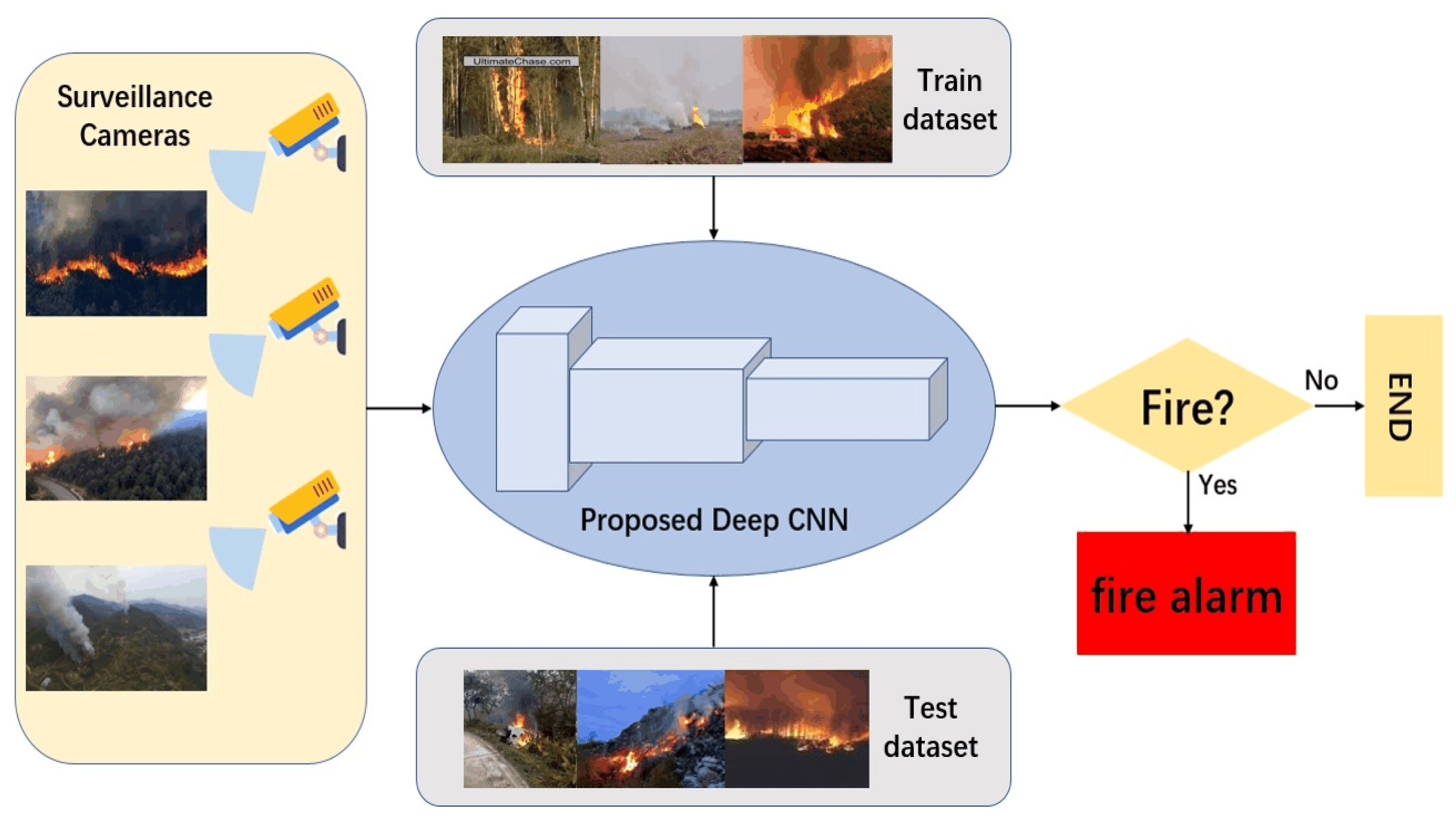
A deep learning project for automated wildfire detection from images using Convolutional Neural Networks (CNNs). Built with PyTorch, this system classifies images as either fire or non-fire to assist in early wildfire detection and monitoring.
Wildfires pose a significant threat to ecosystems, property, and human life. Early detection is critical for effective response. This project leverages deep learning to automatically detect the presence of fire in images, providing a scalable solution for monitoring systems.
The original dataset was imbalanced (significantly more fire images than non-fire images). We applied random undersampling to create a balanced dataset with equal representation of both classes, improving model generalization.
The CNN architecture consists of 3 convolutional blocks followed by fully connected layers:
Sequential( (0): Conv2d(3 → 16, kernel=3×3, padding=1) (1): ReLU() (2): MaxPool2d(2×2, stride=2) (3): Conv2d(16 → 32, kernel=3×3, padding=1) (4): ReLU() (5): MaxPool2d(2×2, stride=2) (6): Conv2d(32 → 64, kernel=3×3, padding=1) (7): ReLU() (8): MaxPool2d(2×2, stride=2) (9): Flatten() (10): Dropout(p=0.5) (11): Linear(50176 → 500) (12): ReLU() (13): Dropout(p=0.5) (14): Linear(500 → 2) [Output: Fire / Non-Fire] )
# Clone the repository git clone https://github.com/Ibnbuba-A360/Wildfire-Detection-Using-DeepLearning-Convolutional-Neural-Networks.git cd Wildfire-Detection-Using-Convolutional-Neural-Networks # Create virtual environment (recommended) python -m venv venv # Activate on Windows venv \S cripts \a ctivate # Activate on macOS/Linux source venv/bin/activate # Install dependencies pip install torch==2.11.0 torchvision==0.26.0 pip install numpy pandas matplotlib tqdm scikit-learn torchinfo Pillow
torch>=2.11.0 torchvision>=0.26.0 numpy>=1.24.0 pandas>=2.0.0 matplotlib>=3.7.0 tqdm>=4.65.0 scikit-learn>=1.3.0 torchinfo>=1.8.0 Pillow>=10.0.0
3. Dataset Ingestion, Preprocessing & Stochastic Augmentations
from explore_dataset import sample_images , class_counts # View random samples from each class sample_images ( data_dir , "fire_images" ) sample_images ( data_dir , "non_fire_images" ) # Check class distribution class_counts ( dataset ). plot ( kind = "bar" )
from explore_dataset import undersample_dataset # Balance the dataset undersample_dataset ( dataset_dir = "data/train/dataset" , output_dir = "data/train/undersampled_dataset" , target_count = None # Uses minimum class count automatically )
from training import train import torch import torch . nn as nn import torch . optim as optim from torchvision import datasets , transforms from torch . utils . data import DataLoader , random_split # Load preprocessed dataset dataset = datasets . ImageFolder ( root = "data/train/undersampled_dataset" , transform = transform ) train_dataset , val_dataset = random_split ( dataset , [ 0.8 , 0.2 ]) # Create data loaders train_loader = DataLoader ( train_dataset , batch_size = 32 , shuffle = True ) val_loader = DataLoader ( val_dataset , batch_size = 32 ) # Initialize model, loss, and optimizer model = build_model () # Your CNN architecture loss_fn = nn . CrossEntropyLoss () optimizer = optim . Adam ( model . parameters (), lr = 0.001 ) # Train history = train ( model = model , optimizer = optimizer , loss_fn = loss_fn , train_loader = train_loader , val_loader = val_loader , epochs = 30 , device = "cuda" if torch . cuda . is_available () else "cpu" )
from training import predict , score from sklearn . metrics import confusion_matrix , ConfusionMatrixDisplay # Evaluate on validation set val_loss , val_accuracy = score ( model , val_loader , loss_fn , device ) print ( f"Validation Accuracy: { val_accuracy :.2% } " ) # Generate predictions probabilities = predict ( model , val_loader , device ) predictions = torch . argmax ( probabilities , dim = 1 ) # Confusion Matrix cm = confusion_matrix ( targets , predictions . cpu ()) disp = ConfusionMatrixDisplay ( confusion_matrix = cm , display_labels = [ "fire_images" , "non_fire_images" ]) disp . plot ( cmap = "Blues" )
# Save trained model torch . save ( model . state_dict (), "models/wildfire_cnn.pth" ) # Load for inference model . load_state_dict ( torch . load ( "models/wildfire_cnn.pth" )) model . eval ()
Epoch: 1, Training Loss: 0.84, Validation Loss: 0.34, Validation Accuracy: 0.86 Epoch: 5, Training Loss: 0.11, Validation Loss: 0.15, Validation Accuracy: 0.93 Epoch: 10, Training Loss: 0.02, Validation Loss: 0.25, Validation Accuracy: 0.92 Epoch: 20, Training Loss: 0.02, Validation Loss: 0.49, Validation Accuracy: 0.93 Epoch: 30, Training Loss: 0.12, Validation Loss: 0.21, Validation Accuracy: 0.93
Wildfire-Detection-Using-Convolutional-Neural-Networks/ │ ├── 📂 data/ │ └── train/ │ ├── dataset/ # Original unbalanced dataset │ │ ├── fire_images/ │ │ └── non_fire_images/ │ └── undersampled_dataset/ # Balanced dataset (244 per class) │ ├── fire_images/ │ └── non_fire_images/ │ ├── 📂 models/ │ └── wildfire_cnn.pth # Saved trained model weights │ ├── 📂 notebooks/ │ ├── explore_dataset.ipynb # Data exploration & preprocessing │ └── model_training.ipynb # Model building & training │ ├── 📂 src/ │ ├── __init__.py │ ├── training.py # Core training functions │ ├── model.py # CNN architecture definition │ └── utils.py # Helper functions (transforms, etc.) │ ├── 📄 README.md # Project documentation ├── 📄 requirements.txt # Python dependencies └── 📄 LICENSE # MIT License
For questions or collaboration opportunities, please open an issue or reach out via GitHub.
Deep learning system for automated wildfire detection from images. Built with PyTorch CNNs to assist early wildfire monitoring and emergency response
4. Neural Network Backbone, Layer Specifications & Loss Formulations
Overview Wildfires pose a serious threat to ecosystems, infrastructure, and human life. This project presents a deep learning–based wildfire detection system that classifies satellite images into Wildfire and No Wildfire categories. The system leverages transfer learning and introduces a hybrid CNN architecture combining ResNet152 and InceptionV3 to achieve high accuracy and robustness. Features Satellite image–based wildfire classification Transfer learning with state-of-the-art CNNs Custom Hybrid ResIncepNet architecture Data augmentation for better generalization Model comparison with training time analysis Confusion matrix & ROC-AUC evaluation Single-image inference with confidence scores Models Used ResNet152 InceptionV3 Hybrid ResIncepNet (ResNet152 + InceptionV3) Dataset Source: Kaggle Wildfire Prediction Dataset Binary classification: --wildfire --no wildfire Split into training, validation, and test sets Tech Stack Python, TensorFlow / Keras, NumPy, Pandas, Matplotlib, Scikit-learn, KaggleHub Architecture (Hybrid Model) Shared input image Feature extraction using: ResNet152 InceptionV3 Global average pooling Feature concatenation Fully connected classifier Sigmoid output Results Model Accuracy Model Accuracy ResNet152 94.25% InceptionV3 97.25% Hybrid ResIncepNet 97.29% The hybrid model achieves the best performance and surpasses several existing research approaches. Evaluation Metrics Accuracy Confusion Matrix ROC Curve & AUC Training Time Comparison Comparison With Existing Research The proposed hybrid model demonstrates competitive performance compared to recent wildfire detection studies, achieving higher accuracy with efficient training time. Future Improvements Multi-class wildfire severity detection Temporal satellite image analysis Lightweight model deployment Real-time monitoring system Web or mobile application integration How to run the file Install dependencies Run the main file
Wildfires pose a serious threat to ecosystems, infrastructure, and human life. This project presents a deep learning–based wildfire detection system that classifies satellite images into Wildfire and No Wildfire categories.
The system leverages transfer learning and introduces a hybrid CNN architecture combining ResNet152 and InceptionV3 to achieve high accuracy and robustness.
The hybrid model achieves the best performance and surpasses several existing research approaches.
The proposed hybrid model demonstrates competitive performance compared to recent wildfire detection studies, achieving higher accuracy with efficient training time.
Satellite Image Driven Disaster Prediction and Impact Assessment using AI This project uses optical & SAR satellite imagery with AI/ML to predict floods, wildfires, and earthquakes, and assess their impact. It enables early alerts, damage mapping, and better disaster response through advanced deep learning models.
🔥 FireWatch AI – Wildfire Image Detection with GPT Assistant Overview FireWatch AI is a wildfire detection system using EfficientNet and Streamlit. Users can upload satellite or aerial images to check for fire presence. It also integrates OpenAI GPT to answer wildfire-related questions. Features Wildfire detection using deep learning (EfficientNet-B0) GPT-4 Assistant for safety tips and wildfire questions Real-time image upload and classification Streamlit-based interactive UI Tech Stack Python, PyTorch, torchvision, Streamlit OpenAI GPT-4 API PIL, dotenv, HuggingFace EfficientNet weights Example Project Structure project/ │ ├── data/ # Data files (raw/test images) ├── models ├── main.py ├── requirements.txt ├── README.md 🚀 Setup Instructions Clone the repo: git clone https://github.com/yourusername/firewatch-ai.git cd firewatch-ai Install dependencies: pip install -r requirements.txt Run the app: streamlit run src/wildfire_app/main.py 🧠 Model EfficientNet-B0 trained on wildfire image dataset Binary classification (Fire / No Fire) 📬 Contact Developed as part of the TechLabs Munich AI track For inquiries, contact [yourname@domain.com] --- # ## 📤 4. **Push to GitHub (Final Steps)** Make sure you do the following in your terminal: ` ` ` bash # Initialize Git (if not done) git init git remote add origin https://github.com/TechLabsMunich/SoSe25-Project-FireWatch-AI.git # Add and commit your project git add . git commit -m " Final TechLabs AI Project - FireWatch AI " # Push to the private repo git push origin main
FireWatch AI is a wildfire detection system using EfficientNet and Streamlit. Users can upload satellite or aerial images to check for fire presence. It also integrates OpenAI GPT to answer wildfire-related questions.
git clone https://github.com/yourusername/firewatch-ai.git cd firewatch-ai Install dependencies: pip install -r requirements.txt Run the app: streamlit run src/wildfire_app/main.py 🧠 Model EfficientNet-B0 trained on wildfire image dataset Binary classification (Fire / No Fire) 📬 Contact Developed as part of the TechLabs Munich AI track For inquiries, contact [yourname@domain.com] --- # ## 📤 4. **Push to GitHub (Final Steps)** Make sure you do the following in your terminal: ` ` ` bash # Initialize Git (if not done) git init git remote add origin https://github.com/TechLabsMunich/SoSe25-Project-FireWatch-AI.git # Add and commit your project git add . git commit -m " Final TechLabs AI Project - FireWatch AI " # Push to the private repo git push origin main
5. Training Protocol, Convergence Behavior & Experimental Evaluation
AI-powered wildfire detection and explainability project using satellite imagery and deep learning (TechLabs Munich 2025)
: 🔥 Wildfire Detection Using Deep Learning 📌 Overview This project leverages Machine Learning (ML) and Deep Learning techniques to detect wildfires from satellite imagery. A Convolutional Neural Network (CNN) is trained to classify images into two categories: wildfire and no wildfire. The model processes image data and predicts the presence of a wildfire, helping in early detection and prevention. 🚀 Features Utilizes TensorFlow/Keras for deep learning. Image preprocessing with ImageDataGenerator. Binary classification model with CNN. Trained on a dataset of wildfire and non-wildfire images. Supports real-time image classification. 📂 Dataset The dataset contains images categorized as: Wildfire 🌲🔥 No Wildfire 🌲❌ Images are stored in directories: swift Copy Edit /kaggle/input/wildfire-prediction-dataset/train /kaggle/input/wildfire-prediction-dataset/valid /kaggle/input/wildfire-prediction-dataset/test 🏗️ Model Architecture The CNN model consists of: Conv2D layers for feature extraction MaxPooling2D layers for downsampling Dense layers for classification Dropout to prevent overfitting Sigmoid activation for binary classification 🛠️ Technologies Used Python TensorFlow/Keras NumPy Pandas PIL (Python Imaging Library) Tkinter (for GUI support, if needed) 📊 Training & Evaluation Input images are resized to 64x64 pixels. Data is augmented using ImageDataGenerator. Loss function: Binary Crossentropy. Optimizer: Adam. Accuracy is used as the primary metric. ⚡ How to Use Clone this repository: bash Copy Edit git clone https://github.com/yourusername/wildfire-detection.git cd wildfire-detection Install dependencies: bash Copy Edit pip install tensorflow numpy pandas pillow Train the model: python Copy Edit python train.py Use the trained model for predictions: python Copy Edit python predict.py --image test.jpg 📌 Future Enhancements Improve model accuracy with Transfer Learning. Deploy as a web application for real-time wildfire detection. Integrate geospatial data for enhanced predictions. 📜 License This project is open-source under the MIT License. THE DATASET USED TO TRAIN THE MODEL : https://www.kaggle.com/datasets/abdelghaniaaba/wildfire-prediction-dataset
🔥 Wildfire Detection Using Deep Learning 📌 Overview This project leverages Machine Learning (ML) and Deep Learning techniques to detect wildfires from satellite imagery. A Convolutional Neural Network (CNN) is trained to classify images into two categories: wildfire and no wildfire. The model processes image data and predicts the presence of a wildfire, helping in early detection and prevention.
🚀 Features Utilizes TensorFlow/Keras for deep learning. Image preprocessing with ImageDataGenerator. Binary classification model with CNN. Trained on a dataset of wildfire and non-wildfire images. Supports real-time image classification. 📂 Dataset The dataset contains images categorized as:
swift Copy Edit /kaggle/input/wildfire-prediction-dataset/train /kaggle/input/wildfire-prediction-dataset/valid /kaggle/input/wildfire-prediction-dataset/test 🏗️ Model Architecture The CNN model consists of:
Conv2D layers for feature extraction MaxPooling2D layers for downsampling Dense layers for classification Dropout to prevent overfitting Sigmoid activation for binary classification 🛠️ Technologies Used Python TensorFlow/Keras NumPy Pandas PIL (Python Imaging Library) Tkinter (for GUI support, if needed) 📊 Training & Evaluation Input images are resized to 64x64 pixels. Data is augmented using ImageDataGenerator. Loss function: Binary Crossentropy. Optimizer: Adam. Accuracy is used as the primary metric. ⚡ How to Use Clone this repository: bash Copy Edit git clone https://github.com/yourusername/wildfire-detection.git cd wildfire-detection Install dependencies: bash Copy Edit pip install tensorflow numpy pandas pillow Train the model: python Copy Edit python train.py Use the trained model for predictions: python Copy Edit python predict.py --image test.jpg 📌 Future Enhancements Improve model accuracy with Transfer Learning. Deploy as a web application for real-time wildfire detection. Integrate geospatial data for enhanced predictions. 📜 License This project is open-source under the MIT License. THE DATASET USED TO TRAIN THE MODEL : https://www.kaggle.com/datasets/abdelghaniaaba/wildfire-prediction-dataset
Mathematical Formulation 1.1: Loss Objectives and Optimization Dynamics for Wildfire Detection Ai. The training protocol of wildfire detection ai minimizes an empirical risk objective defined across high-dimensional parameter space Theta in R^d. Categorical predictions are governed by Cross-Entropy Loss: L_CE = -sum(y_i * log(p_i)). To tackle class imbalance, the network incorporates Focal Loss: L_Focal = -alpha_t * (1 - p_t)^gamma * log(p_t), where gamma modulates the gradient penalty on hard misclassified instances. For spatial tasks, Dice Loss balances continuous spatial overlap: L_Dice = 1 - (2 * sum(y * y_hat) + eps) / (sum(y) + sum(y_hat) + eps). Stochastic optimization utilizes AdamW with decoupled weight decay, maintaining stable moment estimations m_t and v_t across variable learning rate schedules.
Architecture Specification 1.2: Feature Extraction and Layer Formulations for Wildfire Detection Ai. The primary computational backbone for Wildfire Detection Ai incorporates hierarchical deep neural layers designed for multi-scale representation extraction. Input tensors X in R^(B x C x H x W) pass through initial stem convolutions with Batch Normalization and GELU non-linearities. Residual identity skip connections, expressed as F(X) + X, prevent vanishing gradient degradation across deep topologies. Multi-head self-attention mechanisms compute Query, Key, and Value projections: Attention(Q, K, V) = softmax((Q * K^T) / sqrt(d_k)) * V, capturing non-local contextual dependencies across spatial and temporal sequences.
Data Pipeline 1.3: Stochastic Augmentation and Normalization Protocols for Wildfire Detection Ai. To prevent overfitting and maximize generalization on unseen testing distributions, input datasets undergo rigorous preprocessing. Images and sequences are standardized using z-score normalization: x_norm = (x - mu) / sigma. Stochastic augmentations include random horizontal flips, affine rotations (-15 deg to +15 deg), CutMix, and Mixup: X_tilde = lambda * X_i + (1 - lambda) * X_j, smoothing decision boundaries and reducing model overconfidence.
Model Figures & Evaluation Curves (4 Images)
Deep Learning Execution Pipeline
(Preprocessing)
(Feature Extraction)
(Self-Attention)
(Loss Optimization)