ROS2 Projects for Beginners
The robotics industry in 2026 draws a clear distinction between engineers who can only run tutorials and those who can design complete simulation-to-AI pipelines. The most valued profiles at Amazon Robotics, Boston Dynamics, NVIDIA Isaac, ABB, Fanuc and Indian startups are those who understand Gazebo physics and plugins, ROS 2 middleware (Navigation2, MoveIt2, ros2_control) and modern deep learning perception or reinforcement learning stacks. At ProjectsatBangalore, our Gazebo ROS2 projects and Gazebo Deep Learning projects are purpose-built to give BE and MTech students this triple skill — every project is a genuine co-design where a Gazebo world (sensors, actuators, environments), a ROS 2 software stack and a deep learning module are designed together and evaluated with quantitative metrics suitable for IEEE-style reporting.
We cover nine co-design domains: autonomous navigation with Nav2 + vision, semantic SLAM with deep features, multi-robot coordination, vision-guided manipulation with MoveIt2, reinforcement learning policy training, UAV/drone simulation, industrial digital twins, and multi-modal sensor-fusion pipelines. Every project produces IEEE-quality results suitable for VTU, Anna University and JNTU final year project evaluation as well as MTech thesis research and Scopus/IEEE journal publication.
Why Gazebo + ROS 2 + Deep Learning Projects Stand Apart
- Demonstrates end-to-end robotics system design — industry's most prized skill
- Two demonstration layers: live Gazebo simulation + quantitative AI metrics
- Targets robotics job profiles at Amazon, NVIDIA, ABB, Fanuc and startups
- Produces IEEE-publishable results on sim-to-real and perception-planning
- Covers ECE, CSE, Mechatronics and Robotics specialisation students
- Bridges physics simulation and modern deep learning pipelines
- Navigation2 / MoveIt2 / YOLO — core to every robotics interview
- ROS 2 lifecycle + composable nodes differentiate from ROS 1 tutorials
- Gazebo Projects for Final Year 2026


The most comprehensive Gazebo ROS2 Deep Learning project package in Bangalore — purpose-built for BE, MTech and PhD final year students. Each project is a genuine simulation–middleware–AI co-design: Gazebo worlds and plugins paired with ROS 2 (Nav2 / MoveIt2) and deep learning perception or RL policies. Domains include autonomous navigation, semantic SLAM, multi-robot systems, manipulation, UAV simulation, reinforcement learning and digital twins — all backed by IEEE 2026 base papers.
ROS Gazebo Projects Topics
How a Gazebo + ROS 2 + Deep Learning Project is PartitionedEvery Gazebo ROS2 project is split across three tightly coupled layers — the Gazebo physics and sensor fabric, the ROS 2 middleware plane, and the deep learning perception or decision plane — connected by standard ROS 2 topics, services and actions.
🔷 Gazebo Simulation Layer
- ✦ SDF world and model design
- ✦ Sensor plugins (LiDAR, RGB-D, IMU, Camera)
- ✦ Actuator and physics configuration
- ✦ Custom C++ Gazebo plugins
- ✦ Domain randomisation for sim-to-real
- ✦ Multi-robot and dynamic environments
- ✦ Lighting, materials and collision models
- ✦ Gazebo–ROS 2 bridge topics
Services
Actions
tf2 · params ⟶ ROS 2
🟠 ROS 2 + Deep Learning Layer
- ✦ ROS 2 Humble / Jazzy nodes
- ✦ Navigation2 / MoveIt2 stacks
- ✦ YOLO / PointNet perception nodes
- ✦ RL policy training (PPO / SAC)
- ✦ Lifecycle and composable nodes
- ✦ RViz2 visualisation & debugging
- ✦ rosbag2 logging and replay
- ✦ ONNX / TensorRT deployment path
ROS Gazebo Projects
Tools & Platforms — Gazebo · ROS 2 · Deep LearningTriple toolchain used across all Gazebo ROS2 projects and Gazebo Deep Learning projects.
| # | Gazebo ROS2 Deep Learning Project Topic | Gazebo / Sim Side | ROS 2 + AI Side | Level |
|---|---|---|---|---|
| 04 | Semantic SLAM with YOLO Object Landmarks and ORB-SLAM3 Backend in Gazebo — Indoor world with labelled furniture; YOLO detects and tracks objects as semantic landmarks; fused with ORB-SLAM3 for denser loop closure; map quality and ATE metricsSLAMYOLO IEEE 2026 | Gazebo RGB-D, object models | ROS 2, ORB-SLAM3, YOLO | MTech |
| 05 | Learning-Based Visual Place Recognition for Loop Closure in Large Gazebo Campus World — Large outdoor campus SDF; NetVLAD / SuperPoint descriptors for place recognition; integrated into Cartographer or RTAB-Map; precision-recall of loop closuresSLAM IEEE 2025 | Gazebo large campus, cameras | ROS 2, Cartographer, PyTorch | PhD |
| 06 | 3D Semantic Mapping with PointNet++ Instance Segmentation in Gazebo LiDAR World — Warehouse LiDAR world; PointNet++ segments instances; semantic octomap / 3D costmap generation for navigationSLAM IEEE 2026 | Gazebo 3D LiDAR, warehouse | ROS 2, PointNet++, OctoMap | MTech |
| # | Gazebo ROS2 Deep Learning Project Topic | Gazebo / Sim Side | ROS 2 + AI Side | Level |
|---|---|---|---|---|
| 07 | Sim-to-Real Object Detection with Domain Randomisation in Gazebo and YOLO Deployment — Randomised lighting, textures and distractors in Gazebo; YOLO trained on synthetic data; transferred to real robot camera; mAP comparison with real-only trainingYOLO IEEE 2026 | Gazebo domain randomisation | ROS 2, YOLO, ONNX Runtime | MTech |
| 08 | 6-DoF Object Pose Estimation with DenseFusion / CosyPose in Gazebo for Grasping — Table-top scene with textured objects; RGB-D pose estimation node; pose accuracy and grasp success rate evaluationPose IEEE 2025 | Gazebo RGB-D, object models | ROS 2, DenseFusion, MoveIt2 | PhD |
| 09 | Real-Time Pedestrian and Vehicle Detection for Outdoor Mobile Robot in Gazebo City World — Urban street SDF; multi-class YOLO; tracking with SORT/ByteTrack; safety stop and path replan integration with Nav2YOLONav2 IEEE 2026 | Gazebo city world, cameras | ROS 2, YOLO, ByteTrack, Nav2 | BE/BTech |
| # | Gazebo ROS2 Deep Learning Project Topic | Gazebo / Sim Side | ROS 2 + AI Side | Level |
|---|---|---|---|---|
| 10 | Multi-Robot Formation Control and Obstacle Avoidance in Gazebo with ROS 2 — 3–5 differential-drive robots; leader-follower or virtual-structure formation; local obstacle avoidance via Nav2 or artificial potential fields; formation error metricsMultiNav2 IEEE 2026 | Gazebo multi-robot world | ROS 2, Nav2, formation nodes | MTech |
| 11 | Auction-Based Task Allocation for Multi-Robot Warehouse Picking in Gazebo — Warehouse with multiple pick stations; robots bid for tasks via ROS 2 services; load balancing and makespan comparison vs. greedy assignmentMulti IEEE 2025 | Gazebo warehouse, robots | ROS 2, auction nodes, Nav2 | MTech |
| 12 | Collaborative Multi-Robot Exploration and Map Merging with Deep Frontier Detection — Unknown environment; each robot runs local SLAM; deep network proposes frontiers; map merging and coverage metricsMultiSLAM IEEE 2026 | Gazebo unknown worlds | ROS 2, SLAM, PyTorch frontier | PhD |
| # | Gazebo ROS2 Deep Learning Project Topic | Gazebo / Sim Side | ROS 2 + AI Side | Level |
|---|---|---|---|---|
| 13 | Vision-Guided Pick-and-Place with MoveIt2 and Deep Grasp Detection in Gazebo — Table-top arm (UR5/Panda); grasp quality network (GG-CNN / GraspNet) proposes grasps; MoveIt2 executes; success rate vs. geometric graspingMoveIt2Grasp IEEE 2026 | Gazebo arm + objects | ROS 2, MoveIt2, GraspNet | MTech |
| 14 | Bin-Picking with Depth-Based Segmentation and Collision-Aware Planning in Gazebo — Cluttered bin; PointNet or Mask R-CNN segmentation; collision-free MoveIt2 trajectories; cycle-time and success metricsMoveIt2 IEEE 2025 | Gazebo bin scene, depth cam | ROS 2, MoveIt2, PointNet | MTech |
| 15 | Dual-Arm Collaborative Assembly Task in Gazebo with MoveIt2 and Force Control — Two arms assembling a simple product; coordinated trajectories; contact-rich phases with impedance control; assembly success rateMoveIt2 IEEE 2026 | Gazebo dual-arm cell | ROS 2, MoveIt2, ros2_control | PhD |
| # | Gazebo ROS2 Deep Learning Project Topic | Gazebo / Sim Side | ROS 2 + AI Side | Level |
|---|---|---|---|---|
| 16 | PPO / SAC Continuous Control for Differential-Drive Robot Navigation in Gazebo — Custom Gymnasium environment wrapping Gazebo; reward shaping for goal reaching and collision avoidance; policy deployed as ROS 2 node; comparison with Nav2 baselineRL IEEE 2026 | Gazebo, Gymnasium wrapper | ROS 2, Stable-Baselines3, PyTorch | MTech |
| 17 | Deep RL for Robotic Arm Reaching and Grasping with Domain Randomisation — Arm + object randomisation; SAC/TD3 training; success rate on held-out object shapes; optional real-robot transfer pathRLArm IEEE 2025 | Gazebo arm, randomisation | ROS 2, SB3, MoveIt2 optional | PhD |
| 18 | Multi-Agent RL for Cooperative Multi-Robot Coverage in Gazebo — Several robots learn cooperative coverage policy; shared or independent critics; coverage time and fairness metricsRLMulti IEEE 2026 | Gazebo multi-robot | ROS 2, multi-agent RL libs | PhD |
| # | Gazebo ROS2 Deep Learning Project Topic | Gazebo / Sim Side | ROS 2 + AI Side | Level |
|---|---|---|---|---|
| 19 | Quadrotor Autonomous Navigation and Obstacle Avoidance in Gazebo with PX4 / ROS 2 — Outdoor world with buildings and trees; PX4 SITL + ROS 2; depth or stereo obstacle detection; 3D path planning and trajectory tracking metricsUAV IEEE 2026 | Gazebo + PX4 SITL | ROS 2, PX4, vision nodes | MTech |
| 20 | Vision-Based Landing Pad Detection and Precision Landing for UAV in Gazebo — Moving or static landing pad; YOLO / ArUco detection; visual servoing or trajectory generation; landing accuracy statisticsYOLO IEEE 2025 | Gazebo UAV + pad models | ROS 2, YOLO / ArUco, PX4 | BE/BTech |
| 21 | Multi-UAV Cooperative Search and Mapping in Large Gazebo Environment — Fleet of quadrotors; area coverage or target search; distributed map building; communication constraints modellingMulti IEEE 2026 | Gazebo multi-UAV world | ROS 2, multi-agent nodes | PhD |
| # | Gazebo ROS2 Deep Learning Project Topic | Gazebo / Sim Side | ROS 2 + AI Side | Level |
|---|---|---|---|---|
| 22 | Digital Twin of a Mobile Robot Warehouse Cell with Gazebo–ROS 2 Synchronisation — High-fidelity warehouse twin; optional real-robot state injection; KPI dashboards (throughput, collisions, battery); what-if scenario runnerTwin IEEE 2026 | Gazebo detailed warehouse | ROS 2, monitoring nodes | MTech |
| 23 | Predictive Maintenance Digital Twin using Vibration/Force Simulation and Deep Anomaly Detection — Simulated joint wear and vibration; autoencoder / LSTM anomaly detector; early warning metricsDL IEEE 2025 | Gazebo with force/vibration | ROS 2, PyTorch anomaly | PhD |
| 24 | Human–Robot Collaborative Cell Digital Twin with Safety Zone Prediction — Human model in Gazebo; robot plans around predicted human motion; safety distance and productivity trade-off studyHRC IEEE 2026 | Gazebo human + robot cell | ROS 2, MoveIt2, prediction | MTech |
| # | Gazebo ROS2 Deep Learning Project Topic | Gazebo / Sim Side | ROS 2 + AI Side | Level |
|---|---|---|---|---|
| 25 | LiDAR–Camera–IMU Deep Fusion for Robust Object Detection and Tracking in Adverse Gazebo Weather — Fog, rain, night models in Gazebo; early/mid/late fusion networks; mAP and tracking metrics under degraded conditions vs. single-sensor baselinesFusion IEEE 2026 | Gazebo multi-sensor + weather | ROS 2, fusion network, tracking | PhD |
All 25 Gazebo ROS2 Deep Learning projects are unique simulation–middleware–AI co-design topics verified against IEEE Xplore 2024–2026 trends. Contact us for the specific IEEE base paper DOI, complete ROS 2 packages, Gazebo worlds, trained models, simulation videos and VTU/Anna/JNTU university-format documentation for any topic above.
2026 Gazebo ROS2 Projects for Students
Gazebo Project Keywords We CoverAll search keywords covered by our Gazebo ROS2 Deep Learning project portfolio.
ROS2 Projects Github
Frequently Asked Questions — Gazebo ROS2 Deep Learning ProjectsCommon questions about Gazebo ROS2 projects, Gazebo Deep Learning projects and simulation–AI co-design for BE and MTech.
Gazebo ROS2 Project Lab Gallery — Bangalore
Inside our Gazebo + ROS 2 + Deep Learning co-design lab — Gazebo simulation stations, ROS 2 development workstations, RViz debugging setups, multi-robot test worlds and deep learning training servers for BE, MTech and PhD scholars in Bangalore.
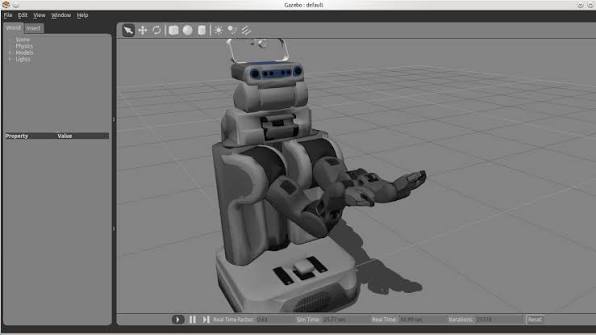 Gazebo + Nav2 Lab
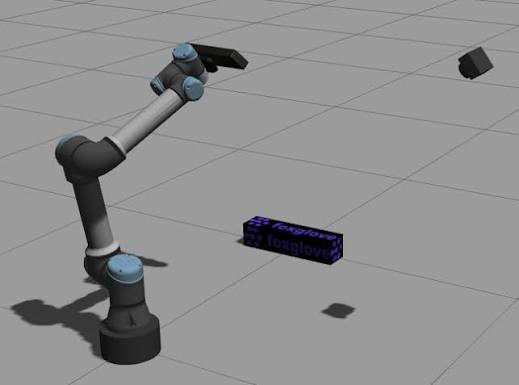 RViz2 + YOLO Perception
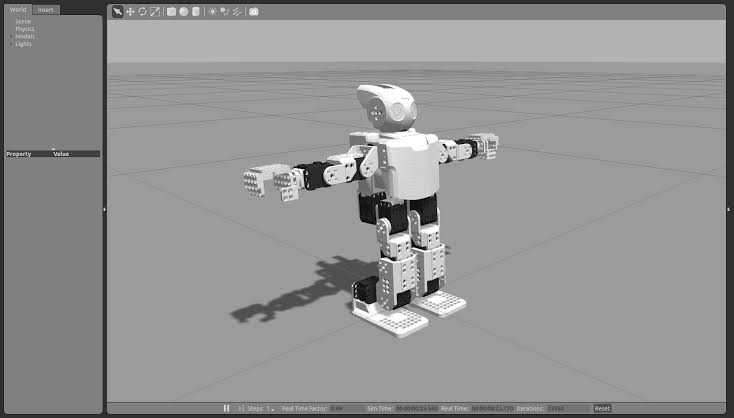 Multi-Robot Gazebo Lab