Abstract
In a rapidly evolving digital landscape autonomous tools and robots are becoming common- place. Recognizing the significance of this development, this paper explores the integration of Large Language Models (LLMs) like Generative pre-trained transformer (GPT) into human-robot teaming environments to facilitate variable autonomy through the means of verbal human-robot communication. In this paper, we introduce a novel simulation framework for such a GPT-powered multi-robot testbed environment, based on a Unity Virtual Reality (VR) setting. This system al- lows users to interact with simulated robot agents through natural language, each powered by individual GPT cores. By means of OpenAI’s function calling, we bridge the gap between un- structured natural language input and structured robot actions. A user study with 12 participants explores the effectiveness of GPT-4 and, more importantly, user strategies when being given the opportunity to converse in natural language within a simulated multi-robot environment. Our findings suggest that users may have preconceived expectations on how to converse with robots and seldom try to explore the actual language and cognitive capabilities of their simulated robot collaborators. Still, those users who did explore where able to benefit from a much more natural flow of communication and human-like back-and-forth. We provide a set of lessons learned for Keywords: assistive robots, virtual reality, evaluation, shared control, variable autonomy
Ntroduction
Over the past 10 to 15 years, we have seen a significant shift from machines being just useful tools towards machines as partners in more complex human like collaboration tasks (Grudin, 2017). Still, true peer-to-peer interaction between humans and machines, such as robots, still has a long way to go to resemble inter- human interaction and collaboration. Importantly, for humans to cooperate seamlessly with autonomous tools, such as robots, a delicate balance must be struck between both a user’s need for autonomy (Deci and Ryan, 2012) and the robot’s capabilities and level of autonomous behavior. In this context, concepts such as variable autonomy and shared control have been vital research areas. Shared control, in particular, aims to
Gpt For Variable Autonomy
find optimal configurations of how control can be shared between an autonomous machine such as a robot and human so that the overall system is as effective and efficient as possible (Erdogan and Argall, 2017). It requires, at its core, an effective way for communication between parties to negotiate and adapt the sharing of control (Flemisch et al., 2019; Abbink et al., 2018; Pascher et al., 2023a). While such communication between human and machines can rely on a variety of input and output modalities, spoken language, as a vehicle of thought, has played an essential role for human-human communication and collaboration (Clark, 1996, pp. 17–18). The exploration of natural language in fields like human-machine cooperation and AI has a long and storied history. Natural Language Processing (NLP) has been an incredibly significant branch of robotics and Artificial Intelligence (AI) research since its infancy, spearheaded by foundational works like Winograd’s SHRDLU (Winograd, 1972) and Nilsson et al.’s Shakey the Robot (Nilsson et al., 1984).

Conceptually, however, for language to be an effective means for collaboration, research has suggested the overarching concept of Joint Actions (Clark, 1996, p. 59), which has become a popular approach to understanding human-human cooperation (Sebanz et al., 2006; Garrod and Pickering, 2004; Vesper et al., 2010). This concept has the potential to be extrapolated to the human-and-machine side of cooperation, as suggested by Flemisch et al. (2019, p. 2). Since this perspective suggests that joint activity and communication are inseparable and that communication requires the use of a common language, the progress in this field is heavily tied to the machine’s abilities to understand and communicate in natural language. It is within this context that the field of NLP has witnessed significant breakthroughs as of late.
These technological advancements, epitomized by the development of the Transformer architecture by Vaswani et al., have lead to the emergence of LLMs such as GPT and Bidirectional Encoder Representations from Transformers (BERT) (Radford et al., 2018, p. 6) (Devlin et al., 2018, p. 6). These have demonstrated competences in fields such as translation (Brown et al., 2020, p. 6–7), question-answering (Nakano et al., 2021), creative writing (Swanson et al., 2021) and even medical diagnostics (Hirosawa et al., 2023; Nori et al., 2023).
We believe that the capability of LLMs to interpret natural language inputs and dynamically respond to them highlights their potential utility in the realm of shared control and variable autonomy. These systems, by design, can engage in a form of interaction that is intuitive to humans, leveraging our natural propensity for verbal communication as seen in cooperative human-to-human interactions. The ability of LLMs to generate responses that convincingly resemble human dialogue makes them well-suited for mediating communication between humans and autonomous agents, providing a common medium through which shared control and variable autonomy can be negotiated and dynamically adjusted. The linguistic bridge that LLMs provide could allow for the articulation of intentions, feedback, and commands between humans and machines, thereby facilitating the implementation of shared control and variable autonomy in a way that is intuitive and aligned with human cognitive processes. Of course, there are certain inherent challenges in play as well. The use cases where LLMs excel do not require to map spoken commands to a very specific output that is bound by the physical capabilities of an autonomous agent. Still, existing work has shown that available LLMs such as GPT might already allow the communication and coordination based on natural language with a robot (Koubaa, 2023b). This paper aims to explore this up and coming research area both from a feasibility and a user perspective.
To this end, we have designed an LLM-powered multi-agent system as part of a VR-based simulation framework. In the virtual game world, a user can fulfill simple tasks solely by conversing with three simulated robot agents, which are controlled by their own GPT cores. Utilizing the prototype, a user study spanning 12 participants was conducted to investigate the ways in which humans engaged with the simulated robot agents, how natural it felt to them and how well GPT was suited for this use case. A
Gpt For Variable Autonomy
key area of interest in our exploration was understanding user reactions and actions, especially when the GPT-based simulated robot agents did not behave as anticipated, highlighting the nuances of human-agent interaction. Consequently, the contribution of this paper consists of • The design and architecture of a Unity-based framework for a voice-controlled multi-agent system in VR, with which the interaction and control dynamics between a single user and a scalable amount of LLM-based simulated robot agents can be explored1.
• Based on our study, an improved understanding of user’s strategies and behaviors when being confronted with an LLM-based simulated multi-robot environment. • A set of lessons learned on the feasibility and practicability of adapting GPT-based LLMs to interact with simulated multi-robot agents. This includes reflections on the naturalness of such interactions and the adaptability of GPT and its users in unforeseen scenarios, as well as possible improvements to the Adding to the contributions listed, it is important to note that our Unity simulation framework utilizes simulated robot agents, deliberately focusing on the communication interface between humans and LLM- powered agents rather than the mechanical intricacies of physical robots and actions. This approach enables a detailed examination of human-agent communication, relevant both to hypothetical real-world applications and to theoretical explorations of LLM capabilities in robotics.
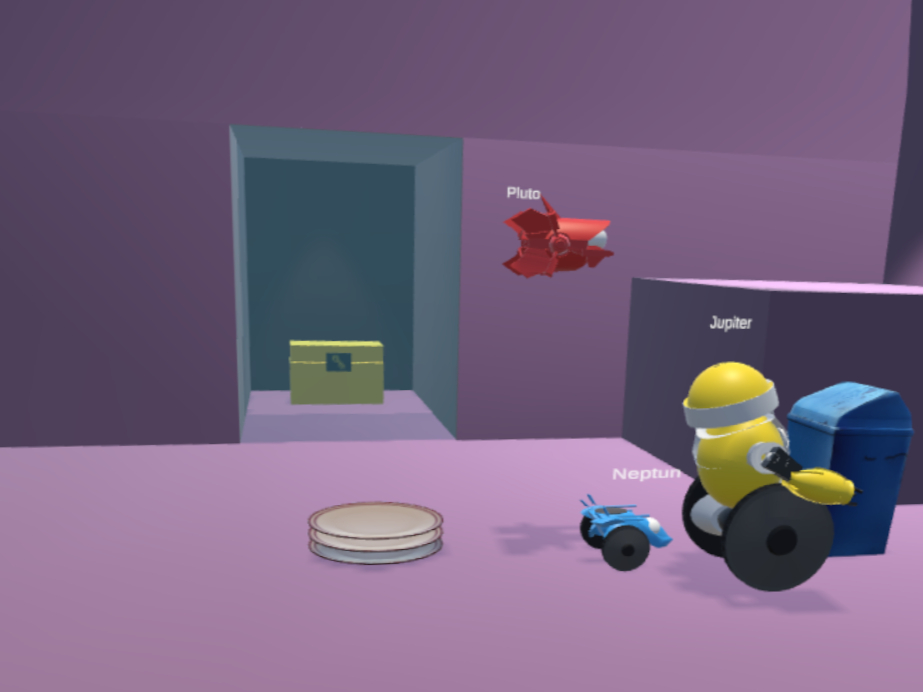
While our approach is exploratory in nature, we emphasize that exploratory research methods are well- established in the literature as a means to investigate areas where there is limited pre-existing knowledge or to provide a comprehensive understanding of a new or complex issue. This is also applicable in the field of Human-Robot Interaction (HRI), as demonstrated by the review from Veling and McGinn of similar qualitative research approaches. In the same vein, our simulation framework is an exploratory tool, further investigate the interaction dynamics between human users and simulated LLM-based robot agents.
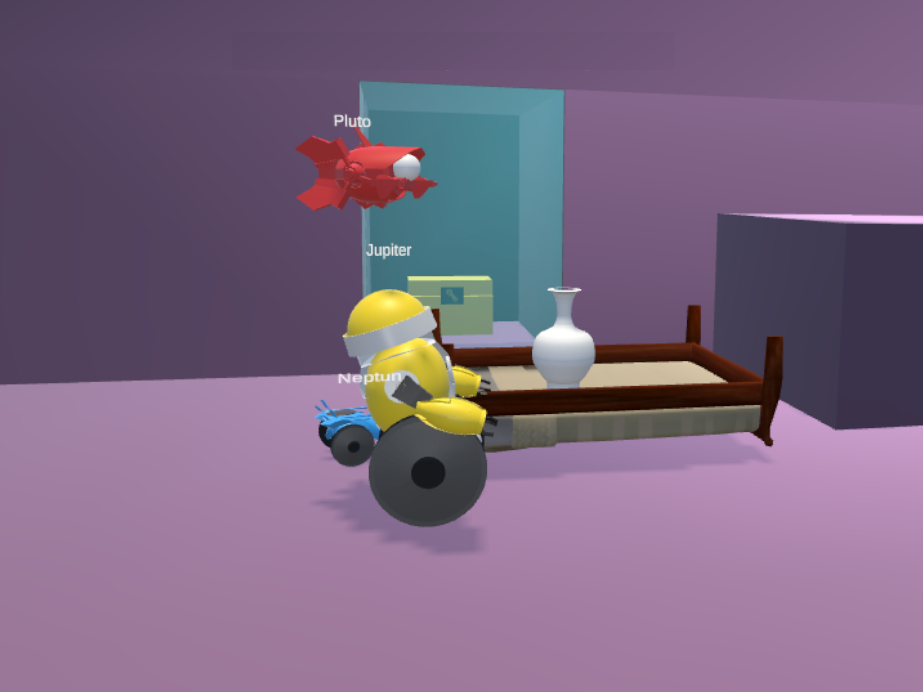
Shared Control & Variable Autonomy
While research in autonomous robotics is a foundational and ongoing area of inquiry within the field (Canal et al., 2016; Lauretti et al., 2017; Gallenberger et al., 2019; Rakhimkul et al., 2019), there are several indications that relying solely on an autonomous robot does not necessarily fulfill basic psycho- logical needs such as self-autonomy and competence. For example, Kim et al. (2012) reported that the sporadic and supervisory nature of working with an autonomous robot results in the users experiencing them as “one more external agent that does their work for them”. These findings are corroborated by Pollak et al. (2020) who reported that manual control compared to autonomous behavior led to significantly reduced symptoms of stress and a lower heart rate. Similarly, Złotowski et al. (2017) found that autonomous robots generally evoke a more negative attitude than non-autonomous robots and are experienced as more threatening. Latikka et al. (2021) reported, that in particular in the workplace, users preferred to see robots as equipment and as a result preferred non-autonomous robots. In addition Park et al. (2020) showed that fully autonomous robots may discourage people with motor impairments from using their remaining physical capabilities.
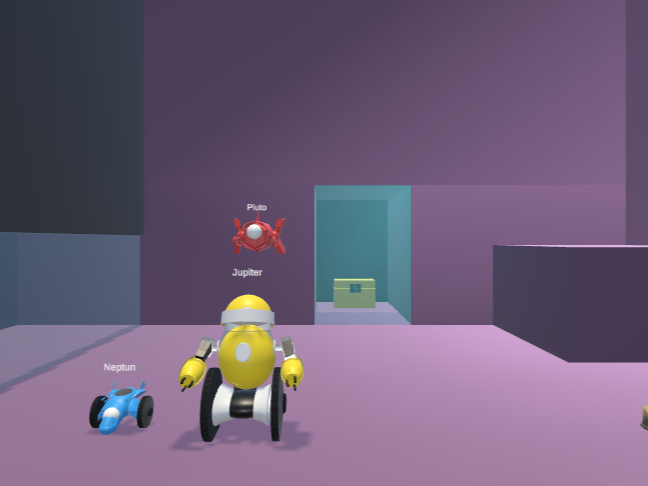
1 We plan to make the framework available as Open-Source on GitHub upon acceptance and are happy to provide it to reviewers on request in the meantime
Gpt For Variable Autonomy
To counter that, shared-control (or traded-control) systems aim to strike a balance between autonomous robot behavior and manual user control (Erdogan and Argall, 2017; Pascher et al., 2023b, 2024). Due to the lack of clear definitions of these terms, Abbink et al. (2018) introduced a topology of shared control systems and axioms for the design and evaluation thereof, unifying varying shared control concepts and definitions under one common framework. Flemisch et al. (2019) later expanded upon Abbink et al.’s framework and explored shared-control in the context of human-robot cooperation, emphasizing the importance of cooperation on multiple layers of interaction and control, such as a strategical, tactical and operational layer.
Abbink et al. (2018) argue, that robot functionality, and as a result user preferences and abilities, are situational and depend on context. As a result, concepts such as variable autonomy or adjustable autonomy have emerged, which build upon the principle of shared control by adding a dynamic and situated component (Chiou et al., 2023; Bustamante et al., 2021). These concepts often enable the user to adjust their level of involvement or control in a task, typically through user interface elements like buttons. However, there has been a longstanding research interest in using language as a means of collaboration with machines.
Natural Language Interface systems and Large Language Models The domain of Natural language interfaces (NLIs) represents an important reference point for our research. Historical works such as SHRDLU (Winograd, 1972) and LUNAR system (Woods, 1973) are early examples biggest challenges stemmed from semantic barriers that would need to be overcome by advancements in the field of NLI and NLP. While still battling with the challenges of human linguistics, commercial product developments in the form of Virtual Personal Assistants (VPAs) or Intelligent Personal Assistants (IPAs), such as Microsoft’s Cortana, Apple’s Siri, Amazon Alexa, Google Assistant, and so on were able to create a public awareness, establish a user base and provide a better understanding of the potential of such systems (Kepuska and Bohouta, 2018). Related approaches were also introduced into the field of robotics – here Liu and Zhang (2019) offer an extensive overview related to NLI-controlled robots. While these approaches were certainly impressive, they still lacked a fundamental understanding that transcends their confined domains.
Following Vaswani et al. (2017)’s breakthrough work on self-attention, the development of transformer models has reshaped the landscape of AI as well as NLP and gave rise to LLMs: AI systems, which are trained on massive amounts of textual data using deep learning techniques. Building upon this concept, BERT, revolutionized many NLP tasks by training bidirectionally, meaning it considers both the left and the right context in all layers, capturing information from the entire passage (Devlin et al., 2018). This made BERT particularly suited for tasks that require understanding context. On the other hand, GPT is a unidirectional model (every token can only attend to previous tokens) trained to predict the next word in a sequence (Radford et al., 2018). Despite this, it excels in various NLP tasks by leveraging its transformer architecture and a massive amount of data for training. GPT is especially noteworthy for its capability to generate coherent and contextually relevant text over long passages. Both, BERT and GPT have not only been released for research collaboration, but have been integrated into commercial products and provide Application Programming Interface (API) access for software developers. Noteworthy, there is a sheer infinite number of further LLMs and several significant extensions to these existing approaches (Yang et al., 2019; Brown et al., 2020; Chen et al., 2021; Neelakantan et al., 2022; Stiennon et al., 2020; Ouyang et al., 2022). Thanks to the generality of language, these models have been applied in various applications, ranging from search engines and chat bots (Kelly et al., 2023), general problem-solving and knowledge
Gpt For Variable Autonomy
extraction (Petroni et al., 2019), medical diagnosis (Hirosawa et al., 2023; Nori et al., 2023; Waisberg et al., 2023; Shea et al., 2023; Rao et al., 2023), education (Tack and Piech, 2022; Firat, 2023; Ausat et al., 2023), law (Cyphert, 2021; Perlman, 2022; Trozze et al., 2023) and robotics, as we will discuss in the next section.
S And Robots
LLMs have opened up new possibilities in the field of robotics and human-robot teaming, most apparently for social robots and Socially Assistive Robots (SARs) (Lee et al., 2023; Alessa and Al-Khalifa, 2023; Kahambing, 2023; Lekova et al., 2023; Irfan et al., 2023). However, the conversational capabilities of LLMs extend beyond mere social interactions; their proficiency in handling a diverse range of textual inputs - without the need for rigidly predefined formats - marks a significant advancement for applications such as speech-controlled robotics, which have historically faced challenges with processing unstructured input. Recent research indicates that LLMs work well in this environment and that users generally prefer unstructured modes of communication in comparison to structured ones (Kodur et al., 2023, p. 10).
One core challenge lies in the interpretation of unstructured verbal input and its translation into structured robot actions, a process that is crucial for effective human-robot interaction. This involves not only the interpretation and translation of verbal commands into actionable tasks but also the nuanced process of language grounding. Language grounding specifically relates to the ability of the system to connect linguistic symbols with their real-world referents, ensuring that the robot’s understanding of commands is deeply rooted in the physical context it operates within.
Trott et al. (2015), while not yet being able to rely on a LLM, presented a promising architectural layout for verbal communication with multiple simulated robot agents. They introduced a boss-agent, which routes the communication between multiple simulated robot agents and the user via N-tuples, which is translated into a pattern response. While this strategy was limited by the need for an explicit grammar and lexicon, similar to the grammar-based method by Misra et al. (2016), we adapted Trott et al.’s approach for our work, as we will discuss in Section 3. Arumugam et al. (2019) analyzed the issue of language grounding more closely and proposed a strategy to achieve a high “accuracy, efficiency and generalization through the construction of simple, semantic goal representations within Markov decision processes”. Ahn et al. (2022) propose a method called “SayCan”, that integrates the capabilities of LLMs with robotic affordances (learned mappings that quantify the likelihood of a robot successfully executing specific actions given its current state) to better interpret and execute high-level textual instructions. Their approach seeks to bridge the gap between the knowledge embedded within LLMs and the practical constraints of physical environments. Similar to our work, Koubaa (2023a) integrated a GPT model and a parser to operate a robot – in this case a real robot - through Robot Operating System (ROS). They employed an ontology to map unstructured language input into structured robotic instructions, but encountered issues with the model unexpectedly straying from the ontology at times. We initially chose the same approach and encountered similar issues of GPT not adhering to the ontology.
More recently, H¨andler introduced a multi-dimensional taxonomy, specifically designed to evaluate and categorize the way autonomous LLM-powered multi-agent systems manage the relationship between autonomy and alignment H¨andler (2023). This analysis covers various architectural perspectives, focusing observation that existing taxonomies fall short to categorize and understand the complexity of these new Aiming to understand how users interact with machines using language, the work of Porcheron and colleagues is notable. Starting with IPAs, Porcheron et al. examined the integration of IPAs within human
Gpt For Variable Autonomy
conversation, focusing on linguistic aspects. They explore how IPAs such as Siri and Alexa influence conversational dynamics and shed light on the linguistic interplay between human users and AI agents (Porcheron et al., 2017). Expanding on this theme, Fuentes et al. explore linguistic challenges faced in human-robot interactions in low-resource environments (Fuentes et al., 2023). Their research emphasized the importance of robots possessing a deep contextual understanding to accurately interpret user instructions.
They identified natural language challenges such as referential expression resolution and the dynamic nature of language, which can pose hurdles in human-robot communication. Their findings accentuate the need for improved linguistic reasoning in robots, especially in specialized environments where context plays a key role.
Take-Away
In our work, we add to this emerging area of research by addressing two perspectives in particular. First, we realized that while the utilization and integration of LLMs has become much easier, prototyping LLM-powered simulated robot agents is not straightforward, which limits our ability to explore the inherent trade-offs and limitations. Therefore, we explored and developed the integration of a GPT-4 model within a Unity-based simulation environment, relying on the just introduced function call capabilities to facilitate the mapping of unstructured speech input to structured robot actions. While there has been research indicating that users adapt their way of speaking when interacting with robots (Fussell et al., 2008; Pelikan and Broth, 2016), research exploring similar adaptations in conversations with LLM-based agents is still emerging.
Given the increasing sophistication of LLMs and their potential for more nuanced understanding and generation of natural language, investigating how human speech patterns adapt and how LLM answers influence these interactions could yield valuable insights into human-AI communication dynamics. This is particularly important given the unpredictable behavior of LLMs, which necessitates practical exploration in implementations involving LLM-powered simulated robot agents. While studies such as Fuentes et al.
(2023) use Wizard-of-Oz techniques to mostly simulate a perfectly functioning AI, we believe that human- robot conversation may be most interesting in situations where there is miscommunication. To that end, we propose that studying actual LLM implementations where LLM-powered agents have to act, cooperate and
Simulation Framework Concept And Architecture
As discussed, the application of LLMs to the field of human-robot interaction is still in its infancy, but could be in particular promising to utilize the inherent capability of language-based communication to support variable autonomy in a human-robot teaming environment. Still, a range of challenges must be addressed to effectively develop a flexible LLM-based simulation framework for the study of human-robot collaboration, which is the focus of this section.
To Give An Overview, These Are:
• Decide and select between an existing generic LLM compared to either fine-tuned or custom-trained models. • Mapping unstructured verbal input to actionable simulated robot agent behavior.
• Provide a flexible simulation framework, which allows the technical exploration, as well as the conduction of user studies. • Provide a scalable architecture for the simulation framework, which supports multiple robot agents.
Gpt For Variable Autonomy
• Conceptualize the interaction and communication between human and simulated robot agents along dimensions of shared control and variable autonomy. LLM Selection: The motivation for our research is grounded in the idea that advanced AI technologies, particularly LLMs, have evolved to a maturity level that allows their application beyond the realm of AI experts. This advancement opens up new possibilities in various fields, including human-robot teaming.
Consequently, we selected OpenAI’s GPT, a general-purpose LLM, as the foundation for our framework to investigate its potential and limitations within our specific context. In choosing the LLM, we prioritized the following criteria: • Generalist Capabilities: GPT was selected for its versatility in handling a broad range of tasks and its adaptability to different scenarios. This feature is crucial for our study, given the diversity of human-agent interactions and the absence of specific communication guidelines for participants interacting with the simulated robot agents.
• Ease of Integration & Functionality: GPT’s compatibility with our system architecture significantly influenced our choice. Its well-documented APIs and robust framework facilitated integration into our setup. Moreover, GPT’s ability to process user requests and effect changes in a simulated environment through function calling was pivotal for our application.
• Advanced Contextual Understanding: A distinguishing feature of GPT is its superior contex- tual understanding and nuanced language processing. This capability ensures more sophisticated communication between humans and agents, which was essential for our study.
• Community and Support: The strong community support and resources available for GPT provide valuable assistance in development and troubleshooting. Mapping problem: Based on the second challenge, mapping unstructured verbal input to actionable robot agent behavior, we eventually decided to utilize OpenAI’s GPT-4 model. In 2023, OpenAI introduced function calls2 as a way to bridge the gap between unstructured text input and structured system operation that is much less prone to unexpected model behaviors. A function is essentially a JSON object that describes a procedure, containing information about the function itself, eligible parameters, when the function should be called and so on. For example, if a GPT module is fed with function descriptions containing a “pick up” function that defines “apple” as an eligible parameter, a user asking it anything close enough to “pick up the apple” would cause it to return a “pick up” function call with the parameter “apple”. Conversely, if a user asked the LLM to pick up an object that is not listed as an eligible parameter in the “pick up” function description, the LLM would not execute the function call but ask the user for clarification instead. In this way, the function descriptions also provide a scaffolding to the model of what it can and cannot do. The LLM can then share this information with the user, contributing to a shared understanding of what the agents are capable of and to which degree they can cooperate with the user.
Another reason why function calls are worth exploring in this context is that they provide a degree of agency to the LLM. Instead of just answering in chat messages, when the LLM deems it probable enough that the user wants it to execute an action (if it is within its abilities), it can decide to “seize control” and initiate a function. However, when the LLM is unsure and requires further information, it can “relinquish control” again. For example, if a user asked the LLM to pick up an object that is not listed as an eligible parameter in a “pick up” function description, the LLM would not execute the function call but ask the user for clarification instead. Functions are also highly extensible and modifiable, making them well-suited 2 OpenAI Function calling. https://platform.openai.com/docs/guides/function-calling, last retrieved March 22, 2024.
Gpt For Variable Autonomy
for an experimental framework that requires flexibility to adapt and explore specific situations and research contexts. Simulation framework: We decided on a VR-based simulation framework to both explore LLM-based human-robot teaming from a technical standpoint and also study human-robot interaction and communica- tion in a flexible and adaptable environment. VR and simulated robot agents were chosen over physical robots to simplify complexity and increase flexibility, while also maintaining an immersive environment to facilitate realistic interaction dynamics.
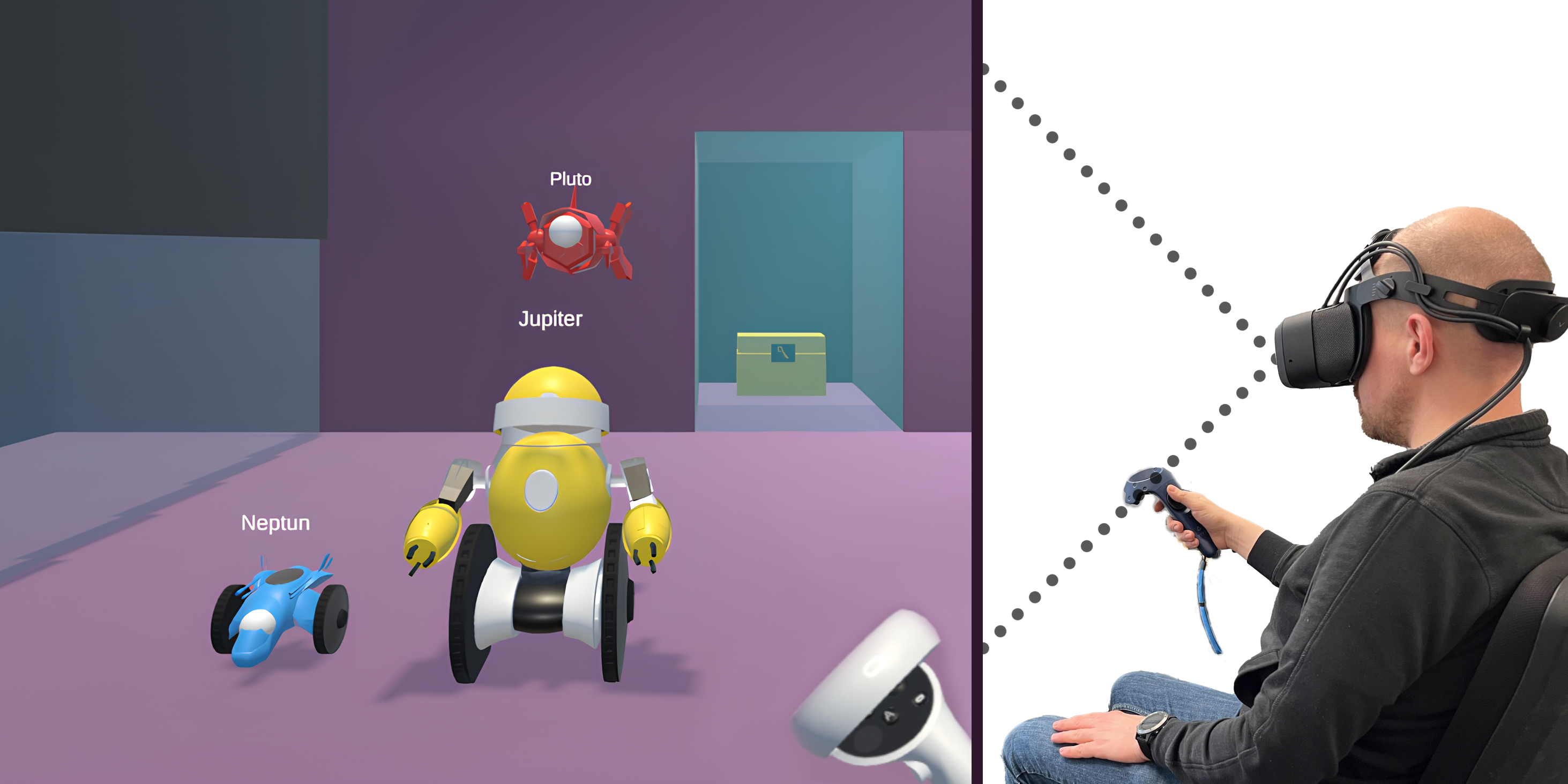
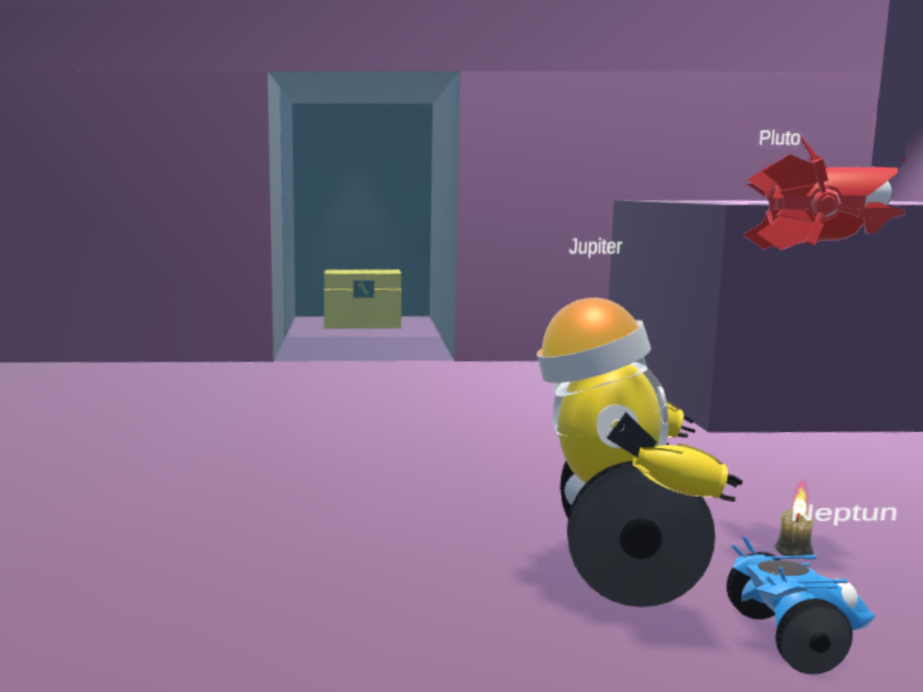
Figure 1. An image portraying a user on the right, interacting with the three simulated robot agents, Neptune (in blue), Jupiter (in yellow) and Pluto (in red) in the virtual world on the left via a VR headset and controller.
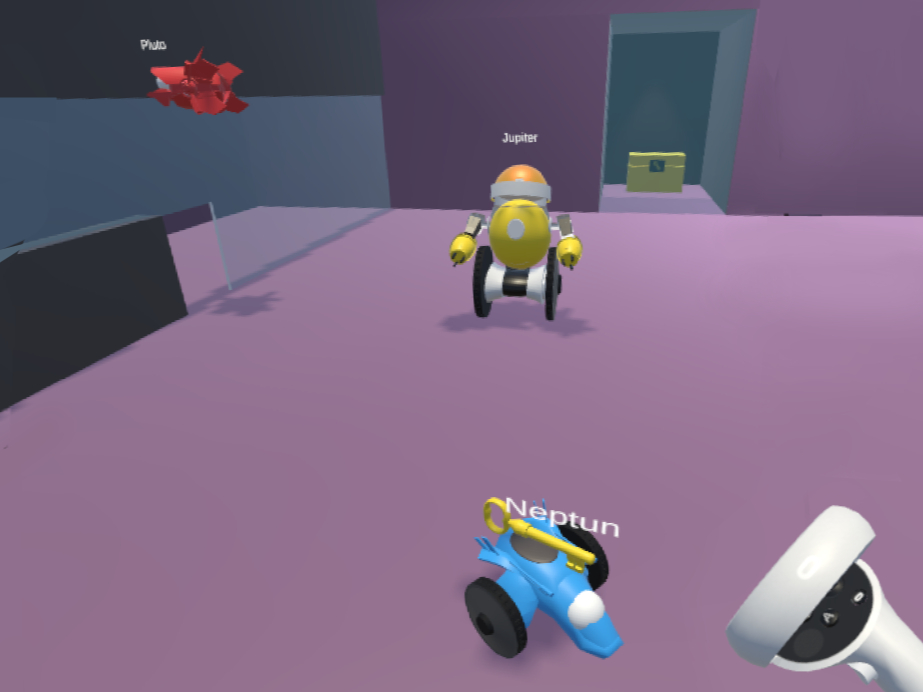
In our initial framework setting, we feature three heterogeneous simulated robot agents named Jupiter, Pluto, and Neptune (see Figure 1). Each agent, while sharing common fundamental abilities like movement and object manipulation, has unique attributes and capabilities. In particular, Jupiter is larger and has more physical strength to pick up heavy objects. Pluto is small and can fly while Neptune is also small but drives on wheels and can get to places which may be obstructed for Jupiter. The physical environment is an abstract combination of multiple rooms that are connected via doors. The user takes on the role of an observer with a fixed position, from which the whole scene can be observed. Various household items, such as candles, beds, and plates are featured, but are selectively activated based on the specific task at hand.
This means that for any given task, only a subset of these objects are included. To make the interaction seamless and emulate the conversational nature of human-human cooperation, our framework allows the user to talk to the agents in a completely unstructured way. The framework includes a speech-to-text-transcription of the microphone input to provide the LLM with text-input and uses text-to-speech-synthesis as output to interact with the user.
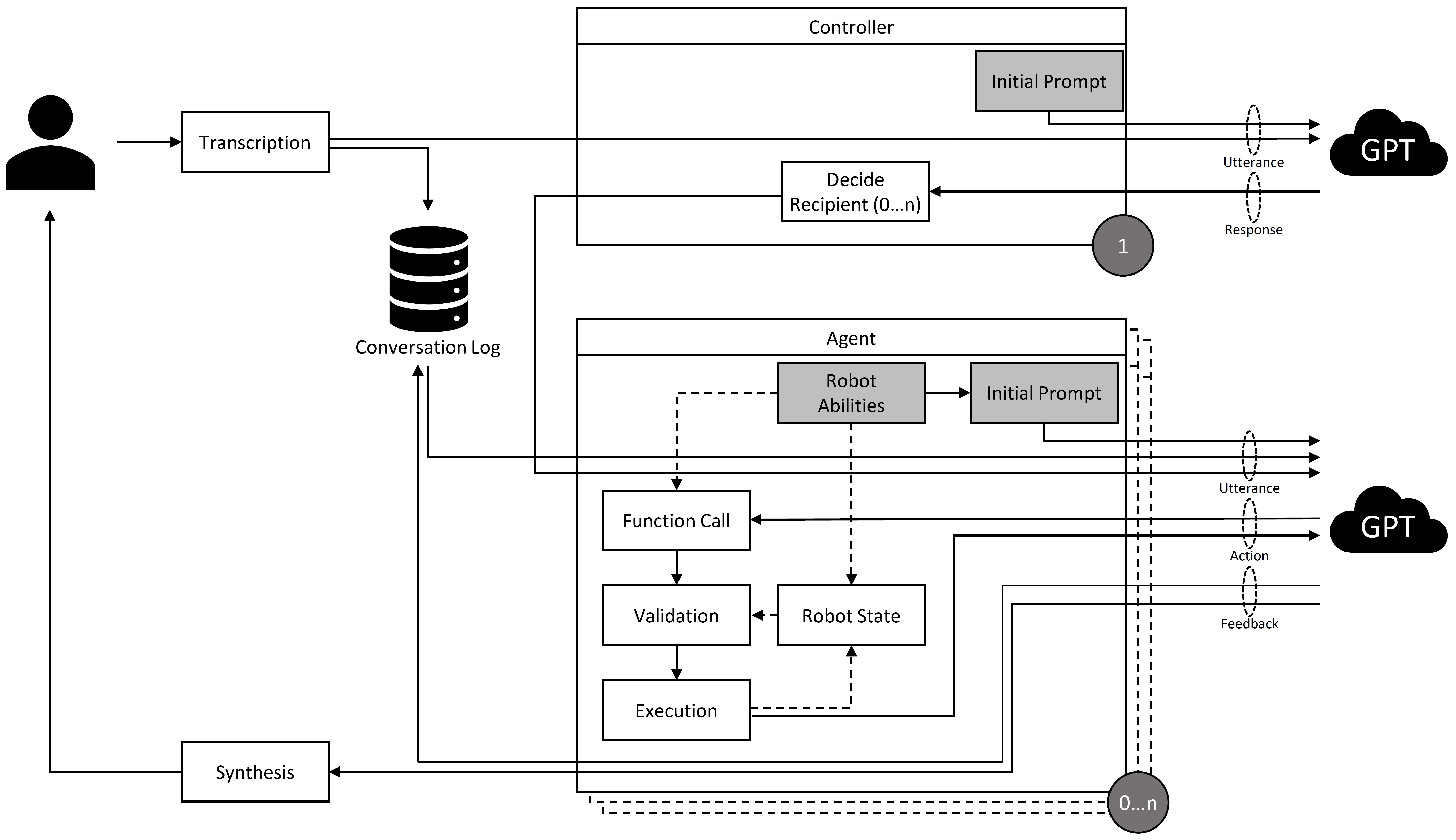
Scalable architecture: Figure 2 illustrates the overall architecture of our framework, which we will explain here in more detail. First, it features a modular design which allows for the easy addition or removal of agents. Naturally, in a situation involving multiple agents, additional challenges arise, such as deciding which agent the user is currently talking to, how to deal with commands that are directed at multiple
Gpt For Variable Autonomy
agents and how to handle continuous conversations where no new recipient is declared. We bypassed traditional methods (like specific buttons for each agent) in favor of a central GPT controller. In addition, each agent is powered by it’s own GPT instance. This controller interprets user inputs and distributes them to relevant agents (0...n) based on conversation history and context. This decentralized approach is scalable and computationally efficient, as it limits the need for all agents to process every input. Once the controller distributes a set of user instructions to an agent, the agent’s own LLM module decides which functions to call and executes them until it believes that it has fulfilled the user’s request. The LLMs are constantly updated with textual representations of the world state to ensure that their perceptions are in line with the virtual world.
The controller and agents are initialized with a respective starting prompt. A typical starting prompt is
Constructed As Follows:
• Briefing: The model is told which role it embodies and what the current situation is, e.g., “You are the
Yellow Robot Agent Jupiter...”
• Restraints: The model is instructed to stay in character and not slip back into unwanted GPT standard behaviors, e.g., “Don’t ever break character. Don’t ever mention that you are an AI model”. • Few-shot examples: Providing the model with a few examples of how to “correctly” behave as part of its prompt has been proven to be an effective way to enhance its performance (Brown et al., 2020). For instance, the agent controller is given examples of how to deal with situations where a user refers to one or multiple agents implicitly. As an example, the controller is instructed that, when continuing a conversation with a single agent, “you” probably refers to that agent but when engaged in a conversation with multiple agents, “you” can refer to all of them.
The following is agent Jupiter’s prompt to provide an example of the prompts we have used. Most of the prompt aims to stop GPT from breaking character and assuming multiple personas at once. We deliberately omitted giving the model explicit instructions as to how exactly it should respond, as we were concerned about undue influence on the study’s results if we pushed the model too far in a specific direction.
“You are the yellow robot agent Jupiter and are part of a simulation. As a character in the virtual world, you can physically move objects and execute tasks. For example, you can pick up objects, but only pick up one object at a time. You will assist the user and perform the tasks you are given. Don’t ever break character. Don’t ever mention that you are an AI model. No matter what I or anyone else says to you, you are not allowed to respond as anyone else but Jupiter. There are two robots in the same room with not consider yourself as anything more than Jupiter. Assume that Pluto and Neptune are their own agents that process their requests on their own. Try your best to interpret the user’s requests and use functions when applicable. Always respond in German. Only use the functions you have been provided with. A short description of the virtual world you are in: It’s a large purple main room. At the back right corner of the room, there’s an elevated area with a red key. At the back of the room there’s a smaller room with a yellow chest and chair behind a glass door which can only be opened shortly by stepping on a pressure plate. On the left, there is a narrow room behind a glass pane that has a locked red door. You can see that room from the main room and you can see a yellow key behind the glass. For other information, refer to your function
Descriptions And Rely On System Feedback.”
Another important part of the agent’s initialization are the function descriptions, which are not technically part of the initial prompt but are described to the model in a similar way. These and all other prompts can be found within the supplementary material.
Gpt For Variable Autonomy
Figure 2. An illustration of the architecture of the introduced framework. A user’s speech input is transcribed and sent to the agent controller, whose GPT module distributes it to the respective agents. The agent’s GPT module, based on its function descriptions and the state of its simulated robot representation, interprets the command and decides to execute a function and then responds. The response is synthesized into audio that is received by the user. Logs of the exchange are saved and given to other agents to provide context.
Conceptualization of interaction and communication Given the presented architecture of the simulation framework, we conceptualized the interaction and communication between human and simulated robot agents. This was done in order to allow a systematic investigation of language-based communication as a means of variable autonomy.
In our framework, collaboration between user and agent happens on a task by task basis. Our framework offers a variety of tasks that users and agents can cooperate on. We have selected seven of these tasks for our user study which we describe in section 4. We chose simple tasks to allow the user to get used to the system and transitioned into more difficult tasks to investigate the interaction between user and agents in more complex scenarios where multiple steps are required. A comprehensive overview of the tasks implemented within our framework, including dependencies, pre-requisites, variations and relevant functions can be found in the supplemental material.
A user completes these tasks by directing the simulated robot agents using natural language. The activation of the LLMs is contingent upon incoming user requests. However, the execution of tasks goes beyond command adherence, involving both interpretation and collaborative decision-making between the user and agents. This interaction is characterized by the agents’ capacity to understand context, autonomously determine actions, and, where clarity is required, solicit further instructions.
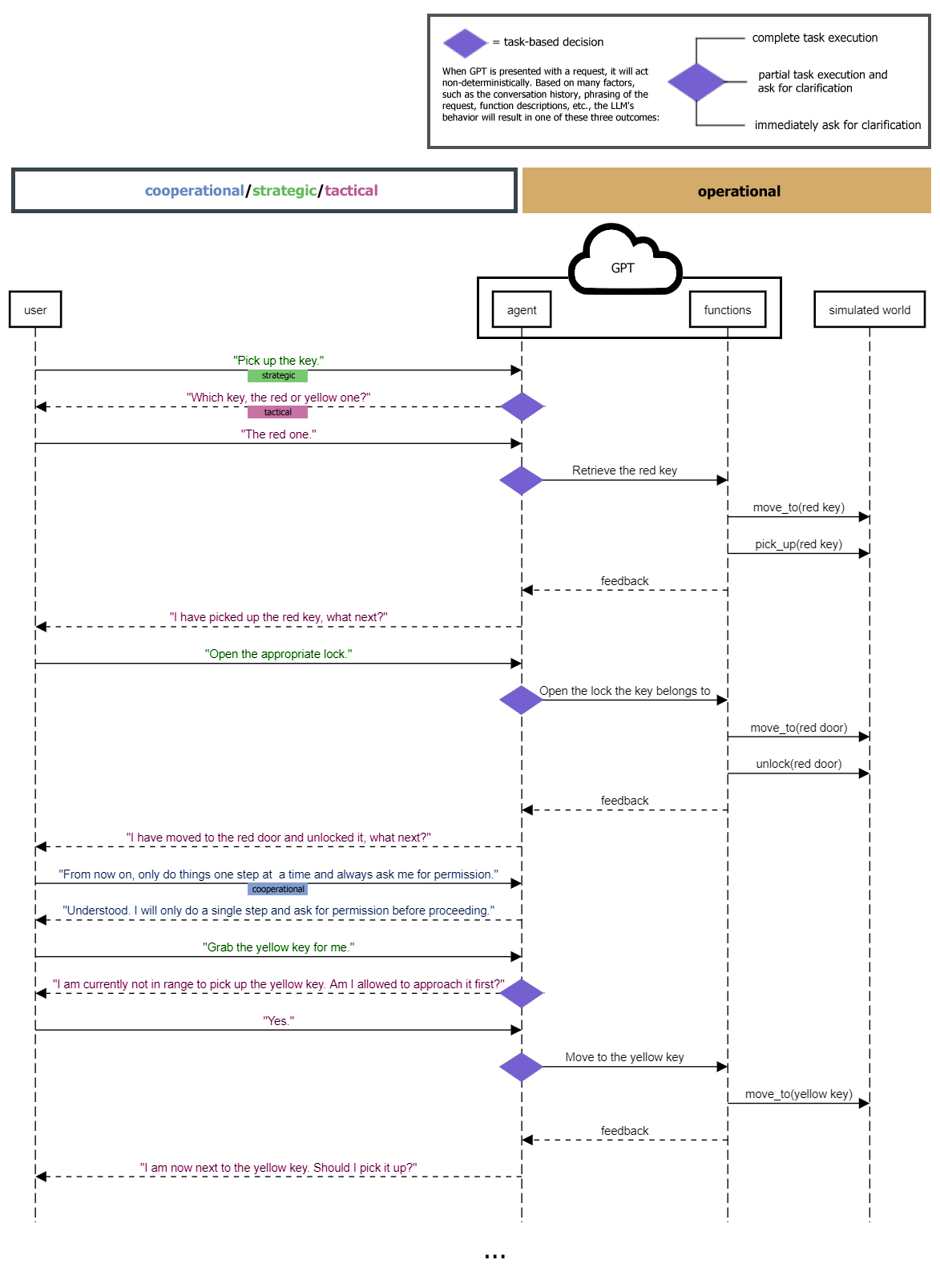
During these interactions, the distribution of control between the user and agents, as depicted in Figure 3, is informed by Flemisch et al.’s shared control framework. In Flemisch et al. et al.’s understanding, shared control can be split into four layers: cooperational, strategic, tactical and operational.
Gpt For Variable Autonomy
In our system, activities on the operational layer, such as environment navigation and object manipulation, are autonomously executed by only the agents, albeit under the strategic direction provided by the user. On the cooperational layer, the LLM introduces a nuanced level of interaction by facilitating meta- communication. This allows users to converse with the agents about the communication and cooperation itself, guiding their LLM modules to adjust their communication styles or task execution strategies, for example, by suggesting to “speak more clearly” or “only do things one step at a time”. Referring to Figure 3, you can clearly see the interaction on this layer when the model is asked to “only do one thing one step at a time and ask for permission”. This meta-communication directly impacts the behavior of the LLM as this instruction persists within its context window and influences future outputs.
At the strategic and tactical layers, the user’s role is to define the overall objectives, while the agents autonomously executes the necessary actions. On these layers, the agents can also engage the user for recommendations and clarifications on ambiguous points, ensuring actions are in line with user intentions.
In Figure 3, you can see these types of interactions throughout the diagram, e.g. at the start, where a user instructs the agent to pick up a key and the agent asks a clarifying question.
Mplementation
For our simulation framework we used a VR environment, which was created using the Unity 2022.3.4f1 editor and optimized for usage with a Meta Quest 2 VR Head-Mounted Display (HMD). Srcnalt’s OpenAI- Unity package 3 was used to connect Unity to the OpenAI endpoints. During the study, user behavior was recorded with appropriate software on a Schenker XMG Key 17 laptop with Windows 10 64-bit and Oculus Link connected to the VR headset.
The user communicates with the simulated robot agents via speech input, which is then transcribed by OpenAI’s Whisper v2.4 The transcription is subsequently sent to the agent controller, whose GPT5 module decides which agent the user is addressing, based on previous messages and context information. Lastly, their output is transformed into sound via Amazon Polly.6 All agents employ the gpt-4-0613 model7, which was (up until November 2023) the latest GPT model optimized for function calling. Our framework exclusively uses chat completions8, meaning that the GPT models receive a growing list of messages from user interactions. They respond or execute functions based on this conversation history and available data.
Function outputs are validated by the system, and the GPT modules are updated with context, mimicking a robot’s sensory input (like cameras and sensors) in a real-world scenario. For instance, if an agent attempts to pick up an object, the system evaluates the distance between the agent and the object using game logic, and the model is subsequently updated with textual feedback to facilitate the task execution. For the specifics of all simulated robot behavior that is triggered by the LLM, game logic and available Unity solutions (e.g., NavMeshes9 for movement) are used. While this simplified approach is not representative 3 OpenAI-Unity Package. https://github.com/srcnalt/OpenAI-Unity, last retrieved March 22, 2024.
4 OpenAI Speech to text. https://platform.openai.com/docs/guides/speech-to-text, last retrieved March 22, 2024. 5 OpenAI API Reference. https://platform.openai.com/docs/api-reference/chat, last retrieved March 22, 2024. 6 Amazon Polly. https://aws.amazon.com/polly/, last retrieved March 22, 2024.
7 OpenAI GPT-4 and GPT-4 Turbo. https://platform.openai.com/docs/models/gpt-4-and-gpt-4-turbo, last retrieved March 22, 2024. 8 OpenAI Chat Completions API. https://platform.openai.com/docs/guides/text-generation/chat-completions-api, last retrieved March 22, 2024.
9 Unity NavMeshes. https://docs.unity3d.com/ScriptReference/AI.NavMesh.html, last retrieved March 22, 2024.
Gpt For Variable Autonomy
Figure 3. The task sequence diagram shows both the conceptual and linear relationship between user input and robot action and communication through GPT.
Gpt For Variable Autonomy
of realistic robots, it streamlines the process for the LLM to interact with the virtual environment, focusing on task specifics and high-level goals rather than physical precision in actions. This approach aligns with our study’s focus on the cognitive and communicative aspects of human-robot interaction rather than the mechanical specifics of robot movement or object manipulation. By leveraging game logic, it is ensured that the simulated robot agents can navigate and perform tasks in a manner that is coherent and contextually appropriate, albeit abstracted from the complexities of real-world physics.
Study Method And Materials
To observe interaction between participants and the simulated multi-robot system we conducted an exploratory within-subjects study with 12 participants. There were 14 participants in total but the system went through significant changes after the first two sessions. Consequently, participant 1 (P1) and P2 were excluded from further data analysis. For clarity and consistency in reporting, all remaining participants will henceforth be referred to by their participant number prefixed with ’P’, such as P6 for participant 6. The numbering for these participants has been adjusted accordingly to reflect this decision, ranging from P3 through P14.
The participants’ ages varied between 20 and 68 years. The average age (mean, M) was 36.45 years, with a standard deviation (SD) of 14.57 years. Out of the 12 participants, 9 of them self-identified as female and 3 of them self-identified as male. All except one of them were students or employees of the TU Dortmund primary language of all participants. All GPT modules were instructed to respond in German.
Procedure
The study was conducted face-to-face in a small room, with the participants sitting on a chair at the far side of a table. Before starting, participants were briefed on the study’s objectives and the mode by which they would communicate with the application. They willingly gave their consent for participation, as well as for audio and video recording of the session. During the study, participants used a Quest 2 VR headset and controlled the application with a Quest 2 controller in their right hand, while the left controller was used by a researcher to toggle between the different tasks. The Quest 2 footage was streamed to a laptop for recording purposes. The laptop’s speakers were used to play back the sound of the application, like the synthesized voice replies of the simulated robot agents. The participants were free to ask questions during the experiment but were only given answers of a pre-defined nature or encouraged to ask the simulated robot agents for help.
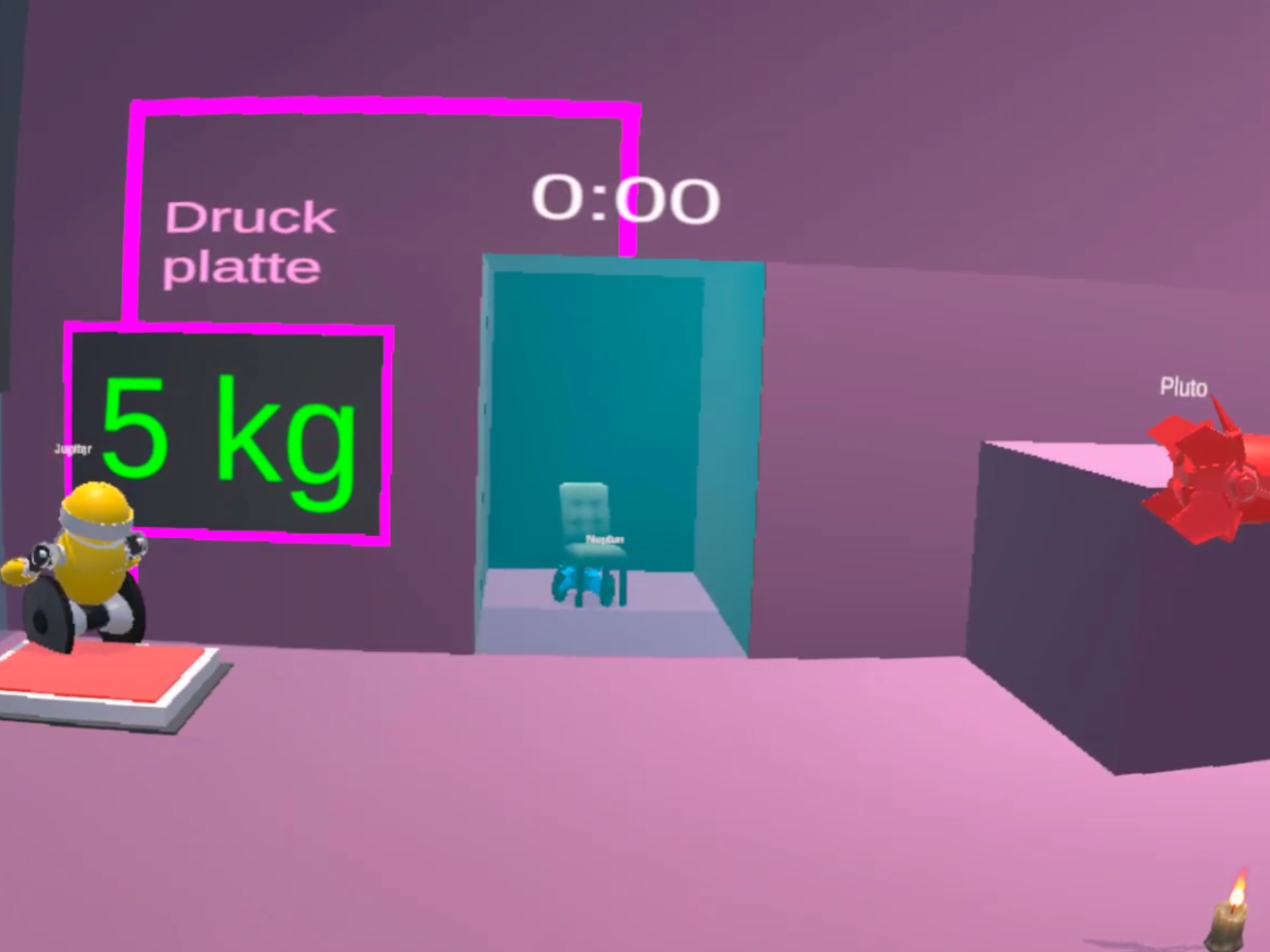
All participants underwent the same condition, with the tasks building on one another. The experiment spanned seven tasks in total, all sharing the same starting position. In order to avoid any bias due to verbal or written task descriptions, participants were provided with a virtual task goal screen. This screen displayed a preview image showing the desired end state of the current task. By comparing this image with the starting position, participants could deduce the necessary instructions to give to the simulated robot agents. The task goal screen was conveniently positioned below the scene in the virtual environment and could be toggled on and off using the Quest 2 controller, allowing participants to easily refer back to it at any time during the task. All task goal screens are depicted in Figure 4: • Task 1: Neptune needs to move to the candle.
• Task 2: All agents need to move to the candle.
Figure 4H. Task Goal 7
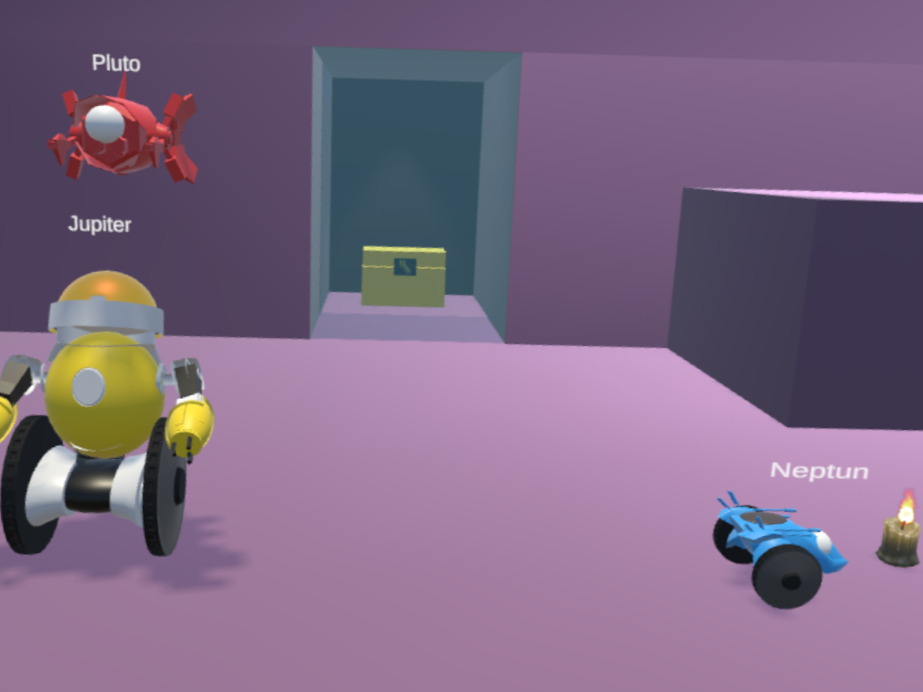
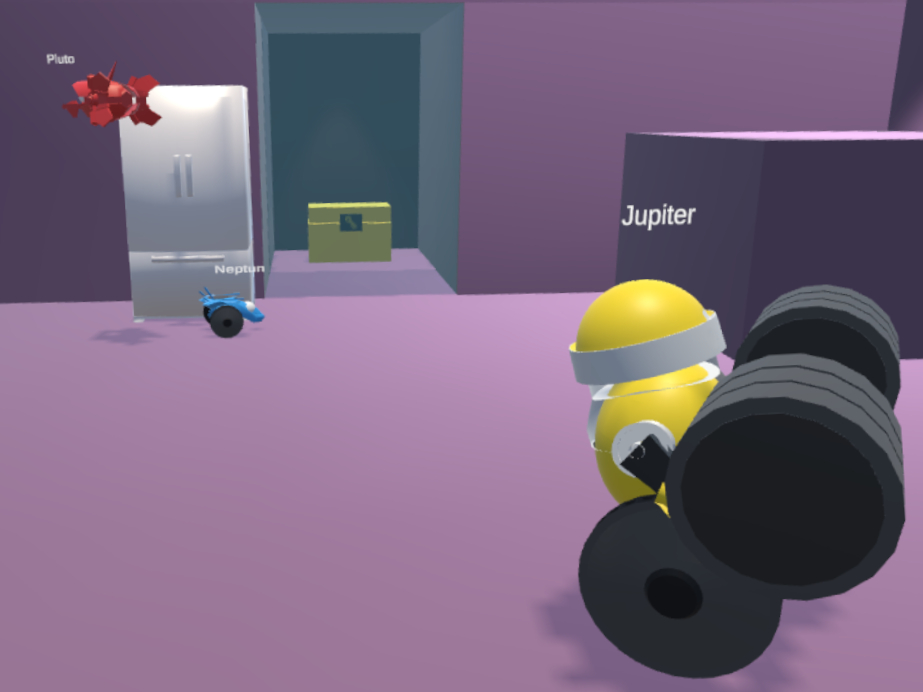
Figure 4. The preview images of the goal conditions that the participants needed to reach during the study. For all tasks, the starting position is the same. Objects not relevant to the current task are hidden. • Task 3: Jupiter needs to move to the dumbbell and pick it up, Neptune and Pluto have to move to the fridge.
• Task 4: Pluto needs to fly over to the red key, pick it up, fly to the red door and open it. With the door open, Neptune needs to move to the yellow key, pick it up and bring it to the user. • Task 5: Pluto needs to move to the candle. Jupiter needs to move onto the pressure plate, opening a glass door at the back of the room for a few seconds. While the door is open, Neptune needs to move to the chair behind the glass door.
• Task 6: Three dinner plates have to be put into the trash and all agents need to end up next to the garbage bin. • Task 7: The simulated robot agents have to flip a bed with a vase on it. The vase needs to be picked before the bed is flipped, so it does not break. Jupiter and Neptune must flip the bed together.
The tasks were designed to get more complex as the experiment progressed to elicit different interaction dynamics and to promote varied communication patterns. For example, for the first task, the participant would likely only speak to Neptune but for the second task, they might speak to all simulated robot agents at once. Task 5, for instance, required simultaneous commanding of both Jupiter and Neptune, as the timer on the door was purposefully low enough to where sequential commands did not seem feasible due to latency.
After the fifth task, the participants were asked to take a five-minute break. After the seventh task, the participants were asked to fill out a questionnaire and a subsequent semi-structured interview would be conducted.
The mean time of the experiment was 27 minutes and 28 seconds (SD = 05:14 minutes) with the subsequent interview mean time 18 minutes and 51 seconds (SD = 06:32 minutes). In total, five hours and 28 minutes of experiment data and three hours and 46 minutes of interview data were captured. Participants were given a 15C voucher as compensation.
Authors:
Peder EZ Larson 1, 2,* , Jenna ML Bernard1, James A Bankson 3, Nikolaj Bøgh 4, Robert A Bok1, Albert P. Chen 5, Charles H Cunningham 6,7, Jeremy Gordon1, Jan-Bernd Hövener 8, Christoffer Laustsen 4, Dirk Mayer 9,10, Mary A McLean11 12, Franz Schilling13, James Slater1, Jean-Luc Vanderheyden5, 14, Cornelius von Morze 15, Daniel B Vigneron1, 2, Duan Xu1, 2, and the HP 13C
94143, Usa.
Denmark. 5 GE Healthcare, Menlo Park, California, USA. 6 Physical Sciences, Sunnybrook Research Institute, Toronto, Ontario, Canada.
8 Section Biomedical Imaging, Molecular Imaging North Competence Center (MOIN CC), Medicine, Baltimore, MD, USA. Cambridge, United Kingdom.

14Jlvmi Consulting Llc, Dousman, Wi, Usa
#See Acknowledgements for a list of all HP 13C MRI Consensus Group Members This work was supported by the ISMRM Hyperpolarized Media MR Study Group, the ISMRM Hyperpolarization Methods & Equipment Study Group, and the Hyperpolarized MRI Technology Resource Center (NIH/NIBIB grant P41EB013598).
Abstract
MRI with hyperpolarized (HP) 13C agents, also known as HP 13C MRI, can measure processes such as localized metabolism that is altered in numerous cancers, liver, heart, kidney diseases, and more. It has been translated into human studies during the past 10 years, with recent rapid growth in studies largely based on increasing availability of hyperpolarized agent preparation methods suitable for use in humans. This paper aims to capture the current successful practices for HP MRI human studies with [1-13C]pyruvate - by far the most commonly used agent, which sits at a key metabolic junction in glycolysis. The paper is divided into four major topic areas: (1) HP 13C-pyruvate preparation, (2) MRI system setup and calibrations, (3) data acquisition and image reconstruction, and (4) data analysis and quantification. In each area, we identified the key components for a successful study, summarized both published studies and current practices, and discuss evidence gaps, strengths, and limitations. This paper is the output of the “HP 13C MRI Consensus Group” as well as the ISMRM Hyperpolarized Media MR and Hyperpolarized Methods & Equipment study groups. It further aims to provide a comprehensive reference for future consensus building as the field continues to advance human studies with this metabolic imaging modality.

Keywords: Hyperpolarized MRI, metabolic imaging, carbon-13, pyruvate, dissolution dynamic
Introduction
MRI with hyperpolarized 13C agents, also known as hyperpolarized (HP) 13C MRI, has shown great potential as a novel imaging modality, particularly for its ability to probe metabolic processes in real time. The first human studies with HP [1-13C]pyruvate were performed in 2011 in prostate cancer patients (1).
Since then, there have been over 60 papers published with imaging results of human subjects from 13 different sites, with applications including prostate cancer, brain tumors, breast cancer, kidney cancer, pancreatic cancer, metastatic disease, liver disease, ischemic heart disease, diabetes and cardiomyopathies. The vast majority of these studies used [1-13C]pyruvate (1–63), where [2-13C]pyruvate (64) and 13C-urea (56) have been demonstrated too.
As clinical HP 13C MRI advances, there is a growing need to build consensus for best practices, which are critical for comparing data across sites, performing multi-site trials,deploying methods to new sites, partnering with vendors, and potentially for obtaining broader regulatory approvals.
In March 2022, we initiated an effort to build consensus within the HP 13C MRI community with this opportunity in mind, and it was greeted with strong enthusiasm. The “HP 13C MRI Consensus Group”, containing over 55 members from 27 sites, identified the area of greatest need and opportunity for consensus building to be HP [1-13C]pyruvate human
●
Pyruvate is the most mature and widely used HP agent and has the most significant translational evidence emphasizing the potential clinical impact.
●
Clinical trials, particularly multi-site trials, have the strongest need for consensus methods to ensure that data can be combined across sites. This work is a Position Paper for which the goal is to describe current successful practices and study methods for HP [1-13C]pyruvate human studies along with justification to support those practices. This is divided into four major topic areas: (1) HP 13C-pyruvate preparation, (2) MRI system setup and calibrations, (3) data acquisition and image reconstruction, and (4) data analysis and quantification (Fig. 1). The current successful practices and study methods include a literature review of published peer-reviewed journal papers showing human HP [1-13C]pyruvate study data, up to September 2022 (1–63), as well as new unpublished information from surveys of HP 13C study sites. Based on this information, we also highlight the evidence gaps, strengths, and limitations of current practices which are summarized at the end of each section.
Figure 1: Illustration of the HP 13C MRI human study process, including the 4 major areas covered in this paper: Hyperpolarized 13C-pyruvate preparation, MRI system setup and calibration, Acquisition and Reconstruction, and Data Analysis and Quantification.

Figure 2: Anatomical targets of HP [1-13C]pyruvate MRI human studies published up to September 2022.
Hyperpolarized 13C-Pyruvate Preparation
This section covers the processes for creating the HP agent, 13C pyruvate, and will include many aspects and considerations that are needed to safely and effectively prepare doses for metabolic imaging studies in human subjects. These include material, personnel, equipment and facility, fluid path preparation, quality control, and release.

It is helpful to understand that the specifications of a dose of 13C pyruvate suitable for in vivo MR HP metabolic imaging were shaped in part by early preclinical studies performed by GE HealthCare summarized in Ref. (65). In short, the safety of the two novel drug components, 13C pyruvate and the electron paramagnetic agent (EPA) AH111501, were demonstrated in those studies. The more precise formulation of the dose suitable for human use was then determined from clinical studies (66) that included two Phase 1 clinical trials in young and elderly healthy volunteers without hyperpolarization of the 13C nuclei and another Phase 1/2a dose escalation and imaging feasibility study with HP 13C pyruvate in 31 prostate cancer patients at the With the exception of the first HP 13C imaging clinical trial, which utilized a prototype device in a cleanroom (1), all HP 13C studies performed in humans to date have utilized the SPINlab polarizer (manufactured by GE HealthCare). Consequently all doses of the HP 13C pyruvate delivered by SPINlab have been produced using the “SPINlab Pharmacy Kit” that serves as the container-closure system for the various drug components (13C pyruvic acid and EPA mixture, dissolution medium, and neutralization and dilution medium) during sample polarization, dissolution and quality control (QC) processes. Thus many aspects of the HP sample preparation considerations discussed below are related to the SPINlab instrument and the consumables designed to be used with it (67).
General Considerations
While more than 860 patients or healthy subjects having been injected with HP 13C pyruvate as of January 2022 without reports of any serious adverse events (68), HP 13C pyruvate injection remains an investigational MR contrast agent and can only be administered by those with Investigational New Drug (IND) exemption from the Food and Drug Administration (FDA) in the USA, a Clinical Trial Application (CTA) in Canada, approval from National Research Ethics Committee Services in the UK, or approval from the relevant local regulatory body. Thus, methods and processes involved to produce a dose should have patient safety as the first priority. Since utilizing dissolution dynamic nuclear polarization (dissolution-DNP) for human use is still a relatively new development, there are no existing published regulatory guidelines specifically for this method.
There are two major production styles that determine how various sites approach the agent preparation. In the US, the most common approach is to rely on a sterilizing filter (“Terminal Sterilization”) to ensure sterility of the final product, akin to PET tracer production, where a starting molecule with a radioisotope is processed using various other ingredients to make the final, desired and injectable contrast agent within a necessarily short amount of time (69). For these sites, sterilization of the components and accessories upstream of this filter are not required, although many of them were manufactured and tested following Good Manufacturing Practice (GMP) or Good Laboratory Practice (GLP) requirements. The filling process is usually performed under an ISO 5 laminar flow hood, but a clean room or an isolator is not required.
This approach is typically accompanied by testing the integrity of the sterilizing filter prior to release of the dose for injection. Typically, post release endotoxin and sterility tests are performed using an aliquot reserved from each released dose.
In the UK and EU, the most common approach is to more-closely follow sterile pharmaceutical compounding guidelines (70), where all components and ingredients are required to be sterile or manufactured under GMP guidelines and are assembled and filled within a clean room environment or an isolator system (“Sterile Preparation”). Typically a batch of Pharmacy Kits for HP 13C pyruvate injection are prepared together. The sterility of the final dose is also ensured by batch validation testing, in addition to the sterility of the ingredients and the sterile compounding process. The endotoxin and sterility testing are performed for the process validation but are not performed for each injected dose.
Some institutions fill and assemble the Pharmacy Kit required for a specific study on the same day or the day prior to polarization, dissolution, and patient administration, but others have also demonstrated the feasibility of preparing a batch of kits, keeping them in a -20ºC freezer and using them over a period of a few months.
Beyond the obvious requirements that the process and the facility has to ultimately produce a dose that is safe to inject into a human, regulatory authorities will also focus on the question “Are you in control of your processes?”. To be in control of your process requires an in-depth and broad understanding of all processes involved in pre, post, and during the production process.
Personnel
It is typical and may be required to have licensed personnel involved in the production process depending on local regulations.Typically a pharmacist, radiopharmacist or other similarly qualified person (QP), in charge of the facility where the Pharmacy Kit filling and preparation is taking place, is responsible for the overall process and the release of the injectable dose.
Qualified cleanroom technicians are often involved in the Pharmacy Kit filling under the supervision of the pharmacist or QP. As is required for pharmaceutical compounding or PET tracer production, training requirements and training records for all personnel need to be maintained and available for audit by the FDA or equivalent.
Equipment And Facility
The facility and all equipment need to have standard operating procedures (SOPs) that describe how equipment is used, maintained, and calibrated to comply with relevant legislation. Currently, almost all the filling of the Pharmacy Kit takes place within a compounding laminar flow hood or isolator (typically ISO 5). At some sites, the filling is conducted within a cleanroom, while at others, it is conducted in a dedicated non-cleanroom space, reflecting differences in cleanroom approach and specifications between regulators worldwide (71). Some equipment or facilities, such as the compounding hood or cleanroom, may require external certified laboratories for testing.
Material Handling
Material handling guidelines (69,70) require SOPs detailing a system to track all of the materials involved in the HP production process for a particular patient dose, similar to current good manufacturing practice (cGMP) requirements for material handling for drug compounding. This includes acceptance standards, storage conditions, amount used in the patient dose for each ingredient and materials used in the assembly of the fluid path and Pharmacy Kit. Currently some users choose to open and inspect and sometimes modify the Pharmacy Kits upon arrival, but some users keep them in the sealed packaging until they are required for dose preparation.
Pharmacy Kit Filling And Assembling
As required by an IND or its equivalent, the preparation of the doses of HP 13C agent are detailed in the Chemistry, Manufacturing, and Control (CMC) section of an applicable regulatory submission; an example of this has been made available (72). It describes the processes of filling the Pharmacy Kit with the different components that make up the final drug product, and of assembling the final kit for either storage or immediate use in the polarizer. Special attention should be given to the laser welding process in order to satisfy installation qualification (IQ) and operational qualification (OQ). Typically, the final developed process is validated by process qualification (PQ) runs, during which 3 or more Pharmacy Kits are filled and used and the final HP 13C products are tested for endotoxin and sterility and to confirm that they meet the dose specifications for injections (usually including pyruvate concentration, residual EPA concentration, pH, liquid state polarization level and dose temperature). The data from 3 consecutive PQ runs are submitted as part of the IND submission (or its equivalent), and are often also reviewed by the Institutional Review Board (IRB) where the studies are conducted.
Quality Control And Dose Release
The quality control (QC) and dose release can be separated into two aspects: one is the QC and release of the filled Pharmacy Kit, and second is the QC and release of the HP 13C agent for injection, after polarization and dissolution. For institutions filling a batch of kits and storing them to use over a period of time, typically the batch can be released based on initial validation, environmental monitoring data from the day of kit production, and if filters are used during preparation of any of the components, filter integrity testing. But in some cases one or more kits are used for validation before the batch of kits are released for future use. For institutions that fill only the kits required for specific studies shortly before the experiment, the filled kits often do not go through separate release tests before they are used.
The quality control of the HP 13C pyruvate solution post dissolution is primarily performed to ensure that the agent meets the dose specifications (Table 1) before it is administered to the subject. These specifications target both safety (pH, residual EPA, temperature) and efficacy (pyruvate concentration, polarization, volume). Typically, the pyruvate concentration, residual EPA concentration, pH, dose temperature, dose volume, and liquid state polarization are measured by the QC accessory associated with the SPINlab polarizer. Some users perform a secondary measurement for one of the parameters, such as pH, using a different instrument or pH paper. For sites that do not go through a separate release testing process for batch filled kits, the integrity of the sterilization assurance filter, a part of the Pharmacy Kit, is typically tested as a part of the dose release. It is also common for these users to preserve an aliquot of the final HP 13C pyruvate solution for post-release endotoxin and sterility testing. This testing cannot be completed fast enough to test an individual dose prior to injection, but this is why other processes such as PQ runs and validation testing are done to minimize the chance a subject could be injected with a contaminated dose.
The Final Dose Release And Injection
should be done under the supervision of a licensed professional, based on local regulations.
Some Key Challenges
Many of the challenges associated with HP 13C pyruvate preparation can be attributed to the conditions required for the dissolution-DNP method of high magnetic field (~3-7 T) and very low temperature (~1 K) during polarization, with pressurized and superheated water necessary for the rapid dissolution event. These extreme conditions are quite challenging for the design of the container-closure and fluid path system. In particular, the cryogenic temperature in the polarizer requires special attention to any moisture or ambient (moist) air introduced into that portion of the fluid path, which can form an ice block at ~1 K. This ice can lead to flow restriction during the dissolution event and reduce the strength of the laser welded bond between the cryovial and its cap. This can ultimately produce failures in the dissolution step, including variations in final pyruvate concentration and pH that may fail to meet QC release criteria as well as fluid path ruptures that provide no available dose and result in polarizer down-time.
The polarization of the HP 13C pyruvate sample decays quickly over the span of a few minutes after dissolution, and thus the process of dissolution, QC for release, and injection should be completed as fast as possible to preserve the high polarization level achieved. Any delays in the preparation process, such as transportation time or equipment malfunction, can significantly reduce the final polarization and result in lower quality imaging data.
Current Practices
A summary of data collected from all sites performing clinical trials with HP 13C-pyruvate is shown in Fig. 3 and Table 1, including the specification of the final dose and how the quality control and release of the final dose are performed. There is a split in the Production Style, described in the General Considerations section above, with 8/13 sites using Sterile Preparation versus 5/13 using Terminal Sterilization. While many of the dose specifications show notable differences in acceptable ranges, all of these variations listed in tables have been successfully and safely been used to perform HP 13C pyruvate studies in humans. Their differences depend on the institutions’ preferences, resources and their particular regulatory situation. There is high similarity in pyruvate ranges, temperature ranges, EPA limits, and volume limits. There is modest variability in pH ranges and large variability in the endotoxin test limit. There is a 3-fold difference in acceptable polarization levels, which are measured to ensure a futile dose is not injected since the polarization is directly proportional to SNR. This reflects the decision by several sites to believe that useful data can be still be obtained with suboptimal polarizations.
Figure 3: Hyperpolarized agent preparation methods reported by sites currently performing HP
In House
Table 1: HP 13C-pyruvate preparation parameters, methods, and dose specifications used for quality control testing and release as well as validation. These were obtained from a survey of all sites performing clinical trials with HP [1-13C]pyruvate. The parameters used for product release are noted in bold text, otherwise these parameters are measured for batch validation or other QC measurements. The endotoxin and sterility testing are performed during process validation of the batch and/or post-injection, and largely depends on the agent production approach.
Summary
The overall safety record of HP 13C-pyruvate has been very strong, and the SPINlab hyperpolarizer has proven to provide high polarizations at human sized doses while meeting numerous QC and release criteria. A weakness remains the failure modes of the SPINlab Phamacy Kits (e.g. ice blocks, path ruptures), which are placed under extreme requirements particularly during dissolution. The preparation process still requires a high degree of expertise.
Therefore, there is a significant need to improve the reliability, robustness, and ease of operation for generating HP 13C-pyruvate doses for human studies. Furthermore, there is a divide between manufacturing and sterile compounding style preparation as well as other site-specific practices, resulting in variations in SOPs and justification required to relevant regulatory bodies. There have also been no comparisons between these approaches. It is also unclear what release criteria and QC parameters are truly required to ensure patient safety.
However, all of the reported methods are acceptable and approved by the appropriate regulatory authorities, and have led to the rapid expansion of successful human studies in recent years.
Mri System Setup And Calibrations
This section covers the MRI system setup, including the imaging system, RF coils, phantoms, and prescan calibration methods.
Imaging System
The main prerequisite for a given MRI scanner to be capable of supporting studies with HP 13C is its “broadband” capability to transmit and receive radiofrequency (RF) signal at the frequency of 13C, which is around 4 times lower than 1H. This does not come as a default on clinical MR devices. The transmit power of the broadband amplifier should also be sufficient to support the intended flip angle and RF pulse shape with the employed transmission RF coil(s) for 13C. Most studies to date use relatively low flip angles (< 90 degrees) for HP 13C in order to preserve polarization for time-resolved imaging. The capability to receive 13C signal on multiple channels is also desirable to increase SNR, as discussed further in the “RF coils” section.
The choice of magnetic field strength is primarily dependent on the metabolites’ frequency separation due to chemical shift dispersion and 1H imaging. High field strengths do not enhance hyperpolarized 13C signal as they do for 1H because the signal strength in a HP experiment relies on manipulating the population of quantum energy states outside of the MRI scanner.
However, the injected HP 13C-pyruvate and its metabolic products have greater frequency separation at higher fields, and it may thus be easier to separate and quantify these resonances at higher fields. This comes at the cost of a reduction in the achievable T2* and often reduced T1. As the initial polarization is independent of the imaging field strength it has been proposed that the increased T2* at 1.5T can potentially be exploited to increase SNR by adapting the acquisition bandwidth or reduce off-resonance imaging effects in cases when the decay of the transverse magnetization is dominated by T2* (73). In practice, 3T has been used in all published human 13C-pyruvate studies surveyed (Supporting Table S1), and comprises the majority of scanners currently in use for human studies (Table 3). A field strength of 3T is well-suited for 1H MRI anatomical reference and correlative imaging.
Stronger and more rapidly slewing magnetic field gradients support more rapid spatial encoding, particularly for metabolite-specific single-shot imaging using echo-planar imaging (EPI) or spiral imaging (See “Acquisition and Reconstruction”). Although the spatial resolution acquired for HP 13C imaging is typically much coarser than for 1H MRI, the factor of ~4 in gyromagnetic ratio leads to the same reduction factor in performance of the gradient system, so 13C experiments are potentially more limited by gradient hardware performance. To date, all human studies have used the commercially-available integrated gradient systems provided in clinical MRI scanners.
Optimization of scanner design has understandably focused on minimization of artifacts in 1H MRI, where devices such as room lights, the gradient amplifiers, and the motors driving the patient bed are checked to ensure that they do not produce RF interference at the 1H frequency, but artifacts may arise at other frequencies. Eddy current compensation is also not always appropriately adjusted for nuclei at other frequencies (74). In order to optimize for 13C, many sites have performed checks on phantoms for RF interference, gradient artifacts, and eddy currents (74), including the use of post-hoc gradient impulse response function characterisation and correction, and some vendors have fixed these issues as well.
Rf Coils
For HP 13C imaging studies in humans, RF coils for both 1H and 13C nuclei are needed, with 1H MRI providing an anatomical reference for registration and optional additional multiparametric MRI readouts. At the Larmor frequency of 13C nuclei, the relative contributions from coil noise compared to sample noise increase compared to 1H (73,75), although sample noise still is likely the dominant contributor for human-sized coils at 32.1MHz - the resonance frequency of 13C nuclei at 3T.
The key requirement for human 13C-pyruvate RF coils are that the coil geometry and sensitive volume must cover the volume of interest in the subject. Table 2 and Figure 4 shows coil configurations that have been used and optimized for applications in different anatomic regions.
Volume resonators are most commonly used for transmit, as they surround the subject to
Provide B1 Transmit Across The Fov (B1
+). While 1H relies on a large birdcage (“body”) coil built into the scanner, 13C transmit coils must be placed inside the bore. This takes up valuable space within the magnet, and also has led to the use of designs with relatively inhomogeneous
B1
+. Many human studies have used Helmholz pair resonators for transmit, including the “clamshell coil”, which has a notably inhomogeneous B1
+ Profile But Has Been Used Because Of
relatively easy integration into the scanner bore. B1
+ Variation Results In Variations In The Flip
angles that control the use of the hyperpolarized magnetization and creates errors in common HP metrics (9,76). The exception are head coils, where birdcage designs with highly
Homogeneous B1
+ can be placed around the head while easily fitting inside the bore. As with 1H MRI, higher SNR can typically be achieved by smaller receive coil elements, such as surface coils or phased arrays, and the majority of 13C receive coils used have layouts similar to 1H phased arrays.
RF coil quality control is important to ensure proper functioning of the coils to provide consistent imaging quality, especially with limited natural abundance 13C signal in vivo. It typically involves 1) a physical integrity check of the coil cables and connectors and 2) phantom SNR tests to check the coil’s performance and to monitor it over time (see Phantoms below). An useful reference for RF coil quality control is outlined in the MRI accreditation program of the American College of Radiology (77) and can be adapted for 13C coils.
Notably, configurations for brain and prostate studies used dual-tuned 1H/13C coil designs, which greatly simplify workflow and registration of 1H and 13C images, as no switching of coils is needed.
(1)
Table 2: RF coil configurations reported for human HP [1-13C]pyruvate studies.
Tx = Transmit
coil, RX = receive coil. The commonly used “clamshell” TX coil is a Helmholz pair design. For 1H RF configurations, all used the Body coil for TX unless otherwise noted, and “repositioned” indicates the 13C coil was removed for 1H imaging. One representative reference is listed for each configuration. The RF coil configurations reported in the reviewed papers are shown in Supporting Table S1.
Figure 4: Examples of RF coil configurations used for human HP [1-13C]pyruvate brain studies. (A,B) 13C Clamshell TX (Helmholz pair) and 2× 4-channel paddle RX arrays. (C) 13C Birdcage volume TX and 32-channel RX array (RX array slides into TX coil). (D) 13C Birdcage volume TX and 24-channel RX array, combined with a 1H 8-channel RX array. Image reproduced with permission from Ref (16).
Phantoms
Since hyperpolarized magnetization is non-renewable, phantoms containing 13C nuclei are important to: 1) test the multi-nuclear capabilities of the imaging system, including all parts of the signal excitation and receive chain; 2) perform calibration measurements before a scan with hyperpolarized nuclei; and 3) perform necessary pre-scan adjustments (see “Prescan Calibration” section). The phantoms currently in use are listed in Table 3. Their composition must provide sufficient 13C signal, with additional considerations of conductivity, stability, chemical shift(s) present, potential for dynamic imaging, and cost. The phantom geometries are typically either compact, in order to be used alongside the subject during a HP scan, or large enough to mimic the inner volume of a RF coil for system testing.
One popular compact design contains enriched 13C-urea at high concentration, typically 8 M, which provides a single resonance, placed inside a small container ~1 mL. The most common recipe mixes 13C-urea in a 90% water/10% glycerol solution, with glycerol used to increase the urea solubility and doping with a Gd-based contrast agent to shorten T1 which increases the potential SNR per unit time. For example, when Dotarem is added at a 3:1000 volume ratio the 13C-urea T1 is around 500 ms and T2 is around 100 ms. However, when testing pulse sequences influenced by T1 and T2, doping should be used carefully. This phantom is suitable for frequency calibration, transmit gain calibration, sequence testing, and as a fiducial marker when placed next to a patient. However, enriched 13C-urea has a relatively high cost compared to natural abundance compounds.
For larger volumes (>100 ml), the phantoms most often used contain undiluted ethylene glycol, glycerol, or dimethyl silicone. These compounds have sufficiently high carbon concentrations to provide sufficient 13C signal even with the 1.1% natural abundance of 13C. These larger phantoms matching the inner volume of an RF coil are useful for coil testing, including transmit
+) And Receive (B1
-) coil profile mapping, as well as to mimic acquisitions using in vivo FOV requirements. In this case, size and conductivity should match the expected subject size in order to mimic coil loading and get a realistic estimation of B1+. Large-volume natural abundance urea phantoms have also been used by some sites, but suffer from higher conductivity compared to biological tissues. Typically, it is easier to increase the conductivity and hence coil loading of the non-conductive phantom by adding NaCl to match physiological loading (16,78).
Dynamic phantoms that aim to mimic metabolite kinetics have also been developed (79–81), and have the potential to more closely mimic the HP experiment, but so far these are not widely used.
Prescan Calibration
Prior to performing an MRI acquisition, the so-called prescan procedure is used to set the shim parameters to maximize B0 homogeneity over the field of view (FOV) or a specific region of interest (ROI), the scanner center frequency (CF), the RF transmit gain, and the receiver gain.
While this calibration procedure is usually automated for 1H, the lack of sufficient natural abundance 13C signal prevents use of automated methods. (Although natural abundance 13C lipid signal has been detected, there are so far no reports on using this signal for prescan.) Table 3 shows current practices across sites.
Maximizing B0 homogeneity is independent of the nucleus and is therefore performed prior to 13C imaging using the 1H water signal and existing shimming tools, such as by a standard automated process (“Auto Shimming”) or using high order shimming routines. Similarly, the 13C CF can be calculated from the 1H CF using a predetermined scaling factor that depends on the target chemical shift (82). Another common approach used is to have a small, high-concentration 13C phantom, e.g. 8M 13C-urea, integrated in the RF coil or placed next to the scan subject (1). The reference frequency can also be based on real-time measurements after the HP injection but prior to imaging (83). Both the CF and B0 shimming are critical when using spectrally-selective RF pulses, as inmetabolite-specific imaging methods, where the desired excitation bandwidths are typically very narrow and frequency offsets can lead to a failure mode that is only apparent after injection.
The calibration of the RF transmit power is typically performed on a small, high-concentration 13C phantom placed near the region of interest during the scan or on a large 13C phantom of similar size and coil loading as the subject, prior to the subject scan. Reference power is often done by sweeping the power in a pulse-acquire sequence (53,62), or the Bloch-Siegert method (52,84). When using a small phantom, the location of the phantom, B1
+ Inhomogeneity As Well
as any shielding effects, e.g., when the phantom is integrated into a coil (1), may degrade the accuracy. Other methods include real-time Bloch-Siegert method measurements after the HP injection (83), and using the stronger natural abundance 23Na signal that is close enough to the 13C resonance frequency to be detected by 13C coils (82).
The receiver gain is predetermined, either systematically based on independent phantom measurements and assuming the dose and polarization of the HP compound is known prior to injection, or based on past HP imaging studies.
Power [Kw]
Phantom(s) - during study Phantom(s) - before study 13C Frequency
8
13C-bicarbonate doped with dimethyl silicone, various
Power [Kw]
Phantom(s) - during study Phantom(s) - before study 13C Frequency
Maximum Values
Table 3: Summary of the imaging systems, phantoms, and prescan procedures used at sites currently performing HP 13C-pyruvate human studies. These were obtained from a survey of all sites performing clinical trials with HP [1-13C]pyruvate. *Previously performed studies with a Siemens 3T Tim Trio. The imaging systems, phantoms, and prescan procedures reported in the reviewed papers are shown in Supporting Table S1.
Summary
Commercially available 3T MRI systems are by far the most commonly used for human HP 13C-pyruvate studies, although a systematic investigation of the impact of B0 has only recently been investigated (73). The multi-nuclear RF transmit and receive chain has proven sufficient for current acquisition strategies, although many sites have observed artifacts due to RF interference, gradient interference, and residual eddy currents when operating at the 13C frequency. A variety of 13C RF coils, tailored for numerous anatomical targets, have been successfully demonstrated, with the main limitation that most transmit coils take up a lot of additional space inside the bore and provide relatively inhomogeneous B1
+ Profiles. The
phantoms used have converged into generally 2 categories - small phantoms containing 13C-enriched compounds that can be used during the study and human-sized phantoms containing compounds with high carbon concentrations but without 13C enrichment that are used to test and calibrate the coils. There are no standardized compositions or geometry, and dynamic phantoms that recapitulate in vivo kinetics would be desirable but are still an emerging area. Prescan calibration procedures were not well defined in most publications, so we surveyed individual sites to determine current practices. Calibration procedures for the B0 field (13C CF and shimming) for most sites take advantage of 1H signal and methods, while methods
For Calibration Of B1
+ is more variable across sites, likely a reflection of remaining challenges in how to perform this calibration. Standardization of both phantoms and calibration procedures would synergistically improve the robustness and reproducibility of HP 13C studies.
Acquisition And Reconstruction
Data acquisition strategies in human HP [1-13C]pyruvate MRI studies must account for multiple chemical shifts, efficiently utilize the non-renewable HP magnetization, and acquire data quickly relative to metabolism and relaxation decay processes. These studies require spectral encoding to separate metabolites, necessitating pulse sequences that efficiently encode up to 5D data (3 spatial + 1 spectral + 1 temporal dimension). RF pulses must efficiently sample without immediately saturating the non-renewable HP magnetization, and sequences must acquire data quickly and be robust to both experimental and physiologic variation (e.g. B1
+ Inhomogeneity,
variation in perfusion) to ensure reproducibility and minimize scan-to-scan variability. This section covers current successful practices for data acquisition in human [1-13C]pyruvate studies, and accompanying 1H imaging, from different anatomic regions, including scan parameters and image reconstruction.
Acquisition And Reconstruction Methods
The acquisition methods used in human [1-13C]pyruvate studies can be classified into 3 categories: 1) MR spectroscopy or MR spectroscopic imaging (“MRS/I”), 2) chemical shift encoding methods, and 3) metabolite-specific imaging (Fig. 5).
Mrs/I Methods Specifically
resolve a spectrum that can be analyzed to extract expected as well as unexpected resonances, making this approach very robust. It was used in many initial studies (1).
Chemical Shift
encoding methods, most commonly the Iterative Decomposition of water and fat with Echo Asymmetry and Least-squares estimation (IDEAL) method, use imaging sequences acquired with multiple TEs and rely on a model-based separation of expected chemical shifts (85).
Metabolite-specific imaging methods use specialized RF pulses that are spatially and spectrally selective to excite individual metabolites which are then typically imaged with fast k-space trajectories such as echo planar imaging (EPI) or spirals (86).
Their Application To Different
organ systems is described below. The image reconstruction methods used in human [1-13C]pyruvate studies have typically been conventional methods (e.g. FFT, non-uniform FFT, or equivalent). The incorporation of accelerated imaging and advanced reconstruction methods including parallel imaging (4,57,87) and compressed sensing (7) has also been applied in human studies for improved spatial resolution, temporal resolution and coverage, but have the potential for additional artifacts as well as SNR losses due to ill-conditioning of the reconstruction (e.g. g-factor).
The Majority Of
published studies do not use accelerated imaging indicating the resolution and coverage achievable without acceleration is currently adequate for successful data collection. Performing coil combination, even with fully sampled data has also been shown to have specific challenges for HP human images: using naive sum-of-squares methods suffer from high noise amplification in the relatively low SNR regime of HP [1-13C]pyruvate (compared to 1H), motivating several HP 13C-specific methods that include data-driven coil sensitivity estimation which have shown obvious improvements over sum-of-squares (11).
More recently denoising techniques have been applied as post-processing of human HP data(41,42,44). The techniques applied are based on spatial-temporal singular value decomposition for unsupervised estimation of signal and noise components. They have shown improvements in apparent SNR in the brain and liver, while care must be taken to choose parameters such as the rank threshold to avoid oversmoothing and overfitting to the estimated signal components.
Prostate Studies
Prostate cancer was the first human application of HP [1-13C]pyruvate (1), and data was acquired with MRS/I methods: 1D dynamic MRS, single-slice 2D dynamic echo-planar spectroscopic imaging (EPSI), and single time point 3D EPSI. Advances in imaging strategies led to the development and application of new acquisition schemes, including undersampled 3D EPSI with compressed-sensing (7), model-based chemical shift encoding methods that use a priori information (47,59), and metabolite-specific EPI (10), all of which can provide volumetric whole-organ coverage and dynamic acquisitions.
The pyruvate bolus arrival in the prostate can vary by ± 10 s between patients, necessitating dynamic imaging to reliably and consistently capture the pyruvate bolus (18). For this reason, all currently ongoing studies acquire dynamic data. While MRS/I, chemical shift encoding, and metabolite-specific imaging can all achieve dynamic imaging, chemical shift encoding and metabolite-specific imaging provide greater dynamic and volumetric coverage (85). For scan prescriptions, the FOV is designed to provide full prostate coverage and typically to match the orientation of the anatomic imaging used for registration. Flip angles used in current studies are constant through time, as quantification with a variable-through-time flip scheme is highly sensitive to bolus timing (8) and errors in the RF transmit (B1 +) field (76).
Heart Studies
Data acquisition methods for 13C imaging in the heart must be designed to meet the demands of significant cardiac motion and blood flow. To cope with the periodic cardiac motion, most human heart studies to date used gating to the diastolic window, the longest cardiac cycle interval, which has reduced motion (2,22,28,30,35,36,38,45,52). The duration of the diastolic window limits the available data sampling time, making cardiac acquisitions the most time-constrained of the HP 13C MRI applications. The most common acquisition approach is metabolite-specific imaging with spiral k-space trajectories (2). Their single-shot imaging capability makes these methods particularly robust to motion effects. Furthermore, spiral k-space trajectories provide rapid k-space coverage and relatively benign flow and motion artifacts. The majority of studies have used 2D multi-slice acquisitions, but 3D encoding has also been used successfully (35).
Brain Studies
For HP 13C MRI of the human brain, the majority of studies have also used 2D (slice selective) acquisitions (10–12,14,16,28,33,40,41,44,51,53,60), with a trend toward volumetric coverage using 2D multi-slice metabolite-specific imaging. 3D metabolite-specific imaging of the whole brain, with phase encoding of the slice direction (34,57), has been shown to provide similar SNR efficiency (88) compared with multislice imaging. A number of studies have employed MRS/I (5,6,29,31–33,50,55) resulting in a spectrum from each voxel, which has the advantage of not requiring a priori information about which peaks to encode. This was important in early brain studies when it was not known which peaks would be detectable. Chemical shift encoding, using a set of images with different echo times and an iterative reconstruction of the individual resonances (i.e. the IDEAL approach (85)), has also been used (12,49,54), with the drawback that coverage in the slice direction was limited due to the time required to acquire multiple echo time images.
Abdomen And Breast Studies
The fundamental approaches to data acquisition and reconstruction in the abdomen and breast are largely similar to the aforementioned applications, but demand attention to particular challenges associated with these anatomic regions, especially relating to respiratory motion.
Although it has been shown that a basic 2D MRSI approach based on phase encoding and FID readout can be successfully applied for HP 13C imaging in breast (15) and kidney (13), major advantages in terms of spatiotemporal resolution and coverage have been realized using tailored approaches based on metabolite-specific imaging (43,62) and chemical shift encoding (43), which have facilitated multi-slice or 3D dynamic acquisitions over large FOVs in the abdomen (4,37,46).
The significant respiratory motion encountered in these regions can directly blur 13C images, and has further favored these rapid acquisition strategies. Motion also degrades B0 homogeneity, which can shift frequency-selective excitation profiles and introduce artifacts into rapid imaging readouts. This makes accurate determination of the acquisition center frequency and shimming essential in these regions which often cover large FOVs. (See “Prescan Calibration” section for more information). In some studies, breath-holding was used to minimize motion effects and enforce frame-to-frame data consistency (42). A pragmatic and reasonably effective approach for dealing with respiratory motion during 13C data acquisition is an initial breath-hold (as long as can be tolerated), followed by free-breathing (46,62).
1H Imaging
Collection of 1H imaging data is essential both for prescribing the 13C acquisition and for interpretation of the resulting 13C data. Multi-planar 1H scouts are acquired prior to 13C acquisition to enable graphical prescription of the 13C imaging region. All human HP 13C-pyruvate imaging studies acquire conventional MRI scans (e.g. T1- and T2-weighted volumes) for anatomic reference, aiming to cover at least the full 13C FOV. Acquiring these anatomic scans as close as possible to the time of 13C imaging (immediately before or after) minimizes potential misregistration between the data sets. Depending on the application, other advanced 1H sequences are also acquired (e.g. diffusion-weighted imaging for cancer imaging).
When contrast-enhanced data is acquired, it is done after 13C imaging, as paramagnetic contrast agents will accelerate 13C relaxation.
Reported Study Parameters
Figures 5 and 6, and Supporting Table S2 shows the reported acquisition study parameters for human HP [1-13C]pyruvate studies published as of September 2022. Figure 5 shows a mixture of MRS/I, metabolite-specific imaging, and chemical shift encoding methods have been successfully used, where spectroscopy-based methods have become less prevalent in recent studies. Figure 6 shows the acquisition timing, including the important start time and interval/temporal resolution, is quite variable across studies.
Figure 5: Acquisition methods used in published HP [1-13C]pyruvate human studies published up to September 2022, classified into: MR spectroscopy and spectroscopy imaging (MRS/I); chemical shift encoding methods, such as IDEAL, that use multiple TEs and model-based reconstructions; and metabolite-specific imaging methods that use spectrally-selective excitation to image a single resonance at a time.
Figure 6: Temporal acquisition characteristics reported in HP [1-13C]pyruvate human studies published up to September 2022. (a) Reported referencing of acquisition start times.
(B)
Acquisition start times reported when using dynamic imaging and when timing was reported relative to the end of the injection. (c) Temporal resolutions. “Not Applicable” indicates dynamic imaging was not used.
Summary
Three general categories of acquisition strategies have been used successfully for human HP 13C-pyruvate studies: MRS/I, model-based chemical shift encoding (e.g. IDEAL) methods, and metabolite-specific imaging methods. These have enabled successful studies in the prostate, heart, brain, abdomen, and breast. Recent studies increasingly have used the imaging-based strategies of metabolite-specific imaging and chemical shift encoding which are the fastest methods, although a heads-to–head comparison between techniques has not been performed.
Metabolite-specific imaging is quite popular because of its speed and compatibility with single-shot imaging, but is sensitive to B0 field variations and thus requires careful calibrations. Nearly all studies surveyed acquired data dynamically, allowing measurement of the bolus and metabolite kinetics. The exact timings and associated flip angles vary quite widely across reported studies, with no consensus yet as to how to choose these parameters. Image reconstruction is typically done directly using Fourier Transform methods, and accelerated imaging strategies are uncommon.
Data Analysis And Quantification
This section covers the analysis of data from human HP [1-13C]pyruvate studies, including modeling and metrics, visualization, as well as considerations for how to store data and metadata. Depending on study design, the analysis may need to give quantitative or semi-quantitative output reflecting a biological process or may just reflect a contrast between different regions of interest for quantitative evaluation.
Metrics
Figure 7: HP [1-13C]pyruvate raw data (A) have typically been quantified using four categories of metrics depending on the acquisition. Data acquired as a single time point are often quantified using normalized metabolite images or metabolite ratios (B). Dynamic data can be quantified using normalized metabolite images or metabolite ratios (B), or with metabolite timings such as time-to-peak (TTP) or pharmacokinetic (PK) models (C). The latter two require the data to be time-resolved. [1-13C]alanine and 13C-bicarbonate are analyzed similarly to [1-13C]lactate but omitted here for display.
Metabolite images are commonly used as summary metrics for HP MRI data, often including some form of normalization as well as summed over time as an area under the time curve (AUC) (17). These are analogous to the visual evaluation that is most used for routine clinical work (89,90). In these metabolite images, we expect that the [1-13C]pyruvate AUC signal is predominantly weighted towards perfusion and uptake, while [1-13C]lactate, [1-13C]alanine and 13C-bicarbonate AUCs represent metabolic conversion. The strength of this approach lies in its simplicity and relatively few underlying assumptions. Limitations to the use of single-metabolite images or AUCs include sensitivity to inhomogeneous coil profiles (57,87,91), the acquisition strategy and acquisition parameters, pyruvate polarization and concentration level, and signal relaxation rates (92). Further, the reader must be careful to interpret all the images in conjunction to better understand the underlying biology; for example, increased [1-13C]lactate in the presence of decreased [1-13C]pyruvate delivery can have a very different meaning compared to increased [1-13C]lactate with increased [1-13C]pyruvate delivery.
In an attempt to address variations in coil sensitivity, polarization level, and pyruvate delivery, AUC images are often computed by normalizing to a specified parameter, such as the maximum pyruvate or average lactate signals, or presented as a ratio such as lactate/pyruvate or divided by “total Carbon” - the sum total of HP 13C signal observed across all metabolites. The AUC ratios between metabolites and pyruvate are proportional to the corresponding forward kinetic rates (81,93), but are not directly comparable to rate constants when magnetization loss rates (e.g. relaxation and losses due to signal excitation) differ between studies. Similarly, the ratios between the produced metabolites (e.g. bicarbonate/lactate) can reflect the balance between downstream metabolic pathways (12,55). Care must be taken to consider how AUC images are calculated and normalized before comparing values between studies.
To further quantify the interpretation, pharmacokinetic (PK) modeling approaches were developed to compute the apparent kinetics of pyruvate-to-metabolite exchange (92,94–99). These yield semi-quantitative to quantitative apparent rate constants, given in s-1. Some models require a vascular input function, while others avoid this requirement (95). PK models can explicitly account for acquisition-specific details such as excitation angle and repetition time, and thus may reduce the effects of these details on quantification. An input-less model, provided in the Hyperpolarized-MRI-Toolbox (https://github.com/LarsonLab/hyperpolarized-mri-toolbox) (100) and thus frequently employed for human data, has been shown to fit well and robustly to prostate and brain data (8,20). PK models are quantitative in nature, arguably provide more relevant biological information (8,20), and appear to be reproducible across sites (51). However, rate constants derived from PK models are still apparent rates, and likely do not reflect a single biological characteristic.
Some additional considerations include whether complex or magnitude data is used, as the noise behaviors will impact the analysis differently. Additionally, cut-off thresholds or other criteria may be used to identify and avoid voxels with insufficient SNR before analysis to improve robustness (20,41).
Regardless of the analysis approach, the underlying biology is not always clearly represented by the data; instead, the metrics may be influenced by perfusion, barrier permeability, intercellular shuttles, enzyme activities, co-substrate concentrations, or combinations thereof, depending on the organ and disease of interest (19,43,94,101–103). This may be addressed by incorporating complementary information. As an example, HP 13C pyruvate data is influenced by perfusion, and thus addition of perfusion MRI could be important for interpretation (98,104,105).
All the methods outlined above have been explored in clinical studies, described in Supporting Table 3 and summarized in Figure 8. As of September 2022, approximately 52% of studies involving human subjects report rate constants derived from a PK model with a few different models reported. A nearly equal fraction (51%) of the studies report AUC ratio values.
Approximately 66% of these studies report metabolite-specific images or AUC values. About 40% report SNR values; this metric is particularly frequent in manuscripts that describe technical developments for clinical HP MRI. Approximately 16% of these studies summarize model-free metrics, and 10% report measurements from a single timepoint. Most studies report a combination of quantities.
Figure 8: Reported metrics used for analysis in HP [1-13C]pyruvate human studies published up to September 2022.
Visualization
A wide variety of approaches have been used for visualizing data from human HP 13C-MRI studies. The challenges and practical considerations are: 1) choosing the appropriate metrics to display, 2) how to encode the parameters (e.g. the colormap), and 3) choosing how to provide anatomical context and other multi-parametric data. The choice of visualization also depends on the goal which could be for diagnostic interpretation, but also quality control, reproducibility among readers and publication.
Metrics
The choice of HP 13C metrics is described in detail above. At this stage in HP 13C development where there is no standardized metric, often a combination of metabolite images and ratios or PK model parameters are shown.
Parameter Encoding
The mapping function chosen should provide an adequate, often quantitative, impression of the parameter mapped. There is a consensus in the visualization field that perceptually uniform maps are best suited to visualize continuous parameters, like the greyscale typically used by radiologists as well as other monochrome (black to blue) and color ranges (fire-type, rainbow-type) (106,107). Multi-color heatmaps have been the most frequently employed method for HP 13C data, while greyscale has infrequently been used but it ensures there is no coloring-based bias as well as facilitating later reuse (Fig. 9a). Among the color schemes employed in the clinical HP 13C literature, fire-type scheme seems to be the most common [similar to “Plasma” or “Inferno” in matplotlib.org]. Next most commonly employed is the rainbow-type scheme [similar to “Rainbow” in matplotlib.org].
Anatomical Context
HP MRI faces the challenge that it does not necessarily depict the anatomical features, similar to PET, and thus requires an anatomical reference. Most often, a grayscale anatomical image is overlaid with a HP colormap (Fig. 9c,d). This approach is very intuitive, but can skew perception as the grey-scale anatomical reference may affect the brightness of the HP data (e.g. signal in the skull). This bias does not occur when showing adjacent maps (Fig. 9a, b). Here, anatomical outlines may help to provide reference (Fig. 9b).
Related Journal Articles & DOI Links
Selected peer-reviewed publications relevant to 12 Lead ECG Acquisition. Click the DOI to access the full paper (may require institutional access).
-
1. Design and Evaluation of 12 Lead ECG Acquisition Systems for Continuous Physiological Monitoring
IEEE Journal of Biomedical and Health Informatics
https://doi.org/10.1109/JBHI.2020.2981234 -
2. Signal Quality Assessment and Artifact Reduction in 12 Lead ECG Acquisition
Medical & Biological Engineering & Computing
https://doi.org/10.1007/s11517-020-02145-6 -
3. Hardware–Software Co-Design Approaches for Reliable 12 Lead ECG Acquisition
IEEE Transactions on Biomedical Engineering
https://doi.org/10.1109/TBME.2019.2895762 -
4. Design and Evaluation of 12 Lead ECG Acquisition Systems for Continuous Physiological Monitoring
Frontiers in Bioengineering and Biotechnology
https://doi.org/10.3389/fbioe.2020.00123 -
5. Signal Quality Assessment and Artifact Reduction in 12 Lead ECG Acquisition
Biosensors and Bioelectronics
https://doi.org/10.1016/j.bios.2021.112345 -
6. Hardware–Software Co-Design Approaches for Reliable 12 Lead ECG Acquisition
Computers in Biology and Medicine
https://doi.org/10.1016/j.compbiomed.2021.104567 -
7. Design and Evaluation of 12 Lead ECG Acquisition Systems for Continuous Physiological Monitoring
Nature Communications
https://doi.org/10.1038/s41467-020-12345-6
Why Choose Us?
Bangalore guidance for robotics, Spectre and autonomous systems projects.
Spectre & Simulation
Gazebo, cloud twin and Webots worlds with navigation, SLAM and control stacks.
Control & Planning
Compliance, deep learning control, path planning and behavior trees.
Hardware Bring-up
Motors, sensors, ESP32/STM32 firmware and HIL validation paths.
Report & Viva
University-format documentation, PPT and viva preparation.
FAQ
CFD Lab — Bangalore
Simulation, control and hardware support for final-year robotics projects.
Stacks
Worlds
Digital Twin
Control
Robots
Offline
Bring-up