Research Article
The Digital Transformation in Health: How AI Can Improve the Performance of
Health Systems
África Periáñez, Ana Fernández Del Río, Ivan Nazarov, Enric Jané, Moiz Hassan, Aditya Rastogi, and Dexian Tang
Abstract
Mobile health has the potential to revolutionize health care delivery and patient engagement. In this work, we discuss how integrating Artificial Intelligence into digital health applications focused on supply chain operation, patient management, and capacity building, among other use cases, can improve the health system and public health performance. We present the Causal Foundry Artificial Intelligence and Reinforcement Learning platform, which allows the delivery of adaptive interventions whose impact can be optimized through experimentation and real-time monitoring. The system can integrate multiple data sources and digital health applications. The flexibility of this platform to connect to various mobile health applications and digital devices, and to send personalized recommendations based on past data and predictions, can significantly improve the impact of digital tools on health system outcomes. The potential for resource-poor settings, where the impact of this approach on health outcomes could be decisive, is discussed. This framework is similarly applicable to improving efficiency in health systems where scarcity is not an issue.

Introduction
Low- and middle-income countries (LMICs) face multiple challenges in health systems and public health, mostly caused by constrained resources, inadequate infrastructure, and socioeconomic inequalities. One major issue is poor access to basic health care services, often resulting from a scarcity of health care facilities and trained health care professionals.1 Ineffective health information systems in LMIC hamper the effective collection and utilization of
Resource
allocation.2 Health disparities are aggravated by socioeco- nomic factors, resulting in the poorest populations having the least access to essential health care services and increased disease burdens.3 Infectious diseases, including HIV/AIDS, tuberculosis, and malaria, disproportionately affect LMICs, straining their health systems and diverting scarce resources from other important public health initiatives.4 Furthermore, the rise of non-communicable diseases is creating a dual burden, complicating efforts to
Already-Constrained
circumstances.5 High-Income Countries (HICs) also face significant health care challenges. Pervasive issues related to patient engagement, adherence to treatments, and adop-
Accelerated By The Covid-19 Pandemic, The Global
health care sector is experiencing rapid growth in the use of digital health tools as promising solutions to many persistent challenges encountered by patients, caregivers, and suppliers.7 As part of the impetus toward
Universal Health Coverage (Uhc), The World Health
Organization has recognized a set of prioritized digital interventions for health system strengthening, including health worker decision support and targeted provider and patient communication via mobile applications.8
Functions, Such As Communication, Management Of
patients and chronic conditions, self-reporting, adher- ence support, access to medical knowledge bases and pharmaceutical catalogs, capacity building, procure-
Ment Of Drugs And Medical Supplies, And Inventory
and distribution management.
In Recent Years, Artificial Intelligence (Ai) Has
emerged as a powerful tool in health care, capable of utilizing data for decision-making and persona-
Lized Interventions.9–12 Ai Systems Can Use Ade-
quately tracked data from digital health platforms to offer insights, predictions, and recommendations
Quality, And Demand, Facilitating The Development
of adaptive interventions delivered through digital tools.13–17 AI-enhanced adaptive interventions are
Not Only Tailored—They Also Continuously Evolve,
adapting in real-time to each user’s unique choices
Contact África Periáñez
Causal Foundry, Inc., 4 Peddlers Row #1037, Newark, DE 19702, USA
Https://Doi.Org/10.1080/23288604.2024.2387138
© 2024 The Author(s). Published with license by Taylor & Francis Group, LLC. This is an Open Access article distributed under the terms of the Creative Commons Attribution License (http://creativecommons.org/licenses/by/4.0/), which permits unrestricted use, distribution, and reproduction in any medium, provided the original work is properly cited. The terms on which this article has been published allow the posting of the Accepted Manuscript in a repository by the author(s) or with their consent.
And Circumstances. This Evolution Determines The
content and timing of interventions and enables the
Tional Support. Furthermore, Ai Can Be Used To
anticipate medication demand variations to help in
Timely Reminders And Guidance Systems Can Promote
consistent availability of vital supplies across all dis-
Ai Can Also Be Used To Harmonically Combine And
reconcile information from multiple sources, including various digital tools that contain rich information on the health care system’s status, functioning, and efficiency at different levels. Merging these and other sources of information into a holistic picture can facilitate evi- dence-based decision-making, generating a framework that policymakers can use to systematically explore, understand, and quantify the real or potential impact of different current or planned public health strategies and health system policies. AI technologies can also be used in experimental designs for robust risk-minimizing public policy evaluation. To date, digital adaptive stra- tegies are predominantly used in HICs, particularly in
Entertainment And E-Commerce.19,20 However, The
expanding mobile health infrastructure and surging
Smartphone Adoption, Including In Lmics, Present
a significant potential for positive global health impacts through adaptive measures. Indeed, an increasing num- ber of digital and adaptive intervention initiatives have been appearing in and targeting the Global South in
Recent Years.21–25
This article presents an AI platform designed to gen- erate personalized predictions, recommendations, and insights by harnessing and analyzing data from digital health tools and other relevant sources. The platform provides the capability to create, test, and deploy adap- tive interventions driven by Reinforcement Learning to enable optimized user engagement, resource allocation recommendations, and clinical and behavioral guidance for users. These capabilities are made possible through the platform’s integration with existing digital tools designed to support patients, medical facilities, pharma-
Cists, Community Health Workers (Chws), Midwives,
and distributors of drugs and medical consumables by enhancing their operational efficacy. This paper is intended for a public health audience, focusing on the practical benefits and outcomes relevant to the public health context. While references are provided for those interested, it does not delve into the technicalities and specificities of the AI and Machine Learning (ML) algo- rithms and methods utilized by the platform.
While the discussion in this paper is framed specifically around the potential impact on health systems in LMICs, the same approach would also benefit health systems in HICs by driving efficiency and better health outcomes.
While the use of AI for certain use cases is more widespread in these contexts, an integrated approach that would unleash the full potential of this framework is yet not in place for even the most well-resourced health systems.
Digital Health And Artificial Intelligence
AI and ML are becoming essential everywhere, including increasingly being used in public health and health care. AI has recently received significant attention due to the popu- larization of large language models (LLMs). At their core, AI and ML are techniques that enable systems to learn patterns from large sets of data without being explicitly programmed for specific tasks. In most cases, these tools are designed to make predictions from large amounts of data without focusing on understanding the underlying mechanisms driving the system outputs.26 Several domains within AI have been developed to address different pro- blems, such as natural language processing, time series forecasting, and computer vision. AI is a rapidly evolving field with an active research community constantly explor- ing new applications underpinned by increasing computa- tional power. Given the large amount of data generated by digitized health systems, harnessing AI to extract mean- ingful insights and make evidence-based decisions has become a major frontier in public health and health care.27–30 Potential applications specifically for global health have gathered attention in recent years.9,12
Predictive Analytics Is An Important Ml Component
that allows public health professionals to forecast dis- ease and potential outbreak trends. For instance, ML algorithms can be trained on historical epidemiological data to predict future disease hotspots or identify factors that make populations susceptible to health challenges.
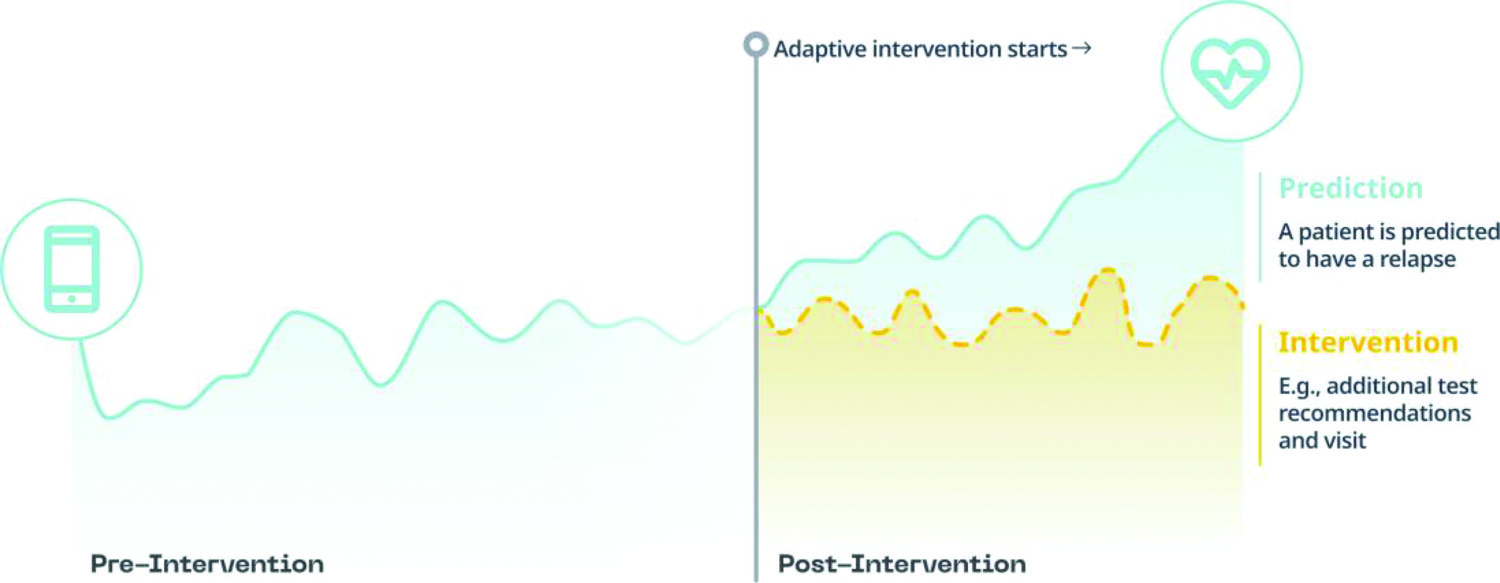
This forward-looking capability could be used to sup- port optimal resource allocation and timely deployment of public health measures to protect vulnerable popula- tions more efficiently with targeted interventions.31–33 Another transformative application lies in behavioral nudges and other personalized interventions.34–37 By ana- lyzing individuals’ behaviors, habits, and preferences, ML algorithms can craft personalized messages or recommen- dations designed to encourage the adoption of best prac- tices, healthier choices, and adherence to treatment and public health interventions, among other behaviors.14,38 These systems dynamically adapt, allowing rapid innova- tion cycles to support the deployment of agile and respon- sive public health and health care systems. Figure 1 illustrates how an adaptive intervention could improve an undesired health care outcome.
Á. Perianez Et Al.
Finally, AI can play a role in addressing the chal- lenges of digital health fragmentation, where systems often operate in silos with limited interoperability. For example, CHW job aids, procurement and supply chain management apps, electronic health records, and custo- mer-facing tools serving patients and caregivers all gen- erate vast data. AI systems are capable of integrating diverse data streams and then offering contextualized insights. When exploited by AI, these data can signifi- cantly enhance the effectiveness and efficiency of health systems. The following subsections expand on how AI could be leveraged to improve the health system’s effi- ciency and outcomes.
Strong Community-Based Integrated Primary Health
care (PHC) is one of the cornerstones of UHC, quality of care, and improved health outcomes. Yet in LMICs, primary health care facilities often lack the necessary human and material resources to operate adequately.39 Health care workers (HWs), especially in LMICs, grap- ple with many challenges, including fragmented pro-
Assessment, And The Overwhelming Task Of Managing
diverse patient needs with limited resources. In addi- tion, many LMIC health systems struggle to ensure that HWs are trained, supervised, and equipped to provide quality care.
Digital tools can support HWs and PHC facilities by offering guidance on clinical processes and connecting them to patients and peers. They can also be used for continuous capacity building and professional develop- ment, operational tasks (such as appointment manage- ment and referrals), the provision of required tests and
Medicines, And Stock Management. Use Of Patient
management and clinical decision support tools can also facilitate reporting and promote adherence to estab- lished clinical guidelines and efficient resource allocation.
Examples of tools that are already being used by HWs
And Facilities Are: Charm40 (Client & Community
Health Assisted Resources for Mentors), a job aid used
Africa, Tanzania, Uganda And Zambia; Lifebank’S
Nerve App,41 which allows hospitals and clinics in Nigeria to conveniently order blood, oxygen and med- ical consumables online); Ilara Health’s HMIS42 (Health Management Information System), a digital tool for streamlining clinic operations in Kenya via guided con- sultations, electronic health records, patient billing and inventory management; Global Strategies’ NoviGuide,43 a neonatal care clinical decision support software avail-
Able Worldwide; And Maternity Foundation’S Safe
Delivery App,44–46 which is a capacity building and job aid for skilled birth attendants, available worldwide with a generic version with additional language and context- specific versions for multiple countries.
By Hws Offers Promising Avenues To Improve Their
ability to provide quality health care.22 Personalized
Hw Interventions Can Support Adaptive Learning
journeys, timely reminders for crucial tasks, incen- tives for best practices, and patient-specific recom- mendations based on clinical and behavioral data. For
Example, Ai-Powered Digital Tools Can Use Patient
data to assist HWs in identifying high-risk patients
Who Could Benefit From Extra Support And Targeted
communications. This is particularly important in the
Case Of Chws, Who Play A Crucial Role In Linking
local, and often, remote communities with the formal
Health Care System, And Who Usually Have Limited
tools and skills. Figure 1. Adaptive intervention. The goal of adaptive interventions is to dynamically adjust the strategies used to individuals’ changing needs and context over time. The adaptations are selected using data-driven machine learning methods that analyze previous responses to interventions and predicted and observed performance to maximize overall performance.
When It Comes To Improving The Skills Of Hws, One
challenge lies in ensuring their adherence to digitally enabled training programs. ML tools allow for the build- ing of adaptive learning journeys, in which user data is utilized to design individualized nudges and content to
Ensure They Are Engaged And Able To Pass Every
certification.
Finally, Ai Systems Can Support Hws By Offering
patient-specific recommendations, including regarding clinical workflows (e.g., suggesting additional testing for diagnosis or before prescription or referral). While this paper focuses on operational and behavioral aspects of health care and public health, the AI functionalities presented in the following sections are equally applic- able for purely clinical interventions.
Patient And Caregiver Engagement And Support
Patients and caregivers in LMICs face daunting chal- lenges when seeking life-saving health care, including timely access to commodities and medical advice.
Digital apps can support them by connecting them to relevant health information, health care providers, and pharmacies.
In this case as well, the digital tools generate vast amounts of potentially useful data on patients’ health, the information they seek, and other behaviors. Take,
For Example, The Potential Contributions Of Ai To
improving family planning programs. With increasing access to mobile technology in these countries, particu- larly among the youth, AI-driven apps could provide teenagers and young adults with tailored advice on contraceptive choices, potential side effects, and remin- ders on proper usage. When the apps are integrated with pharmacy chains’ digital systems, they could also facil- itate access to contraceptives, decreasing barriers related to social norms.
There Are Already Examples Of Deployed And Wide-
spread solutions in this arena, such as: Momentum,47
Chemist Chain; Vitala Global’S Aya Contigo,48
a virtual sexual and reproductive health app available
In Venezuela And The Usa; Chekkit App,49 An Anti-
counterfeiting solution for medicines and other pro-
Products Available At A Network Of Pharmacies In
Angola.
By Centering Patients’ Needs When Offering Ai-
driven solutions to address challenges, the health care landscape in LMICs can be significantly trans-
Formed, Ensuring That Patients Receive Robust
support.
Pharmacies
Pharmacies are often the first line of contact for patients seeking health care. Pharmacists are key HWs, ensuring patients and caregivers get proper medical advice, adhere to treatment, and responsibly use medicines. In many LMICs, one challenge is ensuring pharmacies stay abreast of treatment guidelines and offer quality care to patients. Digital tools again offer opportunities to pro- vide training and to gather data on pharmacy custo- mers. AI can leverage these data to ensure pharmacists receive nudges and incentives to follow guidelines and provide quality care, strengthening pharmacies’ role in the overall health system.
Pharmacists are business operators as well as HWs, and often struggle with inventory management, fore- casting, and procurement optimization, among other critical functions. These activities involve proactive col- laboration with pharmaceutical warehouses in order to replenish stock while judiciously balancing demand against the risk of overstocking, which can lead to wastage through expired medications. AI systems can support all these functions, ensuring pharmacies are well-stocked with life-saving commodities.
A Noteworthy Trend In Lmics Is The Growth Of Tech
companies specializing in business-to-business (B2B)
Acquire
supplies.
Simultaneously, Many Pharmacies Are Evolving Into
franchises and chains. E-commerce applications for health care products are becoming a convenient (and often cheaper) way to purchase and track goods. AI can leverage the data on demand and stock movement gen- erated through these digital tools to help pharmacists manage stocks to ensure essential medicines are always available.
Notable Examples Of Such Platforms Are Swiperx (A
comprehensive tool for Southeast Asian pharmacies that
Includes B2B E-Commerce, Professional Networking,
continuous professional development, and more) and Field’s Shelf Life (a supply service for pharmacies in
Supply Chains
Supply chains are a vital component of health systems. Efficient supply chains prevent wastage and counter- feiting, safeguard against stockouts, and ensure that life- saving commodities, such as antimalarials and antibio- tics, are available at the point of care. However, the intricacy of these networks, especially in LMICs, often results in stockouts across the supply chain and at the
Á. Perianez Et Al.
point of care.53 The prevalence of substandard and falsified drugs is also an issue in some markets. Digital tools have significant potential to make the sup- ply chain more efficient. They can ease procurement through B2B solutions and reduce paperwork, using tech- nologies such as computer vision or radio frequency iden- tification (RFID) to improve inventory management and prevent the circulation of substandard and falsified medi- cines. Software for supply chain processes facilitates the storage of reliable data with integrity, enabling its systema- tic use for knowledge extraction and intervention. Field’s Supply is an example of such a supply chain software,52 as is Chekkit, a blockchain-based solution for consumers to verify the authenticity of drugs and other products.49 AI can integrate real-time data from multiple digital applications, including inventory levels, demand pat- terns, and other factors like climate events or disease outbreaks, to understand their evolution and predict future needs. Adaptive interventions could promote timely medication replenishment and aid in detecting abnormal behaviors or potential supply disruptions early. This type of model empowers stakeholders to make informed decisions to optimize the supply chain
Ai-Powered Apps Can Generate Tailored Support For
customers, distributors, and other key actors in the supply chain system, including reminders, product recommenda- tions and prioritization, and order and distribution plan proposals. These interventions can leverage demand and user behavior predictions to make the adaptive framework optimize distribution operations and reduce stockouts of essential medications at points of care.
Policymakers And Health Authorities
The previous sections have highlighted the effects that digital tools can have on the day-to-day work and efficiency of health care delivery, focusing on the potential of AI to magnify and scale their impact. This is bound to have a noticeable effect on the health system’s performance as a whole. However, we also expect that there will be more benefits from the use of these technologies. AI can be used to organize and learn from many sources of information readily available to health authorities and other health systems decision-makers, such as public facility periodic
Performance-Based
financing. A combination of incentives and regulations can be used to promote the integration of additional sources of other relevant information. All these sources can be combined and transformed to provide relevant insights and a bird’s eye view of the health system’s functioning to health autho- rities and other stakeholders, such as health insurance or international cooperation agencies.
Efficiency, performance, and outcome indicators can be defined and monitored at different levels (practitioner, facility, and regional). A system of alerts can be built through outlier detection to direct decision-makers’ atten- tion to issues needing intervention and can provide exam- ples of successful interventions to consider. Data can be
Used To Better Understand The Specific Needs Of
a population, the availability of material and human resources, and the challenges, strengths, and financial health of different facilities or systems. This knowledge can then be used to more efficiently allocate resources (including human, medicines and medical equipment, funding, training, and capacity building) and to design strategies to tackle specific issues (e.g., inequities among facilities or neighboring regions in stockout frequency of an essential medicine, of referrals, or of neonatal mortality).
Adding a predictive layer on top of this integrated information system further enhances the framework’s potential for aiding in planning, including enabling simu- lations of the effects of different policies and decisions under various scenarios. The predicted impact of any policy change can be further validated through experimen- tation with adaptive designs, allowing for safer rollouts.
It is beyond the scope of this paper to discuss in detail which specific indicators are the best ones to assess and to track health system performance and guide policy- making or reform. Different contexts will require dif- ferent levels of attention to different types of indicators.
In general, however, they should include monitoring of: ●Accessibility and coverage (e.g., What fraction of
Health Facility?)
●Quality of care (e.g., Are clinical guidelines being followed? Is the level of staffing reasonable? Are
And Tests Available And Affordable?)
●Efficiency and sustainability (e.g., Are cases treated at the appropriate level of care? Is care provided at
The Lowest Possible Cost? Are There Prevention
efforts in place? Are financing mechanisms reliable
And Predictable?)
Attention should be paid both to average values and to variation across regions, facilities, and population groups.
Health
Given its enormous potential to improve health systems, our company Causal Foundry proposes an AI platform designed to support health systems (including health
5
care facilities, HWs, pharmacies, patients, and supply
Chains) In Lmics. This Reinforcement Learning
Platform is the product of our efforts to ensure that the potential of AI can be easily integrated into the growing number of digital health tools in order to achieve the benefits described in the previous section.
Our platform is designed to integrate with existing soft- ware, which reduces the time needed to deploy and scale effective interventions and provides a bridge connecting the different specialized systems that often contribute to the fragmentation of health systems. The result is a platform that allows the use of ML to increase the effectiveness and efficiency of the health system and improve patient outcomes.
In addition to predictive modeling, one major feature of the platform is that it allows testing and deploying adaptive interventions using digital tools. By adaptive, we mean that the system continuously tailors the intervention content and timing to each user based on the feedback collected from the ensemble of users. These interventions include sending messages (SMS, WhatsApp, push notification, in- app messages, etc.) to its users to promote behaviors such as adherence to treatment, reading or listening to relevant health information, or taking a training course.
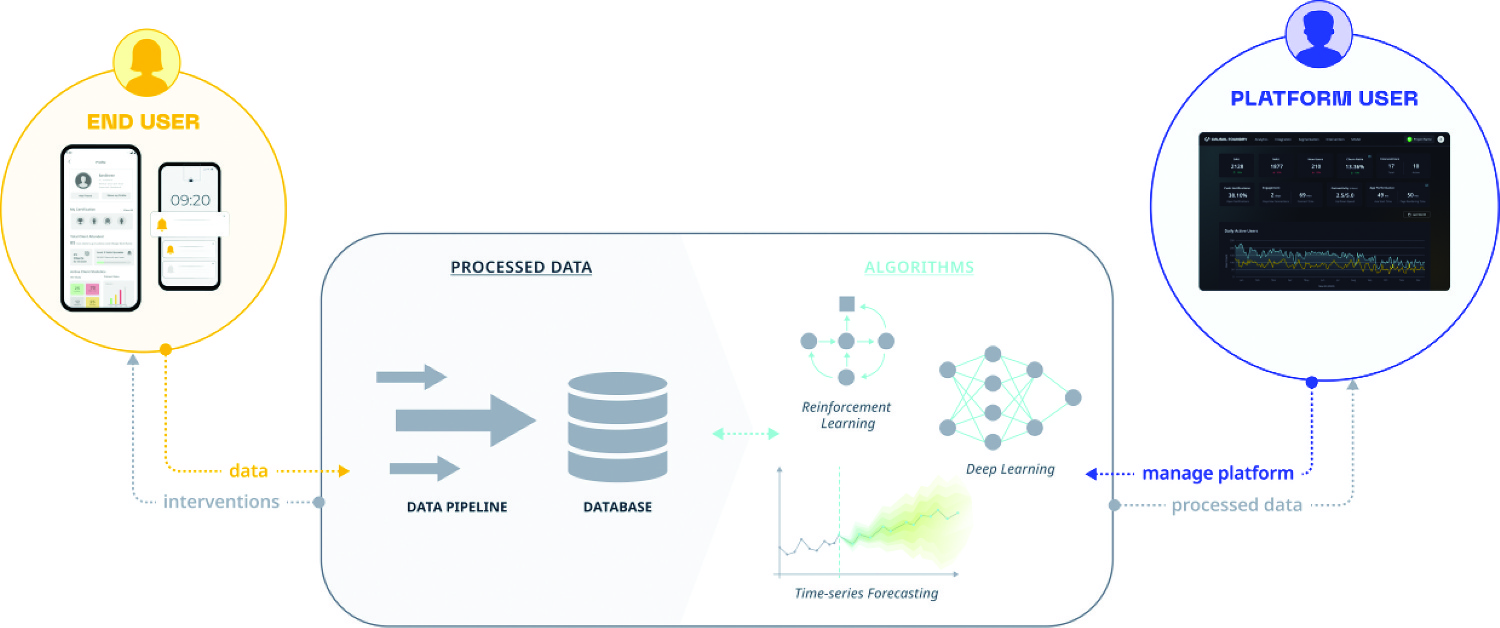
As portrayed in Figure 2, the platform assists users to integrate data from different sources, use ML tools to get insights from the data, and create, test, and deploy adaptive interventions using Reinforcement Learning (RL) techni- ques. These interventions are pushed to the digital tools connected to the platform, and data collected prospectively then feeds back into the system, allowing it to learn and iteratively adapt the interventions to maximize the intended outcome. We provide an overview of the Causal Foundry platform’s capabilities in the following subsec- tions and conclude with a description of the current devel- opment and deployment status.
The Platform
The primary aim of our platform is to integrate vast data sets (including maximizing their quality, proper format, and label) from digital tools (including beha- vioral, clinical, and contextual data) in order to provide valuable insights to stakeholders and create, test, and deploy personalized interventions (such as nudges, recommendations, and in-app personalized content).
The platform ensures that acquired data are well orga- nized and ready for use by ML predictive models. This emphasis on data collection and the use of opi- nionated data schemas is at the core of the platform functionality.
The digital platform is built on three foundational
Components (See Figure 3):
●The user-facing frontend provides a comprehensive user interface, with data and results visualization
●The Backend Serves As The Operational Core
(depicted as the pipelines, database, and algorithms
Within The Gray Box In Figure 3)
●The software development kit (SDK) is the crucial
Figure) And The Platform
Each component is essential to ensuring users can seam- lessly access, analyze, and manage their data and deploy ML models and real-time interventions. Below, we provide additional details for each of these three components.
The frontend has an intuitive user interface for data analysis and model and intervention management and monitoring. Users can perform behavioral and clinical data analysis, statistical modeling, and create cohorts of users. Furthermore, the interface enables designing, testing, and deploying interventions, such as nudges and rewards. It guides the user from a subject cohort (HWs, facilities, pharmacists, etc.) through how to ana- lyze past behavior, predict future or target interventions, or define samples through algorithm selection to feature selection and target specification, including nudge alter- natives in the case of interventions. The platform dash- board presents various traits, predictions, and metrics in an intuitive format to allow clear interpretation of the predicted results and impact of interventions.
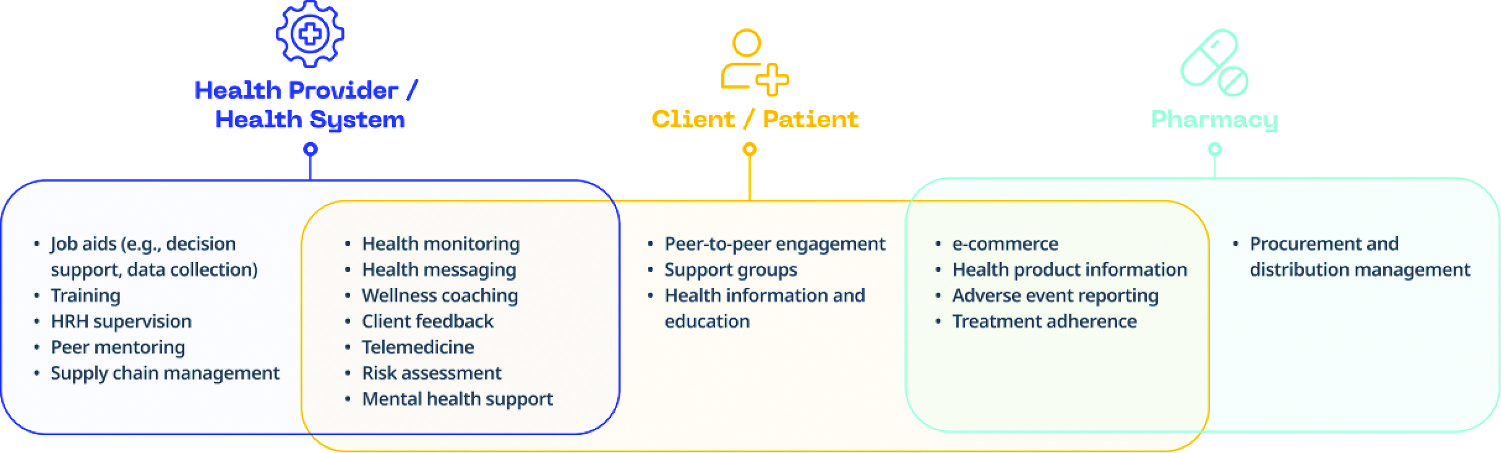
Figure 2. Examples of use cases that can benefit from the reinforcement learning platform. The RL platform delivers AI-based recommendations and incentives to assist health systems stakeholders, including patients, health care providers (e.g., frontline clinicians, nurses, midwives, community health workers, and pharmacists), pharmacies, and suppliers. It optimizes user engagement and resource use, leveraging data generated by an ecosystem of applications such as the ones shown.
Á. Perianez Et Al.
The backend is the platform’s core, allowing the organi- zation of data and the implementation of ML models and adaptive interventions. Data are collected and organized using domain-specific data schemas optimized for ML model implementation. Data security and privacy are key aspects captured in the backend. The platform’s standar- dized design of event logging enables it to be a uniform interface for transformation and aggregation across differ- ent application domains (e.g., supply chain and e-com- merce marketplace, medication tracking, and patient communication). The backend also hosts the predictive modeling engine that handles the ML component and the algorithmic decision-making service. These modules con- figure, train, host, and manage models for time series forecasting, deep and ensemble survival analysis, and sequential decisions via reinforcement learning.
Finally, an open-source SDK tracks the data with the correct labels and formats, creating a data pipeline between the digital tools and the platform.a This SDK is a lightweight software embedded into mobile apps, so data are tracked directly from the source. The software is optimized for the variety of mobile devices used in LMICs, such as budget smartphones and tablets, mini- mizing the impact of platform integration on device performance. This SDK provides tools for collecting relevant events and messaging services that deliver the
General Data Protection Regulation (Gdpr) And The
Health Insurance Portability and Accountability Act (HIPAA) guidelines. It tracks user actions as time- series data and contextual information such as details about the medicines prescribed, viewed, or purchased.
For interventions, the SDK is responsible for presenting the nudges to the mobile app user and automatically logging their reactions (e.g., if they opened, viewed, discarded, or blocked the nudge), ensuring complete visibility of the intervention lifecycle.
The Sdk Uses A Functionality-Specific Opinionated
data model for data collection. This model is optimized for data science and ML purposes and ensures stringent control over content and quality. The goal is to ensure that: everything needed to tackle the relevant use cases for each functionality is recorded in the required format; no redundant or unnecessary information is tracked, in order to function without compromising app perfor- mance, even with limited connectivity, and to reduce storage needs; and, most importantly, the operational data pipelines are as simple and less prone to error as possible. The SDK is also responsible for maintaining interaction logs in offline settings and autonomously managing the network layer to ensure logs are synchro- nized with the Causal Foundry platform as soon as the device regains connectivity. This functionality alleviates the need for app developers to implement networking capabilities for offline usage and supports HWs by elim- inating the necessity of manually opening the app to sync data. The modular (i.e., with different components for different functionalities) nature and generality of the SDK allow for integration with a wide variety of existing tools, while the rigidity of its data model enables com- parability across applications and cross-compatibility of any models and interventions developed.
Predictive Modeling
Predictive modeling is crucial for defining who should be targeted with specific interventions and optimizing their timing. The Causal Foundry platform allows users to utilize three prediction models: time-to-event prediction Figure 3. The reinforcement learning platform structure. The platform creates a robust data structure that logs user events on digital health devices (e.g., mobile apps), classifying them into dynamic and static traits. The backend system analyzes and processes these traits for statistical learning and machine-learning predictions and to generate adaptive interventions based on RL algorithms. User reactions to interventions are recorded via digital health devices and tracked through the system to feed back into the RL algorithms.
7
(also known as survival analysis), demand forecasting, and recommendation systems, such as click-through-
Rate Predictions Or Causal Graphic Analysis.B
Time-to-event prediction offers a way of characteriz- ing behaviors by modeling the probability of occurrence of different events of interest and the duration between them.34,55–57 For example, it can be used to predict the risk of non-adherence to treatment and the time when it will happen, client churn rate in an e-commerce plat- form, or a health worker failing to complete a training module. These types of predictions can be used to iden- tify target subjects for specific interventions (e.g., remin- ders to support treatment adherence, promotions to discourage churn, motivational prompts, or incentives to encourage learning).
The second model class, demand forecasting, is cru- cial in e-commerce, supply chain, and inventory opti-
Mization. It Includes, For Example, Multivariate
forecasting methods that learn either point or probabil- istic forecasts from codependent time series to predict
Demand For Different Pharmaceutical Products.58
Several approaches are available through our platform, including autoregression and graph-regularized factor analysis and latent state forecasting, state space model- ing with long short-term memory (LSTM) and Gaussian copula for probabilistic forecasts, recurrent networks for multivariate count data with non-uniform scale, and attention-based deep models for multi-horizon interval predictions.59–63 Observed stocks and previous ordering behavior, together with the predicted evolution of
Demand, Can Be Used To Identify Which Pharmacies
need reminders to restock or can suggest products to add to the cart while ordering is underway. Similar approaches can be used for patients using e-commerce services and to support decisions on distributing stocks across warehouses.
Finally, click-through-rate predictions allow the plat- form to generate traits useful for content personaliza-
Methods Have Shown Good Performance,64–67 In The
next section, we discuss how adaptive delivery will be the main mechanism to learn and exploit user prefer- ences for recommendations and personalization. Other recommendation algorithms are also available in the platform, as they can provide valuable insights to be leveraged by the RL algorithm. Other models, such as causal graph analysis, can also help to understand cause- and-effect relationships. For example, which factors caused an event? Why did a particular user stop using
A Treatment? Known Causes Can Drive The Design Of
personalized interventions to reduce the chance of that event occurring in the future.
Experimentation
One of our platform’s key features is the ability to design, test, and deploy adaptive interventions. Adaptive intervention delivery uses individual and con- textual data for effective nudging and interventions. Let us illustrate the main underlying ideas using a concrete example of a digital tool, such as an app, for pregnant
Information On Their Pregnancy And Newborn (E.G.,
overall well-being, health issues, vaccinations, use of health care services) and receive relevant health infor- mation. The tool allows us to detect any health issue the
Women And Their Newborns Might Have And Provide
them with relevant health advice (such as recommenda- tions on when to seek care). The impact of this patient
Engagement Tool Hinges On Women Using The Tool—
however, we know user engagement is challenging to maintain.68 Through formative research, behavioral science analysis, and focus group discussions, we decide that we want to test two interventions, one that nudges women with recommendations related to their charac- teristics (stage of pregnancy or age of their newborn), and another that sends messages with suggestions based on behaviors exhibited by similar users.
We Then Need To Determine How To Measure The
intervention’s success, and decide to use the informa- tion women submit through the tool. Finally, we need to select the characteristics (collected through the digital tool) that could influence how impactful a particular nudge will be at any given time. These could include characteristics of the women and their babies (e.g., gestational age, number of previous pregnancies) and their use of the digital tool (e.g., recent exposure and interaction with nudges, information they submitted to the app, and which content they never use). We refer to these characteristics as contextual traits.
The Adaptive Intervention Delivery Then Goes Into
action. Each week (or as scheduled when defining the intervention), the platform decides which nudges to send to each user based on the contextual traits and observes how users with different characteristics react (based on how we decided to measure success) in var- ious situations (as defined by the contextual traits). The platform algorithm will continue to refine and exploit information on what works best in any given situation.
It will also detect changes in how users react to the nudges and adapt correspondingly. At the end of the experiment, we will be able to select the interventions that were most successful in increasing engagement, and discard those that did not generate a significant change. The selected intervention(s) will
Related Journal Articles & DOI Links
Selected peer-reviewed publications relevant to 12 Lead ECG Acquisition. Click the DOI to access the full paper (may require institutional access).
-
1. Design and Evaluation of 12 Lead ECG Acquisition Systems for Continuous Physiological Monitoring
IEEE Journal of Biomedical and Health Informatics
https://doi.org/10.1109/JBHI.2020.2981234 -
2. Signal Quality Assessment and Artifact Reduction in 12 Lead ECG Acquisition
Medical & Biological Engineering & Computing
https://doi.org/10.1007/s11517-020-02145-6 -
3. Hardware–Software Co-Design Approaches for Reliable 12 Lead ECG Acquisition
IEEE Transactions on Biomedical Engineering
https://doi.org/10.1109/TBME.2019.2895762 -
4. Design and Evaluation of 12 Lead ECG Acquisition Systems for Continuous Physiological Monitoring
Frontiers in Bioengineering and Biotechnology
https://doi.org/10.3389/fbioe.2020.00123 -
5. Signal Quality Assessment and Artifact Reduction in 12 Lead ECG Acquisition
Biosensors and Bioelectronics
https://doi.org/10.1016/j.bios.2021.112345 -
6. Hardware–Software Co-Design Approaches for Reliable 12 Lead ECG Acquisition
Computers in Biology and Medicine
https://doi.org/10.1016/j.compbiomed.2021.104567 -
7. Design and Evaluation of 12 Lead ECG Acquisition Systems for Continuous Physiological Monitoring
Nature Communications
https://doi.org/10.1038/s41467-020-12345-6
Why Choose Us?
Bangalore guidance for robotics, Spectre and autonomous systems projects.
Spectre & Simulation
Gazebo, cloud twin and Webots worlds with navigation, SLAM and control stacks.
Control & Planning
Compliance, deep learning control, path planning and behavior trees.
Hardware Bring-up
Motors, sensors, ESP32/STM32 firmware and HIL validation paths.
Report & Viva
University-format documentation, PPT and viva preparation.
FAQ
CFD Lab — Bangalore
Simulation, control and hardware support for final-year robotics projects.
Stacks
Worlds
Digital Twin
Control
Robots
Offline
Bring-up