Authorship: The Pediatric Guidelines Sub-
committee’’ are found in the ‘‘Appendix’’.
Supplementary Material, Which Is Available
to authorized users.
Hospital-Stay Fascial Closure Among
patients with an open abdomen.
Urgently Needed For Patients With Iah
and ACS.
Introduction
Increased attention to intra-abdominal pressure (IAP), along with changes in the clinical management of criti- cally ill or injured patients, have led to an exponential growth in research relating to intra-abdominal hyperten- sion (IAH) and abdominal compartment syndrome (ACS) in recent years [1, 2]. Milestones have included the incorporation of the World Society of the Abdominal
Compartment Syndrome (Wsacs; Www.Wsacs.Org),
and the Society’s publication of IAH and ACS expert consensus definitions in 2006 [3, 4], clinical practice guidelines in 2007 , and recommendations for research in 2009 . Changes in the management of critically ill surgical and/or medical patients have included increased
Use Of Damage Control Surgery And Resuscitation ,
percutaneous catheter-based and other minimally invasive therapies, early goal-directed therapy for severe sepsis [12, 13], and a heightened appreciation of the risks of over- resuscitation [14, 15]. In light of such developments, the WSACS reviewed the literature and updated their proposed 2006 consensus definitions and 2007 management state- ments. The Grading of Recommendations, Assessment, Development, and Evaluation (GRADE) system for clinical practice guideline developers was used to provide consis- tency in identifying and rating the quality of available evidence and the strength of management suggestions and
Recommendations . Although The Results Of Our
update is reported concisely here, interested readers may refer to the parent report for details (Supplement 1; see electronic supplementary material, ESM).
And Risk Factors
In concordance with the levels of agreement appropriate for consensus , all 2006 expert consensus definitions
For Which More Than 80 % Of The Members Voted To
accept ‘‘as is’’ were retained, while all those with less than 50 % acceptance were rejected. Definitions with only 50–80 % agreement were revised through ongoing discussion until complete consensus was obtained.
Where extensive discussion among subspecialists or other experts was required, special sub-committees were created, including a dedicated Pediatric Guidelines Sub- Committee who reviewed the adult guidelines to deter-
To
pediatrics.
Also
searched the literature to determine which IAH or ACS risk factors proposed in 2006 are now supported by
Evidence And Developed A Consensus Open Abdomen
classification system. Further details are presented in Supplement 2 (see ESM).
We Followed Grade Recommendations For Guideline
developers in order to generate management statements related to IAH/ACS . Using this approach, guidelines committee members first developed structured clinical questions and then defined patient-important outcomes with the assistance of an independent GRADE methodo- logical advisor (R.J.). Questions were based on polling of
The Wsacs Executive To Redundancy And Were Formu-
lated according to the Patient, Intervention, Comparison,
Outcome, And Study Design (Pico) Format . Sys-
tematic review teams subsequently conducted systematic or structured/semi-structured reviews and prepared evi- dence profiles for each of the identified patient-important outcomes as suggested by GRADE [18, 20, 24].
Statements
After each systematic review team had created their initial evidence profile, formal face-to-face meetings among all guideline committee members were held on two separate days immediately preceding and following the Fifth Sci- entific Congress of the WSACS in Orlando, FL, USA in August 2011. At the Management Guidelines Meeting, each systematic review team formally presented their search methods and evidence profile. In accordance with GRADE guidelines, they then made recommendations to the panel regarding the direction (for/against/no recom- mendation) and strength (recommend/suggest) of the proposed statement [16–18, 20, 23–26]. Ultimately, the quality of evidence for each outcome was rated along a four-point ordinal scale in which each evidence grade was symbolized by a letter from D to A: very low (D), low (C), moderate (B), and high (A). Further details are pre- sented in Supplements 3 and 4 (see ESM).
Existing Consensus Definitions And Risk Factors
The 2013 WSACS consensus definitions are presented in Table 1. Changes from the previously published 2006 definitions, and the pertinent rationale for such, are out- lined in Supplement 5 (see ESM). Risk Factors for IAH and ACS are shown in Table 2 [2, 4, 7, 27–42].
Classification Of The Open Abdomen
Critical complications which should be considered in man- aging the open abdomen include : (1) fixation of the
1192
abdominal contents (especially of the viscera to the peri- toneal sidewalls) and (2) development of enteroatmospheric fistulae (EAF). To facilitate comparison of patient groups with similar determinants of outcomes and complications, a classification scheme of open abdomen complexity is Table 1 Final 2013 consensus definitions of the World Society of
The Abdominal Compartment Syndrome
Retained definitions from the original 2006 consensus
Statements
1. IAP is the steady-state pressure concealed within the
Abdominal Cavity
2. The reference standard for intermittent IAP measurements is via the bladder with a maximal instillation volume of
25 Ml Of Sterile Saline
3. IAP should be expressed in mmHg and measured at end- expiration in the supine position after ensuring that abdominal muscle contractions are absent and with the transducer zeroed at the level of the midaxillary line 4.
IAP is approximately 5–7 mmHg in critically ill adults 5. IAH is defined by a sustained or repeated pathological
Elevation In Iap C 12 Mmhg
6. ACS is defined as a sustained IAP [ 20 mmHg (with or without an APP \ 60 mmHg) that is associated with new
Organ Dysfunction/Failure
7.
Grade Iv, Iap [ 25 Mmhg
8. Primary IAH or ACS is a condition associated with injury or disease in the abdominopelvic region that frequently requires early surgical or interventional radiological
Intervention
9. Secondary IAH or ACS refers to conditions that do not
Originate From The Abdominopelvic Region
10. Recurrent IAH or ACS refers to the condition in which IAH or ACS redevelops following previous surgical or medical
Treatment Of Primary Or Secondary Iah Or Acs
11.
App = Map - Iap
New definitions accepted by the 2013 consensus panel 12. A polycompartment syndrome is a condition where two or
Compartmental Pressures
13. Abdominal compliance is a measure of the ease of abdominal expansion, which is determined by the elasticity of the abdominal wall and diaphragm. It should be expressed as the change in intra-abdominal volume per change in IAP 14.
The open abdomen is one that requires a temporary abdominal closure due to the skin and fascia not being closed after
Laparotomy
15. Lateralization of the abdominal wall is the phenomenon where the musculature and fascia of the abdominal wall, most exemplified by the rectus abdominus muscles and their enveloping fascia, move laterally away from the midline
With Time
ACS abdominal compartment syndrome, APP abdominal perfusion pressure, IAH intra-abdominal hypertension, IAP intra-abdominal
Distended Abdomen
Hemoperitoneum/pneumoperitoneum or intra-peritoneal fluid
Increased Apache-Ii Or Sofa Score [36, 38]
Massive fluid resuscitation or positive fluid balance [2, 27, 29–31,
Shock Or Hypotension [3, 4, 28, 30, 45]
References are shown if the presented risk factor is supported at least to some degree by primary literature. Those unsupported by primary literature are based on clinical judgment and/or patho- physiological rationale. The patient populations included in these studies included major trauma patients, general intensive care unit patients, severe acute pancreatitis patients, severe extremity injury patients, and surgical intensive care unit patients. Moreover, some of these studies addressed only patients that were mechanically ventilated, whereas others included mixed cohorts of patients with
Different Ventilation Statuses
APACHE-II acute physiology and chronic health evaluation-II, PEEP positive end expiratory pressure, SOFA sequential organ
1193
presented (Table 3). The rationale for creation of this clas- sification system is outlined in Supplement 6 (see ESM).
Pediatric Guidelines Sub-Committee: Definitions
A dedicated pediatric sub-committee evaluated the adult definitions for use among children. A summary of the final accepted pediatricdefinitions ispresented inTable 4. Forthe four definitions rejected, new definitions were proposed that are specific to pediatric use. The rationale for these defini- tions is outlined in Supplement 7 (see ESM).
Consensus Management Statements Are Summarized In
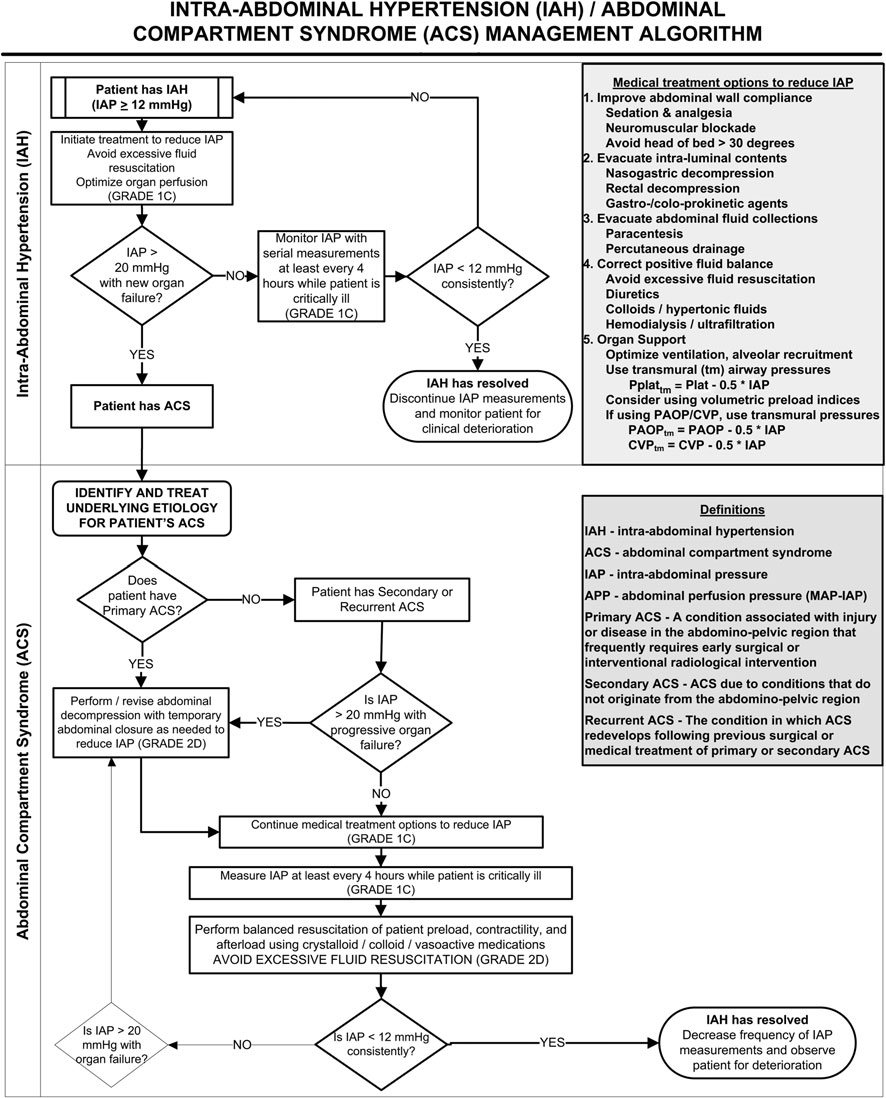
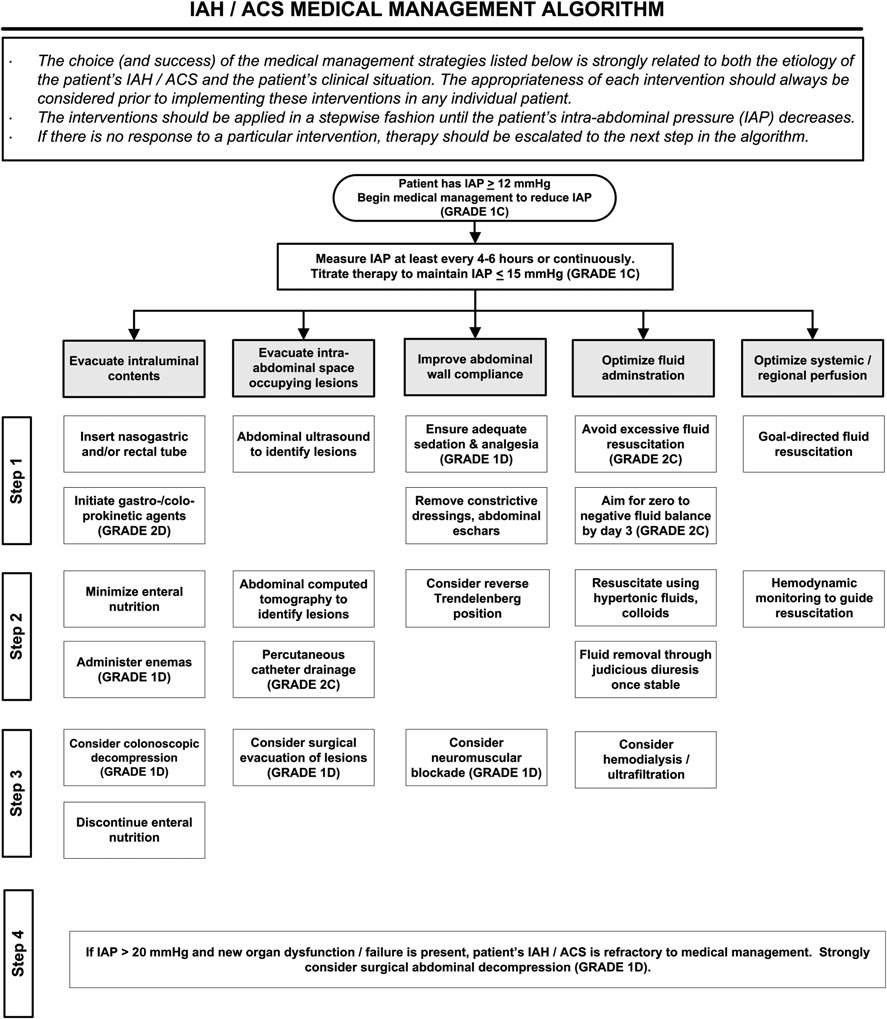
Table 5. Each of these statements are denoted below to indicate whether they were unchanged from previous guidelines, a new guideline, or revised from previous guidelines . An associated summary of overall manage- ment and medical management algorithms are presented in Figs. 1 and 2, respectively. The summary of findings and rationale for each of the following managementstatements is described in the supporting Supplements (see ESM).
Measurement Protocol? (Supplement 8; See Esm)
As clinical examination is inaccurate for detecting raised IAP, IAH and ACS research and management rely upon accurate serial or continuous IAP measurements .
Although there is an increasing number of IAP mea- surement techniques, trans-bladder measurement remains a commonly used method, and was recommended by the WSACS in 2006 due to its simplicity and low cost [3, 45].
Table 3 Classification scheme for the complexity of the open
Contaminated, Frozen Abdomen
4 Established enteroatmospheric fistula, frozen abdomen This is an update of the original Bjorck classification. Enteric leak describes the situation where there is spillage of enteric con-
Development
Table 4 Final 2013 adapted pediatric consensus definitions Definitions accepted without change from the adult guidelines 1.
IAP is the steady-state pressure concealed within the
Abdominal Cavity
2.
App = Map - Iap
3. Primary IAH or ACS is a condition associated with injury or disease in the abdominopelvic region that frequently requires early surgical or interventional radiological
Intervention
4. Secondary IAH or ACS refers to conditions that do not
Originate From The Abdominopelvic Region
5. IAP should be expressed in mmHg and measured at end- expiration in the supine position after ensuring that abdominal muscle contractions are absent and with the transducer zeroed at the level of the midaxillary line 6.
Recurrent IAH or ACS refers to the condition in which IAH or ACS redevelops following previous surgical or medical
Treatment Of Primary Or Secondary Iah Or Acs
7. A polycompartment syndrome is a condition where two or
Compartmental Pressures
8. The open abdomen is one that requires a temporary abdominal closure due to the skin and fascia not being closed after
Laparotomy
9. Pathophysiological classification of the open abdomen
3B: Contaminated, Frozen Abdomen
4: established enteroatmospheric fistula, frozen abdomen 10. Abdominal compliance is a measure of the ease of abdominal expansion, which is determined by the elasticity of the abdominal wall and diaphragm. It should be expressed as the change in intra-abdominal volume per change in intra-
Proposed Pediatric Specific Definitions
11. ACS in children is defined as a sustained elevation in IAP of greater than 10 mmHg associated with new or worsening organ dysfunction that can be attributed to elevated IAP 12.
The reference standard for intermittent IAP measurement in children is via the bladder using 1 mL/kg as an instillation volume, with a minimal instillation volume of 3 mL and a maximum installation volume of 25 mL of sterile saline 13.
IAP in critically ill children is approximately 4–10 mmHg 14. IAH in children is defined by a sustained or repeated
Pathological Elevation In Iap [ 10 Mmhg
ACS abdominal compartment syndrome, APP abdominal perfusion pressure, IAH intra-abdominal hypertension, IAP intra-abdominal
We Recommend Measuring Iap Versus Not When Any
known risk factor for IAH/ACS is present in critically ill
1C])
(Table 2).
Recommend That Studies Of Iah Or Acs Adopt The
trans-bladder technique as a standard IAP measurement
[Not Graded]). Finally, We Recommend Use Of Pro-
tocolized monitoring and management of IAP versus not (New Management Recommendation 3 [GRADE 1C]). Table 5 Final 2013 WSACS consensus management statements
Recommendations
1. We recommend measuring IAP when any known risk factor for IAH/ACS is present in a critically ill or injured patient [GRADE 1C] 2.
Studies should adopt the trans-bladder technique as the standard IAP measurement technique [not GRADED] 3. We recommend use of protocolized monitoring and management of IAP versus not [GRADE 1C] 4.
We recommend efforts and/or protocols to avoid sustained IAH as compared to inattention to IAP among critically ill or injured
Patients [Grade 1C]
5. We recommend decompressive laparotomy in cases of overt ACS compared to strategies that do not use decompressive laparotomy
In Critically Ill Adults With Acs [Grade 1D]
6. We recommend that among ICU patients with open abdominal wounds, conscious and/or protocolized efforts be made to obtain an early or at least same-hospital-stay abdominal fascial closure [GRADE 1D] 7.
We recommend that among critically ill/injured patients with open abdominal wounds, strategies utilizing negative pressure wound
Suggestions
1. We suggest that clinicians ensure that critically ill or injured patients receive optimal pain and anxiety relief [GRADE 2D] 2.
We suggest brief trials of neuromuscular blockade as a temporizing measure in the treatment of IAH/ACS [GRADE 2D] 3. We suggest that the potential contribution of body position to elevated IAP be considered among patients with, or at risk of, IAH or
Acs [Grade 2D]
4. We suggest liberal use of enteral decompression with nasogastric or rectal tubes when the stomach or colon are dilated in the
Presence Of Iah/Acs [Grade 1D]
5. We suggest that neostigmine be used for the treatment of established colonic ileus not responding to other simple measures and
Associated With Iah [Grade 2D]
6. We suggest using a protocol to try and avoid a positive cumulative fluid balance in the critically ill or injured patient with, or at risk of, IAH/ACS after the acute resuscitation has been completed and the inciting issues have been addressed [GRADE 2C] 7.
We suggest use of an enhanced ratio of plasma/packed red blood cells for resuscitation of massive hemorrhage versus low or no attention to plasma/packed red blood cell ratios [GRADE 2D] 8.
We suggest use of PCD to remove fluid (in the setting of obvious intraperitoneal fluid) in those with IAH/ACS when this is technically possible compared to doing nothing [GRADE 2C]. We also suggest using PCD to remove fluid (in the setting of obvious intraperitoneal fluid) in those with IAH/ACS when this is technically possible compared to immediate decompressive laparotomy as this may alleviate the need for decompressive laparotomy [GRADE 2D] 9.
We suggest that patients undergoing laparotomy for trauma suffering from physiologic exhaustion be treated with the prophylactic use of the open abdomen versus intraoperative abdominal fascial closure and expectant IAP management [GRADE 2D] 10. We suggest not to routinely utilize the open abdomen for patients with severe intraperitoneal contamination undergoing emergency laparotomy for intra-abdominal sepsis unless IAH is a specific concern [GRADE 2B] 11. We suggest that bioprosthetic meshes should not be routinely used in the early closure of the open abdomen compared to alternative
No Recommendations
1. We could make no recommendation regarding use of abdominal perfusion pressure in the resuscitation or management of the
Critically Ill Or Injured
2. We could make no recommendation regarding use of diuretics to mobilize fluids in hemodynamically stable patients with IAH after the acute resuscitation has been completed and the inciting issues have been addressed 3.
We could make no recommendation regarding the use of renal replacement therapies to mobilize fluid in hemodynamically stable patients with IAH after the acute resuscitation has been completed and the inciting issues have been addressed 4.
We could make no recommendation regarding the administration of albumin versus not, to mobilize fluid in hemodynamically stable patients with IAH after acute resuscitation has been completed and the inciting issues have been addressed 5.
We could make no recommendation regarding the prophylactic use of the open abdomen in non-trauma acute care surgery patients with physiologic exhaustion versus intraoperative abdominal fascial closure and expectant IAP management 6.
We could make no recommendation regarding use of an acute component separation technique versus not to facilitate earlier
Abdominal Fascial Closure
ACS abdominal compartment syndrome, IAP intra-abdominal pressure, IAH intra-abdominal hypertension, PCD percutaneous catheter
Should We Use Abdominal Perfusion Pressure (App)
as a resuscitation endpoint? (Supplement 9; see ESM) Abdominal perfusion pressure (APP) may be thought of as the abdominal analogue to cerebral perfusion pressure.
This measure has previously been suggested as a more accurate predictor of visceral perfusion and a better endpoint for resuscitation than IAP or mean arterial pressure (MAP) alone [3, 46].
Fig. 1 Updated intra-abdominal hypertension (IAH)/abdominal compartment syndrome (ACS) management algorithm. IAP intra-
We Could Make No Recommendation Regarding
use of APP in the resuscitation or management of the critically ill or injured. Should we treat or prevent IAH? (Supplement 10; see
Esm)
Intra-abdominal hypertension (IAH) has consistently been associated with morbidity and mortality in observational Fig. 2 Updated intra-abdominal hypertension (IAH)/abdominal compartment syndrome (ACS) medical management algorithm. IAP intra-
Related Journal Articles & DOI Links
Selected peer-reviewed publications relevant to 12 Lead ECG Acquisition. Click the DOI to access the full paper (may require institutional access).
-
1. Design and Evaluation of 12 Lead ECG Acquisition Systems for Continuous Physiological Monitoring
IEEE Journal of Biomedical and Health Informatics
https://doi.org/10.1109/JBHI.2020.2981234 -
2. Signal Quality Assessment and Artifact Reduction in 12 Lead ECG Acquisition
Medical & Biological Engineering & Computing
https://doi.org/10.1007/s11517-020-02145-6 -
3. Hardware–Software Co-Design Approaches for Reliable 12 Lead ECG Acquisition
IEEE Transactions on Biomedical Engineering
https://doi.org/10.1109/TBME.2019.2895762 -
4. Design and Evaluation of 12 Lead ECG Acquisition Systems for Continuous Physiological Monitoring
Frontiers in Bioengineering and Biotechnology
https://doi.org/10.3389/fbioe.2020.00123 -
5. Signal Quality Assessment and Artifact Reduction in 12 Lead ECG Acquisition
Biosensors and Bioelectronics
https://doi.org/10.1016/j.bios.2021.112345 -
6. Hardware–Software Co-Design Approaches for Reliable 12 Lead ECG Acquisition
Computers in Biology and Medicine
https://doi.org/10.1016/j.compbiomed.2021.104567 -
7. Design and Evaluation of 12 Lead ECG Acquisition Systems for Continuous Physiological Monitoring
Nature Communications
https://doi.org/10.1038/s41467-020-12345-6
Why Choose Us?
Bangalore guidance for robotics, Spectre and autonomous systems projects.
Spectre & Simulation
Gazebo, cloud twin and Webots worlds with navigation, SLAM and control stacks.
Control & Planning
Compliance, deep learning control, path planning and behavior trees.
Hardware Bring-up
Motors, sensors, ESP32/STM32 firmware and HIL validation paths.
Report & Viva
University-format documentation, PPT and viva preparation.
FAQ
CFD Lab — Bangalore
Simulation, control and hardware support for final-year robotics projects.
Stacks
Worlds
Digital Twin
Control
Robots
Offline
Bring-up