Cancer Treatment
S. K. Sharma1, Navadeep Shrivastava2, F. Rossi3,4,5, L. D. Tung3,4 and N. T. K. Thanh3,4* Augustine, Trinidad and Tobago. Street, LondonWC1E 6BT, UK.
4UCL Healthcare Biomagnetic and Nanomaterials Laboratory, 21 Albemarle Street, London W1S
4Bs, Uk.
5A*STAR, IMRE, Kinesis 11th floor, Fusionopolis 2, 138635, Singapore.
2.1.3. Brownian Mechanism
2.2. Parameters affecting magnetic-induced hyperthermia 2.2.1.Effect of applied magnetic field and frequency
2.2.3. Effect Of Particle Morphology
2.2.4. The role of anisotropy on heating efficiency
2.2.7. Effect Of Coating With Organic Ligands
2.3. Potential magnetic-induced hyperthermia nanomaterials
2.3.3. Multifunctional Hybrid Systems
2.4. Instrumentation for magnetic-induced hyperthermia
3.1.1. Surface Plasmon Resonance Absorption
3.1.2. Interactions between light and carbon reticle vibrational state 3.1.3. Generation of heat in nanoparticles: role of non-radiative recombination 3.2. Parameters affecting the photo-induced hyperthermia 3.3. Potential photo-induced hyperthermia nanomaterial
3.3.2. Au Nanomaterials
3.3.3. Iron oxide nanoparticles (IONPs) and Ferrites
3.3.5. Rare-Earth Containing Nps
3.4. Instrumentation for photo-induced hyperthermia 4. Comparison between magnetic and photo-induced hyperthermia and their combinatorial
Effect
5. Prerequisites for hyperthermia treatment in the clinic 5.1. Parameter affecting toxicity: size, shape, composition, coating 5.2. Biodistribution, pharmacokinetics and clearance rate
5.4. Drug Release By External Thermal Therapy
5.5. In vivo and clinical application of hyperthermia treatments 5.5.1. Tumor microenviroment and hyperthermia effects
5.5.2. Delivery Routes Of Nanoparticles In Tumors
5.5.3.Examples of in vivo and clinical application of hyperthermia treatment
Abstract
Nanoscience provides several modalities to combat cancer disease effectively. Magnetic hyperthermia and photothermal therapy techniques are central research themes among various groups in the world by utilizing magnetic and optical characteristics of distinct or composite nanoentities. This review provides the current research on both the techniques and their successes towards clinical translation. The review discusses about the various heating mechanisms involved in magnetic and photo-induced hyperthermia. We have evaluated potential functional nanoparticles with excellent properties capable of providing innovative future solutions to current problems associated with these therapies. Several factors (extracellular and intracellular) have been covered and explained which may affect such thermal treatments. We have provided some instrumental and technical details of both the techniques that are important for consideration in using these modalities of treatments. A direct comparison of these two techniques and a further need of the combined therapy (magnetic hyperthermia plus photothermal therapy) was highlighted as a new pathway for cancer treatments.
Keywords: Nanoparticles; Magnetic and photothermal hyperthermia; Combined “Mag-Photo” therapy; Biodistribition; Clinical treatment.
1. Introduction
Temperature is one of the basic variables in science and with the latest advancements in nanothermometry nowadays it can be measured with submicrometric spatial resolution . The resolution in temperature measurements expands the applications and control of temperature changes in biological systems leading to a detailed determination of their dynamics and viability for a wide range of organic systems from cells, tissues to organisms .
The use of heat for the purpose of therapy is an old fashion methodology in ancient history which had a rise of popularity through the 19th century as a treatment against cancer, being optimized in 21st century, but still remained unaccomplished due to the lack of measuring methodologies . In recent decades of “the nanoscale era”, the research activities in terms of scientific/technological output using thermal treatments have led to renewed interest in thermal therapy, especially on the magnetic-thermal therapy and photo-induced thermal therapy . Novel techniques for controlled and localized heat generation, monitoring it, and transferring localized heat to the biological targets are being proposed purposely and specified.
The understanding of different mechanisms causing temperature induced cell killing, cell- modification and the capability to produce heat in the vicinity of cells is very important. The type of nanoscale materials used to generate heat from external force such as magnetic field, infrared (IR) radiation, X-rays etc., are the main focus of research in the field . The basic mechanism of thermal therapy is sometime controversial due to a lack of comprehensive understanding of the local effects caused by the temperature elevation on individual cells in most of the given bio-specimen . All thermal treatments are based on driving part of the
5
body or the whole above its normal temperature for a defined period of time. Temperature rise at cellular level causes changes in tissue elasticity, blood flow rate, protein synthesis, dissociation and inactivity of cells from minutes to several hours or days. The essential points in using thermal treatment are: the amount of localized temperature rise in biosystems and the duration of treatment in external field force. The magnitude of the temperature gradient is the primary factor that classifies thermal treatments and their macroscopic effects on cancer
Cells/Tumors In Three Major Categories:
(1) Diathermic treatment: It is based on heating tissues and organs from the standard body temperature up to 41 oC. These processes increase blood flow and cause a rise in the diffusion rates of “bio-liquids” across cell membranes but generally preserve the cellular homeostasis .
(2) Hyperthermia Treatment (HT): It is required the local generation of temperature in the range from 41 to 48 oC which is generally described as clinically relevant . A comprehensive understanding of the biomechanisms acting at the cellular level in this range of temperature is still far from completion. In this temperature range, because of protein denaturation, aggregation and the synthesis of heat-shock proteins, long time treatments may lead to long term cell inactivation and change in the rates of several biochemical reactions. Hyperthermia treatments commonly used in combination with other cancer treatments such as chemotherapy or radiation therapy which are applied after due to increased susceptibility to the treatments of the heat stressed cells .
(3) Irreversible thermal treatment: It includes all treatments that increase the tumor temperature above 48 oC for a relatively short time. At this temperature range the
6
effect on cells/tissues is drastic and non-reversible . Irreversible thermal treatments can be very efficient in the ablation of tumors but sometimes they may cause secondary damages to DNA and proteins of healthy cells. So far that irreversible thermal treatments are not generally used for cancer treatment but primarily only in urology and cardiology as option to the traditional surgery .
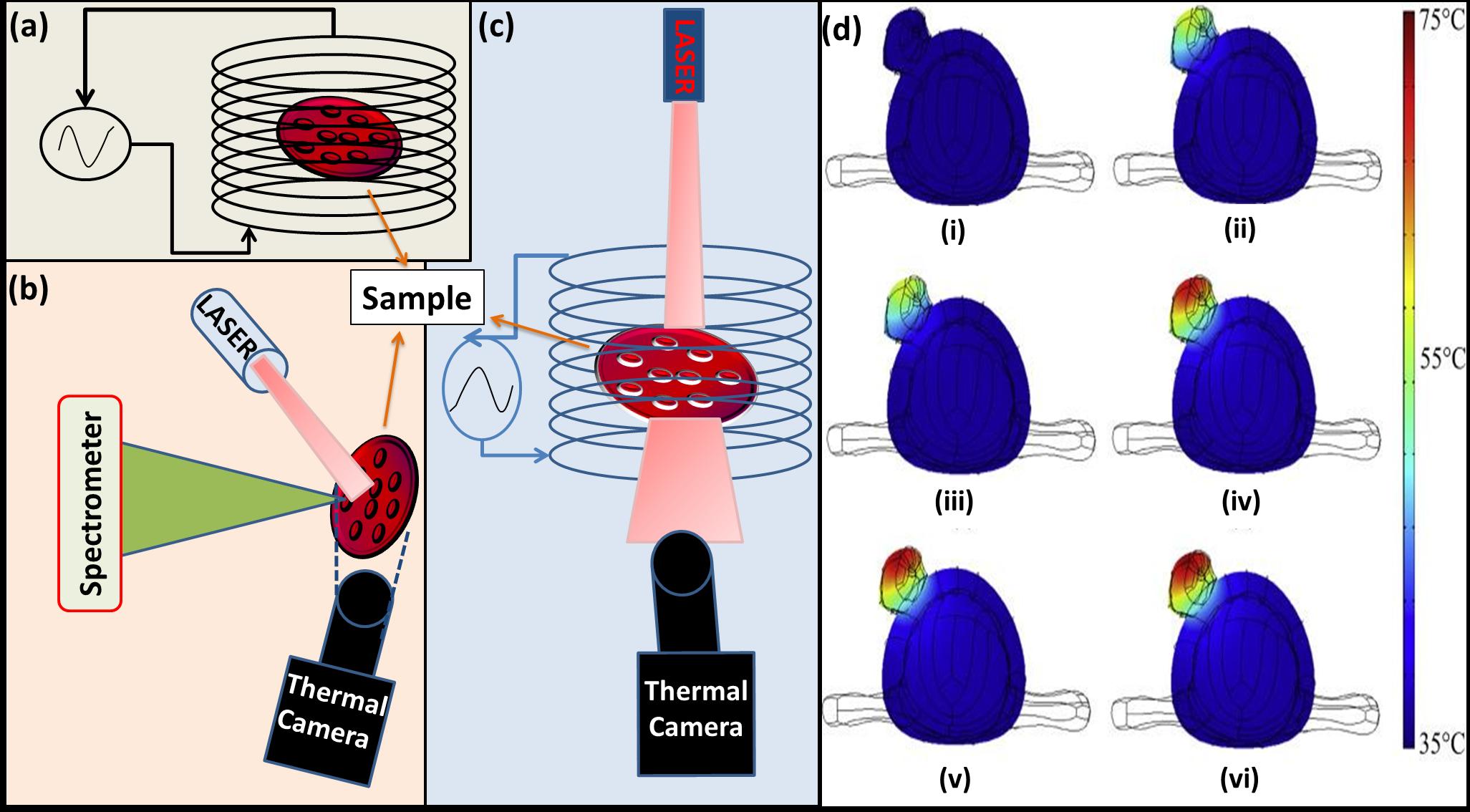
Fig. 1: Fundamental scheme of the experimental device setup for (a) magnetic hyperthermia treatment (MHT), (b) photothermal hyperthermia and (c) combined thermal therapy experiments. The temperature increase can be recorded with an IR thermal imaging camera located at the end of the coil cavity or fiber-optical thermometer. (d) Slices of the temperature fields in the tumor and mouse body obtained using COMSOL software : i) before heating, ii) 3 min, iii) 6 min, iv) 9 min, v) 12 min, and vi) 15 min after the heating starts. Note that the steady-state temperature field is established after 15 min. (Reprinted with permission from Ref.
. Copyright 2016, Elsevier Ltd).
7
Besides direct thermal-induced therapy, there are several other techniques and methodologies which contribute to the efficiency of hyperthermia as a therapeutic tool against cancer diseases such as oxygenation, pH-maintenance, photodynamic therapy, heat released chemotherapy, etc. . Compared with others, thermal therapy is less invasive, and it increases the efficacy of traditional treatments by reducing side effects. Using a sufficiently accurate control, thermal therapy has been used for localized heating of cancer cells with minimal effect on normal cells . Heating on superficial tumors can be done using radio frequencies, microwave irradiation, ultrasound techniques or with IR laser sources . Depending on the depth and size of cancerous tissue, several parameters in instrumental setup can be varied in order to get a more effective treatment. Figs. 1a &1b explain the fundamental experimental arrangements of the magnetic hyperthermia treatment (MHT) as well as the photothermal treatment (PTT) and they can be combined together (Fig. 1c) for more effective treatments .
In difference with micro or bulk counterparts, materials synthesized and engineered on nanoscale usually have novel characteristics which may be favorable in biological systems for interaction with cell surface and intercellular structures. Nowadays the nanoscale materials have become strong candidates for medical treatments as carriers for drugs, therapy and for the detection of diseases. In cancer or tumor treatment, nanoparticles (NPs) have recently been considered as a promising new approach . Nanomedicine requires a multidisciplinary attitude and its understanding requiring knowledge of ethical, physical, chemical, physiological and biological aspects. Nanotechnology promises to revolutionize the area of cancer/tumor treatment with a wide spectrum of nanostructures including polymers, dendrimers, lipids, organometallic, carbon based materials, several inorganic nanomaterials (iron oxide, Au, Ag,
8
semiconductor quantum dots- QDs) contributing to development of treatments with different physical process and mechanisms of action . An approach to the selection of nanomaterials should consider biodistribution, toxicity (short and long term), size control, surface chemistry, their behavior in biological systems and the use of nanomaterials with their unique properties can open a new set of opportunity for medicine. Here, NPs can have therapeutic as well as diagnostic properties to be designed to carry a large therapeutic “payload” . They can also be modified with targeting ligands which yield high affinity and specificity for target cells to deliver highly active chemotherapy and hyperthermia with cellular precision. The complex structure of NPs can be made to accommodate multiple active molecules simultaneously allowing combinatorial cancer therapy with different drugs and biomimetic NPs can bypass cellular membranes as well as overcome drug resistance mechanism [17, 18]. Currently, NPs and nanoparticulate formulations have been integrated into cancer therapeutics and ongoing clinical trials with improved efficacy and reduced toxicity .
Thermal treatments mediated with nanomaterials can be classified through the process used to generate the therapeutic effect a slight activated in the photothermal and photodynamic therapies or magnetically induced for the magnetothermal therapy [18, 20]. Magnetothermal therapy is based on different mechanisms including hysteresis loss, Neel relaxation and Brown relaxation to convert the energy of an external magnetic field into heat. A typical method of delivering the NPs to the tumor site is the direct injection in the tumor area followed by diffusion in the damaged tissues . The first clinical results in the field of MHT were obtained by Jordan et al. against brain tumor using superparamagnetic iron-oxide coated by aminosilane. A benefit of using magnetic nanostructures for MHT is the simultaneously use of
9
either being contrast agent in magnetic resonance imaging (MRI) or acting as heat source when exposed to specific frequencies. On the negative side, MHT may cause protein denaturation, DNA damage, signaling interruption, cell growth inhibition and apoptosis .
PTT, or optical hyperthermia, uses the energy of laser to trigger the action of either photothermal conversion agents or specific physical phenomena to generate heat causing thermal ablation of cancer cells . A field of PTT study has expanded since the beginning of the millennia with the development of easily producible Au nanostructures (e.g., rods, cubes) , and nowadays it is extended to nanostructures with a variety of different elements or materials. Nanomaterials used in PTT are generally characterized by a great efficiency in photothermal conversion for wavelength in the near infrared (NIR) to exploit the optical window of living tissues . In addition, the materials also need to have high performance, especially when applied to in vivo, a low toxicity and tumor targeting properties. NIR lasers are the main energy source for PTT which can penetrate through the tissues and be converted into heat by the nanomaterials (Fig. 1). Using laser directly to ablate tumor tissues would require high energy settings causing unintended damage to normal tissues. The introduction of a photothermal conversion agents allows the use of low energy laser able to penetrate healthy tissues without causing heat damages . Several necessary characteristics are important for such agents including photostability, biocompatibility, large absorption coefficient and NIR absorption. Metals have different optical properties from standard dielectric materials (based on oxides, fluorides, nitrides etc.) and among them nanostructured Au is the most promising photothermal metallic agent. Here, the heating mainly involves surface plasmon generation or localized surface plasmon resonance from the interaction of light with metals. One of the
10
traditional draw backs of PTT was the necessity of the laser to be able to penetrate the healthy tissues without damaging them or loosing too much power (due to scattering).This limitation has been recently overcome by moving the light source inside the patient with the use of fiber optic waveguides. With a powerful laser source, the output, however, was relatively weak limited from fraction of watt to few watts for direct laser ablation or even lower for longer time when used for particles mediated hyperthermia .
The difference between MHT and PTT is the attainable tissue penetration. PTT is only able to treat tumors seated at the surface or a few millimeters below the tissue level because of limited tissue penetration of light while MHT can treat tumors seated at any depth thanks to the large tissue penetration ability of the magnetic field . Moreover, the contactless use of alternating ac magnetic field enables a controllable remote treatment to eliminate tumors that are inaccessible by PTT. The continuous effort of working on the subject of cancer treatments using thermal approach has been linked specially with the synthesis of nanomaterials focusing on high degree of shape-size tunability, surface modifications and bioconjugations with NPs. At the moment, a very few clinical centers use MHT/PTT for anticancer therapy, but there are a large number of particles and protocols in pre-clinical or in the process of being approved in Europe and USA for clinical use [31, 32]. The pursuit of innovative, multifunctional, more efficient and safer treatments is a major challenge in preclinical NP-mediated thermotherapeutic research, and it is important to search for “dual” materials to act as both magnetic and photothermal agents. In this review, we are aiming to provide comprehensive information about magnetic and photothermal hyperthermia including the processes involved in their mechanisms, on the factors affecting the efficiency, the
11
biological interactions as well as details on the instrumentations used for the therapies. We also review both the therapies at clinical levels and the combined therapy showing the research work on this hot topic.
2. Magnetic-Induced Hyperthermia
The primary target of hyperthermia is to deliver heat to kill cancerous cells at clinically adequate temperatures and to limit the damage to healthy tissue. Nanotechnology has provided a novel and original solution allows targeting regions in the body otherwise difficult to reach and thanks to their nanoscale design they open the possibility to conjugate biomolecules like antibodies for a more effective therapy or to accomplish specific targeting . Magnetic- induced hyperthermia is minimally invasive, tissue-specific and capable of precisely localized and high-intensity heating in deep tissues. By heating the NPs using an external ac magnetic field, it is possible to improve the localization and deliver the heat into the tumor tissue .
The concept of magnetic materials used for hyperthermia applications was introduced by Gilchrist et al. in 1957 and expanded in the mid-1990s thanks to the introduction of NPs. This resolved the difficulties occurring with radio frequencies related to power absorption of tissue for the cancer treatment which can overcome the difficulty to adjust to the variability of power absorption of cancerous tissues. Since the synthesis have great impact on the magnetic properties, it is fundamental to find appropriate synthetic methods with the ability to rigorously control the composition, size and shape of magnetic NPs (MNPs).
The heat efficiency generated by MNPs (fluids) is quantified by specific absorption rate (SAR) or specific loss power (SLP) and it is defined as the amount of heat released by an unitary amount
12
of active material per unit time during exposure to an ac magnetic field of defined frequency and field strength .
(1)
Where C is specific heat capacity calculated as a mass of magnetic carriers per equivalent of medium and it describes the “rate of temperature rise”, expressed as average absorbed power per mass unit (W/g). ΔT/Δt is the temperature increase per unit time or initial slope of the temperature versus time dependence. The SAR or SLP of a sample can be estimated experimentally by calorimetric methods.
SLP is defined as electromagnetic power lost per magnetic material mass unit and is expressed in watts per kilogram (W/kg) . In the context of magnetic hyperthermia, the SAR and SLP are of the same order of magnitude. SLP was coined much later because SAR is somewhat misleading by two main reasons: i) it was used in the context of high-frequency radiation (microwaves or higher) where the formula and mechanisms for energy absorption by human tissues are different from the low-frequency magnetic mechanisms observed in magnetic hyperthermia; and ii) because "Absorption Rate" does not state what is being absorbed. SLP is more accurate since it is mass-normalized (specific) and denotes the magnitude (power) that is being absorbed/released. Since most of the data collected are in terms of SAR values, we will consider SAR values throughout the literature unless specified otherwise.
Since SLP or SAR should be as large as possible in the case of hyperthermia application, it can be expressed as being proportional to the rate of the temperature increase (ΔT/Δt). From the linear response theory (LRT) using homogeneity approximation, all spins in a nanosystem behave in the same linear way in response to the applied ac field. LRT indicates that while
13
decreasing size (increasing surface/volume ratio), more spins in the nanoparticle respond to the ac magnetic field in the same way . This model predicts that the highest heat efficiency valid for 15-20 nm particles (ignoring the realistic conditions in in-vivo or in-vitro experiments).
It is noted that besides the high SLP values, for in-vivo experiments, it is necessary also to consider biological constraints (Atkinsons’s criterions) such as highest possible SLP within the biological limit, known now as “Brezovich criterion” (product of field amplitude (H) and frequency (f) maximum heat dose < 4.85 x 10⁸ Am-1s-1) and improvisation of “nano” objects in terms of heating efficiency .
(2)
where m is the mass of heat generating material, C the thermal capacity of the sample as a whole and (dT/dt) the rate of temperature increases as a function of time. Using the initial slope (dT/dt) in T versus t (t →0) curve, it provides a more real estimate of the SLP because the initial thermal losses (during heating process) are still negligible and the temperature distribution within the sample is more homogeneous.
Since SAR describes the efficiency of heat conversion, it is an important parameter from which one can determine the dosages applied to a tumor to achieve a reliable inactivation of target cells. For materials with high SAR, it is possible to reduce the dose applied to the patient to a minimum level. For MNPs, size, shape and microstructure can influence the value of SAR , NPs with high surface anisotropy can generate higher SAR value than that in the bulk form.
The dependence of SAR value to the structural parameters of the NPs and their surface modification makes it virtually impossible to compare the results from different research groups . A comparable calculation of SAR value requires an expensive adiabatic set-up and
14
there is no clear agreement in which frequency or field amplitude used in the experiments can be compared. To overcome this issue, a term intrinsic loss power (ILP) has been introduced by Pankhurst et al. in which SAR is being normalized by the frequency and field amplitude, and therefore independent of the magnetic field parameters. For ILP, it allows a more direct comparison of the heating efficiency of superparamagnetic NPs. The ILP parameter, however, is not completely intrinsic and the system has to follow a few assumptions: the size of the crystallite needs to have a polydispersity index greater than 0.1; the frequency used in the experiment of several MHz; the H value of the sample much greater than the saturation of the NPs and the thermal losses of the system have to be reproducible . Following these
(3)
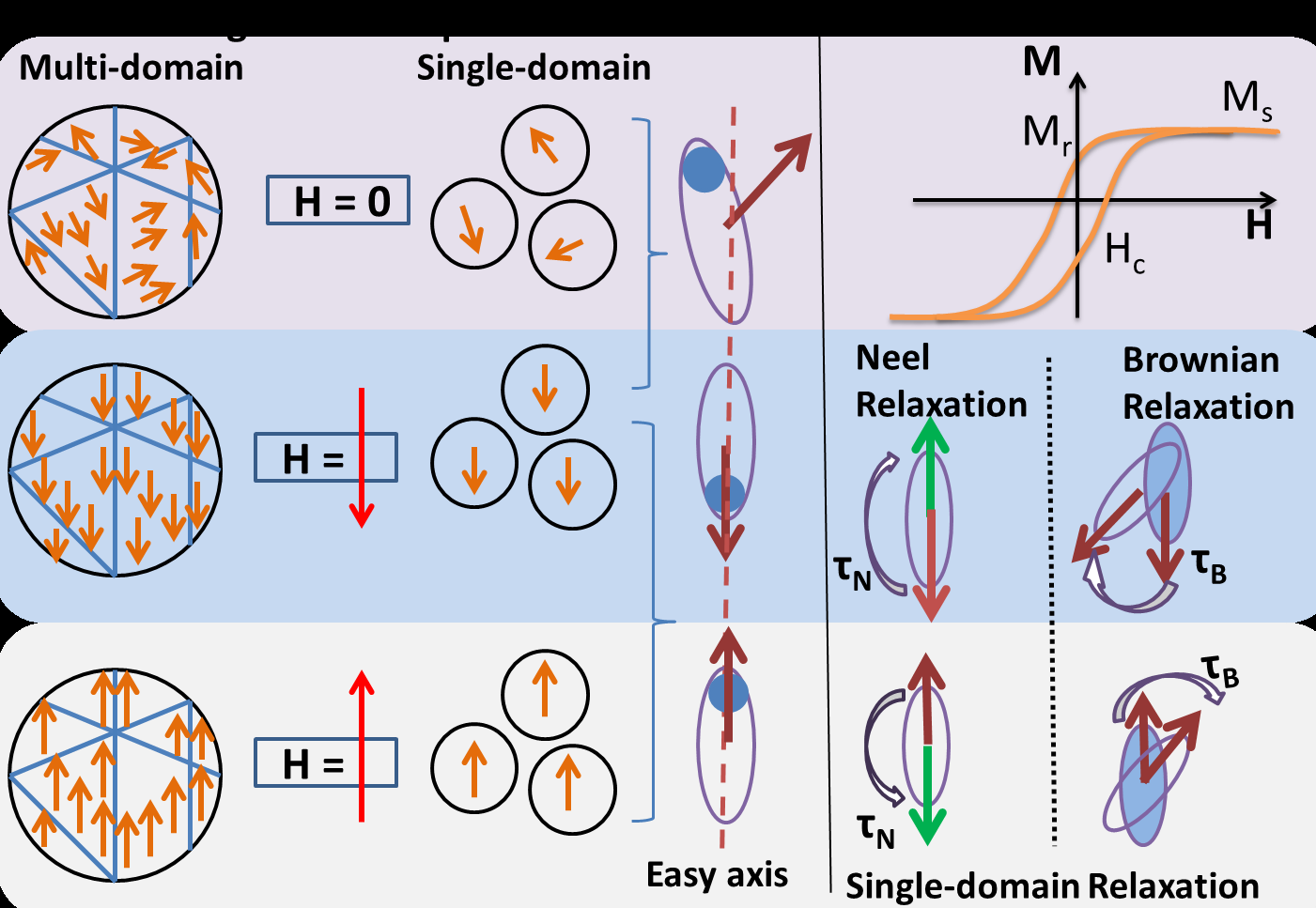
Fig. 2: Different heat generation models in a MNPs in response to the ac magnetic field (H).
2.1. Mechanisms Of Magnetic-Induced Hyperthermia
The heating properties of the MNPs are due to hysteresis, Néel and Brown mechanisms. Different heat generation models in a MNPs in response to the ac magnetic field are shown in Fig. 2.
2.1.1. Hysteresis Mechanism
Hysteresis mechanism of magnetic hyperthermia commonly referred as hysteresis loss is due to multidomain NPs (Fig. 2). The magnetic structure of ferromagnetic materials spontaneously splits into domains in which each of them has uniform magnetization of all the magnetic spins aligning in one direction. The domains are separated by domain walls. When the material is subjected to a cycle of magnetic fields, the magnetization shows a non-linear curve called a hysteresis loop which is a measure of energy dissipated per cycle of magnetization reversal (Fig.
2). This loop is characterized by three material dependent parameters: saturation magnetization Ms, remnant magnetization or remanence MR and coercivity Hc . During a cycle of magnetic fields, there are two processes contributing to hysteresis losses namely the displacement of domain walls being pinned and released at inhomogeneities and the rotation process of magnetic moments inside domains .
For low field amplitudes, losses per cycle depend on the field according to a third order power law, commonly denoted as the Rayleigh law, which is theoretically explained by wall pinning. With decreasing particle size, a transition to single domain particles occurs in which the process of magnetization reversal is in the simple uniform mode. Single domain particles with uniaxial anisotropy were theoretically treated in the classical paper of Stoner and Wohlfarth showing
16
the highest amount of hysteresis energy. The equilibrium magnetization direction is determined by anisotropy contributions due to crystal structure, particle shape and surface . If an assembly of MNPs is put into an ac magnetic field of frequency f and amplitude µ0Hmax, the amount of heat ‘A’ released by the MNPs during one cycle of the magnetic field remains equal to the area of their hysteresis loop. The amount of heat released by ferromagnetic material
(5)
where f denotes the frequency of the ac magnetic field expressed as f = ω/2π, M magnetization and H applied ac magnetic field. Area of the hysteresis loop depends upon the various factors such as MNPs size, anisotropy, frequency and amplitude of applied ac magnetic field etc. Here, Hc and MR are reduced for larger particles due to the reduction in the energy loss per cycle. For smaller particles the enhanced anisotropy energy barriers separating the different orientation states gives enhanced energy loss causing the blockage of the magnetization in the case of superparamagnetic NPs .
2.1.2. Néel Mechanism
For single domain MNPs, the energy barrier for magnetization reversal decrease and consequently thermal fluctuations lead to relaxation phenomena which is commonly called Néel mechanism or Néel relaxation (Fig. 2) . In this case, the time constant of the ac magnetic field is short enough that the physical orientation of the particle remains unchanged while the moment alternates between parallel and antiparallel orientations. These oscillations
17
in the magnetization can occur in a specific time, called the relaxation time (τN). The characteristic time related to the thermal fluctuation of magnetization with different anisotropy
(6)
where τ0 is the characteristic flipping frequency of about 10-9 s, K the anisotropy constant, V the volume of the magnetic particle, kB the Boltzmann constant and T the temperature. Hence, Néel mechanism depends exponentially on magnetic anisotropy and particle volume. The relationship between anisotropic constant K and thermal energy kBT provides the relaxation of the inner magnetic core. Néel relaxation prevails when there is higher frequency as well as smaller particle size .
2.1.3. Brownian Mechanism
In fluid containing magnetic particle suspension, a relaxation path which occurs due to the ability of particles to rotate freely is termed Brownian relaxation. In this case, heating of the particles in liquid suspension occurs due to viscous drag between the particles and the liquid, where the entire particle has a rotational movement with an applied ac magnetic field, while the magnetic moment remains fixed relative to the crystal axis (Fig. 2). The Brownian relaxation
(7)
Where η is the viscosity of the liquid carrier, VH the hydrodynamic volume of the particle, kB the Boltzmann constant and T the temperature. Generally, the hydrodynamic volume VH is larger than the volume of the particle due to fluid interactions or absorbed surfactant. The particles
18
can physically rotate depending on the hydrodynamic parameters of both the particles and the medium at a characteristic time . The Brownian relaxation is size-dependent being dominant at the higher particle size and strongly viscosity dependent. Brownian losses are not only found in superparamagnetic NPs but can also be observed for other if the viscosity of the surrounding medium is low enough to allow rotation of the complete particle.
Generally, both Néel and Brownian relaxations can occur in parallel and the effective relaxation time, τeff, can be determined by the following expression:
(8)
which is dominated by the shorter Néel and Brownian relaxations. For in vivo and in vitro uses, it is better if MNPs relax essentially through the Néel mechanism because of the change in the viscosity medium around the cells limiting free rotation of the particles [12, 44]. In accordance with the LRT theory, the loss power density P is expressed as :
(9)
Where f and H are the frequency and magnitude of an applied magnetic field, respectively, μ0 the permeability of free space, and χˊˊ the imaginary part of the susceptibility. 2.2. Parameters affecting magnetic-induced hyperthermia 2.2.1. Effect of applied magnetic field and frequency The heat dissipation value is proportional to the applied ac magnetic field strength and frequency. For magnetic induced hyperthermia, the amplitude is proportional to the square of the applied ac magnetic field amplitude as shown in eq. 9. SAR is generally found to increases with increasing field strength. In clinical application, the strength of magnetic field is limited by
19
physiological considerations and that with large amplitude, high frequency may induce local heating in non-magnetic tissues due to induced eddy currents . Here the optimum choice of field amplitude may differ for different samples even with the same maximum SAR values.
The role of magnetic field frequency in SAR is considerably more complex in which its range depends on the degree of magnetic anisotropy (Κ) of MNPs . The frequency of the ac magnetic field must be enough to provoke the targeted intra-tissue hyperthermic heating phenomenon but not too high to cause overheating of healthy tissues. It was reported that the frequency should be in the range of 100–1000 kHz in order to prevent side effects of the ac magnetic field in vivo . Using the kinetic Monte-Carlo model with its accurate timescale quantification, it is possible to have a reliable prediction of the frequency and particle size dependent behavior.
For a safe application of hyperthermia to patients, the recommended product of the frequency and the magnetic field amplitude C should be smaller than 5×10⁹ Am-1s-1 but in many experiments it was found mostly above this limit [47, 48]. By introducing the condition f(H) = C/H into the dependence SAR(f,H) for the different loss processes discussed above one get the optimum combination of f and H for maximum SAR. The combination of ac field amplitude and frequency for magnetic hyperthermia depends strongly on the type of particles provided for therapy.
2.2.2. Effect Of Particle Size
The optimum particle size showing enhanced heating efficiency for magnetic hyperthermia is still a matter of debate mainly due to the lack of conclusive data to date comparing the predicted and in vivo performance of MNPs for a wide range of tumors. However, the role of
20
size and size distribution on the heating properties of particles will be significant and of relevant interest. Heat dissipation mechanism is expected to depend largely on particle size but there are two complicating factors that make its contribution to a specific heating mechanism difficult: i) the particles may have single or multiple crystal domains, and ii) the size distribution of NPs can be widely dispersed for a given sample. For magnetite NPs synthesized in the range of 8-18 nm, the largest particles displayed the highest SAR values . The effects of size distribution on heating rate in magnetic fluids was theoretically addressed by Rosensweig et al.
highlighting the importance of using monodisperse colloids in heating experiments. A narrow size distribution needs a good adjustment of mean particle size in relation to the magnetic field amplitude for attaining maximum SAR.
The three primary mechanisms (hysteresis loss, Brownian relaxation and Néel relaxation) of heat generation in magnetic induced hyperthermia depend largely on the size of the particle. Hysteresis losses dominate in large particles (> 100 nm), and particles of this size are too large
Clinical
applications.
Become
superparamagnetic with negligible hysteresis losses leaving Néel and Brownian relaxation the main relevant mechanisms . Generally, within this range, Brownian relaxation is significant in larger particles and Néel relaxation in smaller ones; however, exactly where this division occurs depends strongly on the anisotropy constant of the particle [49, 52].
It was reported that the iron oxide NPs (IONPs) with narrow size distribution and with a mean diameter that corresponds to the maximum coercivity in the single domain size range could lead to maximum heating efficiency . In the superparamagnetic regime SAR increases with increasing relaxation time (i.e. with increasing particle size) until the validity of the relaxation
21
theory ceases near the transition to the stable single domain regime. The particle systems with narrow size distribution are capable of providing remarkable output of heating power and superparamagnetic samples increase SAR with increasing particle size .
Harabech et al. demonstrated the influence of relaxation time constant τ0 on SAR using a macrospin model. Here, the Landau-Lifshitz-Gilbert equation was used to investigate the relation between the Gilbert damping parameter and τ0. It was found that although the effect itself can be quite large, size dependence of τ0 is not vital in SAR calculations because in each size distribution only a limited size range of MNPs contribute to the heat generation. In the investigated model, a well-chosen τ0 was used. The precise value of τ0 is most accurate when it is as close as possible to its true value for the radius of magnetic NPs at the peak of the heating .
2.2.3. Effect Of Particle Morphology
Surface properties are crucial for NPs’ characteristics and its modification will lead to the changes in their physical, chemical and biological properties . Several investigations regarding surface and shape morphologies were reported to understand the magnetic characteristics and their magneto-hyperthermia effect . The studies include new designs or morphologies, for example core–shell, onion-type, multilayered, alloys, multi-metallic etc. Core- shell NPs are class of hybrid materials, where composition and microstructure varies in the radial direction and it can provide the multi-functionalities. The core-shell NPs offer a number of advantages over mono metallic/metal oxide NPs for hyperthermia-based therapy including: (i) a shell can protect air sensitive high magnetic moment nanocomponent core, which provides high value of SLP ; (ii) reduction in the anisotropic magnetic dipolar interaction in core-shell
22
NPs helps to increase the stable suspension of magnetic fluids (behaves as isotropic dispersions) even in the absence of an external magnetic field, which is the main problem in enhanced hyperthermia response .
Hemery et al. prepared well-defined multi-core assemblies of nanoflowers with narrow grain size dispersity and studied magneto-caloric effect in detail along with applications for MRI agents depending upon the morphologies and cluster sizes. They found the correlation between SAR at given field amplitude (Happ = 10.2 kA/m) and frequency (f = 755 kHz) against outer diameter measured by TEM, experimentally following a quadratic law for nanospheres, and a lower exponent (nearly square-root) for nanoflowers, in agreement with the models on the optimal size of MNPs for magnetic hyperthermia at given values of specific magnetization and magnetic anisotropy. The study indicates that nanoflowers and the largest spheres find applications as magnetic nano-heaters, while smaller NPs do not generate sufficient heat .
Recently, Sol-Fernandez et al. demonstrated a wide range of studies regarding intracellular hyperthermia under exposure of alternating magnetic field on flower like Mn-doped iron-oxide functionalized with 𝛼!𝛽!-integrin-ligand . They were able to demonstrate intracellular heating capacity of MNPs depends on factors such as cytoplasm viscosity, NP aggregation within subcellular compartments, and dipolar interactions. Three major strategies were adopted to maximize the magnetic hyperthermia efficiencies : (i) varying doping of Mn2+ changes the crystalline anisotropy in inverse cubic structure; (ii) changes in shape of NPs but keeping superparamagnetic characteristics; and (iii) increasing cell-particle efficacy and
23
interactions through conjugation with a biological targeting molecule to reach the nanoparticle concentration required to increase the temperature within the cell. 2.2.4. The role of anisotropy on heating efficiency Anisotropy of MNPs is a crucial parameter for tuning the magnetic hyperthermia and, according to LRT, it is important in enhancing the Néel relaxation [64, 65]. The most common types of anisotropy are magneto-crystalline anisotropy (or magnetic anisotropy or crystalline anisotropy), surface anisotropy, shape anisotropy, exchange anisotropy and induced anisotropy (e.g. by stress). In MNPs, shape anisotropy and magneto-crystalline anisotropy are the most important. Magneto-crystalline anisotropy arises from spin-orbit interaction which depends on the type of material, temperature and impurities. With decreasing the size of NPs, the ratio of the number of surface atoms to that of the bulk become larger yielding larger contribution of the surface magnetization. In this case, the surface anisotropy of MNPs could be more significant than both the magneto-crystalline and shape anisotropy .
The heating efficiency of spherical IONPs has been widely studied. Different shapes of IONPs other than the typical spheres, i.e. cubes, octopods, octahedral, cube-octahedral and disc shapes, have been proposed in order to tune their anisotropy and improve the heating efficiency [66, 67]. In experimental studies, the comparison of (Zn doped)cubic and (undoped)spherical IONPs with similar magnetic volumes showed more than two-fold increase in SAR for the cubic one . Single-domain cubic IONPs are reported to possess superior heat induction power compared to spherical ones of similar size due to the higher surface magnetic anisotropy and the tendency towards aggregation into chains facilitated by the cubic shape . In addition, monodisperse Fe3O4 nano-octopods were reported to show better heating
24
efficiency than their spherical counterparts, especially in the high field region (> 400 Oe) . The Fe3O4 nanorods have shown enhanced SAR values (862 W/g for an ac field of (68 kA/m) relative to their spherical and cubic counterparts of similar volume (∼140 W/g and ∼314 W/g, respectively), owing to their higher saturation magnetization and effective anisotropy. The SAR of Fe3O4 nanorods can be tuned by varying their aspect ratio . CoFe2O4 based magnetic fluid was found to have lower SAR than Fe3O4 and MnFe2O4 based magnetic fluids. Even after optimizing particle size of CoFe2O4 system, higher SAR values could not be achieved because of its high anisotropy energy .
2.2.5. Effect Of Dipolar Interaction
Understanding the role of dipolar interactions in magnetic hyperthermia experiments is important for optimization of NPs heating power and for selecting the correct dose to inject to reach the desired outcome in intracellular magnetic hyperthermia therapy. For in vivo applications, uptake of MNPs in sub-cellular vesicles such as lysosomes can lead to aggregation resulting to the change of magnetic hyperthermia properties due to dipolar interactions .
The investigation of dipolar interaction carried out via numerical simulations based on a mean- field model showed that it can be used to increase the dissipation of magnetically soft particles but should be avoided in the case of hard particles. It may connect to the fact that the dipolar interaction acts to increase the effective anisotropy barrier. Magnetically hard particles were seen to be further hampered by increasing the dipolar interaction due to a larger freezing of the magnetic spins . Using Monte Carlo algorithm, hysteresis area was found to be well correlated with the parallel or antiparallel nature of the dipolar field acting on each particle.
25
The magnetic interactions strongly depend on NP diameter and anisotropy as well as on the amplitude of the applied magnetic field [74, 75]. It is also reported that a shortening of the magnetization (Neel) relaxation time when increasing the dipolar interactions. Here, dipolar effects occur as soon as the inter-particle distances become shorter than about three times the particle diameter . As the inter-particle distance decreases, it increases dipolar interactions which alter the magnetic response of the ferrofluid.
This interaction directly affects the Néel relaxation time which is the dominant mechanism in hyperthermia studies of the small NPs (< 10 nm) . Further, since dipolar interactions are related with anisotropies directly , tuning the magnetic anisotropy without affecting significantly the size/ size distribution of NPs, affects the efficiencies of nano-heaters at low field hyperthermia, which is the first requirement of clinically relevant criteria. Lowering anisotropy decreases the fraction of blocked NPs, hence increasing the number of nano-heaters (e.g. Zn doped Mn-ferrite will have higher SLP at low field hyperthermia in comparison to Co doped Mn-ferrites, even if the particle size distributions are similar ). Although for single magnetic particle, bigger size can result in enhanced hyperthermia, in the assembly of MNPs the increase in size can give rise to the large dipolar interaction and its dominating effect can reduce the overall magnetic hyperthermia effect.
Experimental evidences and Monte Carlo simulations of an assembly of monodisperse single domain MNPs in thermal equilibrium have shown that the dipolar interactions significantly affect the magnetic susceptibility and hysteresis losses resulting in a considerable reduction in specific heating power for hyperthermia applications .The heating efficiency of a magnetic colloid can increase or decrease with dipolar interactions or the colloid concentration. The
26
power dissipated by an ensemble of dispersed MNPs becomes negligible as a direct consequence of the long-range nature of dipolar interactions . The huge enhancement of a heating temperature of soft MFe2O4 (M = Mg, Ni) from 17.6 to 94.7 °C and from 13.1 to 103.1 °C (NiFe2O4) NPs was found due to the increase in magnetic hysteresis and relaxation losses associated with the increase in magnetic moment and susceptibility induced by the dipole interaction .
2.2.6. Effect Of Viscosity
Unlike Néel relaxation, the heat dissipated through Brownian relaxation is greatly influenced by the viscosity of the medium that tends to counter the movement of particles in the medium . For example, if the viscosity of the medium is high or if the freedom of particle rotation is suppressed, the heat dissipated will either diminish or seized [44, 84]. As the temperature increases the heating rate in magnetite-maghemite NPs studied for three different particle sizes (5, 28 and 45 nm) increases due to the decreasing viscosity of the medium . The viscosity has a deleterious effect on magnetic heating. The SAR values for fluid of magnetite coated with dextran (MAG D) NPs and maghemite nano-powders decreased when the NPs were dispersed in more viscous environments due to a reduction in the Brownian relaxation component of magnetic heating . From another similar experimental study, it was concluded that the heating ability of NPs was reduced with an increasement in viscosity. Thus, it was anticipated that due to the high viscosity of the extracellular matrix in a biological tissue, the heat loss by Brownian relaxation is negligible .
27
The molecules chosen for stabilizing the NPs also determine the magneto-hyperthermia of the NPs once exposed to the biological media, because of the formation of a protein corona that influence the particles’ behavior . In-vivo and in-vitro MH experiments suggest that magnetic NPs coated with different organic ligands (polyethyleneimine (PEI), polyethylene glycol (PEG), dextran, oleic acid, and Pluronic F-127) behave differently as compared to uncoated magnetic NPs . An efficient stabilization increases the biocompatibility of NPs, limiting the immune response and avoiding the formation of protein NPs aggregates which can reduce the chance of obstructing blood capillaries . The introduction of organic ligands on the surface of NPs improves the uptakes to tumors and cells by increasing the time the NPs spent in the bloodstream and reducing toxicity. Organic ligands do not affect directly much heat dissipation of magnetic NPs, but they affect their hydrodynamic sizes and dispersion, hence their Brownian relaxation (𝜏!). Linh et al have shown that the SLP of dextran coated Fe3O4 NPs was more than 2 times efficient compared to the uncoated Fe3O4 ones . The influence of stabilizing ligand on biocompatibility and cellular uptake in vitro was studied by Pradhan et al.
using different coatings of dextran and lauric acid on Fe3O4 NPs . It was observed that lauric acid-coated Fe3O4 NPs were less biocompatible and had a higher uptake than that of dextran- coated ones, when tested on L929 mouse fibroblast cells which could be attributed to different cellular interactions from the coating materials . Here, the choice of a biocompatible capping agent could increase the uptake of the NPs in the tumor, the time spent in the blood stream by the particles, the heating efficiency and reducing the aggregation of the particles in vivo.
2.3. Potential magnetic-induced hyperthermia nanomaterials
28
MNPs can also be designed to combine several therapeutic functions like therapy and drug delivery as well as therapeutic and diagnostic functions. At the same time, MNPs must have characteristics to qualify for biomedical applications such as biocompatibility, nontoxicity, ability to escape from the reticuloendothelial system and low protein absorption. The number of various types of possible core NPs ranging from metallic Fe, Co, Ni, Gd, and their oxides to Au, Ag, carbon nanotubes, manganese oxide, micelles, liposomes etc. Iron oxide based NPs have been extensively investigated due to their excellent superparamagnetic, biocompatible, and biodegradable properties [20, 56]. There have been extensive studies recently on tailoring and tuning the properties of the NPs by changing the structure, composition, size, and shape via different syntheses. Reviews on synthesis of nanomaterials will not be our focus and can be found elsewhere . For MNPs, the effective hyperthermia heating agents are of paramount importance which would enable selective heating of tumor cells and vasculature avoiding excessive damage to healthy tissue structures.
2.3.1. Iron Oxide Nanoparticles (Ionps)
Among magnetic materials, IONPs are considered to be one of the best candidates for biomedical applications due to their biocompatibility, accessibility, facile synthesis , chemically stability and superparamagnetism. IONPs of either magnetite (Fe3O4) or maghemite (γ-Fe2O3) are the most widely use and they have been proved to be well tolerated by the human body which have been approved by the US Food and Drug Administration (FDA) .
Superparamagnetic IONPs (SPIONs) have multifunctional characteristics including image-based diagnostics, localized destruction of target cells via magnetically induced heating and drug release for use as a multimodal cancer therapy agent . These properties make SPIONs
29
an excellent candidate for magnetic hyperthermia therapy since heat generation can be controlled/modulated by an externally applied ac magnetic field. In dual magneto- photothermal therapeutic approach with only IONPs as heat mediators, a very efficient heat conversion for both modalities was achieved. Remarkably, the dual magneto-photothermal therapeutic approaches of IONPs resulted in complete cell death in vitro and in total solid tumor ablation in vivo at low iron doses, tolerable magnetic field and frequency conditions as well as acceptable laser power doses .
Theoretical analysis has shown that the heating efficiency of IONPs depends on their properties such as the saturation magnetization, anisotropy energy and rate of magnetic relaxation. In this regard, size is a controlling factor for increasing the heating efficiency. IONPs with sizes > 20 nm have a SAR significantly higher than that predicted by the widely used linear theory of magnetic fluid heating . The narrowest size distributions, however, have been found in magnetite crystals in bacterial magnetosomes, which have been shown to be significantly more efficient than chemically precipitated particles of similar size . In MNPs comprising iron oxide cores with mean diameter of 50 nm surrounded by a dextran layer, saturation magnetization of the shell is found to play a crucial role in determining SAR .
2.3.2.Ferrites For Magnetic Hyperthermia
For clinical conditions to cure cancer, hyperthermia is a key technique, but temperature regulation is very important that must be precisely controlled. In general, a higher coercivity is required to generate more energy during one cycle of heating which can be achieved using metal NPs. Zhang et al. studied optimization of Curie temperature and coercivity of Co-Zn ferrite NPs aiming for the custom design of self-regulating hyperthermia nano-vehicles by
30
substituting a pre-determined quantity of Cr3+ through a hydrothermal process . In Zn0.54Co0.46Cr0.6Fe1.4O4 NPs the Curie temperature is 45.7 oC and coercivity Hc = 174 Oe. The temperature of these NPs suspension can be self-regulated at 44.0 oC, close to but critically under the clinically used magnetic fields. The evaluation of in vitro cytotoxicity of Zn0.54Co0.46Cr0.6Fe1.4O4 NPs also suggested low toxicity and so the NPs could potentially be used in cancer therapeutics for precise energy transfer from the external magnetic field to the tumor via a self-regulating delivery system in hyperthermia . In summary, the data obtained show the bespoke synthesis of NPs to provide the necessary physical platform to regulate not only the Curie temperature but also the coercivity by a change in the microstructure.
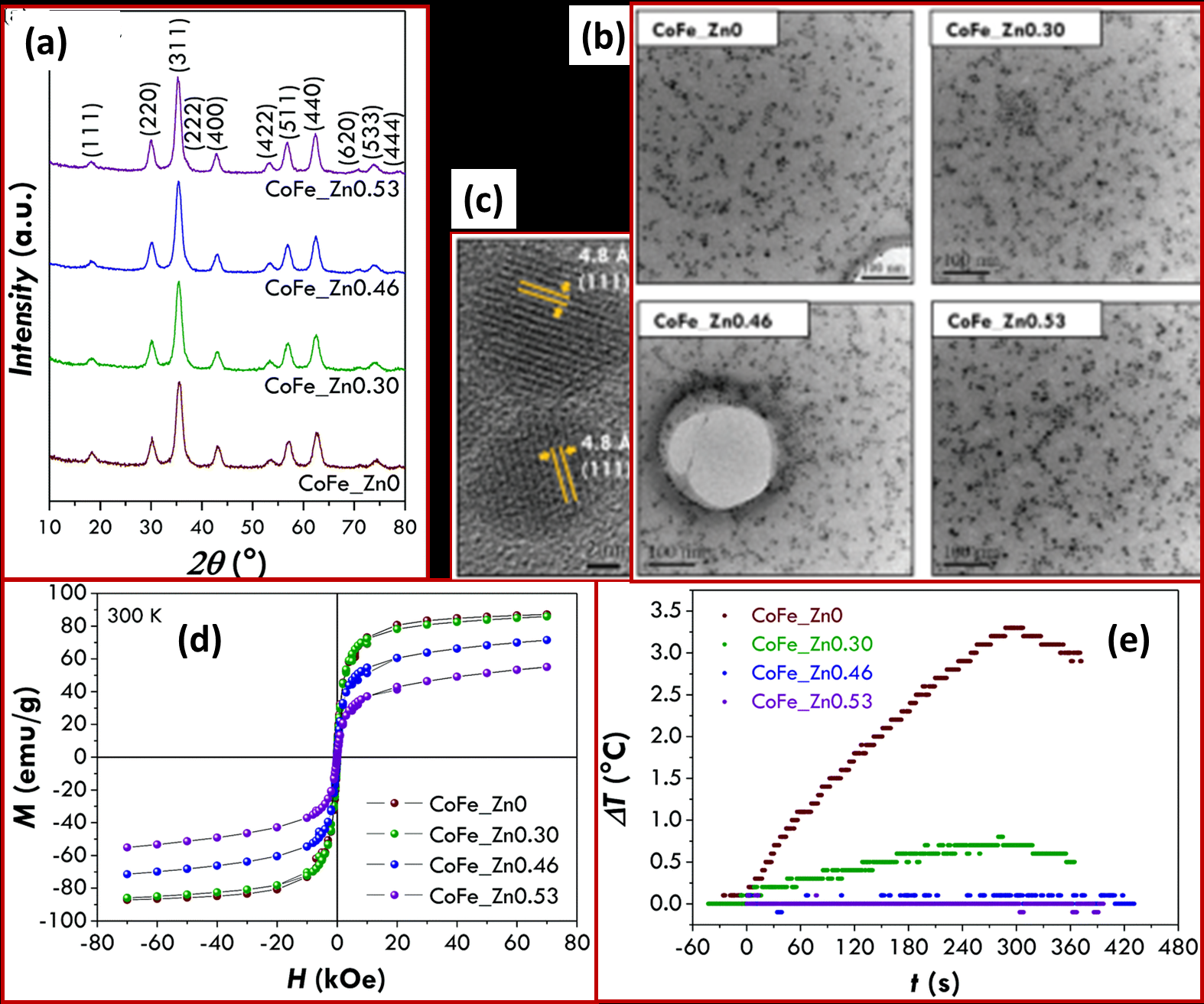
Fig. 3: Microstructural and morphological properties of CoFe_Znx (with x = 0, 0.30, 0.46, 0.53) samples: (a) XRD patterns obtained by the Cu Kα source-equipped diffractometer, (b) TEM
31
images obtained by the JEM 2010 UHR, (c) high resolution images, (d) Magnetisation versus magnetic field curves of CoFe_Znx samples measured at 300 K. (e) Heating curves of CoFe_Znx samples at 25 °C, obtained under a magnetic field of 183 kHz and 17 kA/m . (Reprinted with permission from Ref. . Copyright 2016, The Royal Society of Chemistry) Similarly, Mamely et al. discussed about Zn-substituted cobalt ferrite NPs (ZnxCo1−xFe2O4 with 0 < x < 0.6) as shown in Fig. 3, having similar particle sizes (∼7 nm), size distributions and capping agent amount of 15 %. Here, CoFe2O4 has shown a triple SAR value of 19 W/g and it has both the Néel and Brownian relaxation times that match the characteristic time of the hyperthermic measurement. On the other hand, Zn0.3Co0.7Fe2O4 has a faster effective relaxation time in light with the linear response theory that suggests the higher efficiency of the CoFe2O4 sample.
2.3.3. Multifunctional Hybrid Systems
Multifunctional hybrid NPs being comprised of two or more distinctive functional components have garnered considerable attention in recent times over mono-functional ones. In “all in one probe” mediated by hybrid MNPs, Au/MNPs assimilated into poly(lactic-co-glycolic acid)(PLGA) NPs which can target cancer cells. Au/MNPs can deliver therapeutic cargos to the cancer cells and exert its lethality by three distinctive modes (i.e. chemotherapeutic, photothermal and magnetic hyperthermia) either independently or by the synergistic action of drug and hyperthermia .
Ferrite based hybrid composites have received special attention due to various biomedical applications. A promising nanocomposite material, which was composed of MnFe2O4 NPs of ∼17 nm in diameter deposited onto graphene oxide nanosheet synthesized using a modified co-precipitation method, showed enhanced high-field SAR due to the increase of effective
32
anisotropy and the reduced aggregation of the MnFe2O4 NPs on the graphene oxide . The exchange coupling between a magnetically hard core and magnetically soft shell can tune the magnetic properties and maximize the specific loss power.
A multifunctional nanocomposite consisting of graphene oxide–iron oxide -doxorubicin (GO-IO- DOX) provides multiple therapeutic functions in addition to imaging capabilities. In vitro studies revealed that the GO-IO-DOX nanocomposites possess a greater therapeutic efficacy by exhibiting a superior hyperthermic response in an ac magnetic field and cancer cell specific DOX release to effectively exterminate the target cancer cells through apoptosis-mediated cell death .
heating. Here, a shell can act as a protective shield for sensitive core material. Anisotropy dimers, triangles and flowers have been studied to understand the effects of the core–shell interface structure on the exchange coupling interaction and the resulting heating efficiency with new ligands to give well-defined structure.
thanks to their combination of an iron core, with a high magnetic moment and an iron oxide shell which could protect the core from oxidation (Fig. 4). However, the deterioration of NPs structure can lead to the shrinking of the core and the hollowing of the structure, diminishing
33
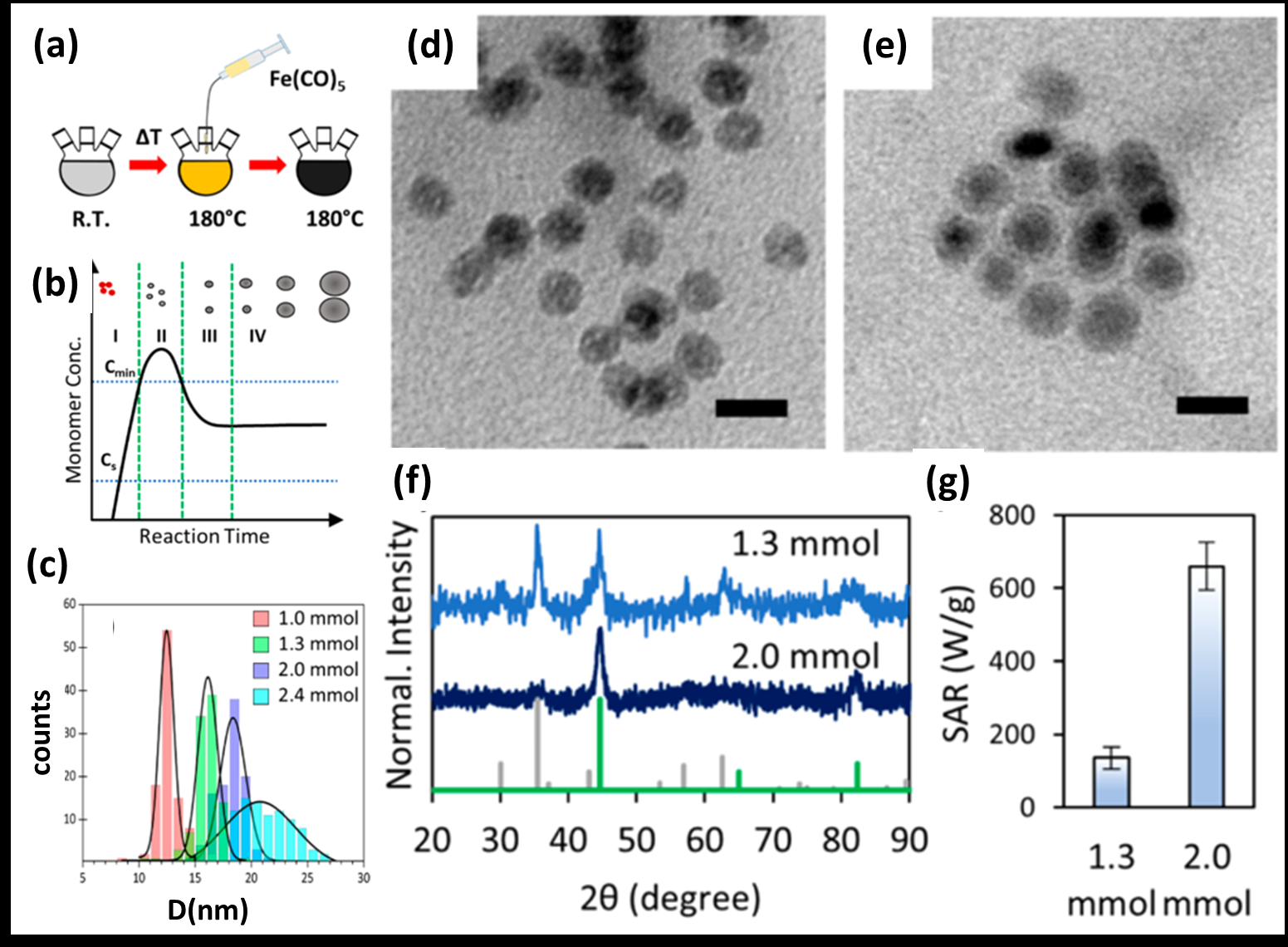
the magnetic properties. The ability to retain the iron core under biomedically compatible conditions is desirable for many applications. Fig. 4 (a) Schematic illustration of the synthesis. (b) Extended LaMer plot configuration, (c) Size distribution for the four reactions with different amount of precursor Fe(CO)5 used: 1.0, 1.3, 2.0 and 2.4 mmol. TEM (with 20 nm of scale bar) picture of Fe NPs synthesized with (d) 1.3 and (e) 2.0 mmol of Fe(CO)5 (f) XRD patterns shown with the gray reference pattern corresponding to the Fe3O4phase and the green one to the Fe phase. (g) Heating power for the
24
kA/m.
Indicate
the standard error of the means of different SAR measurements . (Reprinted with permission from Ref. , Copyright 2018, American Chemical Society). upon exposure to air and after ligand exchange and its resulting effect on the magnetic hyperthermia. Using a continuous injection of the precursor, we were able to finely tune the
34
nm. The structural properties of the particles were studied, and while the size increases, the chemical stability of the iron core is enhanced, and the magnetic properties improved accordingly. Particles larger than 20 nm were shown to be prone to aggregation, resulting in an abrupt increase of the particle size distribution. Two samples (Figs. 4d&e) with high magnetization saturation value and low polydispersity, 15 and 18 nm, were transferred in water using a dopamine-functionalized poly(isobutylene-alt-maleic anhydride) polymer, resulting in colloidal stability over a wide range of pH and ionic strength comparable to physiological conditions. We found that the 18 nm particles retain their chemical properties over 2 months, with less oxidation of the Fe core; this results in a specific absorption rate (SAR) value of 660 W/g and intrinsic loss power (ILP) of 3.6 nHm2 kg−1 (Fig. 4g) , while the 15 nm NPs resulted in the reduction of their properties due to oxidation of the core.
Au–FexOy hybrid structures offer two different functional peripheral surfaces, rendering them particularly attractive multifunctional probes for specific applications. The heat generated by in which it should be related to the higher magnetic anisotropy of the superparamagnetic fraction with the Au shell and higher heat capacity of the Au shell .
framework was developed to include the crystal anisotropy contribution of the Co ferrite phase to the total anisotropy. The experimental results confirmed the theoretical results of the hysteretic heating loss when including nonlinear effects in an effective susceptibility. It is the
35
relative fraction of Co ferrite which determines the anisotropy of these exchange-coupled The optimization of anisotropy constant (K) and saturation magnetization (Ms) by varying the the therapeutic efficacy of these NPs is superior to that of a common anticancer drug.
Recently, He et al. reported the maximized SLP and ILP approaching theoretical limits for ac magnetic-field heating of NPs. This was achieved by engineering the effective magnetic anisotropy barrier of NPs via alloying hard and soft ferrites. 22 nm Co0.03Mn0.28Fe2.7O4/SiO2NPs reach a SLP value of 3,417 W/g at a field of 33 kA/m and f = 380 kHz. Biocompatible Zn0.3Fe2.7O4/SiO2NPs achieve SLP of 500 W/gmetal and ILP of 26.8 nHm2/kg at field of 7 kA/m and f = 380 kHz below the clinical safety limit. This work guides for the design of NPs with appropriate magnetic properties for maximized heating power at any field parameters and, conversely given a particular NP type, choice of field parameters leading to maximized heating power. Furthermore, this biocompatible NP platform with greatly enhanced ac field heating at low field amplitudes are promising for targeted hyperthermia of small tumors and metastases.
2.4. Instrumentation for magnetic-induced hyperthermia Although there have been several works reported on the magnetic hyperthermia from its parameter control (size, shape, distribution, etc.) to improve the heating capabilities of the NPs,
36
there are only few sophisticated systems in the market for measuring SLP. There are number of homemade systems for hyperthermia experiments to measure heat loss in the form of NPs fluid and also utilized for experimentation in mice. Here, the devices are usually built based on simple resonant RLC circuit to create ac magnetic field with a copper coil of different diameter, number of turns, cooling agents etc. In a study of contributions of Néel and Brownian relaxation mechanism to SLP, Fortin et al. used a homemade device with a copper coil having diameter of 16 mm, frequency range of 300 kHz-1.1 MHz and amplitude up to 27 kA/m. The variation in frequency and amplitude has been made by using a variable capacitor (10 pF-4 nF) in series and self-inductance of 25 µH. To avoid heat generated by the coil, continuous circulation of nonane was maintained during the measurements. The small sample volume of 300 µL was used to ensure homogenous magnetic field and a fluoro-optic thermometer for temperature measurements. They presented the quantitative magnetic hyperthermia data matching with theoretical predictions considering relevant parameters such as size, materials, solvent and field characteristics. Ma et al. used a 3 loops copper coil with frequency of 80 kHz and field amplitude of 32.5 kA/m for calorimetric measurements with an asbestos sleeve to reduce excessive heat produced by the copper coil. IONPs fluids were prepared in water with concentration of 2 g/L. Maximum value of SAR of 75.6 W/gmetal was observed at particle size of 46 nm, where the heating contribution is dominated by hysteresis loss. Further increase in particle size showed low heat generation efficiency.
Sadat et al. used a 10 turn coil of 84 mm long with an inner diameter of 39 mm. A sinusoidal 13.56 MHz frequency signal had been generated by a radio frequency generator. Cold water circulation was used to cool down the coil with high ac current and a fiber optic
37
sensor (FOT-L-SD) to measure the temperature. They observed high SAR values for uncoated NPs as compared to coated or confine NP in another material such as iron oxide in Si shell. The observed results were attributed to the high absorption rate in uncoated NPs to Néel relaxation and hysteresis losses whereas dipole-dipole interactions caused the lower SAR values.
For hyperthermia devices, a safe and effective external ac magnetic field is required to stimulate the implanted NPs. Here, the major issues are field uniformity, patient’s convenience and proficiency of working for the whole body. Multi-turn inductive coils in the homemade devices discussed above serve the purpose for small animal preclinical trails. It is also worth to mention a magnetic ac hyperthermia (MACH) developed by Kallumadil in response to the lack of adequate induction heaters available on the market that satisfy the criteria of producing large magnetic fields, being tuneable in frequency and practical in clinical applications. The inventors have been able to produce a variety of coil appendages that allow the MACH to deliver the inductive heating in various ways, highlighting the versatility of the machine, which is essential if taking this further to clinic and allows for self-tuning. The sample is placed in an Eppendorf (2 ml volume) inside the coil. Upon application of the frequency a temperature probe records the temperature increase of the solution over time. The MACH is still in development and currently on its 5th generation . Here, the novelty in the MACH is the use of the control circuit, the electronic breadboard, which generates high magnetic fields in a LC tank, where L is the inductor of the coil, and C the capacitor. The MACH was reported to operate at a fixed frequency of 1 MHz, however this frequency can be tuned using different LC.
Besides the homemade, commercial devices are also available including the magnetherm by nanoTherics; the DM100, D5 series from nB Nanoscale biomagnetics; easyheat by Ambrell, or in
38
vitro magnetic field generator MGF1000 by European Institute of Science AB. These commercial devices have offered a range of variations in the ac magnetic field with varying frequency, amplitude, flux density to provide reliable and reproducible results for NPs heating. Real time tracking of heating measurement can be done using in situ set up of a pancake coil MACH hyperthermic system with a live –cell-imaging microscope (confocal microscope) .
3. Photo-Induced Hyperthermia
The use of radiative sources to induce hyperthermia have been established to treat surface lesions and tumors since the beginning of the 20th century. Initially radiative treatments were based on infra-red (IR) lamps and photosensitizer to induce thermal damage or oxidative stress on the affected areas of the patients, but they could only be applied on entire sections of the body and so it greatly increases the opportunity of collateral damage on healthy tissues and the stress on the patient. This technique is also called optical hyperthermia or sometimes, in modern aspect, it can be addressed as “laser hyperthermia” (Figs. 1b&c).
The use of NPs as localized sources of heat overcomes the aforementioned problem. Here, NPs can be tuned to be actively absorbing near IR wavelengths, where biological tissues have limited absorption, expanding the field of application of photo-induced hyperthermia to internal tissues and tumor mass instead of surface applications . The intense absorption of these kind of particles compared with dyes and photosensitizers and their sharp absorption band allowed a greater efficiency on the energy conversion of the particles, either by surface plasmon resonance (SPR) or carbon reticle vibrational state relaxation, reducing the amount of energy necessary to trigger the hyperthermia effect and in consequences the collateral damage on the healthy tissues surrounding the tumor. The use of photoactivated NPs generates small
39
high temperature hot spots in direct contact with the tumor mass, in the area illuminated by the laser, focusing the hyperthermia effect on the target instead of relying on the heat diffusion of the tissue surrounding the tumor.
3.1. Mechanisms Of Photo-Induced Hyperthermia
Light interacts with matter can be absorbed, transmitted or reflected. The absorbed part can be converted to heat while the reflected one scattered in the surrounding space. The interaction with nanomaterials is complex in which absorbed photons produce heat (emission of phonons) and are responsible for luminescence (emission of photons of different energies) as well. A large absorption efficiency and a limited emission yield are requirements in the selection of NPs in order to obtain a large light-to-heat conversion efficiency. In the following sections, light– matter interaction and different heat generating mechanisms occurring when a NP is illuminated by a light beam are described.
3.1.1. Surface Plasmon Resonance Absorption
When metal particles are reduced to a size comparable to the mean free path of the electrons in their conduction band, e.g. 40-50 nm for Au, they develop a strong absorption at some specific range of wavelength. This phenomenon is caused by the electrons on the surface of the material resonating on the entire length of the nanomaterial which generate a coherent motion called surface plasmon resonance (SPR) . Depending on the geometry, orientation, and material, SPR leads to intense interactions of the particle with light within a range of optical frequencies. The periodic oscillation of the electrons is due to the difference between the length of the electrons mean free path and size of the particle which also determine its frequency . These characteristics of SPR limit the interactions of NPs with light to specific
40
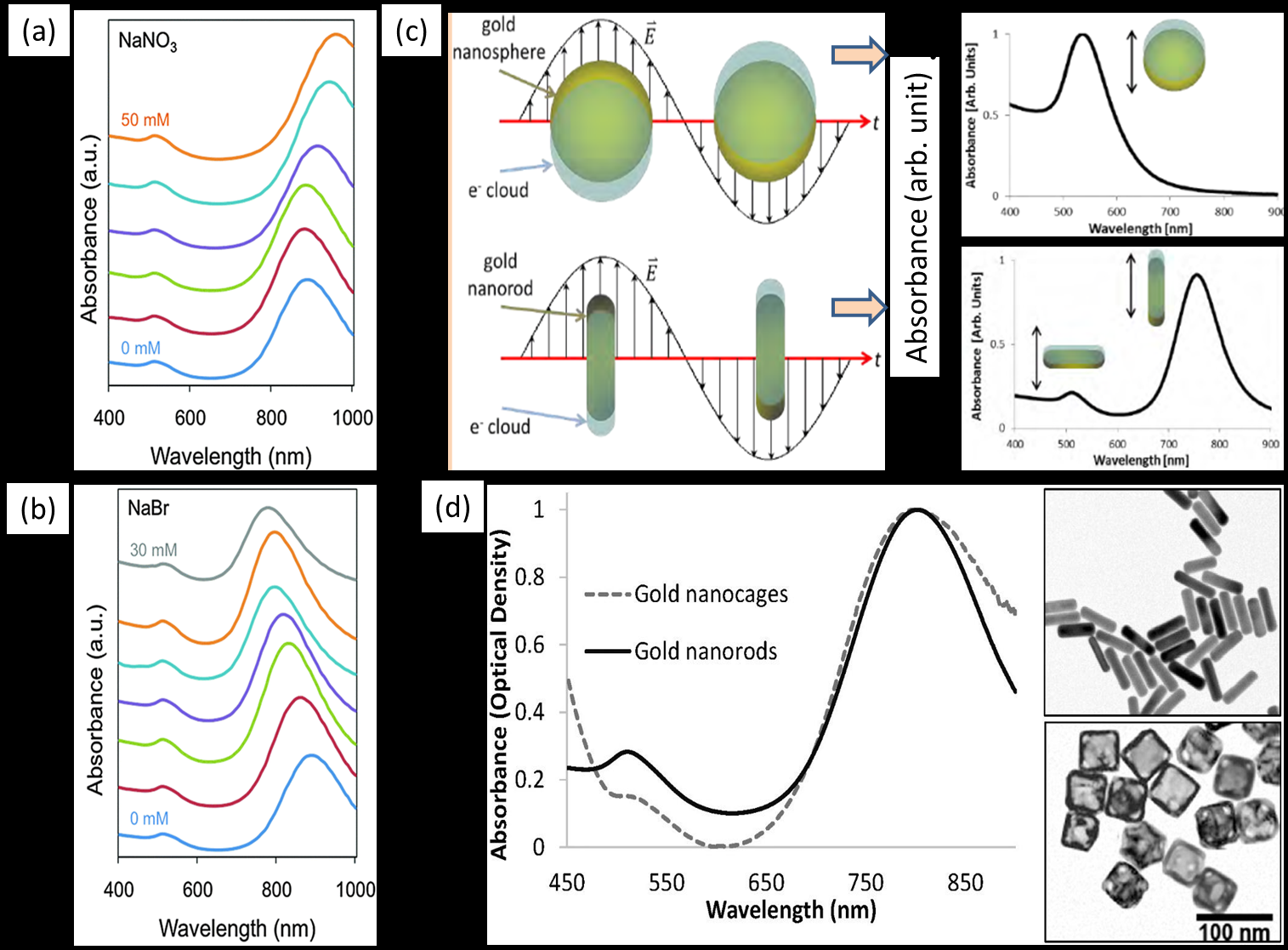
wavelengths, which resonate with the oscillating electrons. When the high-energy states generated by the oscillation decay, it releases the energy with non-radiative processes leading to increase of the temperature of the solution surrounding the particles. The connection between shape and size of metal NPs and their SPR is particularly evident for anisotropic NPs (as Au nanorods) for which the absorption peak of the lateral SPR can be tuned to specific wavelengths controlling the parameters of the synthesis (Fig.5a&b).
Fig 5: (a-b)Normalized extinction spectra of Au NPs grown in the presence of additional amounts of Hofmeister salts: for (a) the salt concentrations are 0 mM (blue), 10 mM (red), 20 mM (green), 30 mM (purple), 40 mM (turquoise) and 50 mM (orange) from bottom to top, and for (d) the salt concentrations are 0 mM (blue), 5 mM (red), 10 mM (green), 15 mM (purple), 20 mM (turquoise), 25 mM (orange) and 30 mM (grey), from bottom to top . (c) Surface plasmon resonance in Au nanospheres and Au nanorods. (d) Au nanorods and nanocages absorbance spectrum (left), TEM image of Au nanorods (top right) with length and width of 60 × 14.8 ± 6.5 × 2.0 nm and TEM image of Au nanocages (bottom right) with edge length of 50 ± 7 nm, 100 nm. The scale bar applies to both TEM images . (Reprinted with permission
41
from Refs. [116, 117]; Copyright 2016, The Royal Society of Chemistry & Copyright 2015,
Elsevier Ltd., Respectively)
The interaction of light with particles can be quantified by the scattering and absorption cross sections Cs and Ca, respectively. The sum of these parameters is defined as the extinction cross section Ce. These values describe the area of light that interacts with the particle and they can be orders of magnitude smaller or larger than the geometric cross section of the particle.
For perfectly spherical nanospheres, Mie et al. showed that these parameters can be calculated exactly by solving Maxwell‘s equations:
(12)
where m is the ratio between the complex parameter describing their fraction of the particle and the real index of refraction of the surrounding medium, k the wave-vector, r the radius of the particle and η the Ricatti-Bessel cylindrical functions. The prime notation indicates differentiation with respect to the argument in parentheses. In general, for nonspherical particles, the cross sections must be determined with indirect measurements or with mathematical simulations, e.g. discrete dipole approximation (DDA) .
The above equations clearly state that the spectral shape and magnitudes of the cross sections depends on the geometry and the optical properties of the particle or the properties of surrounding material. A consequence of this dependence is that the optical properties of
42
metallic particles can be tuned to give a desired response at a particular wavelength. Metallic NPs, at their peak SPR absorption, can have optical cross sections orders of magnitude larger than their geometric cross sections . Peak Ca values can be 5 orders of magnitude larger than that in conventional absorbing dyes, and peak Cs can be 5 orders of magnitude larger than fluorescence from strongly fluorescing dyes. Au nano-spheres with a diameter of 70 nm exhibit a peak SPR at 530 nm when suspended in water. Au nanorods with a length of 50 nm and a width of 15 nm exhibit two peaks when isotropically oriented in water, one at 510 nm when the electric field is parallel to the short axis of the nanorod and another at 780 nm when the electric field is parallel to the long axis of the Au nanorod (Fig. 5c).
3.1.2. Interactions between light and carbon reticle vibrational state Delocalized carbon nanostructures can function as dark bodies and absorb a wide range of wavelengths, which is converted in vibrations of the C-C reticule and released as heat when the vibrational states decay [120, 121]. The photo-thermal properties of the materials depend on the regularity of their structure and from the amounts of impurities and dopants introduced in their reticule which can trigger other mechanisms of energy dissipation [121, 122].
3.1.3. Generation of heat in nanoparticles: role of non-radiative recombination The radiation energy or optical energy may be transformed into several forms when light is being absorbed. A usual energy conversion process caused by the interaction of a material with light is the excitation of electrons which allowed the jump from lower energy state to the higher one without the generation of charge. In the relaxation from the excited state the electrons release energy in radiative or non-radiative form. Radiative relaxation releases energy in the form of photons causing spontaneous light emission (e.g. fluorescence or luminescence),
43
while non-radiative relaxation leads to generation of phonons which induce the increase of the vibrational state of the system and it converted into heat. Laser or photo-induced hyperthermia applications have most of the research work at clinical level in case of plasmonic NPs, e.g. Au, Ag, Pd. Non-radiative transitions plays critical role in metal NPs upon light absorption where electric field component of irradiated light makes free electrons oscillate collectively within NPs which further collides with the nuclei and as a result energy is transferred into vibration modes of lattice transforming into heat. This process leads to plasmon resonance when irradiated light frequency matches with natural frequency of the free electron under interacting force of the nuclei. This is the main mechanism responsible for heat generation in metal NPs. Although Ag NPs generates roughly 10 times as much as heat compared to Au NPs at its plasmon resonance wavelength, Au is still favored in biomedical applications as agents for cancer therapy due to its chemical stability. The heat generation of several typical semiconductor QDs such as ZnS, ZnSe NPs is very low compared to that of Au. In the former, the heating mechanism is the generation of electron-hole pairs and the subsequent non-radiative recombination which is less efficient for heat conversion than the SPR of metal NPs.
Recently, Fe3O4 NPs are found to be most interesting not only for magnetic hyperthermia but also for photo-thermal hyperthermia. They have been observed displaying a photothermal effect which allows local environmental heating upon application of NIR laser . The physical origin of this photothermal effect is important to understand. Iron oxides in the form of magnetite (Fe3O4), maghemite (γ-Fe2O3), and hematite (α-Fe2O3) are abundant in nature. The optical properties of hematite were well investigated, and several theoretical and experimental
44
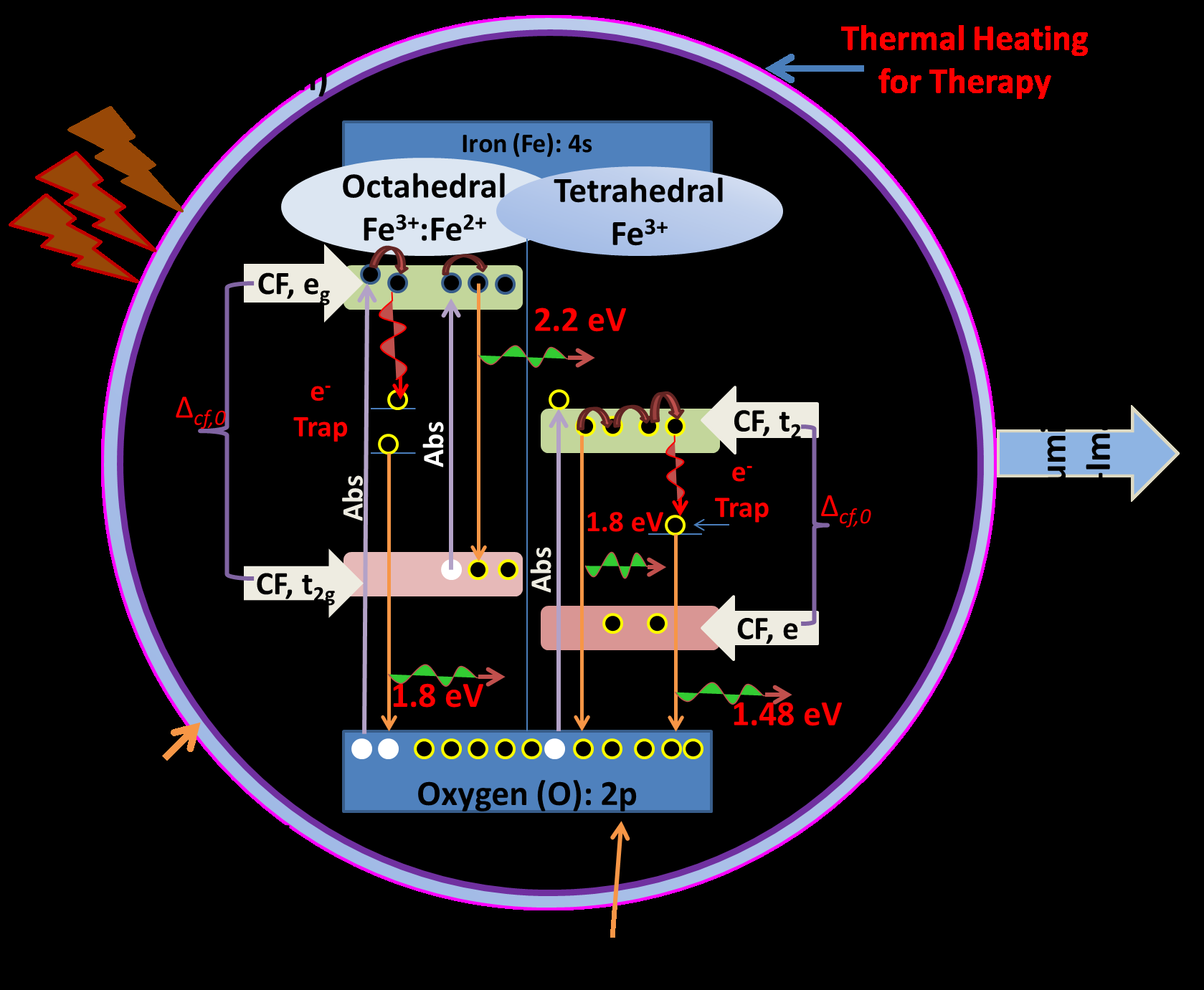
investigations reveal a band gap of 2.1–2.2 eV that has a potential application in the solar energy conversions. Magnetite is also a potential candidate due to its light absorption capabilities from visible to NIR range. Around 119 K, a Verwey transition from semiconductor to metal phase occurs leading to the change in optical and magnetic properties. Fe3O4 (chemical formula: (Fe3+)A[Fe3+Fe2+]B(O2−)4) has an inverse spinel structure with face centered cubic (fcc) lattice of O2-. Valence band of O(2p) to the empty conduction band of Fe(4s) in Fe3O4 is separated by 4-6 eV . Fig. 6 explains the energy band gaping octahedral (B-site) and tetrahedral (A-site) due to the crystal field splitting.
Fig. 6: Schematic representation of spatially confined Fe3O4 NPs embedded in an organic matrix (polystyrene matrix) and its energy bands. Photoluminescence light emission from ultraviolet (UV) to NIR plays important role in photothermal applications and the excitation mechanisms can range from bound exciton in QDs to surface plasmon in metal NPs as stated earlier. Sadat et al. prepared a variety of
45
different sized nanocrystals (10 nm–5 μm) and upon excitation with 407 nm laser, three emission peaks around 560 nm, 695 nm and 840 nm were observed. Cherepy et al. observed transient absorption around the red-IR region. The short span “hot” electron model supported the explanation of the absorbed characteristics due to thermal radiation. It is possible to create mid-band gap states due to intrinsic defects and electrons transit through defects can be trapped there. Further electrons are relaxed to ground state emitting higher wavelength in IR region which is really independent on excitation radiation or energy of laser .
The observed photoluminescence peak around 560 nm (~ 2.2eV) can be assigned to t2g → eg on octahedral site due to the radiative recombination of mobile electrons and the peak at ∼690 nm (1.79 eV) to (i) t2 → O(2p) on tetrahedral site or (ii) the recombination of trapped electrons from the octahedral site to O(2p). The peak in IR region (845 nm, 1.47 eV) is due to transition of electron trapped on tetrahedral site created by oxygen vacancy. Coating materials also contribute their own characteristics. A polyacrylic acid coated iron oxide shows better photothermal conversion efficiency (76 %) as compared to polystyrene)/Fe3O4 (28 %), if excited at 785 nm. In addition, individually coated NPs experience more non-radiative recombination than embedded systems where collective intensity plays a role.
Cherepy et al. investigated the photoexcited electron dynamics in ultrasmall (1–2 nm) γ- Fe2O3, commercial 50 nm diameter γ-Fe2O3, and spindle shape (1 × 5) nm α-Fe2O3 NPs. They found decay times of 0.36 ps (γ-Fe2O3), 4.2 ps (50 nm diameter γ-Fe2O3), and 67 ps (spindle shape α-Fe2O3) upon exciting by 390 nm, 150 fs excitation laser pulse with a 720 nm probe. This fast decay time suggests that relaxation of photoexcited electron is due to electron-hole
46
recombination which is bridged either by the intrinsic mid-bandgaps’ states or trap-gaps due the internal defects. In other words, non-radiative mechanism can be a central theme among electrons and this mechanism can be inferred from several processes such as fast decay of electrons (excitation pulse and electronic transition in semiconductor), release of phonons instead of photons.
3.2. Parameters affecting the photo-induced hyperthermia The ideal NPs for photo-induced hyperthermia need to be able to convert light into heat with a good efficiency. Here it is important that NPs can interact with NIR light to exploit the optical window of the human tissues. In addition, NPs should not be toxic, stable enough in biological condition to reach the target area tissues.
As shown in the review from Zhang et al. the geometry of the particles used for hyperthermia is a fundamental parameter in controlling the interaction between light and NPs. Anisotropic NPs generate a more defined charge separation when their SPR is excited. The increase of intensity of SPR increases the amount of energy they can harvest from the light and consequently the amount of heat released . Another way to increase the heat conversion efficiency is to form particles with cavities as Au nanoshells, nanocages or carbon nanotubes [26, 127].
Tuning the size of the particles is also an important factor in boosting the light-heat conversion. Particles of different sizes absorb different wavelengths and with a careful synthesis it is possible to match the absorption of the particles with the emission of the excitation light source to maximize the overlapping between the wavelengths . An exception to the general requirements for photo-induced hyperthermia is the heat conversion of IONPs where the
47
thermal response or photothermal conversion efficiency is primarily due to electronic transitions between d orbitals of neighboring Fe ions within the lattice. Here, as long as the wavelength of laser irradiation is lower than that of IR, the mid-bandgap states trap the excited ‘hot’ electrons and produce phonons that are carriers of heat .
Effect of location of NPs is also important with respect to the cell in overall heating efficiency of photothermal treatment. Zhou et al. performed in vitro experiments by analyzing efficiency of treatment for extracellular and intracellular therapies using light induced hyperthermia. For moderate continuous wave laser powers, the photothermal therapy was more efficient when the Au nanorods were attached to the cells than when the NIR thermal therapy outside the cells, i.e. in the bath solution around the cells to be treated (extracellular therapy).
In general, photothermal therapies use continuous or pulsed wave lasers as light sources. Mechanism of damaging cell due to photothermal effect is different in these types of lasers as they have different intensities, time profile. It is important to have optimum value of power density (intensity) and energy influence on the biosystem that depends on time of irradiation.
For practical purpose, optimum intensity depends on cell type, photothermal agents, bio- environment etc. and the efficient photothermal treatment varies in the laser range from 1 to about 100 W/cm2.
3.3. Potential photo-induced hyperthermia nanomaterial Many kinds of nanomaterials have been studied for photo induced hyperthermia including Ag nanoprisms, Pd nanosheets, Au NPs and carbon nanostructures. The latter two are the most
Related Journal Articles & DOI Links
Selected peer-reviewed publications relevant to 12 Lead ECG Acquisition. Click the DOI to access the full paper (may require institutional access).
-
1. Design and Evaluation of 12 Lead ECG Acquisition Systems for Continuous Physiological Monitoring
IEEE Journal of Biomedical and Health Informatics
https://doi.org/10.1109/JBHI.2020.2981234 -
2. Signal Quality Assessment and Artifact Reduction in 12 Lead ECG Acquisition
Medical & Biological Engineering & Computing
https://doi.org/10.1007/s11517-020-02145-6 -
3. Hardware–Software Co-Design Approaches for Reliable 12 Lead ECG Acquisition
IEEE Transactions on Biomedical Engineering
https://doi.org/10.1109/TBME.2019.2895762 -
4. Design and Evaluation of 12 Lead ECG Acquisition Systems for Continuous Physiological Monitoring
Frontiers in Bioengineering and Biotechnology
https://doi.org/10.3389/fbioe.2020.00123 -
5. Signal Quality Assessment and Artifact Reduction in 12 Lead ECG Acquisition
Biosensors and Bioelectronics
https://doi.org/10.1016/j.bios.2021.112345 -
6. Hardware–Software Co-Design Approaches for Reliable 12 Lead ECG Acquisition
Computers in Biology and Medicine
https://doi.org/10.1016/j.compbiomed.2021.104567 -
7. Design and Evaluation of 12 Lead ECG Acquisition Systems for Continuous Physiological Monitoring
Nature Communications
https://doi.org/10.1038/s41467-020-12345-6
Why Choose Us?
Bangalore guidance for robotics, Spectre and autonomous systems projects.
Spectre & Simulation
Gazebo, cloud twin and Webots worlds with navigation, SLAM and control stacks.
Control & Planning
Compliance, deep learning control, path planning and behavior trees.
Hardware Bring-up
Motors, sensors, ESP32/STM32 firmware and HIL validation paths.
Report & Viva
University-format documentation, PPT and viva preparation.
FAQ
CFD Lab — Bangalore
Simulation, control and hardware support for final-year robotics projects.
Stacks
Worlds
Digital Twin
Control
Robots
Offline
Bring-up