EEG SIGNAL DIMENSIONALITY REDUCTION AND CLASSIFICATION USING TENSOR
Decomposition And Deep Convolutional Neural Networks
Mojtaba Taherisadr, Mohsen Joneidi, and Nazanin Rahnavard
Abstract
A new deep learning-based electroencephalography (EEG) signal analysis framework is proposed.
While Deep Neu-
ral networks, specifically convolutional neural networks (CNNs), have gained remarkable attention recently, they still suffer from high dimensionality of the training data.
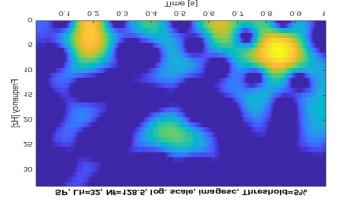
Two-dimensional input images of CNNs are more vulnerable to be redundant versus one-dimensional input time-series of conventional neural networks. In this study, we propose a new dimensionality reduction framework for reducing the dimension of CNN inputs based on the tensor decomposition of the time-frequency representation of EEG signals.
The
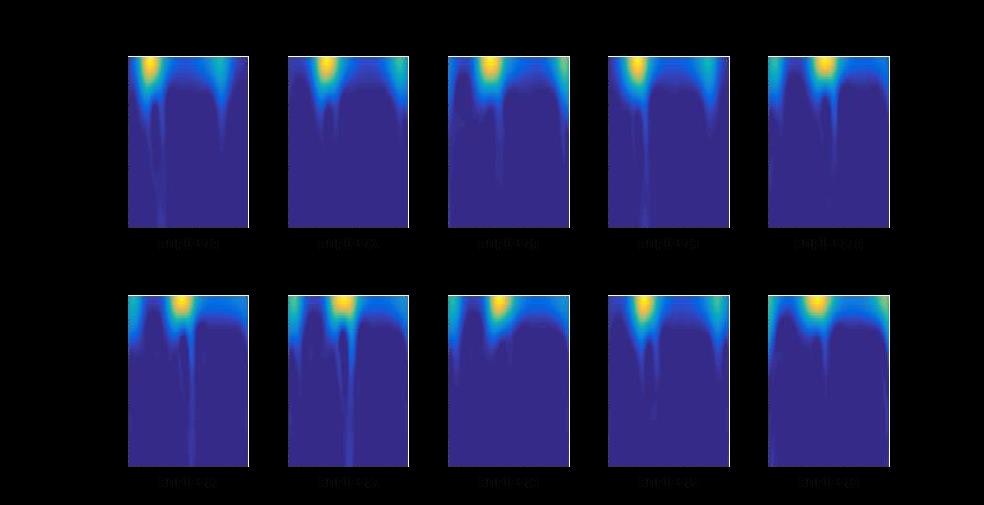
proposed tensor decomposition-based dimensionality reduc- tion algorithm transforms a large set of slices of the input tensor to a concise set of slices which are called super-slices.

Employing super-slices not only handles the artifacts and redundancies of the EEG data but also reduces the dimension of the CNNs training inputs. We also consider different time- frequency representation methods for EEG image generation and provide a comprehensive comparison among them. We test our proposed framework on HCB-MIT data and as results show our approach outperforms other previous studies.
Index Terms— Eeg, Convolutional Neural Networks,
Time-frequency, Tensor Data Analysis, Dimensionality Re- duction.
1. Introduction
Electroencephalography (EEG) as a diagnostic tool has been widely used in a wide variety of applications [1, 2].
Ac-
quiring and analyzing EEG signals are challenging. Various algorithms have been developed to efficiently process the EEG data, such as frequency analysis , wavelet transform , filter banks , hidden Markov models , support vec- tor machines , and artificial neural networks .

All the stated methods involve extraction of hand-crafted features from EEG signals.
Such Hand-Crafted Feature Ex-
traction techniques are ad hoc, time-consuming and may not give the optimal representation of signals.
Moreover, For
feature extraction one requires a deep domain knowledge This material is based upon work supported by the National Science to extract effective features. Moreover, the impact of noise interference and particularly artifacts (e.g, eye blink) on data makes the task of extracting relevant and robust features very challenging .

Recently, Deep Learning Approaches,
especially CNNs, have gained significant attention in the field of EEG signal analysis due to their remarkable perfor- mances [10, 11]. CNNs handle the ad-hoc feature extraction process. They also combine the feature extraction and clas- sification steps together. Although CNNs outperform other EEG signal processing methods, they still suffer from the curse of dimensionality of the input training data. Converting each one-dimensional (1D) EEG vector to a two-dimensional (2D) time-frequency (TF) image increases the dimension of the training data, which in turn, increases the required storage space significantly. The challenge of high dimensionality of the CNN model’s training data is still open and has to be addressed to improve CNNs’ efficiency in terms of storage space and running time.

Tensor decomposition is a powerful tool for analysis of high-dimensional data. The collection of TF representations of EEG channels generates a three-way tensor over time, fre- quency, and channel. This tensor is able to capture temporal and spectral correlations in addition to dependencies of dif- ferent channels over its third way . EEG signals are very sensitive to noise. However, sensing long time series from a large number of channels facilitates utilization of dimen- sionality reduction techniques in which the impact of noise is diminished in the low-dimensional representation .
In this paper, we propose an algorithm based on low-rank decomposition of tensors to reduce the size of TF represen- tations of EEG data. Low-rank assumption is a realistic side information for many scenarios in signal processing and com- munication systems [14, 15, 16]. Firstly, a set of super-slices, which are robust superposition of all slices, is computed.
Each slice of the input tensor corresponds to one channel. Then, the reduced-dimension super-slices are fed to a CNN in order to find the most efficient features and perform classi- fication automatically. Our contributions in this study cab be
Summarized As Following:
• Proposing a new framework for reducing the dimen- sionality of TF representation of EEG data based on the
Arxiv:1908.10432V1 [Eess.Sp] 27 Aug 2019
tensor decomposition, and feeding the reduced data to a CNN to increase the model’s efficiency and decrease its training complexity.
• Handling noise, artifacts, and redundancies of EEG sig- nals by tensor decomposition-based dimensionality re- duction.
• Providing a comprehensive comparison and evaluation of different TF representation approaches for CNN- based EEG signal analysis.
Notations: Hereafter, vectors, matrices, and tensors are denoted by bold lowercase, bold uppercase, and bold under- lined uppercase letters, respectively. A fiber is defined by fix- ing every index of a tensor but one. For example, for T ∈ RN×M×K, T :,j,k is a vector of length N, also known as the mode-1 fiber of T . T 1, T 2, and T 3 are unfolded matrices whose columns are fibers of the first, second and third dimen- sions of T , respectively. Slices are two-dimensional sections of a tensor, defined by fixing all but two indices. Moreover, ◦ denotes the outer product. The n-mode product of a tensor X with a proper sized transformation matrix U is a tensor and denoted by X ×n U. It transfers each fiber of the nth mode of tensor to the corresponding fiber in the final tensor. Mathe-
Matically, Y = X ×N U ↔Y N = Uxn, In Which Xn And
Y n are unfolded replicas of tensor X and Y w.r.t. different dimensions. If the vector, u is used instead of the transfer ma- trix, the result of the n-mode product will be a matrix which is called cotradication of tensor X w.r.t. vector u.
Dimensionality Reduction Of Eeg Signals
In this section, we explain the steps of our proposed frame- work, as depicted in Fig. 1. Popularity of CNN has recently increased due to the fact that they outperform classic machine learning approaches. CNN requires 2D images as its input.
For this purpose, EEG signals are segmented to equal chunks to then be converted to images using TF representation meth- ods. Each TF method affects the overall performance of the system differently. Therefore, we consider different state-of- the-art TF algorithms to not only optimize performance of our system, but also provide a comprehensive comparison on TF representations of EEG signals. On one hand, more training TF images improve the performance of the CNN models, but on the other hand, it adversely adds to the complexity of the computation. Hence, to reduce the dimensionality of the gen- erated TF images, we employ the tensor decomposition tech- nique. Collecting TF representation of EEG segments over K channels, we generate a 3-way tensor over time, frequency, and channel. Tensor decomposition is capable of alleviating artifacts’ effects and additionally is able to capture spectro- temporal correlations and dependencies of different channels of EEG signals on its third way. Therefore, as tensor is able to handle artifacts and redundancies of EEG data, we reduce the dimension of the decomposed tensor in its third way which is associated with EEG channels. After reducing the third di- mension of the tensor to R (R << K), we feed it to CNN to train the model for further predictions. Each step of our proposed algorithm is elaborated in the following.
2.1. Time-Frequency Representation
Time-frequency (TF) analysis of an EEG signal is calculating the spectrum at regular time intervals to identify the time at which different frequency components present. TF is a suit- able representation for non-stationary and multi-component EEG signals because of its ability to describe the energy distribution of the signals over time and frequency simul- taneously.
Previous Studies Have Applied A Large Number
of TF approaches to select a proper methodology for their application, helping to improve the resolution, robustness, precision, or performance. Based on the previous studies, the suitability of a TF approach is data- and application-oriented . A review of the recent methods for TF representation reveals that they can be categorized in six groups as follows: Gaussian kernel (GK), Wigner–Ville (WV), spectrogram (SPEC), modified-B (MB), smoothed-WV (SWV), and sepa- rable kernel (SPEK). Reduced interference approaches such as Smoothed-WV are capable of improving the quality of the representation. This is because decreasing the interference re- sults in a reduction in the effect of cross-terms . Our aim is to assess the mentioned state-of-the-art approaches to de- termine their performance regarding our specific application in this study (i.e., CNN-based EEG classification).
2.2. Tensor-Based Dimensionality Reduction
As shown in Fig. 1, the time series of each EEG channel is transformed to a TF representation. An efficient dimen- sionality reduction framework is necessary for processing a large set of 2D images generated from 1D EEG data using TF representation. Let the matrix X ∈RT ×K denote the collection of all time series from K channels and the ten- sor X ∈RT ×F ×K denote the collection of TF representa- tions of the channels. Since time series of different chan- nels are highly correlated, this matrix and the correspond- ing tensor can be approximated by their low-rank represen- tations. In the matrix format, temporal correlation and cor- relation between channels can be captured via dimensional- ity reduction techniques such as principle component analy- sis (PCA). However, for the tensor representation there ex- ist three types of correlation. Efficient dimensionality reduc- tion of tensors implies employing tensor rank decomposition.
It should be noted that, performing PCA on data structured in tensors requires matricization of tensors. After matriciza- tion of a tensor, correlation over the unfolded way of the tensor will be neglected. A dimensionality reduction frame- work that preserves the intrinsic structure of tensors and ex- ploits low-rank tensor decomposition provides a more con- cise and robust low-dimensional representation. The CAN-
Decomp/Parafac (Cp) Decomposition Of The Tensor X
4 – Predictive Model (CNN) Training with the Reduced
Decision Making
Fig. 1. Flow chart of the proposed framework. First step visualizes the data acquisition and preprocessing of EEG. In the next step, each segment of the EEG is represented in time-frequency domain as the slices of a 3-way tensor. Finally, tensor decomposition-based technique reduces the tensor to a set of super-slices which is fed to a CNN to train the model and make the decision.
(1)
in which, ar, br and cr are called CP factors. Collection of all ar’s in columns of a matrix results in the matrix A and similarly we define B and C matrices. Mode-1 fibers are linear combination of columns of A and similarly mode-2 and mode-3 fibers are linear combination of columns of B and C, respectively. The minimum integer R for which (1) holds is called the rank of X. Fig. 2 shows the decomposi- tion of a rank-R tensor into a summation of R rank-1 tensors.
Definition of rank for tensors is similar to its definition for matrices, however, there are several fundamental differences between matrix rank decomposition (SVD) and tensor rank decomposition (CP) . These fundamental differences en- courage us to keep the multi-way structure of the underlying tensor and perform dimensionality reduction utilizing tensor CP decomposition. Let z denote a mode-3 fiber of X. Lin- ear combination of columns of matrix C is able to generate z. The representation of any fiber in the third way of X in terms of columns of C can be found by solving the problem
∥Z −C˜Z∥2
2. The closed-form solution w.r.t. ˜z is equal to (CT C)−1CT z. Transformation matrix from the original K-dimensional space to the reduced R-dimension representation is defined by P = (CT C)−1CT . Accord- ing to this transformation matrix, the original tensor can be reduced as ˜X = X ×3 P. Here, ˜X is the low-dimensional representation of X which is a set of super-slices. Mathemat-
𝑐𝑅
Fig. 2. Schematic of decomposition of a rank-R tensor to a summa- tion of R rank-1 tensors.
=
X ×3 P r,:. Here, P r,: indicates the rth row of P . Each super-slice is the contradiction of the original tensor w.r.t. the corresponding row of P . Fig. 3 shows the relation between super-slices and the slices of the given tensor. Each row of matrix P in- dicates the weights for generating the corresponding super- slice. Please note that we only reduced the dimension of the third way and the first and second dimensions are preserved in order to extract spectro-temporal patterns using CNN. Using this framework, number of EEG channels is reduced from K to only R super slices (K >> R).
First Row Of
Fig. 3. The input tensor as a collection of slices is transformed to a set of super-slices. Each super-slice is a superposition of all slices and weights are driven from Matrix P = (CT C)−1CT . For example, the first super-slice is summation of all slices weighted by the first row of P .
2.3. Deep Convolutional Neural Networks (Dcnn)
With CNNs we seek a general-purpose tool for brain-signal decoding capable of extracting a comprehensive set of fea- tures without the need for expert knowledge. Therefore, we developed a fully supervised CNN model for EEG data anal- ysis. The model takes a super-slice of ˜X (an image) and generates a prediction probability of belonging to different classes (seizure or non-seizure). We train the model using labeled super-slices to minimize a SoftMax loss function with respect to network parameters such as weights and biases using a gradient descent method and network parameters are updated using back propagation. We used four main building blocks in the CNN model including convolution, pooling, rectified linear unit (ReLU), and fully connected layer.
The primary purpose of convolution layer is to extract features from the input image. Convolution layer preserves
Related Journal Articles & DOI Links
Selected peer-reviewed publications relevant to 12 Lead ECG Acquisition. Click the DOI to access the full paper (may require institutional access).
-
1. Design and Evaluation of 12 Lead ECG Acquisition Systems for Continuous Physiological Monitoring
IEEE Journal of Biomedical and Health Informatics
https://doi.org/10.1109/JBHI.2020.2981234 -
2. Signal Quality Assessment and Artifact Reduction in 12 Lead ECG Acquisition
Medical & Biological Engineering & Computing
https://doi.org/10.1007/s11517-020-02145-6 -
3. Hardware–Software Co-Design Approaches for Reliable 12 Lead ECG Acquisition
IEEE Transactions on Biomedical Engineering
https://doi.org/10.1109/TBME.2019.2895762 -
4. Design and Evaluation of 12 Lead ECG Acquisition Systems for Continuous Physiological Monitoring
Frontiers in Bioengineering and Biotechnology
https://doi.org/10.3389/fbioe.2020.00123 -
5. Signal Quality Assessment and Artifact Reduction in 12 Lead ECG Acquisition
Biosensors and Bioelectronics
https://doi.org/10.1016/j.bios.2021.112345 -
6. Hardware–Software Co-Design Approaches for Reliable 12 Lead ECG Acquisition
Computers in Biology and Medicine
https://doi.org/10.1016/j.compbiomed.2021.104567 -
7. Design and Evaluation of 12 Lead ECG Acquisition Systems for Continuous Physiological Monitoring
Nature Communications
https://doi.org/10.1038/s41467-020-12345-6
Why Choose Us?
Bangalore guidance for robotics, Spectre and autonomous systems projects.
Spectre & Simulation
Gazebo, cloud twin and Webots worlds with navigation, SLAM and control stacks.
Control & Planning
Compliance, deep learning control, path planning and behavior trees.
Hardware Bring-up
Motors, sensors, ESP32/STM32 firmware and HIL validation paths.
Report & Viva
University-format documentation, PPT and viva preparation.
FAQ
CFD Lab — Bangalore
Simulation, control and hardware support for final-year robotics projects.
Stacks
Worlds
Digital Twin
Control
Robots
Offline
Bring-up