1
Bilirubin lowering effect and safety of a prototype low cost blue light emitting diode (LED) phototherapy device in the treatment of indirect hyperbilirubinemia among healthy term infants in a tertiary government hospital: a pilot study.
Abstract
Title: Bilirubin lowering effect and safety of a prototype low cost blue light emitting diode (LED) phototherapy device in the treatment of indirect hyperbilirubinemia among healthy term infants in Ospital ng Makati: a pilot study.
Background:
Phototherapy is the most frequently used treatment for the control of neonatal jaundice. The rate of decline of total serum bilirubin level during phototherapy depends on several factors: type of phototherapy, type of light, irradiance level, surface area covered and initial total serum bilirubin level. Light-emitting diodes (LEDs) are power-efficient, low heat-producing light sources that has the potential to deliver high intensity light of narrow wavelength band in the blue-green portion of the visible light spectrum, which overlaps the absorption spectrum of bilirubin resulting in potentially shorter treatment times. These characteristics make LEDs an optimal light source for phototherapy.
Objective: This pilot study was done to evaluate the capability of a prototype low cost blue light emitting diode (LED) phototherapy device in lowering bilirubin levels among healthy term infants diagnosed with indirect hyperbilirubinemia.
Methods: Experimental study on term infants diagnosed with indirect hyperbilirubinemia in Ospital ng Makati from May 2016 to November 2016 who underwent phototherapy using the low cost blue LED phototherapy prototype.
Results: After 24 hours of phototherapy under the prototype LED phototherapy unit, 16% of the total patients completed treatment as they were already classified in the low risk zone, and another 36% of patients completed treatment after 48 hours. The total bilirubin significantly decreased from baseline bilirubin levels after 24 hours by 16.5% (p = 0.0001). The mean percentage of change of bilirubin reduced after 48 hours of 29.9% was also significant. The proportion of subjects in the high risk zone during baseline to 24th hour went down significantly from 80% to 28% (p = 0.0003), while comparing baseline to 48th hour, the percentage of high risk zone went down from 80% to 9.5% (p = 0.0001). No subjects were reported to have rebound hyperbilirubinemia after discontinuation of phototherapy treatment under the LED prototype. No patient experienced any complication while on phototherapy treatment.
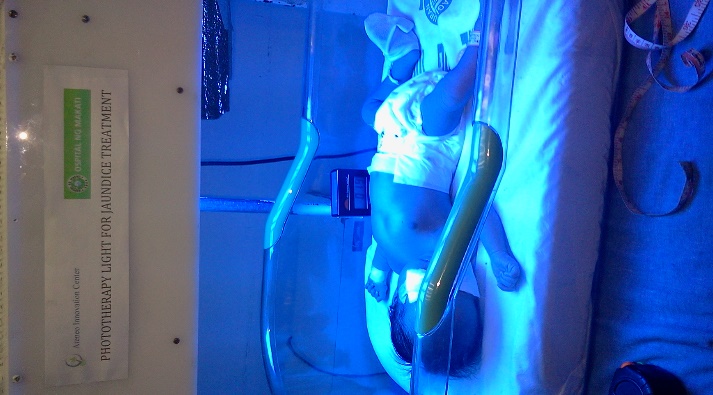
Conclusion: The prototype low cost blue light emitting diode (LED) phototherapy was able to lower total serum bilirubin among healthy term infants with indirect hyperbilirubinemia and was safe to use.
Keywords: neonatal jaundice, indirect hyperbilirubinemia, phototherapy, light emitting diode
Introduction
Jaundice is one of the most common conditions needing medical attention in newborn infants. It is caused by a raised level of bilirubin in the body, a condition known as hyperbilirubinemia. Neonatal jaundice occurs in 25% to 50% of term newborns, and in a larger proportion of preterm newborns, in the first two weeks of life. Most jaundice is a benign transient physiological event in the majority of newborns. Various mechanisms are involved in producing this 'physiological' increase in serum total bilirubin include increased production of bilirubin due to lysis of red blood cells, decreased ability of liver cells to clear bilirubin and increased enterohepatic circulation. Any condition that further increases bilirubin production or alters the transport or metabolism of bilirubin increases the severity of the physiological jaundice.1 Because of the potential toxicity of bilirubin which can cause permanent neurological disability, it is important to identify newborn infants who might develop severe
Hyperbilirubinemia.2
Phototherapy is the most frequently used treatment when serum bilirubin levels exceed physiological limits. To initiate phototherapy without delay is the most important intervention for infants with severe hyperbilirubinemia. Phototherapy converts bilirubin into water soluble photo- products that can bypass the hepatic conjugating system and be excreted without further metabolism. The clinical response to phototherapy depends on the efficacy of the phototherapy device, as well as the infant’s rates of bilirubin production and elimination.3 Phototherapy can be delivered using several types of conventional light sources, including daylight, white or blue fluorescent bulbs and filtered halogen bulbs. The efficacy and ability of these light sources to provide intensive phototherapy varies widely and some may be limited because of the inability to keep them close to the infant due to high heat production and unstable broad wavelength light output. In recent years, a new type of light source, light-emitting diodes (LEDs) have been developed and studied as possible light sources for the phototherapy
4
of neonatal jaundice. LEDs are power efficient, portable devices with low heat production, light in weight and have a longer lifetime.1 Blue LEDs emit a high intensity narrow band of blue light overlapping the peak spectrum of bilirubin breakdown resulting in potentially shorter treatment times. These characteristics of LEDs make them an optimal light sources for a phototherapy
Review Of Related Literature
Jaundice is observed during the first week of life in approximately 60% of term infants and 80% or preterm infants. It is a benign transient physiological event in the majority of newborns but can cause irreversible brain damage and kernicterus in some infants if the serum bilirubin levels are very high.5 Unconjugated hyperbilirubinemia in which the direct-reacting bilirubin level is less than 15% of serum total bilirubin is the most common form of jaundice seen in newborn infants. Common risk factors for pathological unconjugated hyperbilirubinemia include blood group incompatibility, glucose-6-phosphate dehydrogenase enzyme deficiency, prematurity, instrumental delivery and non-optimal breastfeeding.1 Phototherapy is the standard treatment for neonatal jaundice.2 It converts bilirubin into water soluble photo-products that can bypass the hepatic conjugating system and be excreted without further metabolism.1 It uses irradiation with blue light to photoisomerize bilirubin into products that can be excreted in bile or urine.5 The clinical response to phototherapy depends on the efficacy of the phototherapy device, as well as the infant’s rates of bilirubin production and elimination. To initiate phototherapy without delay is the most important intervention for infants with severe hyperbilirubinemia.3 The efficacy of phototherapy is dependent upon wavelength, irradiance, exposed body surface area, distance of the phototherapy, and duration of exposure. Intensive phototherapy is provided by use of high levels of irradiance in the 430 to 490 nm band, usually 30 µW/cm2 per nm or higher delivered to as much of the infant's body
5
The commonly used light sources for providing phototherapy include blue fluorescent tubes, compact fluorescent tubes and halogen spotlights. The efficacy and ability of these light sources to provide intensive phototherapy may be limited because of the inability to keep them close to the infant due to high heat production and unstable broad wavelength light output. In recent years, a new type of light source, light-emitting diodes (LEDs) have been developed and studied as possible light sources for the phototherapy of neonatal jaundice. LEDs are power efficient, portable devices with low heat production so that they can be placed very close to the skin of the infants without any apparent untoward effects. They are also durable light sources with an average life span of 20, 000 hours hence with a low cost potential.1 Blue LEDs emit a high intensity narrow band of blue light overlapping the peak spectrum of bilirubin breakdown and has a higher delivered irradiance resulting in potentially shorter treatment times. These characteristics of LEDs make them an optimal light sources for a phototherapy device.4 Vreman et. al. in 1998 studied high intensity light-emitting diodes (LEDs) as possible light sources for the phototherapy of hyperbilirubinemic neonates. They constructed a prototype phototherapy device using 300 blue LEDs and compared it with that of conventional phototherapy devices by measuring the in vitro photodegradation of bilirubin in human serum albumin. The result of the study showed that the prototype device with three focused arrays, each with 100 blue LEDs, generated greater irradiance (> 200 microW.cm-2.nm-1) than any of the conventional devices tested and supported the greatest rate of bilirubin photodegradation: degrading bilirubin by 28% of dark control, followed by blue-green (18% of control), and then white light (14% of control) and least was green light (11% of control). Hence it was concluded in the study that light from LED should be considered a more effective treatment for hyperbilirubinemia than light from other phototherapy devices used.6 Kumar P, et. al conducted a systematic review on six randomized controlled trials in 2010 that compared the efficacy of LED phototherapy to conventional phototherapy such as halogen light sources and compact fluorescent light sources in decreasing TSB levels and
6
duration of treatment in neonates with unconjugated hyperbilirubinemia. It was concluded in the study that LED light source phototherapy is as effective in decreasing TSB at rates that are similar to phototherapy with conventional light sources.1 In a controlled trial conducted by Mohammadizadeh, et. al in 2012 on preterm infants hospitalized in neonatal intensive care unit who needed conventional phototherapy for uncomplicated indirect hyperbilirubinemia, neonates received phototherapy through devices with LEDs or special blue fluorescent tubes. The ‘rate of fall of bilirubin’ and ‘duration of phototherapy’ have been the two main outcomes investigated. Treatment failure defined as the need for exchange blood transfusion or intensive phototherapy, side effects like temperature instability (hypothermia or hyperthermia), skin rash, and burns were also considered. Results of the study showed that LED light source is as effective as fluorescent tubes for the phototherapy of preterm infants with indirect hyperbilirubinemia in terms of decreasing levels of bilirubin.
However, the LEDs unit resulted in less frequent hyperthermia, compared to the conventional
Fluorescent Group.7
In another randomized controlled study of Colindres, et. al. in 2011, 45 preterm neonates requiring phototherapy were randomized to receive phototherapy using LED-based lights, conventional fluorescent blue lights or conventional halogen lights. The average rate of decrease of bilirubin levels was 0.047-0.037 mg/dl/hour, 0.055-0.056 mg dl/ hour and 0.057- 0.045 mg/dl/hour in the groups receiving conventional fluorescent blue light, conventional halogen light and LED phototherapy, respectively. The average duration of phototherapy treatment in the three groups was 108.8-85.9 h, 92.8-38.1 h, 110.4-42.6 h, respectively. In this study, LED phototherapy using simple, low-cost set of lights was as effective of conventional
Significance Of The Study
This study aims to evaluate the safety and bilirubin lowering effect of phototherapy using a prototype low-cost light emitting diode (LED) lights in healthy term infants diagnosed with indirect hyperbilirubinemia. Phototherapy, despite being the recommended standard of treatment for hyperbilirubinemia in newborns, may not be available in developing countries because the devices and replacement bulbs are often too expensive.8 The results of this study can help provide evidence on whether a prototype low cost blue LED phototherapy device is safe to use and is capable of lowering bilirubin levels, prior to undergoing a clinical trial. This is a preliminary study prior to a randomized controlled trial to ascertain and quantify the capability of the device so that it can be use in resource-challenged institutions especially in developing countries.
General:
To evaluate the effectiveness of a prototype low cost blue light emitting diode (LED) phototherapy device in lowering bilirubin levels among healthy term infants diagnosed with indirect hyperbilirubinemia.
Specific:
1. To measure the rate at which the total serum bilirubin (TSB) changes during the first 24 to 48 hours under low cost blue LED phototherapy device. 2. To determine the average change in bilirubin level using a prototype low cost blue LED phototherapy device.
8
3. To determine the occurrence of treatment failure among term infants under low cost blue LED phototherapy prototype device. 4. To identify the possible side effects of phototherapy using prototype low cost blue LED phototherapy device.
Study Design
Experimental study on term infants diagnosed with indirect hyperbilirubinemia admitted at the nursery, OB ward, and pediatric ward of Ospital ng Makati from May 2016 to November 2016. Infants who met the inclusion criteria for the study underwent phototherapy using the low cost blue LED phototherapy prototype. Bilirubin levels were monitored, at most for 48 hours.
Inclusion/Exclusion Criteria
Included in the this study were term infants, 37 to 42 completed weeks of gestation with weights appropriate for gestational age, who developed indirect hyperbilirubinemia needing phototherapy within the first 14 days of life. The need for phototherapy was based on the age of the infants in hours and serum total bilirubin that is considered high risk to high intermediate risk indirect hyperilirubinemia which is above the 75th percentile based on the hour specific normogram (Appendix B) but not exceeding a total serum bilirubin level of more than 25mg/dl.
Infants included had normal physical examination findings and normal laboratory test results such as complete blood count, reticulocyte count, peripheral blood smear and Coomb’s test. Excluded from the study were infants with onset of jaundice during the first 24 hours after birth; with direct bilirubin levels more than 20% of total bilirubin; with evidence of hemolysis (positive
9
direct Coombs test); diagnosed with neonatal sepsis; who needed exchange transfusion at the time of enrollment; and those with congenital malformations.
Sample Size
Subjects were recruited consecutively as they were diagnosed and deemed eligible based on inclusion/exclusion criteria. A total of 27 patients were recruited for this pilot study. The sample size was computed using the 24 hour decrease in bilirubin of the first 8 subjects that were enrolled in this study and the following conditions: power = 80%, alpha = 0.05, effect size = 1, standard deviation (SD) = 1.854.
Intervention
Baseline characteristics such as sex, weight, age of gestation at birth, age at the start of phototherapy, feeding history, maternal blood type, patient’s blood type, cause of hyperbilirubinemia and baseline total serum bilirubin levels of qualified neonates were recorded.
The study was explained to the parents prior to enrollment and an informed consent was obtained. All infants enrolled in the study received phototherapy using the blue light emitting diode (LED) phototherapy.
The prototype low cost LED phototherapy unit was custom made in collaboration with under the School of Science and Engineering. The following specifications were used as guide in making of the prototype: light source using blue light emitting diode (LED) giving off light in the wavelength spectrum of 460 to 490-nm (blue-green light region) with peak spectral irradiance of >30uW/cm2/nm at a recommended treatment distance of 30 cm above the patient.
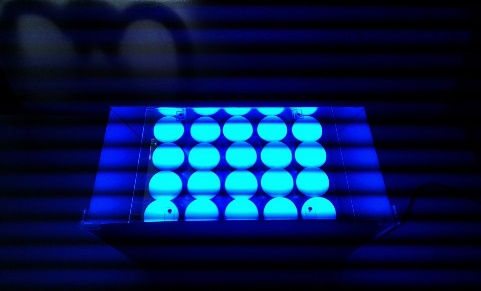
The prototype low cost LED phototherapy was made using 20 pieces blue LED lamps, connected in parallel, for a total power rating of 60 W as shown in Figure 1. A Spectro-Vis Plus
10
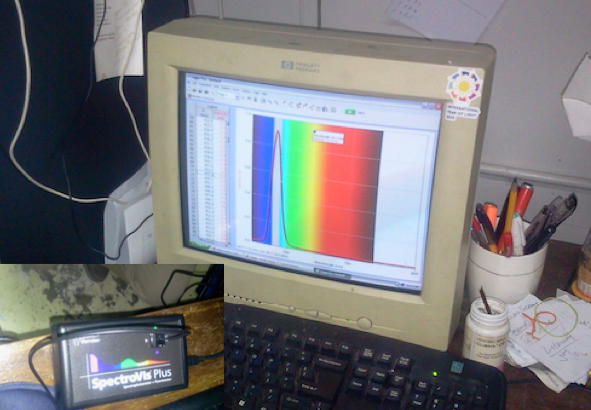
(Vernier) was used to determine the spectrum of the LED lamps. The range of the emission spectrum was found to be 462.1-476.4 nm (Figure 2). This range falls within the most effective
Range (460-490 Nm) For Phototherapy.9
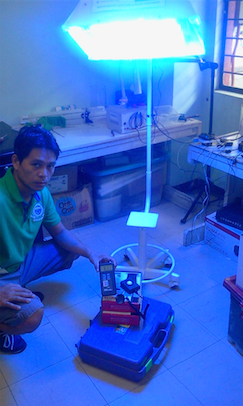
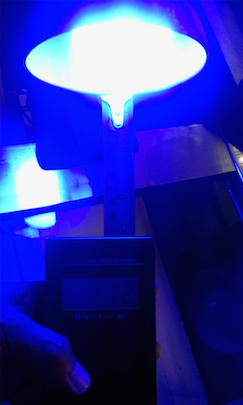
Figure 1. Assembly of the 20 pieces of blue LED lamps. Figure 2. The Spectro-‐Vis Plus used in determining the emission spectrum The intensity of the LED lamp was 12W/m2, measured using a light intensity meter. The calculated value of the irradiance was 84 µW/cm2 /nm. This value is almost three times higher than the minimum recommended irradiance (30 at µW/cm2 /nm) required for intensive
11
phototherapy at 1-m distance.9 Figure 3 shows the measurement of the intensity of the LED lamp. The calculation of the irradiance is shown below. Irradiance = measured intensity (microwatt/ square cm) / range of wavelength Irradiance = {(12 W/ m2) * (106 µW / watt) * [(1 m2 /104cm2)]}
= 84 Μw /Cm2/Nm
Figure 3. Measurement of the intensity of the LED lamp The total power consumption of this prototype is 75 watts which is less than one fifth of the commercial phototherapy light (about 400 watts) that uses fluorescent tubes. This prototype unit can also be powered by photovoltaic cells (solar panels). For a 100-watt solar panel at four-hours of sunlight, it can operate for 5 hours with all light bulbs continuously switched on. It is designed in such a way that it can also operate at half power and twice the time.
An internal continuous test-run was conducted with all the lamps turned on for 7-hours, 24-hours, and 72-hours. There was no notable degradation of the quality of the lamp.
12
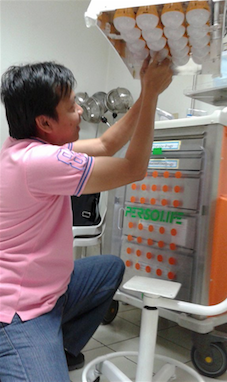
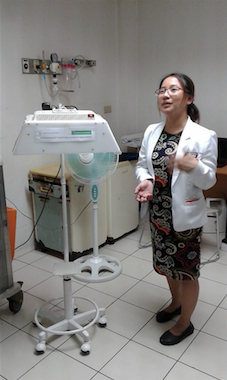
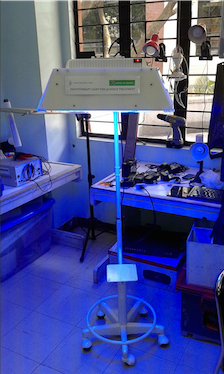
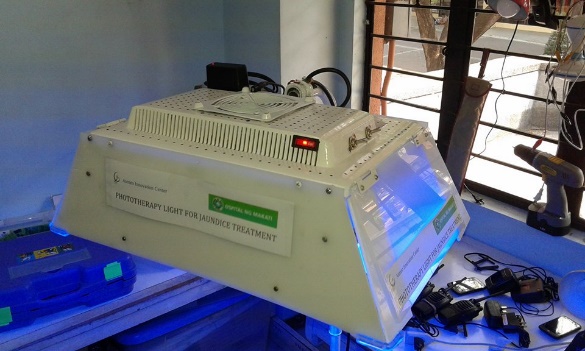
The unit was designed in such a way that the whole light casing can be tilted from side to side, the metallic pipe stand height can be adjusted, the whole unit can be rolled through its wheels for mobility/easy handling. Figures 5 and 6 shows the complete phototherapy equipment. The total cost for the development of the prototype equipment was approximately
Php 20,000.00
Figure 5. The casing of the light source Figure 6. The complete phototherapy equipment Detailed description of the development of the prototype LED phototherapy unit, including the testing of the equipment and the safety precautions built into the phototherapy device prior its use for the study is further discussed in Appendix F.
13
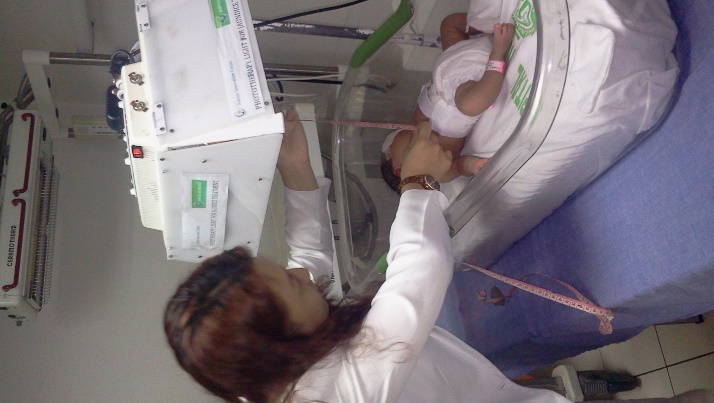
Infants were exposed, completely unclothed with their eyes and genital regions properly covered, to continuous phototherapy for 24 hours only interrupted during feeding, cleaning, blood sampling, and turning to sides every 2 hours. The interruptions in phototherapy were monitored and mothers were instructed to write down the number and duration of interruptions such as breastfeeding, cleaning and blood extractions in a data collection form that was provided. Those who developed comorbidities including hospital-acquired infections while enrolled in the study were withdrawn from the study. Phototherapy using the prototype blue LED phototherapy unit was done for 24 to 48 hours. Infants, who after the first 24 hours of phototherapy showed an increase in total serum bilirubin were shifted to conventional phototherapy. Subjects with no change in total serum bilirubin level after 24 hours continued to receive treatment using the prototype blue LED phototherapy for another 24 hours. After 48 hours of using the prototype blue LED phototherapy unit, subjects who required further phototherapy treatment were shifted to conventional phototherapy.
Participants enrolled in the study were monitored daily by the nurse-in-charge, including daily weight, vital signs every 4 hours, urine output and occurrence of possible complications such as rashes, burns, diarrhea, and hypothermia or hyperthermia every shift. Occurrence of such complications were managed accordingly: hydration for occurrence of diarrhea and hyperthermia, application of therapeutic ointments for rashes or burns and possible referral to other services such as Dermatology and Surgery as needed.
Total serum bilirubin levels were obtained through blood extraction using peripheral venipuncture at baseline then every 24 hours thereafter upon exposure to phototherapy. Serum bilirubin levels was analyzed in the laboratory of Ospital ng Makati using clinical chemistry analyzer Architect C4000 model by Abbott.
When the infants’ total serum bilirubin level fell to the low intermediate risk level (below the 75th percentile of the nomogram or TSB < 14 mg/dl) they were observed for another 24
14
hours after discontinuation of phototherapy prior to discharge to ensure that there was no rebound hyperbilirubinemia. If subjects were noted to be again jaundiced 24 hours after discontinuation of phototherapy, total serum bilirubin levels were taken to determine rebound in the bilirubin level.
Neonates with rebound bilirubin values greater than the 75th percentile or equal to the baseline total serum bilirubin levels on admission were again exposed to phototherapy but this time under conventional fluorescent phototherapy.
Outcomes
Primary outcome results include the average rate of change of the total serum bilirubin level (mg/dl per hour) during the first 24 hours and on the second day of phototherapy treatment. The overall rate of decrease of bilirubin was calculated as initial bilirubin concentration minus final bilirubin concentration over total treatment time (24 to 48 hours).
Secondary outcomes determine the occurrence of treatment failure which include increase in TSB levels after 24 hours or no change in TSB level after 48 hours of exposure under prototype low cost blue LED phototherapy and occurrence of possible side effects of phototherapy such as skin rash, burns, diarrhea dehydration, hypothermia and hyperthermia.
Analysis
Descriptive statistics such as mean and standard deviation (SD) were used to present the profile and total serum bilirubin of patients. The mean bilirubin levels and average rate of decline of the total serum bilirubin level with + 1 standard deviation were analyzed. The proportion of neonates who developed treatment failure and complications to phototherapy intervention were determined. In comparing the baseline bilirubin against the 24th and 48th hour bilirubin, paired t-test was used. Chi square and fisher test were used in comparing the risk zone level between and baseline vs 24th and 48th hour. Test of significance was at 5% level.
15
Medcalc statistical software was used to carry out the computations.
Ethical Consideration
A voluntary informed consent (Appendix A) was obtained from the parents or legal guardian of the subjects prior to their inclusion in the study. Confidentiality of patients’ information was maintained at all times through data anonymity. Only the investigator and those involved in data processing were given access to these records. The study protocol was approved by the hospital research ethics committee.
Subjects were monitored regularly, including daily weight, vital signs every 4 hours, urine output every shift, and occurrence of possible complications such as burns, temperature instability, dehydration, skin rashes and loose stools. The prototype LED phototherapy unit was regularly checked and calibrated once a month.
Profile Of Patients
Twenty seven patients were enrolled in this study however only 25 subjects were analyzed. The 2 subjects were withdrawn from the study due to development of symptoms other than jaundice such as fair suck, fair activity, hypoglycemia and fever, which were attributed with neonatal sepsis. These symptoms were noted after they have completed 48th hour of phototherapy under the LED prototype.
Of the 25 infants, 13 were males and 12 were females. Analyzed infants have an average age of gestation of almost 39 weeks (38.5 ± 1.0), with mean gestational age upon admission of 5 days (5.4 ± 2.1), with mean weight of 3 kg (3.1 ± 0.4). Subjects were mostly
16
blood type O (36%) while the least type was blood type AB. Same pattern can be observed in terms of maternal blood type, where Type O is the most common. In term of diagnosis, 52% were with breastfeeding jaundice, 36% with ABO incompatibility, mostly OA setup and 12% with breastmilk jaundice. All patients were exclusively breastfeeding. Seventeen subjects (68%) were supplemented with intravenous fluid. The mean total serum bilirubin (TSB) of subjects upon admission was 19 mg/dl (19.72 ± 2.93) corresponding above the 95th percentile track (high risk zone) on the hour specific bilirubin nomogram.
Table 1. Demographic and Clinical Data of Patients (N=25) Age of Gestation (weeks), mean ± sd
9 (36.0)
OA set-‐up 6 (24.0) OB set-‐up 3 (12.0)
Outcome Of Treatment
Table 2 show that after 24 hours of phototherapy under the prototype LED phototherapy unit, 16% of the total patients already completed treatment as they were already classified in the low risk zone, while another 36% of the patients completed treatment after 48 hours. Overall, after 48 hours, 52% of infants completed phototherapy treatment. However, 48% of subjects still needed further treatment after 48 hours of exposure under the LED phototherapy light, most of these patients had baseline total serum bilirubin > 20 mg/dl. Subjects who completed phototherapy after the 24th and 48th hours were all discharged with good general condition. No subjects were reported to have rebound hyperbilirubinemia after discontinuation of phototherapy treatment under the LED prototype.
Table 2. Overall outcome of treatment
Comparison On The Total Serum Bilirubin
Considering all patients whether they have received intravenous fluid (IVF) or not, the mean decrease in bilirubin on the 24th hour was 3.25 ± 2.38, with percentage change of 16.5% (p = 0.0001). This means that the amount of total bilirubin reduced after 24 hours of treatment under LED prototype was already significantly lower than the baseline. Likewise, the mean percentage of decrease of bilirubin after 48 hours of 29.9% was also significant when compared to baseline (p = 0.0001). Moreover, the percentage of change from 24th to 48th hour of 18.9% was also significant (p = 0.0001).
18
Among 17 patients supplemented with intravenous fluid while on phototherapy, the percentage of decrease of 18.4% (p = 0.0001) from baseline to 24th hour was significant. Likewise, the 30.4% decrease in total bilirubin reduced after the 48th hour was also significant.
Lastly, the percentage of change from 24th hour to 48th hour was also significant (17.5%). Table 4. Change in TSB from baseline vs 24th and 48th hour among patients with IVF
15.18 ± 2.82
For the 8 patients without IVF, the mean decrease in bilirubin was 1.88 + 1.71 (p = 0.0086) which indicates that the percentage of change of 11.3% from baseline to 24th hour was significant. Likewise, the 28.6% total bilirubin reduced after 48 hours was also significant. And lastly, the percentage of change from 24th hour to 48th hour was also significant (17.6%).
Table 3. Change in total serum bilirubin (TSB) from baseline vs 24th and 48th hour
19
Table 5. Change in TSB from baseline vs 24th and 48th hour among patients without IVF
12.0 ± 2.13
Outcome in terms of Total Bilirubin Risk Zone Classification Considering the risk zone classification, the p value of 0.0001 indicates that the improvement is significant. The proportion of subjects in the high risk zone during baseline to 24th hour went down significantly from 80% to only 28%, while increasing also the low intermediate risk and low risk zone classification. Likewise, comparing baseline to 48th hour, the percentage of high risk zone went down significantly from 80.0% to just 9.5%, while increasing low intermediate risk and low risk zone. This suggest that the condition of patients significantly improved after the 24th and 48th hours of treatment under the LED prototype.
Table 6. Change in total bilirubin risk zone classification
Related Journal Articles & DOI Links
Selected peer-reviewed publications relevant to 12 Lead ECG Acquisition. Click the DOI to access the full paper (may require institutional access).
-
1. Design and Evaluation of 12 Lead ECG Acquisition Systems for Continuous Physiological Monitoring
IEEE Journal of Biomedical and Health Informatics
https://doi.org/10.1109/JBHI.2020.2981234 -
2. Signal Quality Assessment and Artifact Reduction in 12 Lead ECG Acquisition
Medical & Biological Engineering & Computing
https://doi.org/10.1007/s11517-020-02145-6 -
3. Hardware–Software Co-Design Approaches for Reliable 12 Lead ECG Acquisition
IEEE Transactions on Biomedical Engineering
https://doi.org/10.1109/TBME.2019.2895762 -
4. Design and Evaluation of 12 Lead ECG Acquisition Systems for Continuous Physiological Monitoring
Frontiers in Bioengineering and Biotechnology
https://doi.org/10.3389/fbioe.2020.00123 -
5. Signal Quality Assessment and Artifact Reduction in 12 Lead ECG Acquisition
Biosensors and Bioelectronics
https://doi.org/10.1016/j.bios.2021.112345 -
6. Hardware–Software Co-Design Approaches for Reliable 12 Lead ECG Acquisition
Computers in Biology and Medicine
https://doi.org/10.1016/j.compbiomed.2021.104567 -
7. Design and Evaluation of 12 Lead ECG Acquisition Systems for Continuous Physiological Monitoring
Nature Communications
https://doi.org/10.1038/s41467-020-12345-6
Why Choose Us?
Bangalore guidance for robotics, Spectre and autonomous systems projects.
Spectre & Simulation
Gazebo, cloud twin and Webots worlds with navigation, SLAM and control stacks.
Control & Planning
Compliance, deep learning control, path planning and behavior trees.
Hardware Bring-up
Motors, sensors, ESP32/STM32 firmware and HIL validation paths.
Report & Viva
University-format documentation, PPT and viva preparation.
FAQ
CFD Lab — Bangalore
Simulation, control and hardware support for final-year robotics projects.
Stacks
Worlds
Digital Twin
Control
Robots
Offline
Bring-up