Chapter 13
The application of collagen in advanced wound dressings
Giuseppe Tronci
Clothworkers’ Centre for Textile Materials Innovation for Healthcare, School of Design &
Abstract
Chronic wounds fail to proceed through an orderly and timely self-healing process, resulting in cutaneous damage with full thickness in depth and leading to a major healthcare and economic burden worldwide. In the UK alone, 200,000 patients suffer from a chronic wound, whilst the global advanced wound care market is expected to reach nearly $11 million in 2022.
Despite extensive research efforts so far, clinically-approved chronic wound therapies are still time-consuming, economically unaffordable and present restricted customisation. In this chapter, the role of collagen in the extracellular matrix of biological tissues and wound healing will be discussed, together with its use as building block for the manufacture of advanced wound dressings. Commercially-available collagen dressings and respective clinical performance will be presented, followed by an overview on the latest research advances in the context of multifunctional collagen systems for advanced wound care.
Keywords: (atelo)collagen, triple helix, wound healing, MMP, dressing, fibre
13.1 Introduction
Chronic wounds, also referred to as hard-to-heal ulcers, fail to proceed through an orderly and timely self-healing process, resulting in cutaneous damage with full thickness in depth. Chronic wounds typically take longer than 3 months to heal, and can originate from prolonged application of pressure to the skin (pressure ulcers), diabetes-related reduced nerve function and poor blood circulation (diabetic ulcers), improper functioning of venous valves (venous ulcers), and arterial narrowing at the lower extremities (arterial insufficiency ulcers). Clinical complications arising from this pathology include infection, gangrene, haemorrhage and lower- extremity amputations, potentially resulting in permanent disabilities and pain for patients.
Chronic wounds are a major healthcare and economic burden worldwide. In the UK alone, 200,000 patients suffer from a chronic wound, whilst more than 6 million people are affected in the United States of America . Due to the increasing rates of diabetes and obesity as well as an ageing population, it is estimated that 1-2% of the general population will develop a chronic wound, and up to 25% of the patients with diabetes will be affected by an ulcer in their lifetime . Consequently, the global advanced wound care market, including advanced wound dressings, negative pressure wound therapy (NPWT), wound care biologics and other products, is expected to reach nearly $11 million in 2022, growing at a CAGR of 5% from 2016 to 2022 . Due to their easy applicability and availability as well as clinical competence, advanced wound dressings accounted for the largest market share of the advanced wound care technology market in 2015. There is therefore growing attention towards the design of advanced dressing devices that can accelerate healing in chronic wounds by recapitulating aspects of the wound healing microenvironment, and that can be customised according to stratified wound populations, to improve patients’ quality of life, to reduce healthcare costs and to create patient-friendly solutions.
13.1.1 Clinical Need Of Advanced Wound Dressings
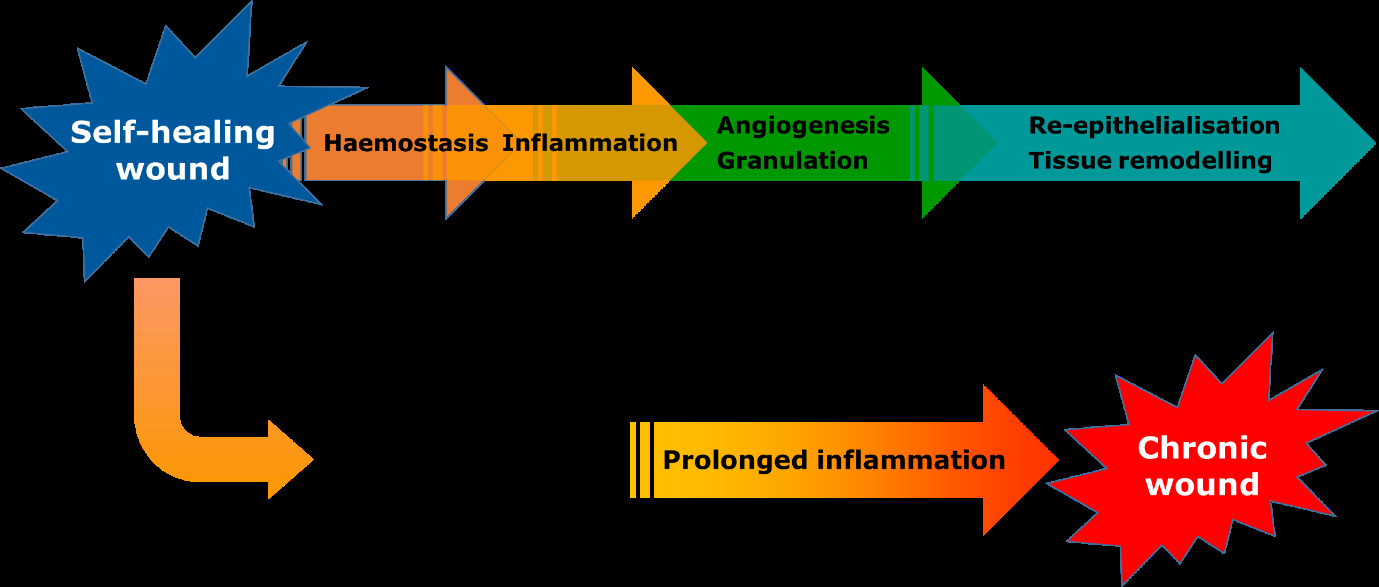
Wound healing is a dynamic process, which proceeds via overlapping phases of inflammation, epidermal restoration, wound contraction and remodelling (Figure 13.1). This process relies on the dynamic interaction of cells, soluble factors and the extracellular matrix (ECM), so that inflammation can rapidly be resolved to allow for the ingrowth of fibroblasts and keratinocytes . Activation of platelets and secretion of inflammatory cytokines, migration of
Matrix
metalloproteinases (MMPs) and growth factors are key to promote wound contraction and closure, ultimately leading to mature ECM and the formation of functional neo-tissue. Figure 13.1. Typical healing and impaired healing phases in normal and hard-to-heal wounds, respectively.
Especially the release of MMPs in a balanced and coordinated fashion is crucial to enable phagocytosis, angiogenesis, cell migration during epidermal restoration, and tissue remodelling. Such cascade of timely events is impaired in chronic wounds and results in a persistent inflammation state, which is associated with upregulated MMPs and reactive oxidative species (ROS), impaired growth factor expression, and increased risks of bacterial contamination . MMP activity has been reported to be up to 30-fold higher in chronic compared to acute wound fluids, suggesting that new extracellular matrix (ECM) is continuously broken down due to the imbalanced ratio between MMPs and tissue inhibitors of MMPs (TIMPs). In light of the orchestrated nature of the wound microenvironment, observed MMP upregulation negatively affects fibroblast response and differentiation and cause growth factor denaturation at the wound site, so that the subsequent healing steps are halted.
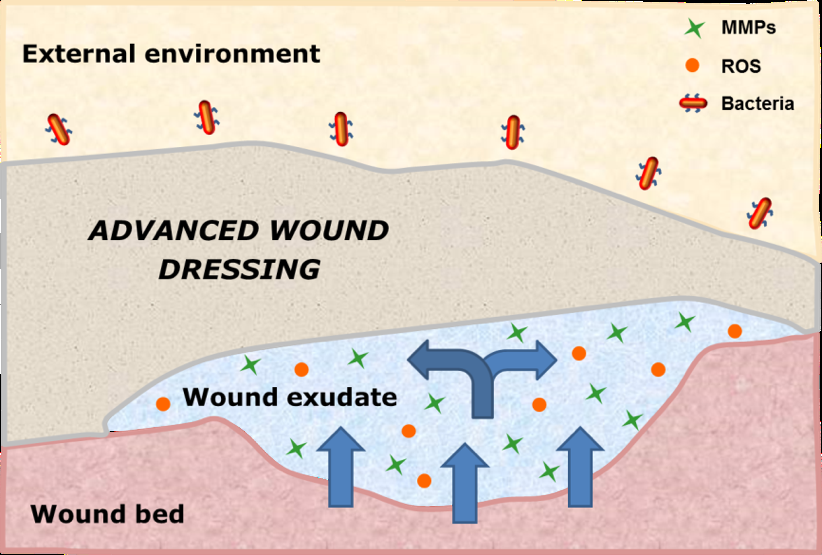
The use of topical wound dressings is a recognised way to wound healing (Figure 13.2). Initially intended to keep the wound dry to minimise wound infection, conventional dressings were subsequently designed to absorb and retain wound exudate in order to enhance healing rates. Highly-hydrated fibrous assemblies have therefore been realised , yet a narrow trade- off between dressing exudate absorbency and hydrated mechanical properties is commonly observed in situ. Consequently, self-adhesive oxygen-permeable film dressings have been developed to allow for moisture evaporation from intact periwound skin.
Figure 13.2. Design concept of an advanced wound dressing regulating wound exudate levels at the macroscopic scale, as well as pH and overexpressed MMPs and ROS at the biochemical level. Ultimately, with the advances in biomaterials science, textile manufacture and skin biology, a technology design shift has been pursued from dressings intended as purely skin-protecting bandages to advanced wound dressings, aiming to regulate wound microenvironment with regards to e.g. pH, proteolytic activity and ROS concentrations. An array of approaches of varying efficacy has therefore been pursued, including MMP-cleavable sacrificial substrates , metal-chelating chemistries , cell and soluble factor delivery strategies, keratinocytes migration-inducing peptides , bio-responsive systems and growth factor- delivering vehicles . Despite extensive research efforts so far, clinically-approved therapies for chronic wound management are still time-consuming, economically unaffordable and present restricted customisation.
In this chapter, the role of collagen in the ECM of biological tissues and wound healing will be discussed, together with its use as building block for the manufacture of advanced wound dressings. Commercially-available collagen dressings and respective clinical performance will be presented, followed by an overview on the latest research advances in the context of multifunctional collagen systems for advanced wound care.
13.2 Collagen as building block of advanced wound dressings Collagen is the most abundant protein in the human body. As a structural protein produced by fibroblasts, it plays a major role in all phases of the wound healing cascade, stimulating cellular activity and contributing to new tissue development . The presence of collagen in wound dressings is therefore highly advantageous to promote healing in hard-to-heal wounds, by encouraging the migration of macrophages and fibroblasts to the wound site, leading to the deposition of new collagen matrix. Other than its chemotactic effect on wound specific cells, collagen is also highly hydrophilic, so that respective collagen dressings promote the uptake of growth factors- and MMP-rich wound exudate . Collagen-driven uptake of wound exudate is key not only to keep the wound hydrated, but also aiming to bind and protect wound exudate-carried growth factors, as well as to inactivate upregulated, tissue detrimental chronic wound MMPs, so that neo-tissue is not constantly enzymatically degraded. With the increased elucidation on the role that biochemical factors play in chronic wounds and in light of recent advances in biomaterials science, a great deal of attention has therefore been devoted to the development of advanced collagen-based dressing formulations aiming (i) to provide dressings with superior enzymatic stability at the macroscopic level, (ii) to regulate the chronic wound microenvironment at the biochemical level, and (iii) to successfully enable their customisation to fulfil the requirements of a wide range of chronic wound populations.
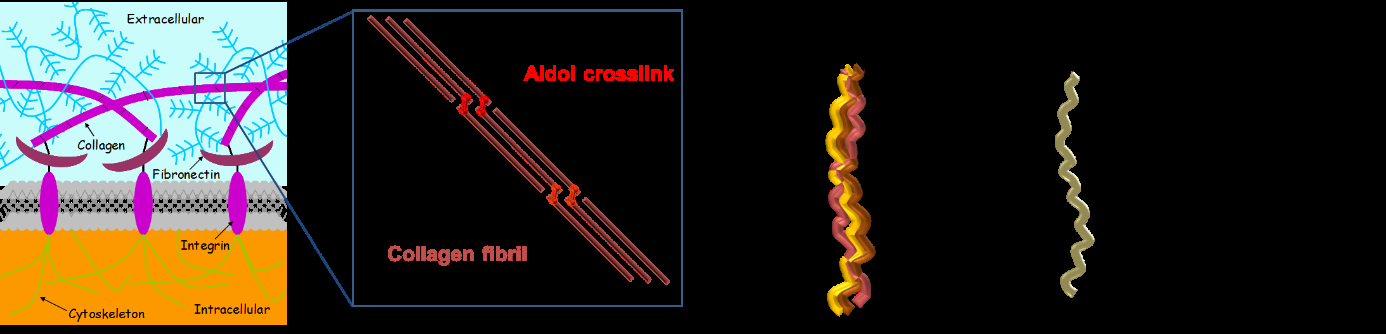
13.2.1 Protein composition and organisation in vivo Collagen accounts for about one-third of the proteins in humans and two-thirds of the skin dry weights. As the most abundant protein in mammals, collagen has provided mankind with widespread applicability. In vivo, it plays a dominant role in maintaining the biological and structural stability of various tissues and organs. Ex vivo, collagen has been widely employed in the development of leathers and glues, food, cosmetic and pharmaceutical formulations, as well as in medical devices . So far, 28 genetically-distinct types of collagen have been identified, with all of them displaying a triple helical structure at the molecular level (Figure 13.3).
Figure 13.3. Stabilised collagen fibril assemblies present in skin’s ECM. Of these, type I (found in skin, tendon, and bone), II (found in cartilage), and III (found in skin and vasculature) are mostly employed for biomedical applications, and are characterised by collagen triple helices assembled into fibrils at the nanoscale, which are responsible for tissue architecture and integrity. The remarkable industrial versatility of collagen can therefore be largely attributed to its hierarchical organisation.
The collagen molecule is based on three left-handed polyproline II-type (PPII) helices, which are staggered from one another by one amino acid residue and are twisted together to form a right-handed triple helix (300 nm in length, 1.5 nm in diameter). Triple helices (THs) can be either homo- or heterotrimers, depending on the tissue and collagen type. With regards to collagen type I, which is widely used in wound care and regenerative medicine, the triple helix consists of a heterotrimer of two α1(I) chains and one α2(I) chain . At the molecular level, each TH-forming PPII helix contains ca. 1000 amino acid residues, and is characterised by the repeating unit Glycine-X-Y, whereby X and Y are predominantly proline and hydroxyproline, respectively. The high content of both stiff (hydroxyl-)proline and small glycine residues explains the folding of each polypeptide into a PPII helix and the consequent arrangement of three PPII helices in the right-handed triple helix. Depending on the location in the human body and the specific biological tissue, THs can assemble into fibrils, fibres and fascicles. Besides secondary interactions, collagen assemblies, i.e. THs, fibrils, fibres and fascicles, are stabilised via covalent crosslinks, which are formed between (hydroxy-)lysine residues under the influence of lysyl oxidase via either aldol condensation or Shiff base- mediated mechanism . These naturally-occurring intra- and intermolecular crosslinks are formed in the non-helical, telopeptide regions of the collagen molecule; they are responsible for the proteolytic resistance of collagen in vivo and contribute to the mechanical properties and biological function of tissues.
Above-mentioned chemical composition and structural organisation explains the importance of collagen in wound healing and its widespread use for the manufacture of advanced wound dressings. The presence of the integrin recognition amino acidic sequences RGD and GFOGER along PPII helices enables collagen to control many cellular functions of fibroblasts and keratinocytes, including cell shape, differentiation and migration. Type I collagen has been reported to stimulate angiogenesis in vitro and in vivo via binding of endothelial cell (EC) surface α1β1 and α2β1 integrin receptors by the GFPGER502-507 sequence of the collagen triple helix . The amino acidic sequences of collagen also serve as binding sites for a number of chronic wound-upregulated inflammatory cytokines and MMPs, making collagen biodegradable. Besides promoting the migration of skin cells towards the wound, the application of collagen dressings can also divert tissue detrimental action of aforementioned enzymes and soluble factors from the chronic wound to the dressing, offering an inherent mechanism of wound microenvironment regulation towards healing.
13.2.2 Extraction Of Collagen Ex Vivo
Aiming to use collagen as the building block of advanced wound dressings, collagen is extracted from biological tissues, e.g. tendons, in acidic environments or via enzyme-catalysed extraction. Collagen fibers in vivo are stable enough to withstand the disruptive influence of thermal agitation but capable of the assembly and disassembly of the component molecules. However, irreversible disassembly of collagen can be induced ex vivo by several agents, such as heat, pH, and enzymatic action. In these situations, the weak bonds (hydrogen bonds, dipole-dipole bonds, ionic bonds, and van der Waals interactions) are initially broken, followed by the chemical cleavage of covalent crosslinks. Collagen molecules in the form of triple helices become therefore soluble and diffuse away from the tissue to the extracting medium. Consequently, the unique hierarchical organisation of collagen found in vivo is lost ex vivo, resulting in a water-soluble product with limited solubility in organic solvents. Extracted collagen triple helices can be reconstituted in vitro (pH 7.4, 37 ºC) into in vivo-like fibrillary structures, resulting in viscoelastic gels at the macroscopic level; yet poor mechanical stability and uncontrollable volumetric swelling are usually observed in aqueous environment.
Whilst the extraction of collagen is typically carried out in mild conditions, so that collagen triple helices can be preserved and collected, excessive heating and extremely acidic solution pH can lead to denatured collagen, whereby triple helices unwind into single random coils, and cleavage of pristine collagen polypeptides into smaller chains occurs. Such denatured form of collagen is called gelatin, which is a heterogeneous mixture of water-soluble polypeptide chains of varied molecular weights. Gelatin usually binds more water than collagen in light of its randomly-coiled conformation, whereby an increase number of functional groups are exposed to water, leading to new hydrogen bonds. Based on their chemical similarities and compatibility within the body, collagen and gelatin are both widely used as building blocks for the design of multifunctional biomaterials and the manufacture of advanced wound dressings. Gelatin is a much cheaper raw material than collagen, and that is why it is often employed in place of collagen. Due to the presence of triple helices and higher molecular weight of PPII helices, collagen shows restricted solubility compared to gelatin, although collagen-based materials typically exhibit increased mechanical competence in hydrated conditions. Consequently, flexible chemical and manufacturing processes should be developed to enable collagen applicability in clinical settings towards the development of in vivo-like covalently-crosslinked collagen networks, which are water-insoluble, elastic and that can be configured in bespoke macroscopic formats, such as nonwoven fabrics, coatings as well as pads.
13.2.3 Collagen Sources And Antigenicity
Type I collagen has been successfully extracted from either bovine, equine, or porcine tissues and employed in commercial advanced wound dressings, e.g. Promogran®, Biopad® and Biostep®. However, the use of animal-derived collagen is associated with religious constraints, potential allergies and concerns of transmissible diseases, especially bovine spongiform encephalopathy (‘‘mad cow disease’’). Synthetic research approaches leading to either collagen-like macromolecules or collagen triple helix-mimicking peptides have been proposed as chemically viable ‘artificial’ collagen [21, 22]. Likewise, genetic engineering strategies have been successfully pursued to achieve type I recombinant human collagen as pathogen-free, economically affordable and quality-controlled raw material . On the other hand, alternative collagen sources, such as fish and chicken skin, have been explored to address above-mentioned issues in translation and commercialisation settings, and to comply with current regulatory framework. Tissue source is known to affect the extraction yield and the chemical composition and clinical performance of resulting collagen , whereby differences in amino acid composition (e.g. lower imino acid and lysine content in fish compared to bovine collagen) have been found to impact on thermal, structural and mechanical properties, covalent crosslinking, and, above all, antigenicity . With regards to the latter point, the use of a human collagen would minimise the probability of interspecies variability and immune rejection, whilst the concept of material purity should also be carefully considered. Therefore, reliable extraction and manufacturing processes should be developed, to minimise the contamination of collagen products with unwanted residues related to non- collagenous proteins, cells, crosslinking compounds, or microbial components, i.e. endotoxins .
The selection of collagen sources with minimal antigenicity is prerequisite to enable clinical use of collagen dressings in humans and to minimise the potential to evoke immune and adverse reactions. Macromolecular features present in the collagen backbone not common to the host species are more likely to interact with antibodies and to encourage an immune response than shared features, thereby acting as antigenic determinants. Interspecies amino acidic variation is therefore inherently linked to the issue of collagen antigenicity. Hence, the immunological closeness to humans supports the widespread use of bovine collagen for the development of commercial wound dressings with minimal antigenicity. Antigenic determinants of collagen can be found in the (triple) helical regions, with variations in the amino acid sequences not exceeding more than a few percent between mammalian species . A far greater degree of variability is found in the non-helical terminal regions of collagen, i.e. telopeptides, with up to half of the amino acid residues in these regions exhibiting interspecies variation. Telopeptide-free collagen, also called atelocollagen, can be obtained via pepsin-induced extraction , whose yield is reported to be higher compared to acidic extraction . The introduction of pepsin in the extraction medium allows for the selective cleavage of peptide bonds located in the terminal non-helical regions, potentially reducing collagen antigenicity. The telopeptide ends of the collagen molecule are dissected, whilst the triple helices remain preserved. The removal of telopeptides may on the other hand result in the inability of reconstituted product to display characteristic collagen fibril patterns, due to the role amino and carboxyl telopeptides play in crosslinking and fibril formation .
13.3 Commercial Collagen Dressings
Collagen has been widely investigated as building block of commercial advanced wound dressings, whereby varied protein and chemical configurations have been proposed to achieve superior wound healing dressing function. The application of hydrophilic dressings with appropriate exudate management capability is a recognised route to chronic wound healing . Transparent collagen dressings have been developed in the form of membranes, pads and gels, allowing for wound monitoring and uptake of growth factor-rich wound exudate, whilst providing a barrier to exogenous bacteria. With the increasing understanding of the chronic wound microenvironment, multiphase formulations have also been pursued aiming to integrate collagen-based dressing devices with multiple functions, such as antibacterial activity, drug release as well as wound cleansing and MMP management capabilities (Table 13.1).
Table 13.1. Examples of patented, commercially-available collagen-based advanced wound dressings.
Content [Wt.%]
Format Ref.
13.3.1 Non-Hydrolysed Collagen Formulations
Nonporous dressing pads made of 100% type I equine non-hydrolysed collagen have been developed and commercialised (Biopad®) for the therapeutic treatment of burns and wounds . Here, the hydrophilic behaviour of collagen was exploited to promote absorption (up to 15 times of the material dry weight) of wound exudate and aqueous biological media in the dressing. The dressing product consists of a non-fibrous pad of chemically unmodified collagen, which is prepared by sequential collagen acidic solubilisation, filtering and drying.
The fact that the material is nonporous and chemically-unmodified may be beneficial (i) to control and slow down the rapid dressing-induced exudate uptake (due to the presence of a compact, pore-free structure), which may otherwise lead to detrimental and excessive wound evaporation; (ii) and to preserve the native collagen biological function and triple helix structure in resulting product. Especially the retention of triple helices is key to allow for collagen binding with wound exudate growth factors and cytokines and to ensure mechanical competence in the hydrated state . The resulting collagen dressing pad is amenable to surgical cutting to fit the size of the wound. Prior to application in situ, the dressing should be partially hydrated to gain elasticity and to conform to the wound, likely due to the glassy-like behaviour of collagen in the dry state and the absence of any plasticising phase in the dressing .
Following hydration with wound exudate in situ, the collagen dressing is claimed to be transparent, allowing for continuous wound monitoring, so that frequent dressing removal and replacement can in principle be avoided (although a secondary dressing is normally applied to maintain the dressing pad at the wound site). Besides the inherent advantages associated with its 100% non-hydrolysed triple helix-preserved collagen composition, this dressing was also reported to exhibit optimal structural compromise with regards to the extension of the collagen areas and the thickness of the collagen strands. Although no information on the MMP regulation capability was disclosed, these dressings proved to retain the same overall structure during exposure to collagenase . Aiming at a dressing device with additional biochemical and wound cleansing capabilities, a non-hydrolysed collagen-based formulation (Puracol®) was proposed containing Manuka honey (MH) . The use of MH in the dressing is rationalised by the fact that wound cleansing of necrotic tissue is typically required prior to wound dressing treatment; this is usually carried out via surgery or sharp debridement, which may cause patient pain and require additional nursing time. Here, bovine collagen was employed to induce MMP regulation via collagen binding and cleavage with MMPs, and was still applied in its non-hydrolysed, triple helix, and non-crossinked state. Other than controlling MMP overexpression in chronic wounds, the use of collagen was also expected to increase the viscosity of MH aiming to achieve localised delivery to the wound site, minimising MH spillage out of it. The use of MH was first intended to promote debridement of necrotic tissue following dressing application in situ, although MH activity is expected to positively impact on wound healing over different levels: (i) its acidity induces temporal denaturation of MMPs, which are responsible for wound chronicity; (ii) MH osmolarity draws wound exudate out of the wound bed, resulting in an outflow of fluid, which helps dissolving necrotic tissue and cleansing the wound ; (iii) MH has broad-spectrum antibacterial activity even when in contact with high amounts of wound exudate, largely attributed to the presence of methylglyoxal .The proposed formulation combining the advantages associated with collagen and MH can be employed as wound contacting layer within a multilayer dressing comprising a (non)woven fabric, an absorbent layer made of e.g. polyurethane foam or cellulose fibres, and a fluid impervious, adhesive cover layer designed to contain the wound exudate absorbed by the dressing. The wound cleansing and healing performance of the collagen layer was successfully investigated in patients with hard-to-heal wounds. Here, decrease in depth, increase in granulation tissue and decrease in the overall wound size provided evidence of the wound conversion from a chronic to a proliferative state within a 3- week time window , These findings demonstrated the beneficial function of the native collagen dressing towards the preparation of an optimal wound bed, ultimately leading to accelerated wound re-epithelialisation. On the other hand, the dressing potential to manage MMP upregulation in situ was not specifically addressed.
Non-hydrolysed type I equine collagen has also been recently combined with hyaluronic acid (HA) aiming to realise a dressing pad capable to promote cell proliferation, migration, differentiation, and angiogenesis, whilst also inducing hydration of the wound . The use of HA is rationalised since HA is a glycosaminoglycan found in the ECM that plays a central role in controlling water content and mechanical function of connective tissues, whilst also regulating several processes related to cell physiology and biology via interaction with specific cell receptors .
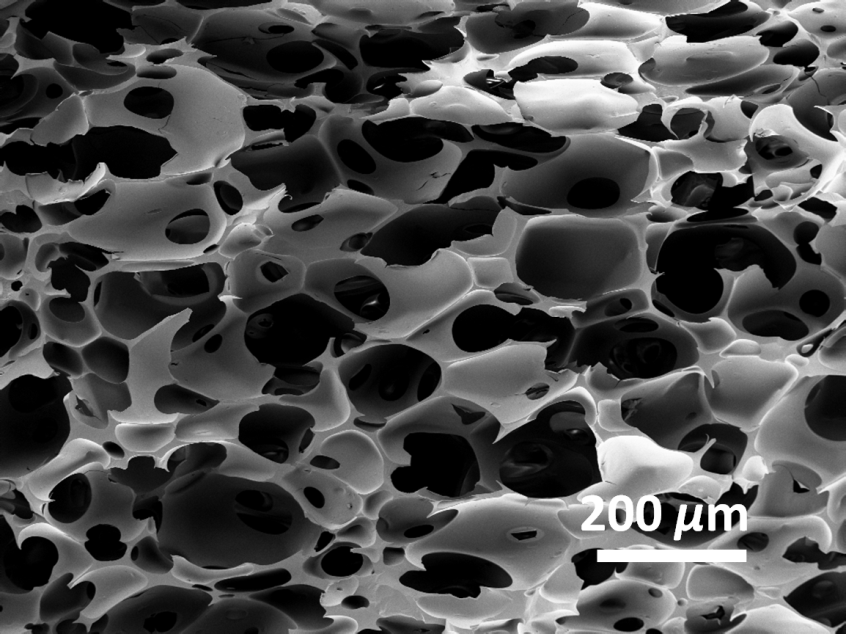
Aiming to preserve both collagen proteolytic activity and HA biofunctionality and keep the dressing pad manufacture simple, the formulation is prepared with no covalent crosslinks or chemical functionalisation at the molecular level. Solutions containing specific ratios of HA and collagen are freeze-dried so that the final dressing pad is achieved ready for sterilisation. The application of freeze-drying to the polymer solution enables the formation of pores in resulting dressing internal architecture , thereby enhancing the exudate absorption capacity of the dressing (Figure 13.4). Despite the absence of any covalent crosslink between the two phases, carboxylic acid groups of HA are expected to electrostatically interact with the amino groups of collagen, resulting in the formation of a physical network at the molecular scale. In light of the addition of HA, resulting dressing is mechanically strong yet flexible, in contrast to the case of collagen only pad , and can promptly conform to topical wounds.
Figure 13.4. Manufacture and scanning electron microscopy (SEM) of a dressing pad obtained via freeze-drying of a gelatin aqueous solution. Other than wound dressing pads, the HA-collagen formulation can also be delivered in the hydrogel state for the treatment of cavity wounds. Culture of 3T3 fibroblasts with both collagen- HA and collagen control formulations confirmed that the use of HA promoted increased adherence of seeded cells to the material with respect to the collagen control, within a 5-day time window. Also in this case, the performance of the HA-collagen dressing prototype in contact with MMPs was not addressed.
13.3.2 Hydrolysed Collagen-Based Formulations
Extraction of collagen with preserved triple helices requires defined and controlled experimental conditions. Once extracted ex vivo, collagen in its triple helix state is known to present limited solubility and time-consuming solubilisation in aqueous conditions, which limit the creation of scalable customised material format. To overcome above-mentioned constraints and identify cost-effective biochemically-comparable alternatives, extensive research and development has been carried out with derived, either hydrolysed or denatured, forms of collagen, which have been successfully integrated in several commercially-available advanced wound dressings. In contrast to native collagen, hydrolysed or denatured (i.e.
gelatin) derivatives consist of a wide mixture of predominantly linear polypeptides. These random coils can however refold into collagen-like triple helices, depending on the environmental conditions and polypeptide molecular weight, so that uncontrollable structure- property relationships may be observed . A modified collagen gel (MCG) formulation (StimulenTM) comprising non-crosslinked, hydrolysed bovine collagen mixture of long and short polypeptides dispersed in a matrix of water and glycerine has been disclosed for the
Sem
treatment of ischemic wounds . Preclinical investigations in an excisional wound swine model showed that MCG-treated wounds displayed longer rete ridge structures compared with untreated wounds, suggesting improved biomechanical properties of the healing wound tissue. The hydrolysed collagen formulation also proved to improve recruitment of neutrophils and release of inflammation-related cytokines into the wound site . Despite lacking its native triple helix structure, the application of hydrolysed collagen in situ was still effective in promoting an initial boost in macrophage concentration and inflammatory response, followed by rapid return of macrophage count to control values and inflammatory resolution, so that healing could take place . Consequent to these results, hydrolysed collagen was blended with oxidised regenerated cellulose (ORC) to create a dressing pad (Promogran®) combining superior water absorption properties of cellulose with wound-regulating biochemical functionalities of collagen . The dressing preparation involved the solubilisation of bovine hydrolysed collagen (BHC) and ORC in an aqueous solution, followed by one-pot freeze- drying and dehydrothermal crosslinking process. The final material therefore consists of a mechanically strong pad, which can be surgically cut to fit the wound size, yet displaying restricted elasticity, likely consequent to the presence of covalently-crosslinked, low molecular weight collagen polypeptides. In contrast to previously-discussed products, results on the BHC/ORC dressing performance in diabetic foot ulcers wound fluid confirmed the material ability to successfully bind and rapidly inactivate chronic wound proteases , although no information on the potential dressing mass loss consequent to proteolytic cleavage was provided. Overall, these results underline that the BHC/ORC formulation could remove excess proteases from the wound bed, so that the enzyme-induced tissue degradation could be reduced and tissue synthesis promoted. Despite hydrolysed rather than triple helix preserved collagen was employed in this dressing, these results demonstrate that the collagen polypeptide can still act as a competitive enzymatic substrate with respect to the neo-tissue.
Other than the collagen-based mechanism, the addition of ORC in the dressing was demonstrated to provide an additional means for MMP regulation via electrostatic complexation of ORC negatively charged functional groups with positively charged metal ions found in physiological conditions and essential for MMP activity. Hydrolysed collagen was also demonstrated to bind with and protect platelet-derived growth factor (PDGF) from proteolytic degradation, suggesting the potential applicability of the BHC/ORC dressing as controlled delivery system. Moreover, the dressing was also demonstrated to serve as free radical scavenger, which is key to control the excessive upregulation of reactive oxygen species responsible for the prolonged inflammatory state in chronic wounds. The multiple biochemical functions exhibited by the BHC/ORC dressing proved key to induce significantly increased wound closure in diabetic mice in contrast to dressing-free control wounds . These results were found in agreement with histological analysis of wound tissue 14 days post-wounding, whereby enhanced formation and maturation of granulation tissue was observed in BHC/ORC-treated wounds. Other than hydrolysed collagen, porcine gelatin has been employed for the manufacture of flexible mesh dressings, together with a biocompatible plasticiser, such as polyethylene glycol (PEG), carboxymethylcellulose (CMC), sodium alginate and ethylenediaminetetraacetic acid (EDTA) . During manufacture, the dressing- forming aqueous mixture is poured on to a fibrous substrate of e.g. cellulose prior to freeze- drying. The use of the plasticiser in the dressing formulation provides the dressing with enhanced elasticity in the dry state, in contrast to previously mentioned collagen-based dressing pad products, whilst CMC and sodium alginate are employed as hydrophilic component to enhance the absorption capacity of the material in situ. Despite gelatin is crosslinked by carbodiimide-induced intramolecular crosslinking, a 20 wt.% mass loss was recorded following 24-hour incubation with collagenase. To further control collagenase activity, EDTA is introduced in the dressing as soluble metal chelator, aiming to induce complexation with the active zinc site of upregulated MMPs, thereby providing an additional mechanism for MMP inactivation. Although the extent of degradation was reduced in the presence of alginate, the structure was observed to collapse following 5-hour exposure to collagenase at body temperature , whilst a water uptake of up to 34-time the initial dressing dry weight was observed following 24-hour incubation (0.01 M PBS, pH 7.4, 37 ºC). The presence of plasticisers effectively enhanced the elasticity of the material following 1-hour soaking in PBS (0.01 M, pH 7.4), resulting in a measured elongation at break of more than 190%. Ultimately, resulting dressing mesh could be loaded with Sirolimus as exemplary anti- inflammatory drug for the controlled delivery to the surface of tissues, whereby less than 2% drug was released after 3 days in vitro (0.01 M PBS, pH 7.4, 37 ºC).
13.4 Design of multifunctional collagen systems with customised formats Despite wound management collagen solutions have been commercialised to respond to the pressing needs of an increasing diabetic population, limitations in biochemical functionalities, manufacturing processes and customisation of dressing properties, functions and format prevent us from developing cost-effective technologies personalised for a wide range of chronic wounds. To address this challenge, widespread research has been pursued to design multifunctional systems with bespoke architecture and integrated bioactive formulations, aiming to correct chronic wound biochemical imbalances and achieve dressing- induced orchestration of the wound healing microenvironment. Research strategies to realise this have focused on three main streams: (i) cell-based therapies, whereby cells are encapsulated in the dressing material to promote tissue repair ; (ii) drug-loaded systems enabling controlled and staggered release of soluble factors to prevent wound infection and accelerate healing ; (iii) cell- and soluble factor-free dressing devices whereby the healing functionality is inherently accomplished by dressing physical properties and chemical configurations at the molecular scale . The design of inherently multifunctional wound dressings may be preferable to achieve constant clinical performance in vivo, irrespective of temporal factors ruling e.g. the release of active compounds or metabolic activity of encapsulated cells, whilst also minimising regulatory framework constraints and time required for regulatory approval and translation to market.
13.4.1 Synthesis of network architectures to achieve dressing multifunctionality Despite collagen is an ideal biomaterial for wound dressing application, the inherent MMP-induced degradation in vivo of collagen-based dressings raises concerns in terms of dressing form-stability, non-controllable swellability, and poor hydrated mechanical properties.
Incorporation of soluble MMP-chelating agents, i.e. EDTA, has been exploited for the development of commercial advanced wound care products. Yet, loading of the dressing with soluble factors may involve additional considerations with regards to controlled release kinetics, sustained MMP modulation and medicinal product-related translation pathway. Either glutaraldehyde , genipin , carbodiimide chemistry , or physical factors have been employed to stabilize collagen in biological environments, although issues remain with regards to material cytotoxicity and restricted control of crosslinking reaction and material properties. To overcome these limitations, a great deal of attention has been given towards the development of flexible crosslinking strategies of collagen. By introducing crosslinks between collagen molecules, water-insoluble networks are accomplished that swell in contact with wound exudate, so that defined moist environment is established in situ, whilst enhanced dressing biodegradability and hydrated mechanical properties can be expected. Most importantly, additional biofunctionalities can be introduced in resulting materials depending on the characteristics of the crosslinking segment.
Type I bovine collagen has been crosslinked with tannic acid in an effort to introduce the antimicrobial and anti-inflammatory activities of tannic acid within a covalent collagen matrix . Tannic acid (TA) is a plant polyphenol consisting of a glucose moiety core with hydroxyl groups being esterified with five digallic acids. Resulting materials proved to display about 10 wt.% mass loss following 42-hour incubation in a collagenase-containing medium, in contrast to more than 60 wt.% mass loss observed in tannic acid-free collagen controls in the same conditions. Following application to full-thickness wounds in rats, TA-crosslinked samples proved to support enhanced wound closure and nearly-complete re-epithelialisation following 12-day treatment, in comparison with the collagen control, whilst no commercial benchmark was employed in the study. Results obtained in vitro and in vivo therefore support the
Related Journal Articles & DOI Links
Selected peer-reviewed publications relevant to 12 Lead ECG Acquisition. Click the DOI to access the full paper (may require institutional access).
-
1. Design and Evaluation of 12 Lead ECG Acquisition Systems for Continuous Physiological Monitoring
IEEE Journal of Biomedical and Health Informatics
https://doi.org/10.1109/JBHI.2020.2981234 -
2. Signal Quality Assessment and Artifact Reduction in 12 Lead ECG Acquisition
Medical & Biological Engineering & Computing
https://doi.org/10.1007/s11517-020-02145-6 -
3. Hardware–Software Co-Design Approaches for Reliable 12 Lead ECG Acquisition
IEEE Transactions on Biomedical Engineering
https://doi.org/10.1109/TBME.2019.2895762 -
4. Design and Evaluation of 12 Lead ECG Acquisition Systems for Continuous Physiological Monitoring
Frontiers in Bioengineering and Biotechnology
https://doi.org/10.3389/fbioe.2020.00123 -
5. Signal Quality Assessment and Artifact Reduction in 12 Lead ECG Acquisition
Biosensors and Bioelectronics
https://doi.org/10.1016/j.bios.2021.112345 -
6. Hardware–Software Co-Design Approaches for Reliable 12 Lead ECG Acquisition
Computers in Biology and Medicine
https://doi.org/10.1016/j.compbiomed.2021.104567 -
7. Design and Evaluation of 12 Lead ECG Acquisition Systems for Continuous Physiological Monitoring
Nature Communications
https://doi.org/10.1038/s41467-020-12345-6
Why Choose Us?
Bangalore guidance for robotics, Spectre and autonomous systems projects.
Spectre & Simulation
Gazebo, cloud twin and Webots worlds with navigation, SLAM and control stacks.
Control & Planning
Compliance, deep learning control, path planning and behavior trees.
Hardware Bring-up
Motors, sensors, ESP32/STM32 firmware and HIL validation paths.
Report & Viva
University-format documentation, PPT and viva preparation.
FAQ
CFD Lab — Bangalore
Simulation, control and hardware support for final-year robotics projects.
Stacks
Worlds
Digital Twin
Control
Robots
Offline
Bring-up