1
Graphene-based field-effect transistor biosensors for the rapid detection and analysis of
Viruses: A Perspective In View Of Covid-19
Joydip Sengupta1 and Chaudhery Mustansar Hussain2*
Abstract
Current situation of COVID-19 demands a rapid, reliable, cost-effective, facile detection strategy to break the transmission chain and biosensor has emerged as a feasible solution for this purpose. Introduction of nanomaterials has undoubtedly improved the performance of biosensor and the addition of graphene enhanced the sensing ability to a peerless level.
Amongst different graphene-based biosensing schemes, graphene field-effect transistor marked its unique presence owing to its ability of ultrasensitive and low-noise detection thereby facilitating instantaneous measurements even in the presence of small amounts of analytes. Recently, graphene field-effect transistor type biosensor is even successfully employed in rapid detection of SARS-CoV-2 and this triggers the interest of the scientific community in reviewing the current developments in graphene field-effect transistor.
Subsequently, in this article, the recent progress in graphene field-effect transistor type biosensors for the detection of the virus is reviewed and challenges along with their strengths are discussed.
Keywords: COVID-19, biosensor, graphene, field-effect transistor, virus detection
2
1. COVID-19 Transmission: Extent and Trivial Goals In December 2019 a new strain of coronavirus caused severe respiratory illness1 which was later termed as severe acute respiratory-related coronavirus 2 (SARS-CoV-2)2. World Health Organization (WHO) declared COVID-19 as pandemic on 13 March 2020 and urged international research community to carry out diagnostic test at a massive scale to fight the rapid transmission of the disease3. Since the transmission rate of SARS-CoV-2 is hasty fast, thus to break the chain of transmission a uniform diagnostic approach needs to be followed.
WHO has formulated a guideline in this regard, named as ASSURED (Affordable, Sensitive, Specific, User-friendly, Rapid and robust, Equipment-free and Deliverable to end-users) as a benchmark to identify the most suitable diagnostic approach/test for resource-constrained situations4. However, this virus is novel in many aspects and possessed great difficulties for all the countries around the world to get control over it5. One of the major difficulties was that, some of the patients are asymptomatic but are capable of transmitting the virus6. Thus rapid, reliable testing needs to be developed for isolation of COVID-19 patients as well as for the safety for others.
2. Detection Strategies For Covid-19
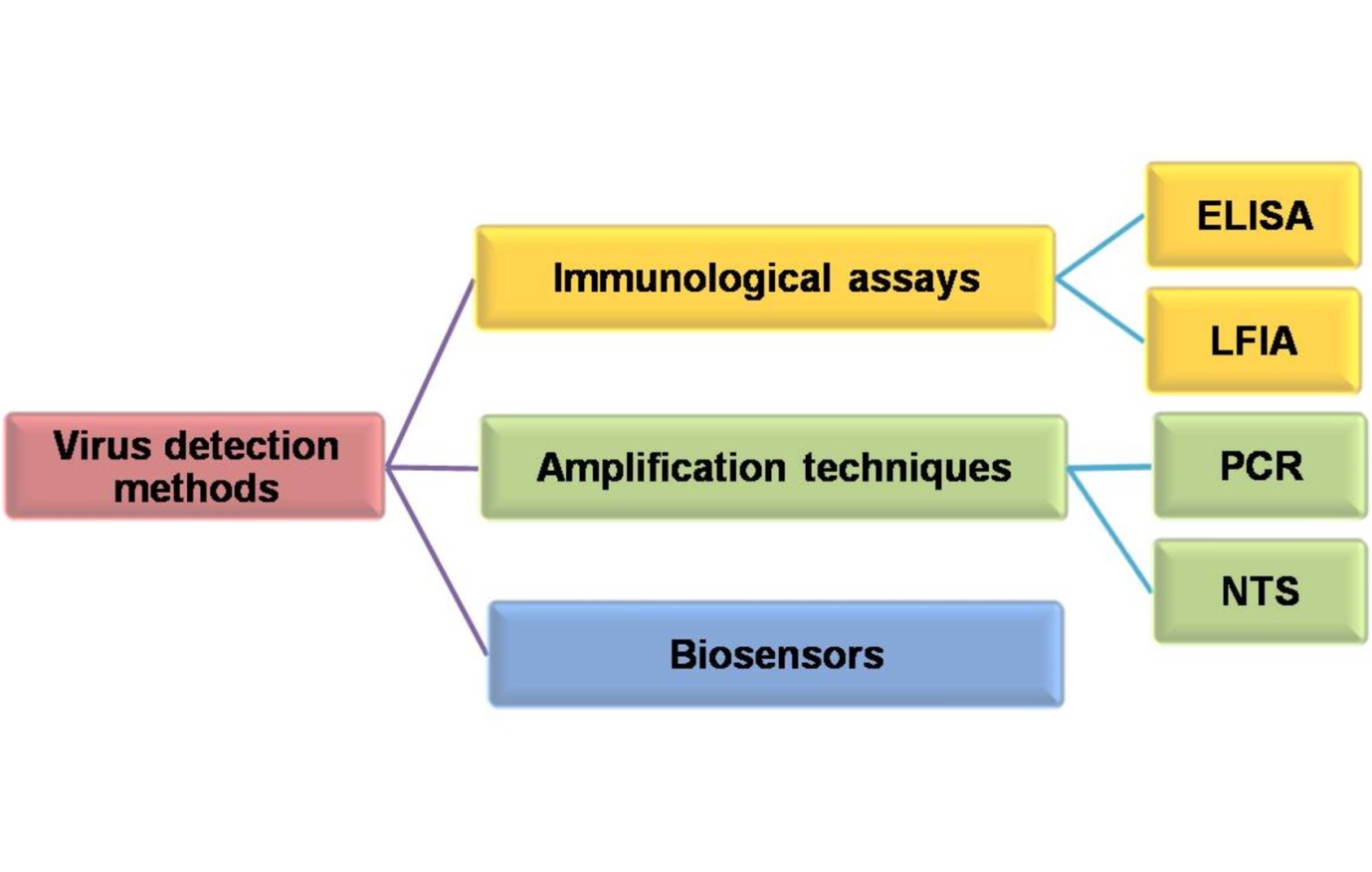
The early diagnosis of SARS-CoV-2 is crucial to prevent the severe outbreak of the disease and different detection strategies are being employed to encounter the adverse situation. Current detection strategies can be categorized as detection using immunological assays, detection based on amplification techniques and biosensing (Fig 1).
3
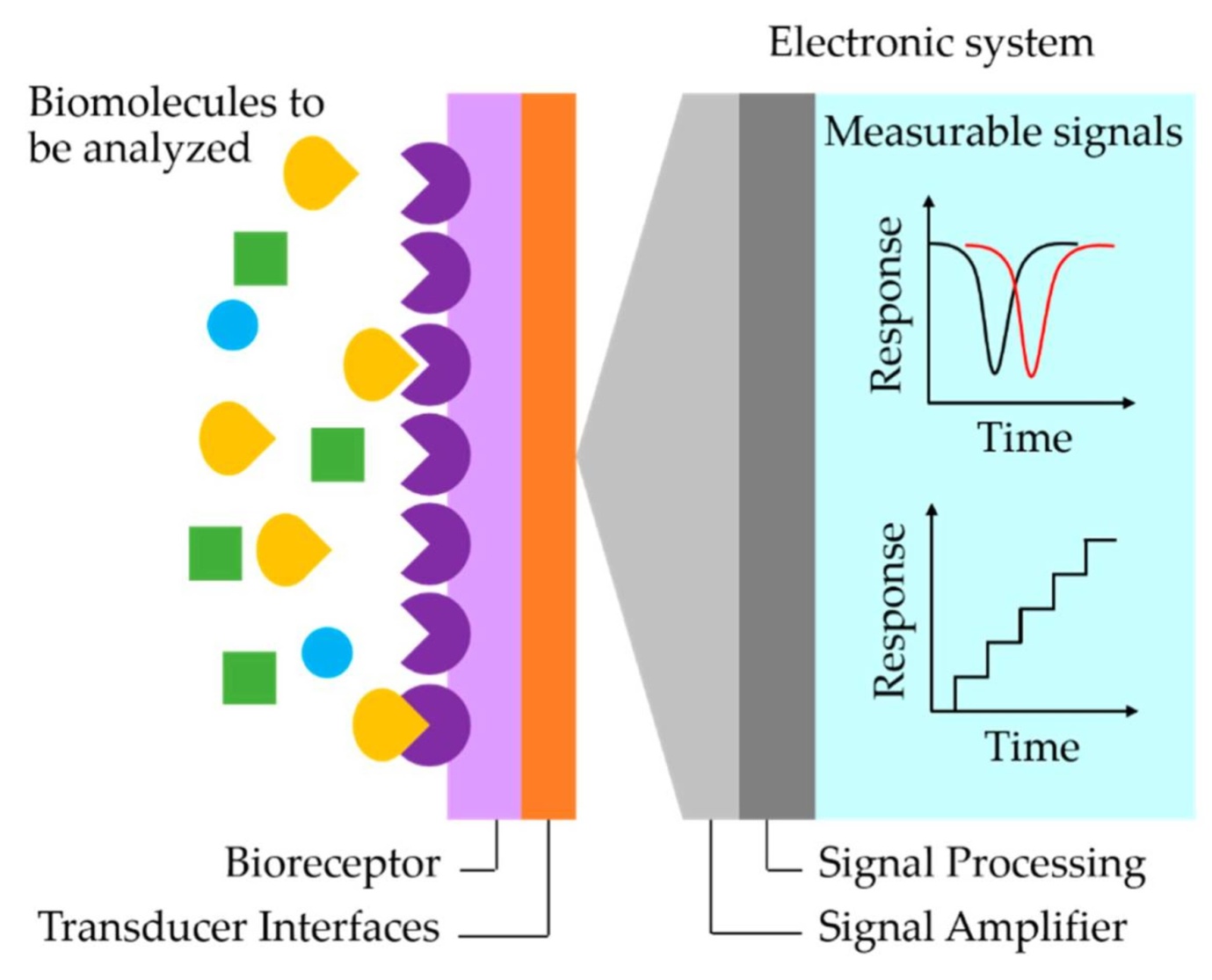
Fig 1. Different virus detection methods. The methods involving immunological assays (e.g. Lateral flow immunoassay (LFIA), Enzyme-Linked Immunosorbent Assay (ELISA)) suffer from the drawback of the requirement of complex production routes of recombinant proteins and antibodies whereas amplification-based techniques (e.g. Reverse Transcription Polymerase Chain Reaction (RT- PCR), Nanopore Target Sequencing (NTS)) involve skilled personnel and expensive instruments7. Moreover, both of these methods require complex, expensive optical imaging devices and longer time for completion. Thus scientists are in search of an inexpensive, reliable, facile way for the apt detection of SARS-CoV-2 with high accuracy. Under the current scenario, biosensing is the most suitable technique for facile and accurate detection of the SARS-CoV-2. The biosensing is performed using a biosensor which is generally composed of two parts, a bioreceptor and a physiochemical transducer (Fig 2). The bioreceptor identifies the target analyte e.g. antibody, enzyme, DNA, aptamer etc. A biochemical signal is generated owing to the biomolecule-analyte interaction and transducer
4
converts it into measurable information and analyzed quantitatively. The signal received from the transducer is firstly amplified and then processed for feeding into a display unit. Fig 2. Schematic illustration of a typical biosensor system8.
3. Nano-enabled biosensing systems for virus detection Since the inception of the biosensor9, a diverse range of biosensors undergoes research and development phase covering a broad spectrum of applications. However, a very limited number of biosensors are commercially available. For real-time sensing of biomarkers with picomolar (pM) sensitivity, only a few complex sensing systems involving high cost was proposed. Moreover, nanomaterials have been the area of keen interest since their discovery because of their unique and novel properties10. Consequently, various kinds (based on their
5
size and shape) of nanomaterials are employed in biosensor for simple, reliable and inexpensive detection of viruses as listed in Table 1. Table 1: Various nanomaterials used for biosensing of virus. Adapted from11
6
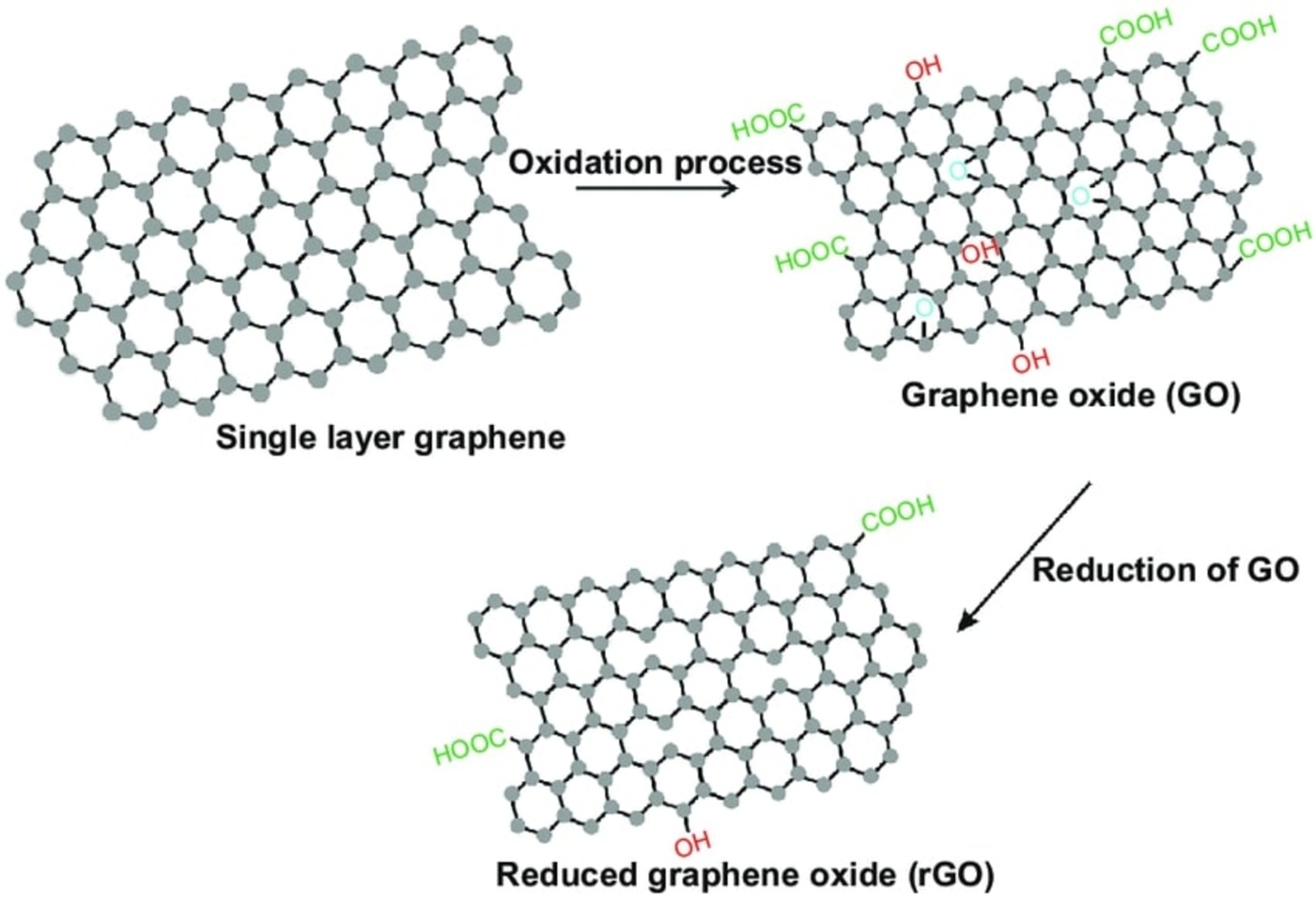
Later on, graphene entered the biosensing-platform after the first demonstration of easy isolation of graphene by Geim and Novoselov, from bulk graphite in 200418. Graphene is a two dimensional sp2 hybridized form of carbon consisting of a single layer of graphite with a hexagonal lattice structure. Graphene can be oxidized by various routes to synthesize graphene oxide (GO) and the GO can be further made to undergo reduction schemes to achieve reduced GO (rGO) (Fig 3).
Fig 3. Synthesis schemes of GO from graphene and rGO from GO19. There are various methods to synthesize graphene and its derivatives for their integration in the biosensor; meanwhile, chemical vapour deposition20 proves to be the best amongst them.
Moreover, in recent days scientists have come up with advanced graphene synthesis method to curtail the production cost21,22 even up to 95.5%23. In the pandemic scenario such as COVID-19, the cost of production of biosensing platforms is a major concern since millions
7
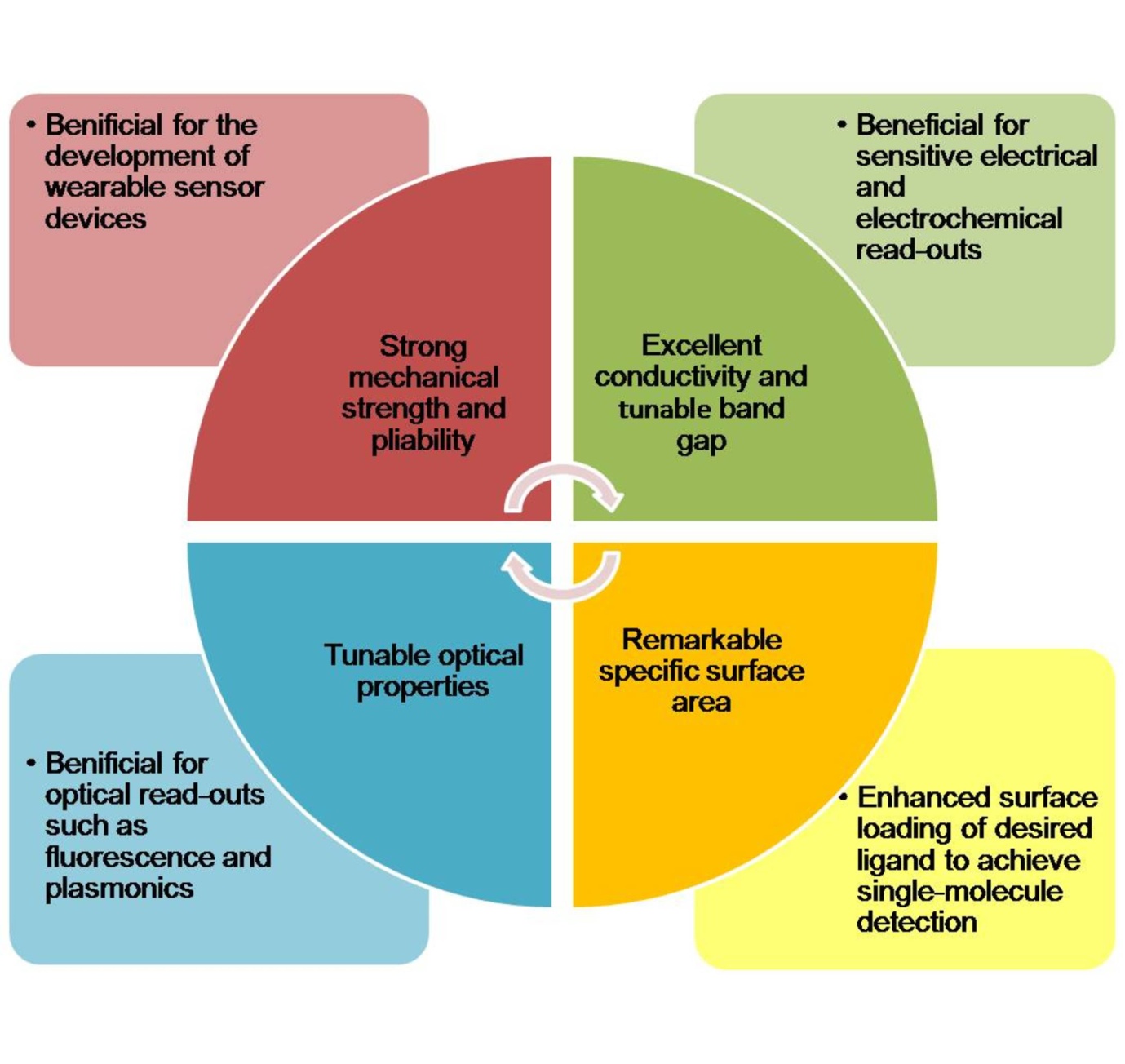
of tests needs to be executed every day. The low cost of graphene makes it an ideal choice for the fabrication of high-performance and low-cost biosensing platforms. Owing to the extraordinary physical and chemical properties, graphene-based materials have proved itself superior to other nanomaterials for the development of super-sensitive biosensors with a very low detection limit24 (Fig. 4).
Fig. 4. Extraordinary physical and chemical properties of graphene-based materials facilitate their use in biosensors.
8
Subsequently, graphene-based sensing schemes have become widely popular nowadays25 and are being employed by the researchers around the globe for detection of bacterial and viral pathogens26, human virus27, even for the vitamins28 (e.g. biotin) with ultrahigh sensitivity and specificity.
4. Graphene-based electrochemical and optical biosensors for virus detection
4.1 Graphene-Based Electrochemical Biosensors
Electrochemical impedance spectroscopy (EIS) makes use of the Faraday’s law to characterize a chemical process employing electrical measurements. In EIS, a small oscillating voltage of varied frequencies is applied to an electrochemical cell and the electrical impedance signal is recorded to acquire information related to diffusion and charge transfer phenomena occurring on the surface of the electrode. An impedimetric biosensor is constructed employing this idea by immobilizing biological recognition elements onto the electrode surface of the electrochemical cell. Whenever the biological sample interacts with the biological recognition elements then the resulted biochemical activities is measured by the electrical impedance signal. Preferably the biorecognition layer should be deposited on a transducing material having a high conductivity, low electron transfer resistance and high surface to volume ratio. Since graphene qualifies for all the characteristics thus graphene- based impedimetric biosensor 29 was successfully employed for the detection of viruses.
Glassy carbon electrode was modified by Gong et al.30 using graphene-nafion composite film for the detection of human immunodeficiency virus (HIV) gene with a detection limit of 2.3 x 10⁻¹⁴ M. Muain et al.31 used gold nanoparticles-decorated rGO nanocomposite for detection of hepatitis B virus with the lowest limit of detection of 3.80 ng mL−1. For the detection of diarrhea virus, Li et al.32 used nanocomposite consisting of molybdenum disulfide and rGO
9
decorated with gold nanoparticles. However, there is a drawback of the impedimetric biosensor as the recording of the full impedance spectrum is a time-consuming task33. Impedimetric biosensor specifically measures the changes in charge conductance via computing the impedance of the electrode surface whereas electrochemical biosensor in general measures the biochemical interaction between a bioactive substance and a biomarker and in addition to measure the impedance (which measures sensitivity); it also selectively detects different molecules as the molecules can be oxidized/reduced at different potentials.
Graphene is widely used in the electrochemical biosensor as the high surface area of graphene aids the presence of a large number of defects which act as electro-active sites for heterogeneous electron transfer34. Huang et al.35 used silver nanoparticle-graphene-chitosan nanocomposite for the detection of avian influenza virus (H7) with a detection limit of 1.6pg/mL. Human influenza virus (H1N1) can also be detected using GO-based electrochemical biosensor as demonstrated by Joshi et al. 36 with a detection limit of 26 PFU/mL. Moreover, graphene is widely used for building analytical lab-on-chip platforms37.
Sing et al. 38 explored this idea to fabricate rGO-based electrochemical immunosensor integrated with a microfluidic platform for the detection of influenza viruses with a lower detection limit of 0.5 PFU/mL. For the detection of dengue virus, Navakul et al.39 used a graphene-polymer based electrochemical biosensor and the sensor could detect the virus down to the level of 0.12 PFU/mL. Graphene quantum dots40 (GQD) were employed for the fabrication of electrochemical biosensor platform for the detection of hepatitis B and hepatitis E viruses by Xiang et al.41 and Chowdhury et al.42, respectively.
10
4.2 Graphene-based electrochemiluminescence and fluorescence biosensors The novel optical properties of graphene such as broadband and tunable absorption along with remarkable polarization-dependent effects make it a suitable material for use in the optical biosensor. A material emits light when it undergoes different physical-chemical process such as electrochemiluminescence (emission of light as a result of a chemical reaction triggered by electron transfer process) and fluorescence (light emission caused by electronic relaxation). Graphene is applied in various roles in electrochemiluminescence43 and fluorescence-based optical detection schemes. Wang et al.44 used GO as fluorescence polarization signal amplifier for the detection of HIV with a detection limit of 38.6 pmol/L.
GO is also employed for the detection of ebola virus by Wen et al.45 via the exploration of quenching property of graphene. The lower detection limit of the device was 1.4pM. Jeong et al.46 made a biosensor using GO and the fabricated biosensor could detect as low as 3.8 pg of influenza viral RNA. GQD is also widely used for optical biosensing of HIV47 and dengue virus48.
5. Graphene-based FET biosensors for virus detection A field-effect transistor (FET) is a majority carrier device having three terminals namely source, drain and gate. In FET an electric field is applied at the gate terminal which in-effect modifies the conductivity of the channel placed between source and drain. In Graphene FET (GFET) graphene is introduced as a channel within the FET structure. Based on the fabrication scheme of the gate, the GFET can be categorized as back-gated GFET or top- gated GFET (Fig. 5 a and b). Since the conductivity of the graphene is very high thus the response time of GFET is extremely small which essentially aids the quick detection of the virus49. In GFET biosensing scheme the virus is immobilized on graphene surface and the
Related Journal Articles & DOI Links
Selected peer-reviewed publications relevant to 12 Lead ECG Acquisition. Click the DOI to access the full paper (may require institutional access).
-
1. Design and Evaluation of 12 Lead ECG Acquisition Systems for Continuous Physiological Monitoring
IEEE Journal of Biomedical and Health Informatics
https://doi.org/10.1109/JBHI.2020.2981234 -
2. Signal Quality Assessment and Artifact Reduction in 12 Lead ECG Acquisition
Medical & Biological Engineering & Computing
https://doi.org/10.1007/s11517-020-02145-6 -
3. Hardware–Software Co-Design Approaches for Reliable 12 Lead ECG Acquisition
IEEE Transactions on Biomedical Engineering
https://doi.org/10.1109/TBME.2019.2895762 -
4. Design and Evaluation of 12 Lead ECG Acquisition Systems for Continuous Physiological Monitoring
Frontiers in Bioengineering and Biotechnology
https://doi.org/10.3389/fbioe.2020.00123 -
5. Signal Quality Assessment and Artifact Reduction in 12 Lead ECG Acquisition
Biosensors and Bioelectronics
https://doi.org/10.1016/j.bios.2021.112345 -
6. Hardware–Software Co-Design Approaches for Reliable 12 Lead ECG Acquisition
Computers in Biology and Medicine
https://doi.org/10.1016/j.compbiomed.2021.104567 -
7. Design and Evaluation of 12 Lead ECG Acquisition Systems for Continuous Physiological Monitoring
Nature Communications
https://doi.org/10.1038/s41467-020-12345-6
Why Choose Us?
Bangalore guidance for robotics, Spectre and autonomous systems projects.
Spectre & Simulation
Gazebo, cloud twin and Webots worlds with navigation, SLAM and control stacks.
Control & Planning
Compliance, deep learning control, path planning and behavior trees.
Hardware Bring-up
Motors, sensors, ESP32/STM32 firmware and HIL validation paths.
Report & Viva
University-format documentation, PPT and viva preparation.
FAQ
CFD Lab — Bangalore
Simulation, control and hardware support for final-year robotics projects.
Stacks
Worlds
Digital Twin
Control
Robots
Offline
Bring-up