Yuzhou Li, Yu Zhang, Wei Li, And Tao Jiang
Abstract—The vast volume of marine wireless sampling data and its continuously explosive growth herald the coming of the era of marine wireless big data. Two challenges imposed by these data are how to fast, reliably, and sustainably deliver them in extremely hostile marine environments and how to apply them after collection. In this article, we first propose an architecture of heterogeneous marine networks that flexibly exploits the existing underwater wireless techniques as a potential solution for fast data transmission. We then investigate the possibilities of and develop the schemes for energy-efficient and reliable undersea transmission without or slightly with data rate reduction. After discussing the data transmission, we summarize the possible applications of the collected big data and particularly focus on the problems of applying these data in sea-surface object detection and marine object recognition. Open issues and challenges that need to be further explored regarding transmission and detection/recognition are also discussed in the article.
I. Introduction
The sea, as the cradle of life on earth, is an important space for human’s survival and sustainable development. In recent years, the human beings have paid ever-increasing at- tentions on the marine exploration to establish a digital ocean.
From a latest report, several marine observation projects, e.g., Argo, GOOS, OOI, IOOS, and NEPTUNE-Canada, have been launched for attempting to demystify the mysterious undersea world . Resorting to the 3S technologies, i.e., remote Sensing, geography information System, and global positioning System, the collected marine wireless data has amounted to the magnitude of PB per year, and is keeping in- creasing exponentially. For example, according to the statistics from the National Marine Information Center, China’s annual marine data volume from remote sensing and collected marine data items in 2014 exceeded 41000 GB and 322 million, respectively . Another example comes from the National Oceanic and Atmospheric Administration in the United States, whose data amount per year had been up to 30 PB by the end of 2012 and over 3.5 million observational files were gathered together each day , . The vast volume of marine wireless data and its irresistible growth have announced the era of marine wireless big data has come.

Generally, the marine big data possesses “4V” features, defined as volume, variety, value, and velocity, , . Specifically, due to myriad sources, sampling methods, and applications, the obtained marine wireless data is usually saved in different types such as audios, images, and videos, and thus is of high variety. Moreover, the original marine data The authors are with the School of Electronic Information and Communica- usually has a low value relative to its volume (e.g., due to hydrology noises) and thus is low value density, which makes it hard to extract valuable information from it. Furthermore, the marine big data sometimes is needed to be processed at a high velocity to meet the requirements of some applications, such as the weather forecast. These “4V” characteristics impose tremendous challenges on designing efficient data-transmitting and data-analyzing techniques. In this article, we particularly focus on the volume and value features. More specifically, two important questions that arise for these large amounts of marine wireless sampling data are how to fast, reliably, and sustainably deliver them to collection centers in complex marine environments and what they can be used for.

Regarding transmission, acoustic communications have emerged as the most prominent choice in underwater scenarios so far. However, fast, energy-efficient, and reliable data trans- mission over the undersea acoustic medium is not easy due to the following facts.

• Violent path attenuations. Underwater sound waves suffer from absorption loss (which increases violently with distance and frequency) and severe ambient noise.

• Severe multiple path. The reflections from the ocean surface and floor together with the varying reflections and refractions from virtual layers due to their variable conductivity produce severe multi-path propagation.
• Large propagation delay. Sound propagates underwater at a very low speed of about 1500 m/s, leading to a delay spreading over tens or even hundreds of milliseconds.
• Strong Doppler effects. The relative motion of trans- mitters and receivers resulted from the ocean dynamics creates extreme Doppler effects.

Hence, the undersea acoustic channel combines the worst aspects of poor quality of terrestrial mobile and high latency of satellite radio channels. As a result, it is rather energy- and spectrum-expensive to continuously satisfy the high-data- rate and reliable transmission demands. Even worse, most of the undersea devices have limited battery storage without effective energy replenishment means. As a consequence, it is well-worth investigating how to achieve energy-efficient and reliable transmission without or slightly sacrificing the data rate when delivering the marine big data.
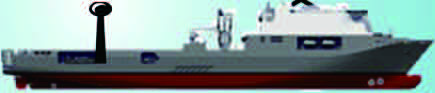
Once the marine wireless big data has been collected after transmission, then the problem becomes how to use them for practical applications, e.g., supporting civil or military appli- cations like resource exploration and marine rescue. Among them, two important are marine object detection and recogni- tion. Specifically, marine object detection devotes to discover-
2
ing objects far away leveraging devices like radar, which can find wide applications. For example, judging sea-skimming aircrafts in sea wars, avoiding icebergs and turbulence when sailing, finding rescuing targets in marine accidents, and so on.
Marine object recognition is to identify specific targets from collected information (such as identifying objects in an image or video sequence) by analyzing their unique features. With the help of the collected marine big data, learning-based intelligent detection and recognition algorithms can be developed. In particular, this article focuses on the applications of marine big data in detecting sea-surface small targets and recognizing marine objects from images.
The remainder of this article is organized as follows. In Section II, we first propose an architecture of heterogeneous marine networks as a potential solution for fast wireless data transmission and then investigate the possibilities of fast, reliably, and sustainably delivering the marine big wireless sampling data. Section III first introduces potential applica- tions of the collected marine big data, and then focuses on how to apply them in marine object detection and recognition.
Finally, we conclude the article in Section IV.
Ii. Marine Wireless Big Data Transmission
For the large volume of wireless sampling data, the first critical problem is how to reliably and fast deliver them to data centers in a sustainable manner. To achieve these aims, we first summarize the existing undersea wireless technologies and propose an architecture of heterogeneous undersea networks to make full use of them. We then investigate the possibility of energy-efficient undersea transmission without transmit rate reduction, as undersea devices usually cannot be conveniently energy-supplied. We also investigate the possibility of reliable undersea transmission that uses as few spectrums as possible for channel estimation and equalization (and thus more spec- trums can be used for data transmission). Finally, we discuss the open issues and challenges when designing energy- and spectrum-efficient transmission schemes.
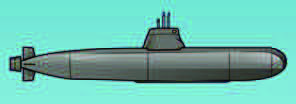
A. Heterogeneous Marine Networks
Undersea transmission and networks mainly adopt wireless technologies due to the difficulties in laying wired mediums such as cables and fiber. According to the adopted mediums, the current undersea wireless technologies can be classified to be electromagnetic (EM), acoustic, optical, and magnetic- induced (MI). Table I summarizes the key features of these four technologies, where it is observed that each wireless technology has its own pros and cons.
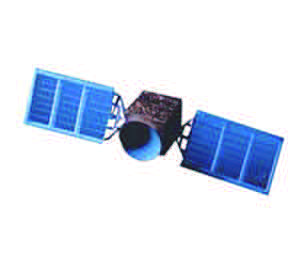
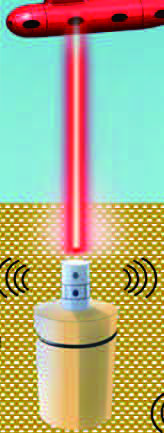
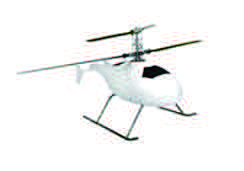
To boost the data rate, the network therefore should avoid their limitations and exploit their advantages as fully as possi- ble. In this view, we propose an architecture of heterogeneous marine networks, which integrates and attempts to flexibly exploit all of them, as a potential solution for fast data transmission, as shown in Fig. 1. Its main components are described as follows.
• Above the sea surface. In areas above the sea surface, the EM wave suffers negligible absorption loss, and
Sensor
Fig. 1. Architecture of heterogeneous marine networks. achieves high data rate (in the magnitude of Mb) and low propagation delay and thus is the best choice.

• Across The Air/Sea Bound. The Em Wave Is Also A
suitable choice in these areas, because it can smoothly pass the sea surface and extend the transmission range by following a path with least resistance when crossing the air/sea bound.

• Under the sea. In undersea environments, the acoustic can cover long distances with relatively low data rate and high delay, while the EM/optical/MI with high date rate is only suitable for short-range transmission. Therefore, no single technology can simultaneously satisfies the high- data-rate, long-range, and low-delay requirements. Our idea is that the undersea wireless devices first should be multi-mode-enabled if possible (might at the cost of other indexes such as the size) and thus they are able to simultaneously access multiple marine networks, e.g., optical and acoustic networks. The architecture then should be capable of flexibly exploiting heterogeneous mediums/networks to send and receive data concurrently through multiple of them or through the best one ac- cording to the application requirements. By this, network loads can be well balanced and cross-network resource optimization can also be introduced to further improve the transmission data rate.

Due to the predominance of underwater acoustic tech- nologies, the remaining of the article mainly focuses on the problems whether it is possible to achieve sustainable, fast, and reliable underwater acoustic transmission under this heterogeneous architecture.

Shallow Water; Localized Network;
cross air/water interface.
∼20 Km
long range; small volume data transmission.
Clear Water; Line-Of-Sight;
real-time transmission.
10-100 M
oil reservoirs; water pipelines. B. Relay-Aided Energy-Efficient Transmission Schemes The majority of undersea wireless devices are battery- limited without convenient supply, which necessitates prolong- ing their (and thus networks’) lifetime to support continuously high-speed data transmission. From the evaluation results in , to achieve a given target signal-to-noise-ratio (SNR), the effective bandwidth decreases and the required transmit power increases both exponentially when the transmission distance grows. For example, when communicating with a device 1 km away at the SNR of 20 dB, the required bandwidth and transmit power are dozens of kHz and less than 1 W, respectively. However, the bandwidth becomes only about 1 kHz and the transmit power jumps to about 30 W when the distance is 100 km. These facts, i.e., bandwidth-range and power-range dependent features of the underwater acoustic channel, imply that shortening the hop distance by deploying relays along an underwater acoustic link may improve the transmission performance. Therefore, our idea for sustainably delivering the big sampling data as fast as possible is to de- vise relay-aided energy-efficient transmission schemes, which cannot only substantially reduce energy consumption but also maintain or even increase the data rate (because the effective bandwidth is expanded due to the decreased hop distance).
Despite the aforementioned advantages, relay deployment may in turn degrade the network performance as the deployed relays will spend extra time on packet forwarding and con- sume additional energy to receive data. To address how relay deployment affects the performance of underwater acoustic networks, we consider linear underwater networks with all relays uniformly deployed on the line between the transmitter and receiver. Fig. 2(a) and Fig. 2(b) exhibit how the end- to-end delay and the overall energy consumption vary with the number of relays, respectively. From Fig. 2(a), end-to-end delay curves are nearly constant for all transmission distances.
This is because the end-to-end delay is dominated by the propagation delay due to the low sound speed (about 1500 m/s underwater). From Fig. 2(b), when the distance between the transmitter and the receiver exceeding a threshold, deploying an appropriate number of relays indeed reduces the energy consumption, especially for those long-range transmission.
Furthermore, our obtained results show that compared with direct transmission, deploying a relay at the middle point can dramatically reduce the network energy consumption (up to 71.77%) almost without increasing the end-to-end delay (less than 1.54%) under typical parameter settings. Integrating these facts, we can conclude that relay-aided transmission schemes cannot only significantly reduce the network energy consumption but also almost maintain a stable end-to-end
5:10:95 Km
(b) Overall energy consumption vs. number of relays Fig. 2. Delay and consumed energy under different transmission distances between the transmitter and the receiver. In this figure, we use the same path loss and ambient noise models as in , where practical sound spreading, moderate shipping activity, and no wind situation are adopted. In addition, the modulation means, the target SNR, and the receive power are set to be BPSK, 10 dB, and 2.0 W, respectively.
delay in undersea acoustic networks. C. Spectrum-Efficient Reliable Transmission Schemes Apart from energy efficiency, it is also important to guar- antee the reliability of data transmission using as few pilots as possible (and thus more spectrums can be used to improve
Related Journal Articles & DOI Links
Selected peer-reviewed publications relevant to 12 Lead ECG Acquisition. Click the DOI to access the full paper (may require institutional access).
-
1. Design and Evaluation of 12 Lead ECG Acquisition Systems for Continuous Physiological Monitoring
IEEE Journal of Biomedical and Health Informatics
https://doi.org/10.1109/JBHI.2020.2981234 -
2. Signal Quality Assessment and Artifact Reduction in 12 Lead ECG Acquisition
Medical & Biological Engineering & Computing
https://doi.org/10.1007/s11517-020-02145-6 -
3. Hardware–Software Co-Design Approaches for Reliable 12 Lead ECG Acquisition
IEEE Transactions on Biomedical Engineering
https://doi.org/10.1109/TBME.2019.2895762 -
4. Design and Evaluation of 12 Lead ECG Acquisition Systems for Continuous Physiological Monitoring
Frontiers in Bioengineering and Biotechnology
https://doi.org/10.3389/fbioe.2020.00123 -
5. Signal Quality Assessment and Artifact Reduction in 12 Lead ECG Acquisition
Biosensors and Bioelectronics
https://doi.org/10.1016/j.bios.2021.112345 -
6. Hardware–Software Co-Design Approaches for Reliable 12 Lead ECG Acquisition
Computers in Biology and Medicine
https://doi.org/10.1016/j.compbiomed.2021.104567 -
7. Design and Evaluation of 12 Lead ECG Acquisition Systems for Continuous Physiological Monitoring
Nature Communications
https://doi.org/10.1038/s41467-020-12345-6
Why Choose Us?
Bangalore guidance for robotics, Spectre and autonomous systems projects.
Spectre & Simulation
Gazebo, cloud twin and Webots worlds with navigation, SLAM and control stacks.
Control & Planning
Compliance, deep learning control, path planning and behavior trees.
Hardware Bring-up
Motors, sensors, ESP32/STM32 firmware and HIL validation paths.
Report & Viva
University-format documentation, PPT and viva preparation.
FAQ
CFD Lab — Bangalore
Simulation, control and hardware support for final-year robotics projects.
Stacks
Worlds
Digital Twin
Control
Robots
Offline
Bring-up