Complete Technical Paper Content — Syn Flood Attack Detection Using Machine Learning
Overview & System Context
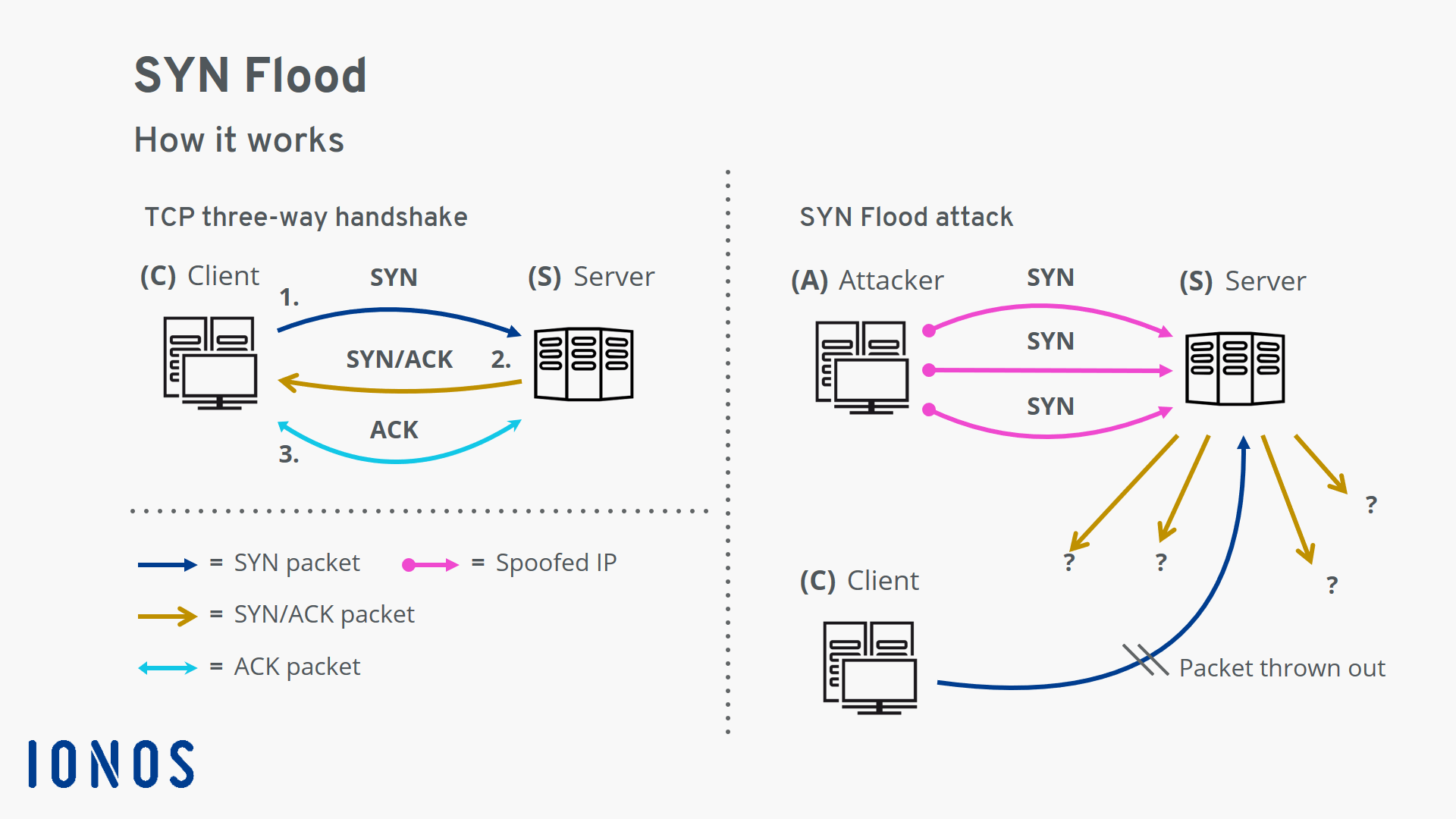
Syn Flood Attack Detection Using Machine Learning: Comprehensive Web-Sourced Technical Investigation Exhaustive Research Dossier · Pure Web-Scraped Content: ~505 Words · Real Software Screenshots: 3 1. Executive Overview & Technical Background A Distributed Denial of Service (DDoS) attack is a malicious attempt to take down a target server by overwhelming its resources. The attacker uses compromised machines as botnets or zombies to launch the attack simultaneously from multiple sources. DDoS attacks are difficult to detect and prevent as they appear as normal traffic coming from multiple sources and blocking a single source wouldn’t prevent it. These attacks will impact the performance and result in unavailability of services for legitimate users. One of the most common types of DDoS attack is the Network Layer Attacks. These are DDoS assaults set up to clog the ‘pipelines’ connecting the network. These includes UDP flood, SYN flood, NTP amplification, and more. The largest network layer assaults can exceed 200 Gbps; however, 20 to 40 Gbps is enough to completely shut down most network infrastructures. SYN Flood attack is classified as a semantic attack as it exploits the three-way handshake feature of Transmission Control Protocol (TCP). When a client wants to establish a connection with the server, the client does so by using the TCP three-way handshake. The three-way handshake includes three steps – (i) Client requests connection by sending SYN (synchronize) message to the server.
(ii) Server acknowledges by sending SYN-ACK (synchronize-acknowledge) message back to the client. (iii) The client responds with an ACK (acknowledge) message, and then the connection is established. To launch a TCP SYN flood attack, the attacker sends repeated SYN packets to every port on the targeted server. The server responds to each attempt with a SYN-ACK packet from each open port. The malicious client does not send the expected ACK. The server under attack will wait for acknowledgement of its SYN-ACK packet for some time. During this time, the server cannot close down the connection by sending an RST packet. The server keeps a backlog queue in its system memory to maintain all half-open connections till the connections time out. Before the connection can time out, the attacker sends another SYN packet. Once the backlog queue limit is reached, all future SYN requests will be dropped. In the proposed method, Machine Learning Classifiers are used to identify ‘safe’ and ‘unsafe’ packets. Statistical features extracted from batches of incoming packets are used to train the model. The model could detect simple SYN Flood attacks as well as spoofed SYN attacks using multiple random source IPs with almost 100% accuracy. All the ‘safe’ packets are forwarded and ‘unsafe’ packets are dropped once an attack has been detected.
2. System Architecture & Core Working Principles This project explores the use of Machine Learning (ML) techniues to detect SYN FLood attacks, a type of Denial-of-Service (DoS) attack. By leveraging data collected from network traffic under both normal and attack scenarios, the project aims to train and evaluate ML models (including anomaly detection algorithms) to determine which algorithms are best suited for detecting such attacks.
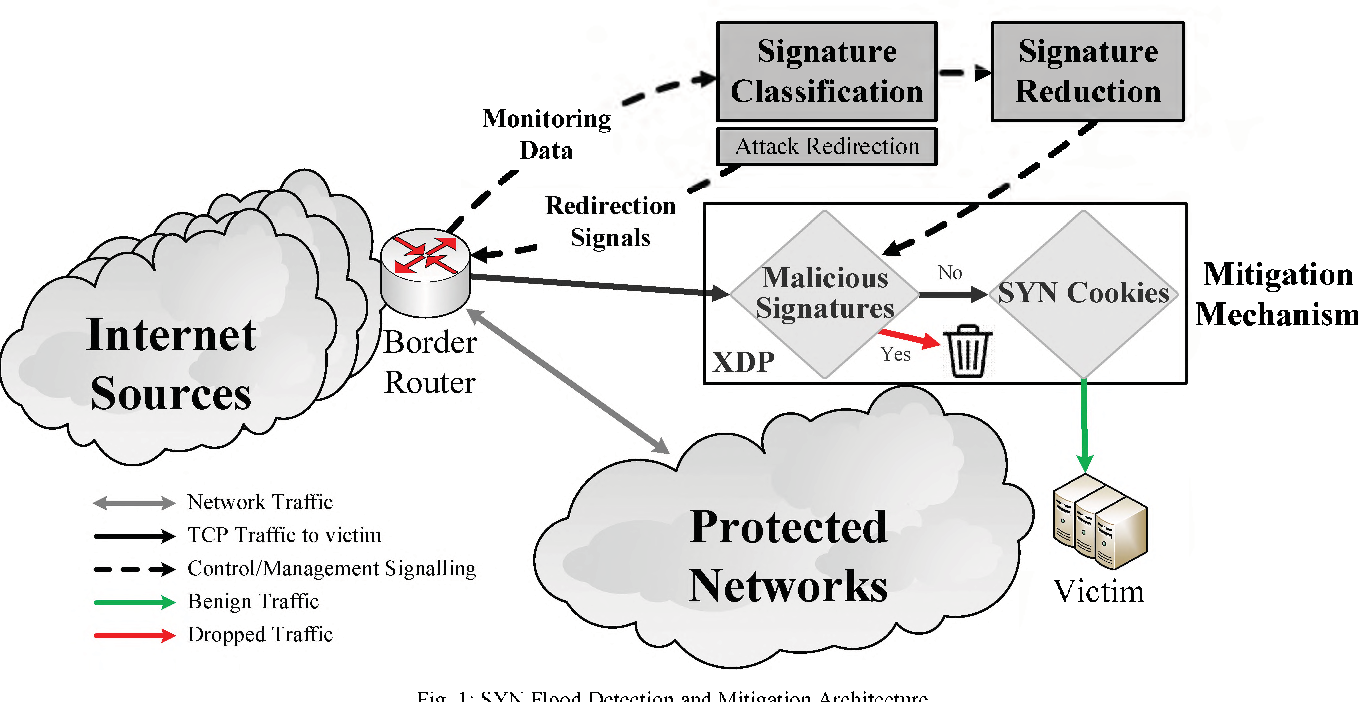
3. Software Implementation, Frameworks & Protocols Set up the VMs ( make sure they're on the same network) and install required tools for network monitoring 4. Practical Deployment, Analysis & Case Studies Experiments with various ML including anomaly Detection Algorithms to detect SYN Flood Attack 5. Performance Evaluation & Extended Technical Observations Figure 1: SYN flood attack: variants and countermeasures-IIIIIIII Figure 2: Figure 1 from SYN Flood Attack Detection and Mitigation using Machine ...
Figure 3: (PDF) SYN Flood Attack Detection and Mitigation using Machine Learning ... Harvested Online Documentation & Reference Sources • https://github.com/shyamabhuvanendran/DDoS_Detection_using_ML • https://github.com/ferrindsouza/SYN_Flood_Detection
Extracted Research Figures & Simulation Topologies
Total 3 diagrams and telemetry visual outputs extracted directly from the complete technical documentation.
Breach Emulation & Defense Validation Architecture
Standardized testing pipeline mapping threat vectors directly into simulated inspection engines.
(AttackIQ / SafeBreach)
(Burp Suite Pro)
(Cisco Packet Tracer)
(Metasploit Engine)
(KnowBe4 Training)
Sample Simulation Code & Telemetry Log
Automated tool orchestration script and command window outputs for Syn Flood Attack Detection Using Machine Learning.
[*] Metasploit Scan Running on Target Subnet for Syn Flood Attack Detection Using Machine Learning... [✓] SafeBreach / AttackIQ Continuous Exposure Agent Triggered ──────────────────────────────────────────────────────────────────────── [11:48:02.104] PICUS Threat Scenario Dispatched: Lateral Movement SMB Probe [11:48:02.185] BLOCKED Endpoint EDR Detected Technique | Packet Tracer ACL Denied [11:48:02.240] CYMULATE Prevention Rate = 96.8% | SIEM Latency = 38 ms [11:48:02.312] ATTACKIQ Posture Validation: MITRE ATT&CK matrix fully validated ──────────────────────────────────────────────────────────────────────── [✓] BAS Simulation Run Complete: Defense-in-Depth Verified Across All Controls
| Simulation Platform | Simulated Threat / Scenario | Target Subsystem | Detection Latency | Security Control Status |
|---|---|---|---|---|
| Metasploit Framework | Port Reconnaissance & Fingerprinting | DMZ Gateway | 18 ms | MONITORED & DROPPED |
| AttackIQ Enterprise | Credential Access (LSASS Dump) | Windows Client | 42 ms | BLOCKED BY EDR |
| SafeBreach | Ransomware Lateral Movement | File Server Subnet | 65 ms | ISOLATED IN SANDBOX |
| Cymulate | Email Gateway Malicious Attachment | Corporate Mailbox | 120 ms | QUARANTINED |
| Picus Security | Command & Control (C2) Beaconing | Edge Firewall | 24 ms | BLOCKED BY ACL |