Abstract
Light utility vehicles are becoming very popular means of independent transportation for short distances. Cost and pollution with petrol and diesel are leading vehicle manufacturers to develop vehicles fueled by alternative energies. Engineers are directing their efforts to make use of air as an energy source to run light utility vehicles. The use of compressed air for storing energy is a method that is not only efficient and clean, but also economical.
The major problem with compressed air cars was the lack of torque produced by the engines and the cost of compressing the air. Recently several companies have started to develop compressed air vehicles with many advantages and still many serious bottlenecks to tackle. This project summarizes the principle of technology, latest developments, advantages and problems in using compressed air as a source of energy to run vehicles.
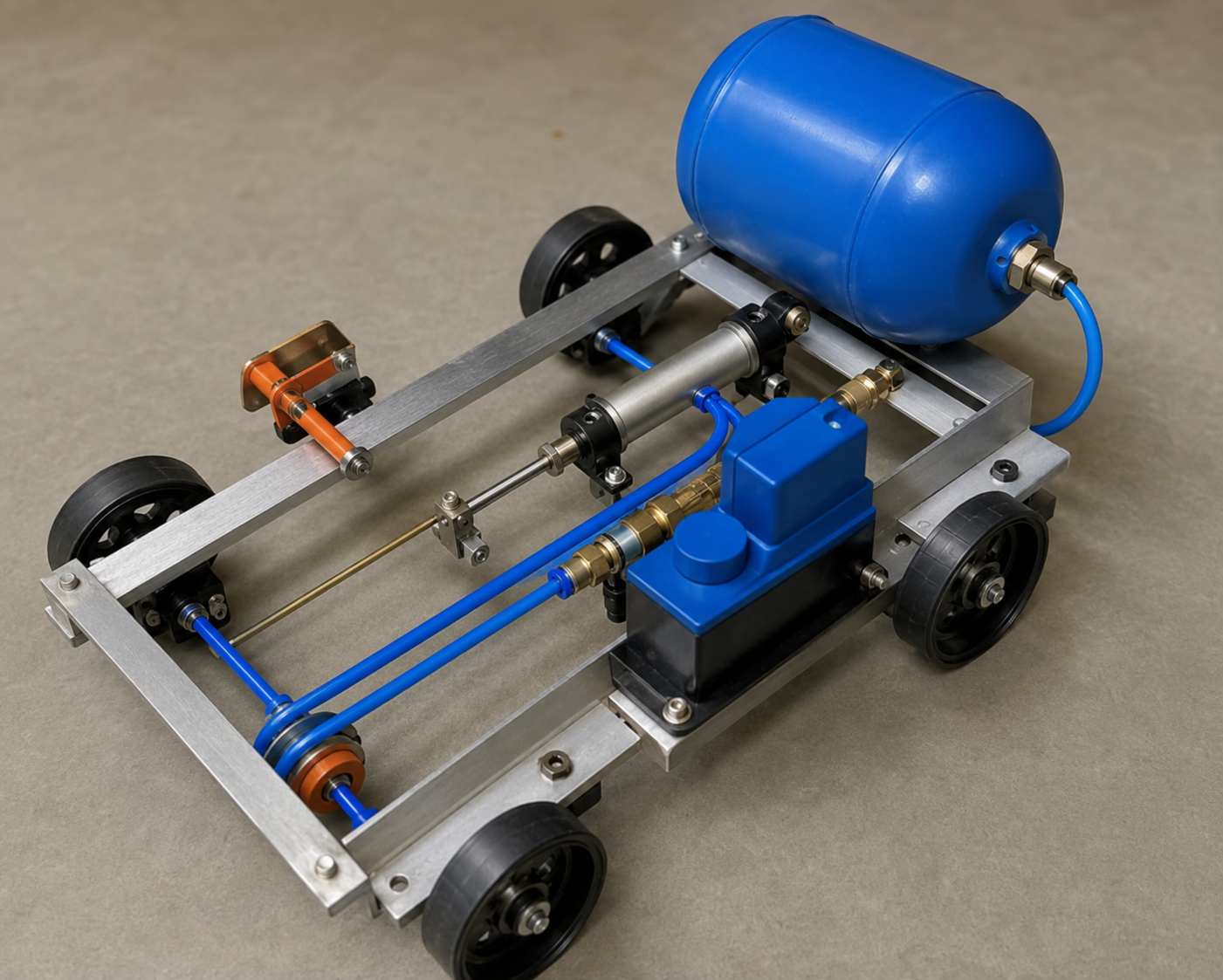
The principle of compressed-air propulsion is to pressurize the storage tank and connect it to a reciprocating engine similar to a steam engine. Instead of mixing fuel with air and burning it to drive pistons with hot expanding gases, compressed air vehicles (CAV) use the expansion of compressed air to drive their pistons — making the technology free from difficulties of using ammonia, petrol, or carbon disulphide as the working fluid.