Enquire Now
Mechanical & Pneumatic Fabrication Project

Pneumatic Sand Filtering Project.

Compressed-air driven sand filtering and separation system for cleaning and classifying sand particles. Complete working model with fabrication, project report, PPT and viva support for BE, B.Tech, Diploma and MTech students.

12K+
Students Guided
100%
Fabrication Support
98%
Project Success

Pneumatic Sand Filtering Project Report

& Key Components & Technology

Core pneumatic, filtration and structural components used in the Pneumatic Sand Filtering Project fabrication.

Air Compressor Pneumatic Cylinder Filter Chamber Mesh Screens Control Valves Sand Hopper Frame Structure Sand Separation
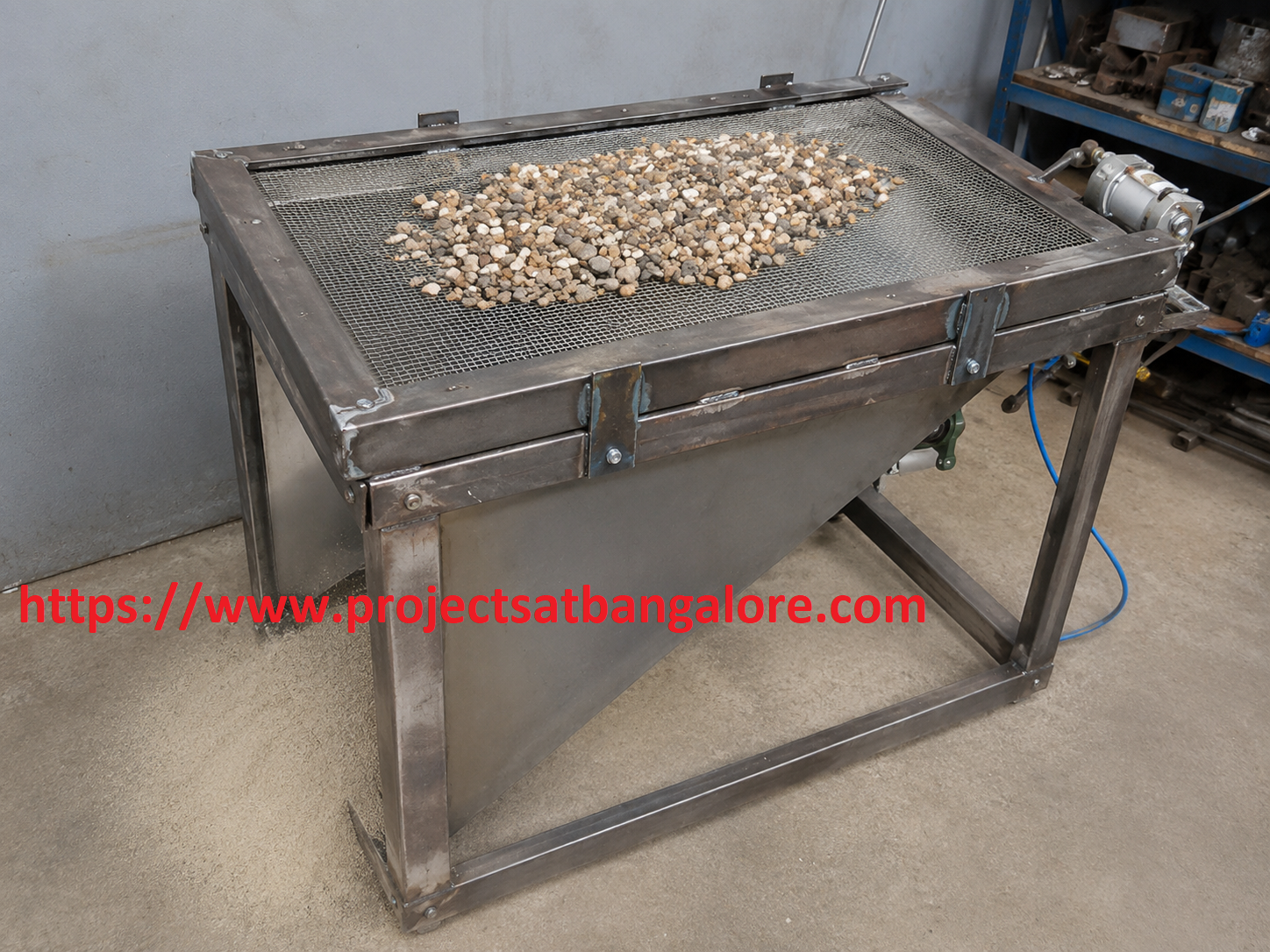
Pneumatic Sand Filtering Project fabrication setup

Pneumatic Sand Filtering Project

Mechanical & Pneumatic fabrication final year project with complete documentation support.

Clean, properly graded sand is essential in construction, foundry and filtration applications. Manual sieving is labour-intensive and inconsistent. A pneumatic sand filtering system uses compressed air to agitate and separate sand particles efficiently.

This project fabricates a Pneumatic Sand Filtering unit that employs an air compressor, pneumatic cylinder or air jets, filter chamber with mesh screens, hopper and control valves. The design covers air-flow path, screen selection, frame rigidity and operator safety — ideal for Mechanical, Production and Manufacturing Engineering students.

Call: +91 95919 12372

Abstract

Sand used in construction, foundry moulds and water filtration must be free of oversized particles, dust and impurities. Traditional manual screening is slow and produces uneven results. A pneumatic approach utilises compressed air to fluidise and separate sand through appropriately sized meshes.

This project develops a Pneumatic Sand Filtering system in which compressed air is introduced into a chamber containing sand. Air jets or a pneumatic actuator agitate the material so that fine particles pass through mesh screens while coarser fractions are retained or collected separately. Key subsystems include the air supply (compressor), filter chamber with interchangeable screens, hopper, control valves and a rigid support frame. The unit demonstrates practical application of pneumatics, material handling and separation principles suitable for academic evaluation.

It is an excellent final-year project for Mechanical, Production, Manufacturing and Industrial Engineering students, combining fabrication, pneumatic systems and process equipment design.


Working Principle

  • Sand is loaded into the hopper or filter chamber.
  • Compressed air is supplied through nozzles or a pneumatic cylinder to agitate the sand bed.
  • Fine particles pass through the selected mesh screens under air-assisted motion.
  • Coarser material and impurities remain on the screen or are directed to a separate outlet.

Advantages

  • Faster and more uniform separation compared with purely manual sieving.
  • Reduced physical labour and improved consistency of filtered sand.
  • Adjustable air pressure and interchangeable screens for different grades.
  • Clear demonstration of pneumatic power and material-handling principles.

Challenges

  • Maintaining optimal air pressure without excessive dust generation.
  • Preventing screen clogging and ensuring even air distribution.
  • Sealing the chamber while allowing controlled discharge of fractions.
  • Frame rigidity and safe handling of compressed-air components.

Technical Specifications

Parameter Details
Air SourceElectric air compressor (suitable pressure & flow)
ActuationPneumatic cylinder / air jets for agitation
Filter MediaInterchangeable mesh screens (selected aperture)
ChamberFabricated mild steel / transparent demo chamber
ControlManual valves / pressure regulator
HopperMild steel feed hopper for sand loading
Typical ApplicationSand cleaning, grading and impurity separation demonstration

What We Provide

ProjectsatBangalore offers complete support for the Pneumatic Sand Filtering Project including working fabrication, project report, PPT, block diagram, viva questions, and demonstration guidance for BE, B.Tech, Diploma, and MTech students in Bangalore.

Working Fabrication
Project Report
PPT Presentation
Block Diagram
Viva Support
Demo Guidance