Enquire Now
Agriculture & Mechanical Fabrication Project

Fabrication of Groundnut Shelling Machine.

Motorized machine that efficiently separates groundnut kernels from their shells, reducing manual labour and increasing productivity for small and medium farmers. Complete working model with fabrication, project report, PPT and viva support for BE, B.Tech, Diploma and MTech students.

12K+
Students Guided
100%
Fabrication Support
98%
Project Success

Fabrication of Groundnut Shelling Machine Project Report

& Key Components & Technology

Core mechanical components used in the Fabrication of Groundnut Shelling Machine project.

Feed Hopper Shelling Drum / Rollers Electric Motor Sieve / Separator Mild Steel Frame Belt / Chain Drive Outlet Chutes Kernel Separation
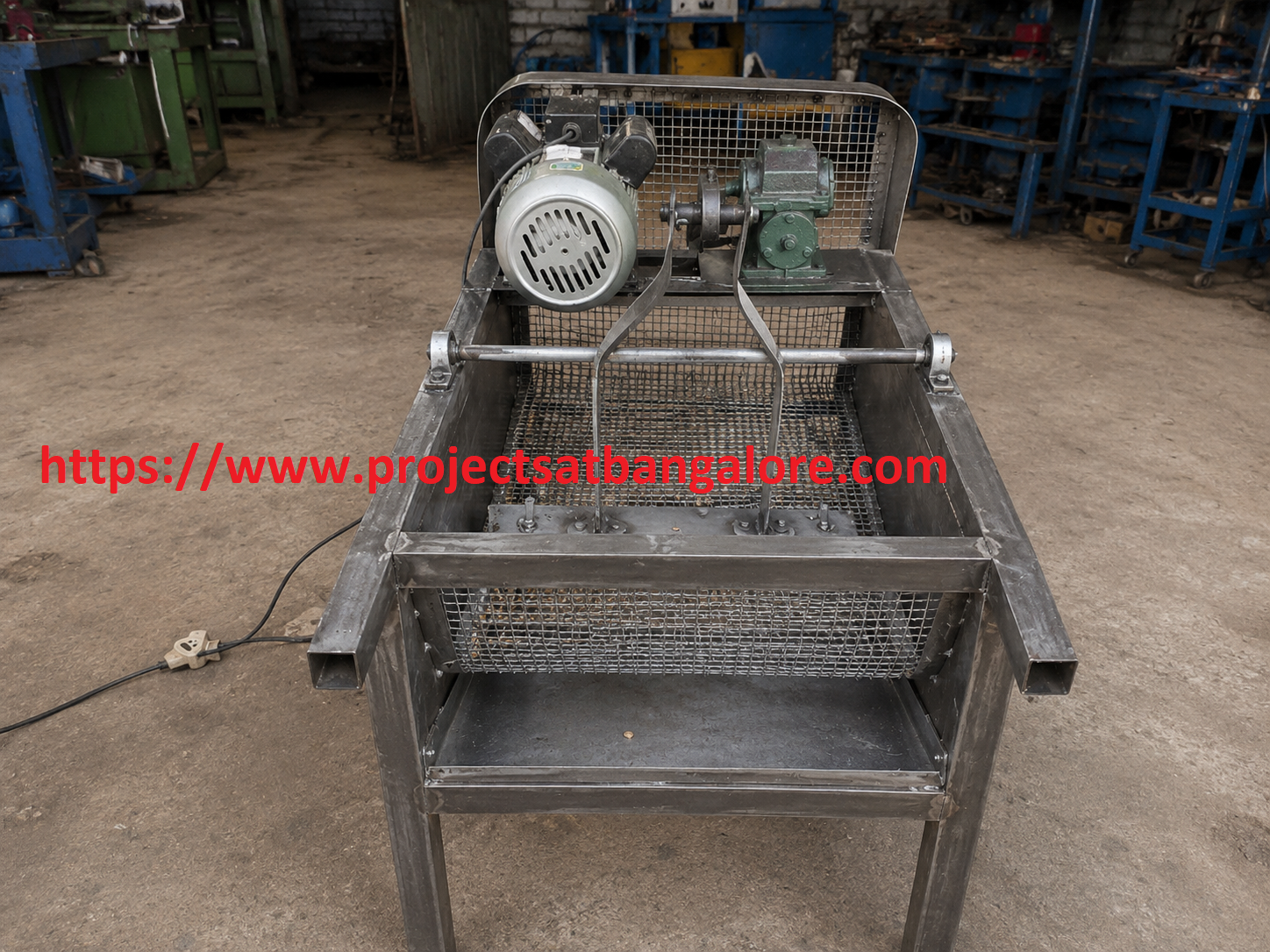
Fabrication of Groundnut Shelling Machine Project setup

Fabrication of Groundnut Shelling Machine

Agriculture machinery fabrication final year project with complete documentation support.

Manual shelling of groundnuts is slow, labour-intensive and often results in high kernel breakage. This project develops a compact motorized shelling machine that efficiently separates kernels from shells while minimising damage.

Groundnuts are fed through a hopper into a rotating drum or set of rollers that crack the shells. A sieve or blower separates the kernels from the shell fragments, delivering clean produce ready for further processing or sale — ideal for small and medium farmers and academic demonstration.

Call: +91 95919 12372

Abstract

Groundnut (peanut) is an important oilseed and food crop. Post-harvest shelling remains a bottleneck for many small farmers who still rely on manual methods. A simple, low-cost motorized shelling machine can significantly improve productivity and reduce labour cost.

This project fabricates a groundnut shelling machine consisting of a feed hopper, a rotating shelling drum or rollers driven by an electric motor, a separating sieve or blower, and outlet chutes for kernels and shells. The design focuses on high shelling efficiency, low kernel breakage and ease of operation and maintenance.

It is an excellent final-year project for Mechanical and Agricultural Engineering students, combining mechanism design, power transmission and practical fabrication skills.


Working Principle

  • Groundnuts are fed into the hopper and guided into the shelling chamber.
  • A motor-driven drum or rollers apply impact/shear force to crack the shells.
  • Cracked mixture falls onto a sieve or is subjected to air flow for separation.
  • Clean kernels and shell fragments exit through separate chutes.

Advantages

  • High shelling rate compared with manual methods.
  • Reduced labour requirement and lower operating cost.
  • Acceptable kernel breakage when clearance and speed are properly set.
  • Simple, robust design suitable for rural and small-scale use.

Challenges

  • Optimising drum/roller clearance and speed to minimise kernel damage.
  • Effective separation of shells from kernels without loss of product.
  • Dust control and safety guarding around rotating parts.
  • Selecting durable materials for high-wear shelling surfaces.

Technical Specifications

Parameter Details
DriveSingle-phase electric motor with belt/chain drive
Shelling UnitRotating drum or pair of rollers
FeedHopper with controlled feed rate
SeparationSieve / blower system
FrameMild-steel fabricated structure
OutputSeparate chutes for kernels and shells

What We Provide

ProjectsatBangalore offers complete support for the Fabrication of Groundnut Shelling Machine Project including working fabrication, project report, PPT, design drawings, viva questions, and demonstration guidance for BE, B.Tech, Diploma, and MTech students in Bangalore.

Working Fabrication
Project Report
PPT Presentation
Design Drawings
Viva Support
Demo Guidance