Enquire Now
Mechanical Fabrication & Automobile Project

Regenerative Braking System Project.

Energy-recovery braking system that converts kinetic energy into electrical energy during deceleration and stores it for reuse. Complete working model with fabrication, project report, PPT and viva support for BE, B.Tech, Diploma and MTech students.

12K+
Students Guided
100%
Fabrication Support
98%
Project Success

Regenerative Braking System Project Report

Core mechanical, electrical and control parts used in the Regenerative Braking System fabrication project.

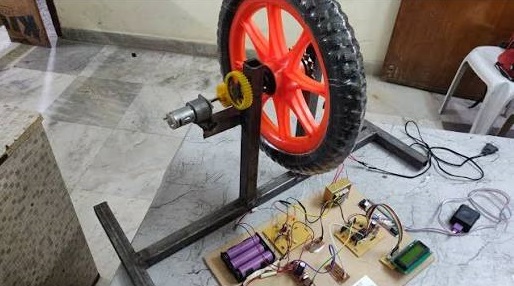
DC Motor / Generator Battery Pack Brake Mechanism Controller / MCU Frame & Chassis Power Electronics Sensors & Feedback Energy Recovery
Regenerative Braking System Project fabrication setup

Regenerative Braking System Project

Mechanical fabrication & automobile engineering final year project with complete documentation support.

Conventional friction brakes convert kinetic energy into heat that is simply wasted. In electric and hybrid vehicles this energy can be recovered, stored and reused — improving efficiency and extending range.

This Regenerative Braking System Project demonstrates a practical setup where a motor acts as a generator during braking, feeding recovered energy back into a battery through controlled power electronics — ideal for student-level EV and automobile applications.

Call: +91 95919 12372

Abstract

Regenerative braking recovers kinetic energy that would otherwise be lost as heat during deceleration. The recovered energy is converted into electrical form and stored in a battery or capacitor for later use, improving overall vehicle efficiency.

This project presents a compact regenerative braking system suitable for laboratory demonstration and small electric vehicle models. It combines a DC motor/generator, power electronics, battery storage and a simple control strategy to illustrate the energy-recovery principle.

It is a practical final-year project for mechanical, automobile and mechatronics students focusing on energy conservation, electric drives and sustainable mobility.


Working Principle

  • During normal propulsion the DC motor drives the wheels using battery power.
  • When braking is commanded, the motor switches to generator mode.
  • Kinetic energy of the moving mass is converted into electrical energy.
  • The generated power is conditioned and fed back into the battery through a controller.

Advantages

  • Improves energy efficiency and extends driving range.
  • Reduces wear on conventional friction brakes.
  • Lowers heat generation and brake fade risk.
  • Demonstrates a key technology used in modern EVs and hybrids.

Challenges

  • Efficient energy transfer and conversion losses.
  • Battery charge acceptance rate during high deceleration.
  • Smooth blending between regenerative and friction braking.
  • Control complexity under varying load and speed conditions.

Technical Specifications

Parameter Details
Motor / GeneratorDC Geared Motor (acts as generator during braking)
Energy Storage12V / 24V Lead-Acid or Li-ion Battery Pack
ControllerArduino / Microcontroller based switching & monitoring
Power ElectronicsMOSFET / Relay based regenerative circuit
SensorsCurrent & Voltage sensing, optional speed feedback
FrameMS / Aluminium structure with wheel assembly
Demonstration ModeLaboratory / pilot-scale rolling setup

What We Provide

ProjectsatBangalore offers complete support for the Regenerative Braking System Project including working fabrication, project report, PPT, block diagram, viva questions, and demonstration guidance for BE, B.Tech, Diploma, and MTech students in Bangalore.

Working Fabrication
Project Report
PPT Presentation
Block Diagram
Viva Support
Demo Guidance