Enquire Now
Pneumatic & Mechanical Fabrication Project

Pneumatic Reciprocating Power Hacksaw Machine.

Compressed-air driven reciprocating hacksaw that delivers smooth, controlled cutting of metal bars and pipes. Reduces operator effort and provides consistent stroke action — complete fabrication support for BE, B.Tech, Diploma and MTech students.

12K+
Students Guided
100%
Fabrication Support
98%
Project Success

Pneumatic Reciprocating Power Hacksaw Machine Project Report

& Key Components & Technology

Core pneumatic and mechanical components used in the Pneumatic Reciprocating Power Hacksaw Machine project.

Pneumatic Cylinder Hacksaw Blade Frame Solenoid / Directional Valve Pressure Regulator Mild Steel Frame Work Holding Vice Air Compressor Reciprocating Cut
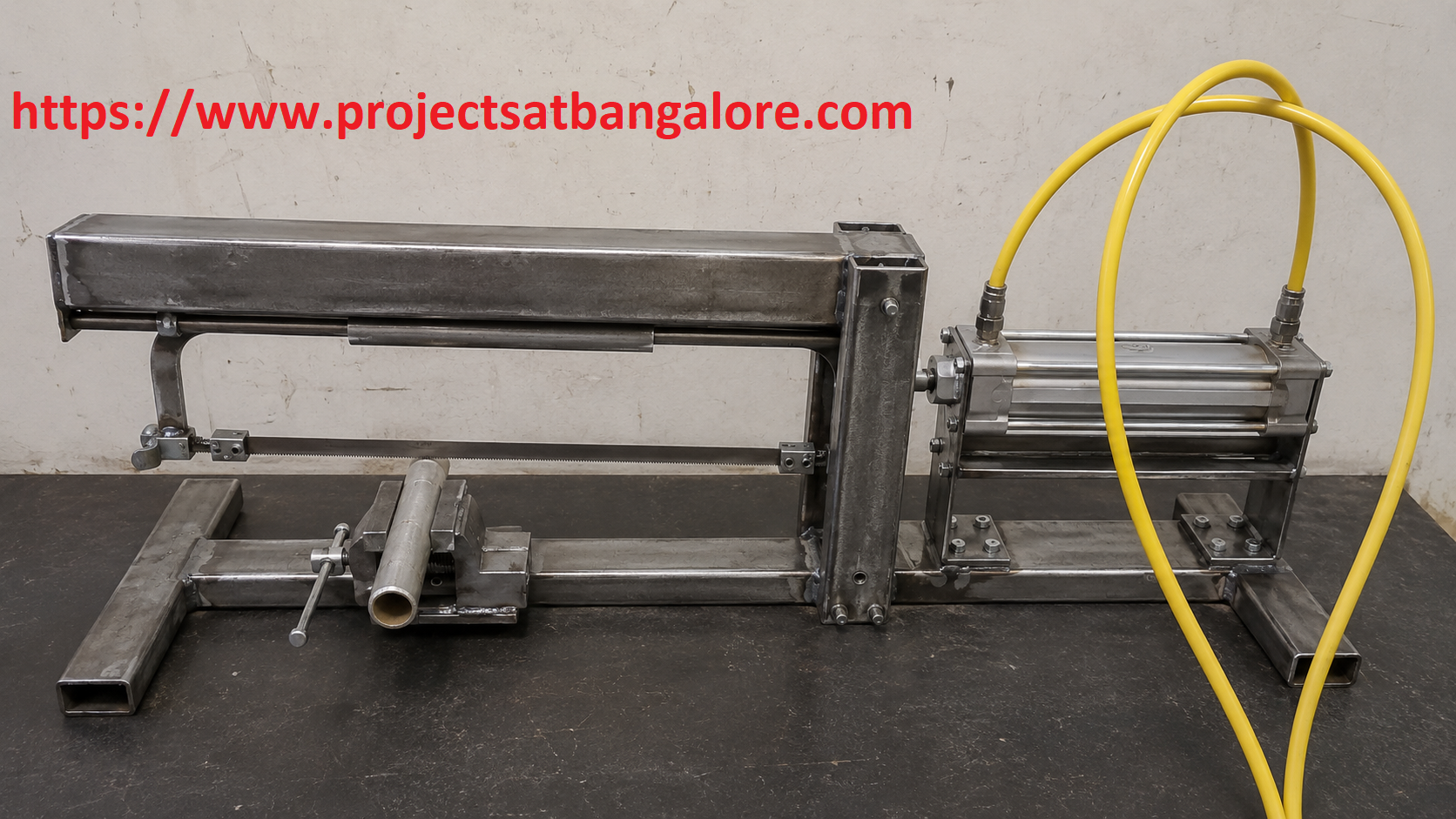
Pneumatic Reciprocating Power Hacksaw Machine Project setup

Pneumatic Reciprocating Power Hacksaw Machine Project

Pneumatic & Mechanical fabrication final year project with complete documentation support.

Manual hacksawing of metal bars and pipes is slow and exhausting. This project develops a pneumatic reciprocating power hacksaw that uses a double-acting cylinder to drive the blade in a controlled back-and-forth motion for efficient cutting.

Compressed air actuates the cylinder through a directional control valve, producing consistent stroke length and force. A rigid frame, work-holding vice and adjustable feed arrangement ensure accurate cuts while reducing operator fatigue — ideal for workshop and educational demonstration.

Call: +91 95919 12372

Abstract

Power hacksaws are essential in workshops for cutting metal stock. Conventional motor-driven machines are effective but can be bulky and require electrical power. A pneumatic alternative offers clean operation, overload protection and suitability for environments where compressed air is already available.

This project designs and fabricates a pneumatic reciprocating power hacksaw consisting of a double-acting cylinder, directional control valve, pressure regulator, rigid frame, blade holder and work-holding vice. Air pressure drives the blade in a continuous reciprocating motion, enabling efficient cutting of mild-steel bars and pipes.

It is an excellent final-year project for Mechanical and Mechatronics students, combining pneumatic circuit design, structural fabrication and practical machining application.


Working Principle

  • Compressed air is regulated and directed to a double-acting pneumatic cylinder via a control valve.
  • The cylinder piston rod is linked to the hacksaw blade frame, producing reciprocating motion.
  • The workpiece is clamped in a vice; the blade cuts on the forward or return stroke depending on design.
  • Stroke speed and force are controlled by air pressure and flow for different materials.

Advantages

  • Consistent cutting force and stroke, reducing operator fatigue.
  • Overload protection — cylinder stalls safely if the blade binds.
  • Clean, spark-free operation suitable for workshop environments.
  • Simple pneumatic circuit that is easy to maintain and demonstrate.

Challenges

  • Designing a rigid frame that resists vibration during cutting.
  • Achieving proper blade alignment and tension for clean cuts.
  • Controlling feed rate and preventing blade damage on hard materials.
  • Ensuring reliable sealing and smooth cylinder operation under load.

Technical Specifications

Parameter Details
ActuatorDouble-acting pneumatic cylinder
ControlDirectional control valve with pressure regulator
Cutting ToolStandard hacksaw blade in reciprocating frame
Work HoldingAdjustable vice / clamp
FrameMild-steel fabricated structure
Air SupplyCompressor, typical operating pressure 4–7 bar

What We Provide

ProjectsatBangalore offers complete support for the Pneumatic Reciprocating Power Hacksaw Machine Project including working fabrication, project report, PPT, pneumatic circuit diagram, viva questions, and demonstration guidance for BE, B.Tech, Diploma, and MTech students in Bangalore.

Working Fabrication
Project Report
PPT Presentation
Pneumatic Circuit
Viva Support
Demo Guidance