Enquire Now
Mechanical & Renewable Energy Fabrication Project

Mini Windmill Power Generation Project.

Compact vertical or horizontal axis mini wind turbine that converts wind energy into electrical power for battery charging and low-load demonstration. Complete working model with fabrication, project report, PPT and viva support for BE, B.Tech, Diploma and MTech students.

12K+
Students Guided
100%
Fabrication Support
98%
Project Success

Mini Windmill Power Generation Project Report

& Key Components & Technology

Core mechanical, electrical and renewable-energy components used in the Mini Windmill Power Generation fabrication project.

Rotor Blades DC Generator / Dynamo Tower / Mast Hub & Shaft Charge Controller Battery Pack Base Frame Renewable Energy
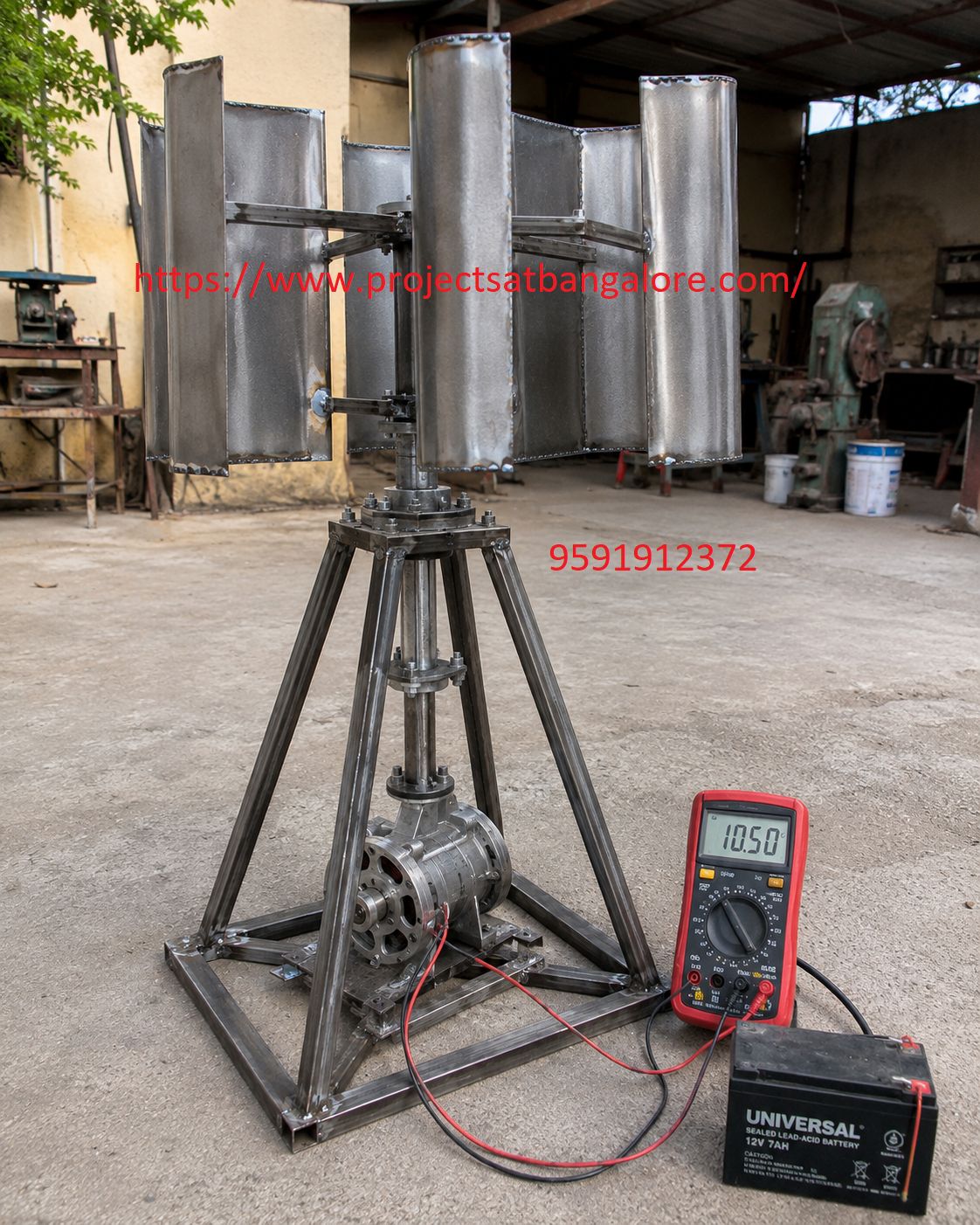
Mini Windmill Power Generation Project fabrication setup

Mini Windmill Power Generation Project

Mechanical & Renewable Energy fabrication final year project with complete documentation support.

Growing demand for clean energy has made small-scale wind power an attractive educational and practical demonstration platform. A mini windmill converts kinetic energy of wind into electrical energy that can charge batteries or power low-load devices.

This project fabricates a compact vertical-axis or horizontal-axis mini wind turbine with rotor blades, hub, shaft, DC generator, charge controller and battery storage. The design covers blade aerodynamics, tower/mast fabrication, generator coupling and basic power conditioning — ideal for Mechanical, Electrical and Renewable Energy Engineering students.

Call: +91 95919 12372

Abstract

Climate concerns and the need for distributed renewable generation have increased interest in small wind energy systems. A mini windmill offers a practical, low-cost platform to study wind energy conversion, rotor design and electrical power generation at student level.

This project develops a Mini Windmill Power Generation system that harnesses wind through a multi-blade rotor coupled to a permanent-magnet DC generator. Key subsystems include the fabricated rotor and tower, generator mounting, rectification/charge control and battery storage. The unit demonstrates core concepts of renewable energy engineering suitable for academic evaluation.

It is an excellent final-year project for Mechanical, Electrical, Mechatronics and Renewable Energy students, combining fabrication, aerodynamics and power electronics.


Working Principle

  • Wind strikes the rotor blades and produces torque on the shaft.
  • The rotating shaft drives a permanent-magnet DC generator (or dynamo).
  • Generated AC/DC is conditioned by a charge controller or rectifier.
  • Electrical energy is stored in a battery or used to power small loads (LED, motor, etc.).

Advantages

  • Clean, renewable energy with zero local emissions.
  • Compact size suitable for laboratory, campus or outdoor demo.
  • Clear demonstration of wind-to-electric energy conversion.
  • Low maintenance and educational value for renewable-energy curricula.

Challenges

  • Low cut-in wind speed versus sufficient power output.
  • Blade design for efficient torque at modest wind speeds.
  • Structural stability of tower under gust loads.
  • Matching generator characteristics to rotor speed and battery voltage.

Technical Specifications

Parameter Details
Turbine TypeVertical Axis (Savonius / Darrieus) or Horizontal Axis
Rotor Blades3–6 blades (plastic / aluminium / composite)
GeneratorPermanent-magnet DC generator / dynamo (12 V typical)
Cut-in Wind SpeedApprox. 2.5–4 m/s (design dependent)
Tower / MastMild steel or aluminium fabricated support
Output StorageLead-acid or Li-ion battery with charge controller
Typical Demo LoadLED lighting, small DC motor or USB charging

What We Provide

ProjectsatBangalore offers complete support for the Mini Windmill Power Generation Project including working fabrication, project report, PPT, block diagram, viva questions, and demonstration guidance for BE, B.Tech, Diploma, and MTech students in Bangalore.

Working Fabrication
Project Report
PPT Presentation
Block Diagram
Viva Support
Demo Guidance