Enquire Now
Mechanical Energy Recovery Project

Kinetic Energy Recovery System using a Flywheel in Bicycle.

Mechanical kinetic energy recovery system that stores braking energy in a high-speed flywheel and releases it to assist pedalling. Improves efficiency and demonstrates regenerative energy principles — complete fabrication support for BE, B.Tech, Diploma and MTech students.

12K+
Students Guided
100%
Fabrication Support
98%
Project Success

Kinetic Energy Recovery System using a Flywheel in Bicycle Project Report

& Key Components & Technology

Core mechanical components used in the Kinetic Energy Recovery System using a Flywheel in Bicycle project.

High-Speed Flywheel Clutch / Engagement Bicycle Frame Chain & Sprocket Bearings & Shaft Mounting Bracket Brake Lever Link Energy Recovery
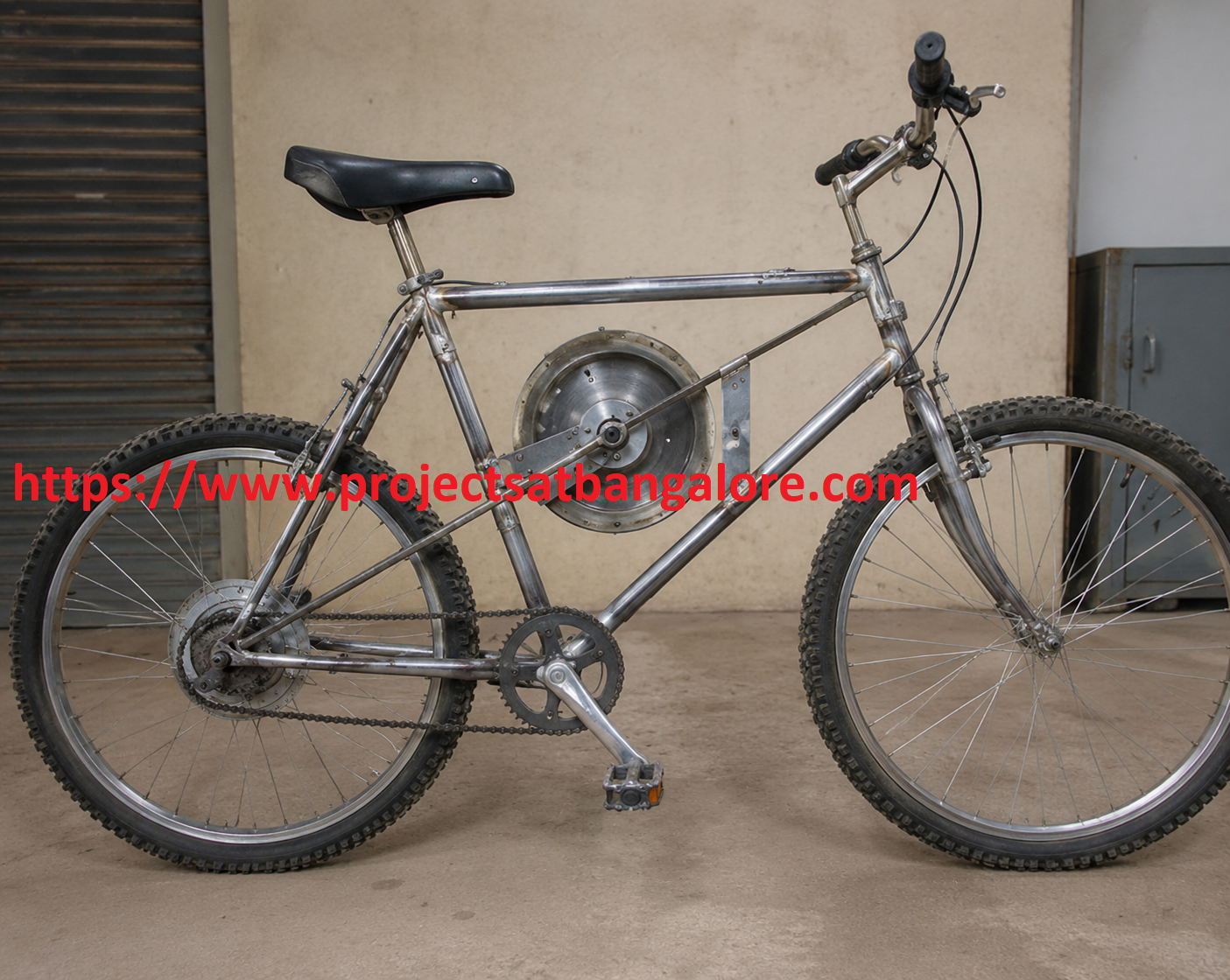
Kinetic Energy Recovery System using a Flywheel in Bicycle Project setup

Kinetic Energy Recovery System using a Flywheel in Bicycle

Mechanical energy recovery final year project with complete documentation support.

Conventional bicycles dissipate kinetic energy as heat during braking. This project integrates a mechanical Kinetic Energy Recovery System (KERS) that stores that energy in a spinning flywheel and later releases it to assist the rider.

When the rider applies the brake, a clutch engages the flywheel, accelerating it and storing rotational energy. On demand, the flywheel is re-engaged to feed energy back through the drivetrain, reducing pedalling effort on restarts or inclines — a clear demonstration of regenerative principles without electronics.

Call: +91 95919 12372

Abstract

Kinetic Energy Recovery Systems (KERS) are widely used in motorsport and hybrid vehicles. Applying the same principle to a bicycle provides an accessible, purely mechanical demonstration of energy storage and recovery.

This project designs and fabricates a flywheel-based KERS for a standard bicycle. During braking, kinetic energy of the bicycle is transferred to a high-speed flywheel via a clutch or friction engagement. The stored rotational energy can later be returned to the rear wheel to assist acceleration, reducing rider effort after stops or on gentle climbs.

It is an ideal final-year Mechanical Engineering project covering energy conservation, rotational dynamics, clutch design and practical bicycle modification.


Working Principle

  • During braking, the engagement mechanism connects the drivetrain to the flywheel.
  • Bicycle kinetic energy accelerates the flywheel, storing energy as rotational inertia.
  • When assistance is needed, the clutch re-engages and the flywheel decelerates, feeding torque back to the wheel.
  • Freewheeling and safety features prevent reverse drive or overspeed.

Advantages

  • Recovers otherwise wasted braking energy for later use.
  • Purely mechanical — no batteries or electronics required.
  • Clear educational demonstration of energy storage and conservation of energy.
  • Potential to reduce rider fatigue in stop-start urban cycling.

Challenges

  • Designing a compact, high-inertia flywheel that fits safely on a bicycle.
  • Reliable clutch engagement/disengagement under varying loads.
  • Balancing added weight against recovered energy benefit.
  • Ensuring structural integrity and rider safety at high flywheel speeds.

Technical Specifications

Parameter Details
Energy StorageHigh-speed flywheel (steel / composite disc)
EngagementMechanical clutch / friction or dog clutch
DriveChain / sprocket or belt linked to rear wheel
FrameStandard bicycle with reinforced mounting brackets
BearingsHigh-speed sealed bearings for flywheel shaft
ControlLever-actuated engagement (linked to brake or separate)

What We Provide

ProjectsatBangalore offers complete support for the Kinetic Energy Recovery System using a Flywheel in Bicycle Project including working fabrication, project report, PPT, design calculations, viva questions, and demonstration guidance for BE, B.Tech, Diploma, and MTech students in Bangalore.

Working Fabrication
Project Report
PPT Presentation
Design Calculations
Viva Support
Demo Guidance