Enquire Now
Mechanical & Material Handling Fabrication Project

Mini Conveyor Belt Mechanism Project.

Compact motor-driven conveyor belt system featuring roller drive, belt tensioning and variable speed control. Complete working model with fabrication, project report, PPT and viva support for BE, B.Tech, Diploma and MTech students.

12K+
Students Guided
100%
Fabrication Support
98%
Project Success

Mini Conveyor Belt Mechanism Project Report

& Key Components & Technology

Core mechanical, electrical and drive components used in the Mini Conveyor Belt Mechanism fabrication project.

Conveyor Frame DC Gear Motor Drive Rollers Belt Tensioner Conveyor Belt Support Rollers Speed Control Material Handling
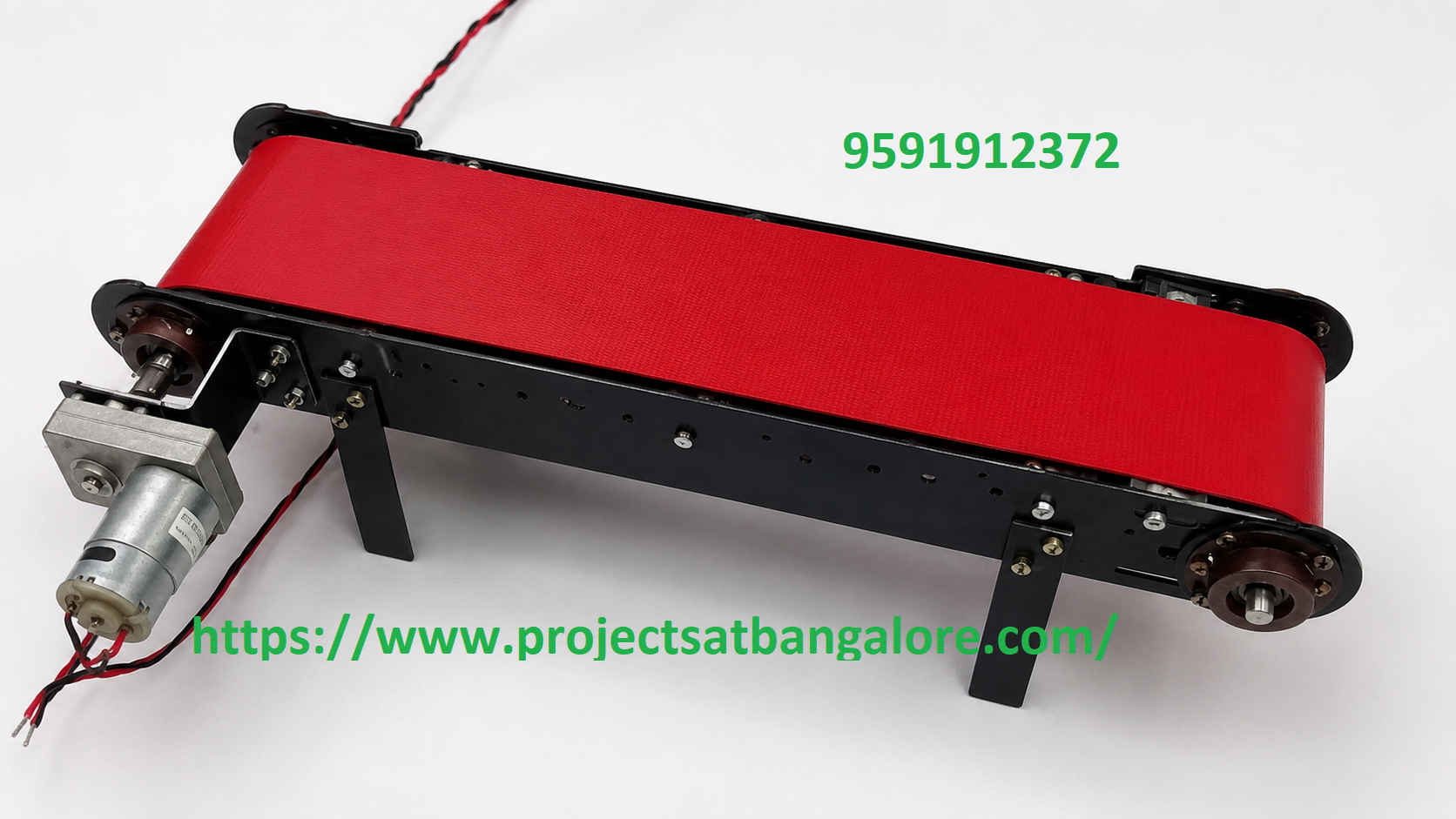
Mini Conveyor Belt Mechanism Project fabrication setup

Mini Conveyor Belt Mechanism Project

Mechanical & Material Handling fabrication final year project with complete documentation support.

Efficient material handling is essential in manufacturing, packaging and automation. A mini conveyor belt provides a practical, compact platform to study belt drive systems, roller design and motorized transport at student level.

This project fabricates a motor-driven mini conveyor with drive and idler rollers, tensioning arrangement, belt and speed control. The design covers frame fabrication, power transmission, belt tracking and basic load movement — ideal for Mechanical, Production and Mechatronics Engineering students.

Call: +91 95919 12372

Abstract

Industrial automation and packaging lines rely heavily on conveyor systems for continuous material movement. A mini conveyor belt offers a low-cost, educational platform to study drive mechanisms, belt dynamics and motor control.

This project develops a Mini Conveyor Belt Mechanism powered by a DC gear motor that drives one or more rollers. Key subsystems include the fabricated frame, drive and support rollers, belt tensioning, optional speed control and demonstration of load transport. The unit demonstrates core concepts of material handling engineering suitable for academic evaluation.

It is an excellent final-year project for Mechanical, Production, Mechatronics and Industrial Engineering students, combining fabrication, power transmission and automation principles.


Working Principle

  • DC gear motor drives the primary (drive) roller through direct or chain/gear coupling.
  • Friction between roller and belt moves the conveyor belt forward.
  • Idler/support rollers maintain belt path and reduce sag.
  • Tensioner adjusts belt tightness for proper tracking and grip.

Advantages

  • Simple, reliable continuous material transport.
  • Compact size ideal for laboratory and classroom demonstration.
  • Clear illustration of belt-drive and roller mechanics.
  • Easily extended with sensors, sorting or PLC control for advanced study.

Challenges

  • Maintaining correct belt tension and tracking without slippage.
  • Selecting motor torque adequate for intended load.
  • Frame rigidity under continuous operation.
  • Safe integration of electrical drive with moving parts.

Technical Specifications

Parameter Details
Drive Motor12V / 24V DC Gear Motor (suitable torque rating)
Conveyor LengthTypically 400–800 mm (student-scale)
Belt TypeRubber / PVC / fabric endless belt
RollersDrive roller + idler / support rollers with bearings
FrameMild steel / aluminium fabricated structure
Speed ControlOptional PWM controller or fixed gear reduction
Load CapacityLight demonstration loads (parts, packages, models)

What We Provide

ProjectsatBangalore offers complete support for the Mini Conveyor Belt Mechanism Project including working fabrication, project report, PPT, block diagram, viva questions, and demonstration guidance for BE, B.Tech, Diploma, and MTech students in Bangalore.

Working Fabrication
Project Report
PPT Presentation
Block Diagram
Viva Support
Demo Guidance