Enquire Now
Electromagnetic & Energy Systems Fabrication Project

Bedini Wheel Using Electromagnetic Flux Generation.

Educational pulsed-electromagnetic rotor system that demonstrates magnetic flux interaction, coil resonance and energy recovery principles. Complete working model with fabrication, project report, PPT and viva support for BE, B.Tech, Diploma and MTech students.

12K+
Students Guided
100%
Fabrication Support
98%
Project Success

Bedini Wheel Using Electromagnetic Flux Generation Project Report

& Key Components & Technology

Core electromagnetic, electronic and mechanical parts used in the Bedini Wheel Using Electromagnetic Flux Generation fabrication project.

Rotor Wheel Permanent Magnets Bifilar Coils MOSFET Switch Optical Trigger Battery Bank Charge Circuit Flux Resonance
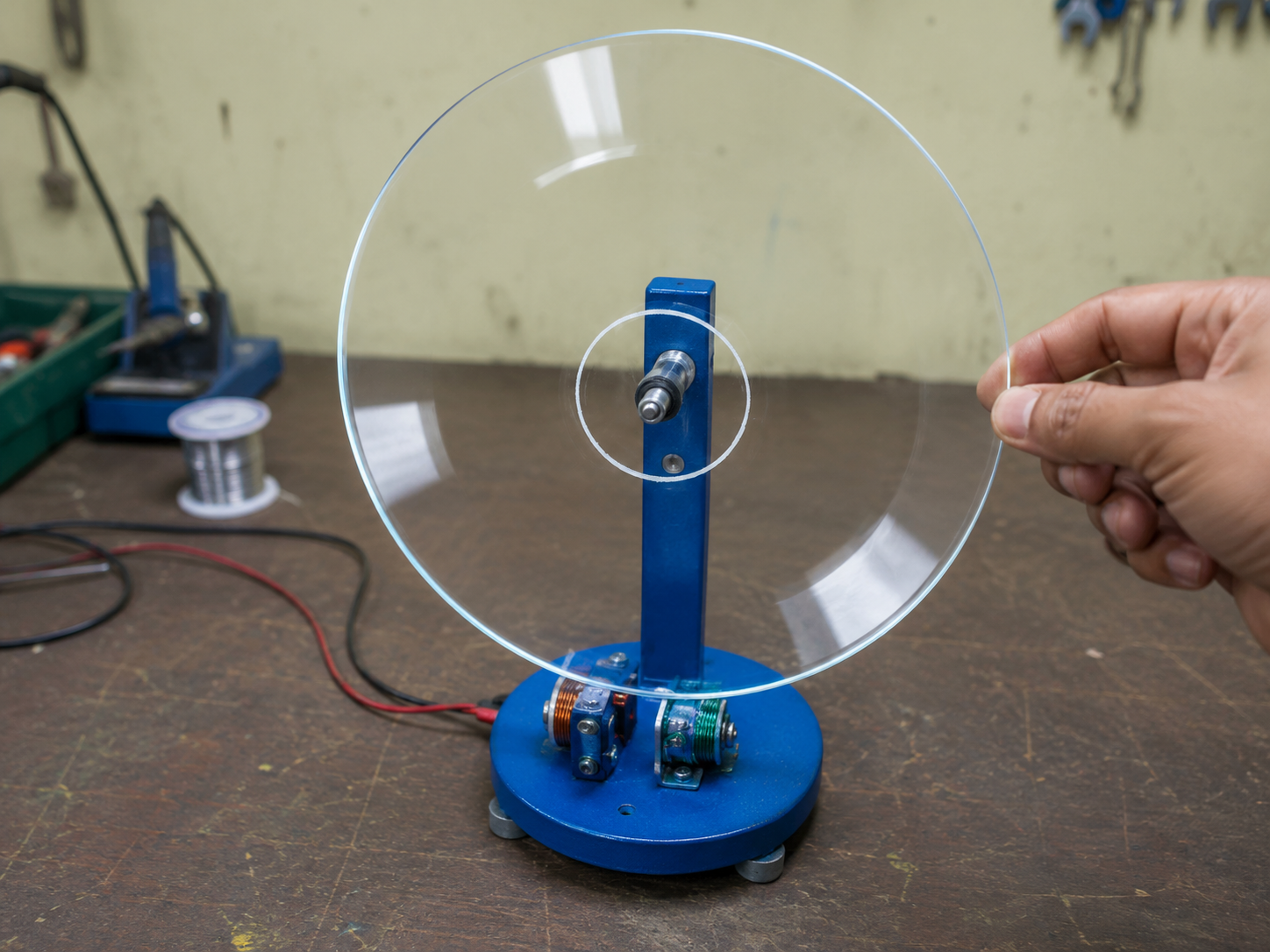
Bedini Wheel Using Electromagnetic Flux Generation fabrication setup

Bedini Wheel Using Electromagnetic Flux Generation

Electromagnetic & Energy Systems fabrication final year project with complete documentation support.

The Bedini Wheel is a classic educational platform for studying pulsed electromagnetism, magnetic flux interaction and energy recovery. It combines a magnet-equipped rotor with carefully timed coil pulses to produce continuous rotation while exploring battery charging behaviour.

This project fabricates a working Bedini-style wheel using permanent magnets, bifilar wound coils, optical or Hall-effect triggering, MOSFET switching and a recovery circuit. Students gain hands-on experience with electromagnetic flux, resonance, back-EMF and practical power electronics.

Call: +91 95919 12372

Abstract

Understanding pulsed electromagnetic systems is fundamental to modern power electronics, motors and energy recovery circuits. The Bedini Wheel provides an accessible experimental platform that combines mechanical rotation, permanent-magnet fields and precisely timed coil energization.

In this project a lightweight rotor carries multiple permanent magnets. As each magnet approaches a bifilar-wound stator coil, an optical or magnetic sensor triggers a MOSFET that briefly energizes the coil. The resulting magnetic pulse both propels the rotor and produces a high-voltage spike that is recovered into a secondary battery. The system illustrates magnetic flux interaction, resonance, back-EMF capture and the practical design of pulsed drive circuits.

It is an excellent final-year project for students of electrical, electronics, mechatronics and renewable-energy engineering who wish to explore electromagnetic principles through hands-on fabrication and measurement.


Working Principle

  • Rotor magnets pass a trigger sensor that signals the control circuit.
  • MOSFET switches a short current pulse into the bifilar coil, creating a repulsive magnetic field.
  • The pulse accelerates the rotor while the collapsing field generates a high-voltage spike.
  • Recovery diodes route the spike energy into a secondary battery for charging demonstration.

Advantages

  • Clear demonstration of magnetic flux, resonance and energy recovery concepts.
  • Low-cost components and simple mechanical construction.
  • Excellent platform for measuring voltage, current, RPM and charge rates.
  • Encourages deeper study of pulsed power electronics and electromagnetic theory.

Challenges

  • Precise timing of the coil pulse relative to magnet position.
  • Minimizing coil heating and MOSFET switching losses.
  • Achieving stable high-speed rotation with low friction bearings.
  • Accurate instrumentation to quantify input versus recovered energy.

Technical Specifications

Parameter Details
RotorAcrylic / aluminium disc with neodymium magnets (typically 8–12 poles)
CoilsBifilar wound copper coils on ferrite or air-core formers
SwitchingPower MOSFET (e.g., IRF540 / IRFZ44) with gate driver
TriggerOptical interrupter or Hall-effect sensor
Power SourcePrimary battery (12 V) + secondary recovery battery
FrameWooden / acrylic base with low-friction bearings

What We Provide

ProjectsatBangalore offers complete support for the Bedini Wheel Using Electromagnetic Flux Generation Project including working fabrication, project report, PPT, block diagram, viva questions, and demonstration guidance for BE, B.Tech, Diploma, and MTech students in Bangalore.

Working Fabrication
Project Report
PPT Presentation
Block Diagram
Viva Support
Demo Guidance